

Ren Jiashun, President of Xinqiao Hospital: The Core of Future Hospitals Lies in Quality and Brand Building
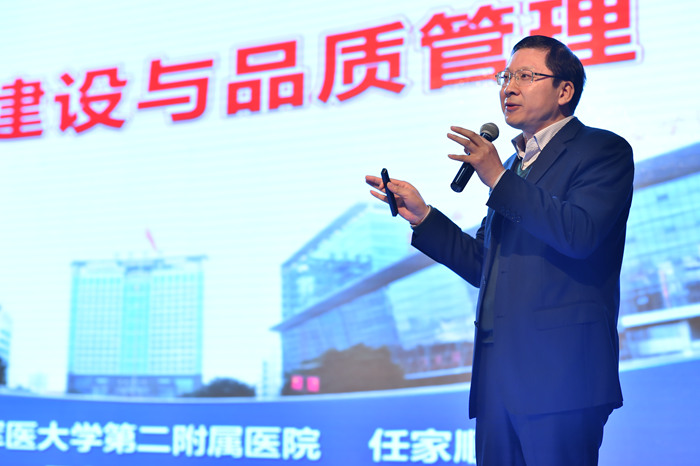
Ren Jiashun, President of the Second Affiliated Hospital of Third Military Medical University (Xinqiao Hospital)
On December 23, at the VCBeat Future Healthcare 100 Forum, Ren Jiashun, President of the Second Affiliated Hospital of the Third Military Medical University (Xinqiao Hospital), was invited to deliver an insightful speech titled “Hospital Development and Quality Management.” The following are the highlights from his address:
Xinqiao Hospital is a comprehensive medical center with a 72-year history, integrating clinical care, medical education, scientific research, and healthcare services. As a large-scale general hospital, it operates 2,800 beds and hosts 15 national key disciplines and key clinical specialties. The hospital handles over 2 million outpatient visits and admits 120,000 inpatients annually.
The country is currently emphasizing supply-side reform, particularly structural reform. Where do the problems lie?
First, insufficient national health expenditure;
Second, the tiered diagnosis and treatment system has not been established, leading to patient overcrowding at large hospitals while small hospitals see few patients;
Third, the regional distribution of medical institutions is uneven, with a concentration in large cities and scarcity in smaller ones;
Fourth, there is a relative shortage of medical personnel, accompanied by significant attrition. Although we have trained a large number of healthcare professionals, many do not enter clinical practice.
The decent income of medical personnel is not high, whether compared with developed countries abroad or with peers in the same industry. Approximately half of the medical personnel who have passed the licensed physician examination do not work in the healthcare sector. The path to becoming a medical professional is arduous; generally, it takes 5 to 10 years to become a physician, 15 to 20 years to become a specialist, and 25 to 30 years to become an expert. Throughout this process, there is also natural selection, where the competent survive and the less capable are eliminated.
What should be done to address these existing problems in healthcare? Growth must be coupled with an increase in the number of medical personnel; the workforce size needs to be expanded. A tiered diagnosis and treatment system must be established, and patient care-seeking behavior should return to rational medical practices and the tiered diagnosis and treatment model.
Hospitals have shifted from expanding scale to focusing on substantive development and quality improvement. Services must transition from a passive to a proactive model, while management must evolve from extensive to specialized approaches, with hospitals prioritizing quality excellence.
Capital and funds are currently very active. Just as water flows to lower ground, money moves toward where it can generate returns. So much capital has been invested in internet healthcare—has it been profitable? Not necessarily. However, profitability is not the top priority; this is an industry that will yield results once it reaches a certain stage of development.
What is quality? In simple terms, it refers to products and services. However, there is a defining prerequisite: it must ensure customer satisfaction, or even exceed customer expectations, delivering a service that surprises and delights customers. Quality in this sense is distinct from mere conformance to specifications.
In the development of hospitals, we have certain reflections and practices: Traditionally, hospital workflows are often designed around physicians’ processes and the primary tasks of medical staff, which differs from workflows that provide a positive patient experience. We aim to reform hospitals to align with patient-centered care pathways.
Perspectives on quality also differ between healthcare providers and patients. From the hospital’s perspective, quality is intertwined with academic disciplines, talent, and scientific research, whereas patients associate it with treatment efficacy, service, and pricing. The corresponding influencing factors are likewise distinct.
The doctor-patient relationship should be a process of mutual trust, working together to overcome disease. However, doctors and patients sometimes find themselves at odds, with patients even actively adopting an adversarial stance. The prominence of doctor-patient conflicts is not solely due to issues between doctors and patients but is also influenced by various social factors.
Healthcare systems in developed countries place strong emphasis on key components, including safety, clinical outcomes, and patient volume. Their core philosophy prioritizes patient needs, adhering to the principle of “patients first.” The United States, in particular, stresses seamless, boundary-free collaboration within multidisciplinary healthcare teams and places significant importance on patient experience.
This is related to our biomedical modelofThe transition is consistent.PreviouslyBiomedical Model,Now it is biological, psychological, social, and environmental.,After the advent of the Internet,AlsoMeetingAre there other factors involved?VeryIt is possible.
Currently, the National Health and Family Planning Commission places particular emphasis on patient experience and humanistic care. In fact, Traditional Chinese Medicine (TCM) has long excelled at integrating medicine, science, and humanistic concern. However, the introduction of Western medicine shifted the focus toward technology, thereby diminishing the role of humanism. We are now in the process of restoring this balance by reintegrating humanistic values with scientific practice.
As a hospital, three key aspects must be prioritized in the development of the medical industry: first, technological leadership; second, service excellence; and third, operational efficiency.
Where Do Public Hospitals Hold the Advantage? Technological Superiority. With decades of accumulated expertise, it is impossible for private hospitals to replicate this advantage in a short period. Consequently, they must focus on areas that are more readily accessible, namely service quality. Since the influx of social capital, private hospitals have excelled in service delivery; however, building technical proficiency remains a gradual process that requires continuous improvement through operational management. Only by optimizing operations can these institutions gain effective control and thereby drive development in both service and technology.
Regardless of how a hospital operates, it must have talent—both specialized technical professionals and management experts. Through continuous innovation, they enhance the hospital’s quality, ultimately leveraging its advantages in technology, management, and service to boost comprehensive competitiveness. In this way, the hospital achieves high-quality care and builds a strong brand.
What are the hallmarks of a top-tier hospital? It requires not only first-class disciplines, but also first-class management and infrastructure, cutting-edge technology, and premium services. Most notably, the culture established through prolonged and tireless pursuit is the defining mark of a top-tier hospital.
Internet healthcare has made significant strides in this area, particularly in cultivating potential customers. By leveraging top-tier experts, leading disciplines, and appropriate promotional efforts, hospitals can raise awareness among individuals who, although they have not visited the hospital, are already familiar with its reputation.
Next is the cultivation of satisfied customers. When patients arrive, they should be made aware of our first-class technology, first-class management, and first-class service, allowing them to experience this level of care and gain recognition for the hospital.
The final level is the cultivation of loyal patients, who identify with your cultural brand and philosophy. This atmosphere makes them feel valued and willing to advocate for your hospital, encouraging other patients to seek treatment there. Loyal patients will not betray you; they remain committed to your hospital. To achieve this, you must align with them on cultural and philosophical levels, fostering their identification with your institution.
All hospitals must share a common vision, mission, and core values. Through system accreditation and the adoption of standards, consensus is achieved among stakeholders. Ultimately, continuous improvement in hospital quality is attained through specific measures such as quality control and clinical pathways.
Xinqiao Hospital conducted a SWOT analysis of the institution. This strategy begins with the introduction of a quality management culture and the cultivation of a supportive atmosphere, achieves tangible results through the application of tools, and ultimately culminates in the establishment of a enduring organizational culture.
New Bridge Hospital has established a “1-3-5” goal for quality control management and set up a corresponding organizational structure called the Quality Control Office. This office serves three functions: first, introducing concepts, culture, and systems; second, guiding relevant functional departments in carrying out quality control work; and third, conducting third-party testing and monitoring to identify issues and oversee their improvement.
Hospitals are generally structured into three tiers. Senior management, such as the hospital president, is responsible for overall design, top-level planning, and comprehensive quality management. Middle management focuses on execution and grassroots administration, leveraging quality control authority and practical tools to drive specific quality improvements. The lowest tier consists of ordinary physicians.
In response, we have implemented a series of stratified training programs to enhance the quality control capabilities of all staff across the hospital:
Hospital Safety Should Center on Two Groups: Patients and Staff.
Lean management focuses on patient-centered process optimization to enhance patient comfort. Precision medicine is achieved through advanced technologies such as genetic testing, gene recombination, and targeted therapies. As a strategic direction, precision medicine requires continuous and sustained implementation.
Sincere service ensures the best patient experience.
Refined Operations: Leveraging Performance Management to Optimize Hospital Efficiency and Maximize Staff Potential and Motivation
Hospitals at all levels should actively participate in the reforms of tiered diagnosis and treatment, medical service pricing, and health insurance payment systems. The current payment system is unreasonable, as we rely on drug sales to subsidize medical services.
Hospital operations also require reform to establish four key pillars: a hub for innovation in diagnostic and therapeutic technologies, a center for advanced continuing medical education, a base for evidence-based medical research focused on developing solutions to clinical challenges, and health service support.
The Current State of Healthcare Access for Chinese Citizens Can Be Improved Through Four Centers:
First, the National Quality Medical Experience Center: a high-quality hospital inevitably offers a distinct patient experience.
The Second National Center for Healthy Living Guidance; currently, many people lack essential health knowledge.
Third, the National Center for Popularizing Medical Knowledge addresses how to seek treatment and medical care. Currently, many people do not understand why large hospitals are overcrowded, with patients flocking to them for minor ailments.
Fourth, the National Center for Improving Healthcare-Seeking Behaviors: patients’ current healthcare-seeking habits need improvement.
In summary, I believe that the Internet can integrate with healthcare. The healthcare industry is, first and foremost, a public-welfare-oriented sector. Secondly, it is essential to clearly identify its profit centers and find the right points of integration. Finally, hospitals should take a pragmatic approach to building their brands, seeking a common ground that both strengthens brand equity and expands access to funding.