

AI-aaS: The Next Frontier Beyond SaaS, PaaS, and IaaS
By Senyi IntelligenceZhang Shaodian
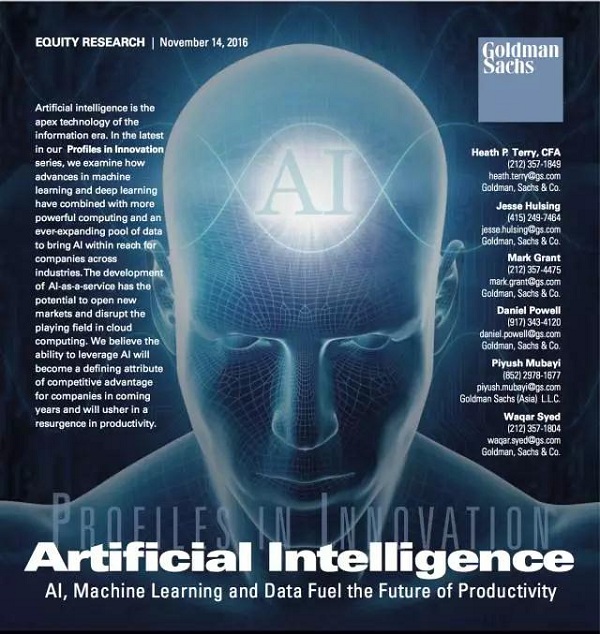
Goldman Sachs predicted in its report,By 2025, the total output value of the AI industry in the United States will exceed $300 billion.。Among them, agriculture, finance, healthcare, retail, and energy will become the major sectors where AI exerts its greatest impact.
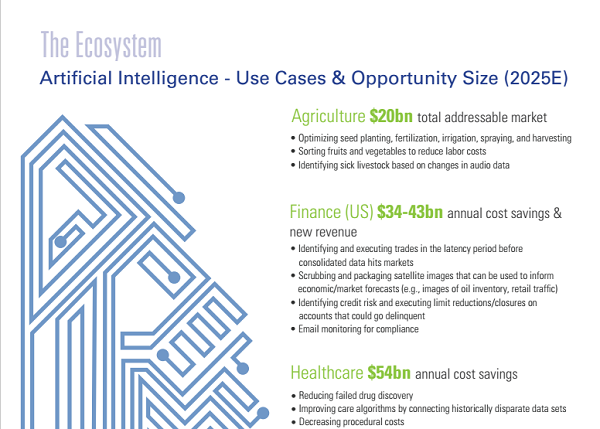
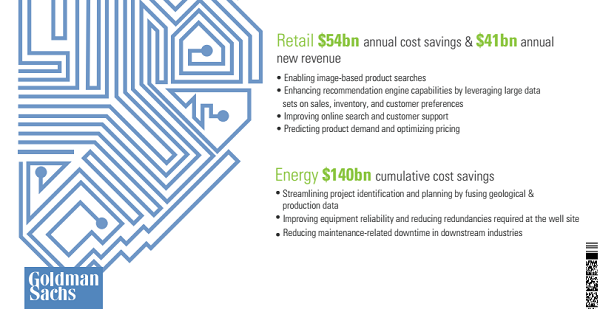
The report opens by pinpointing the core issue right from the start,The Greatest Value of Artificial Intelligence Lies in Enhancing ProductivityGoldman Sachs has even pinned its hopes on AI to fulfill the historic mission of ending the stagnation in U.S. productivity growth since the 21st century and restoring the glory of the 1990s (improving productivity and ending the period of stagnant productivity growth in the U.S.).What an AI version.Make America Great Again。
Goldman Sachs projects that from today through 2025, artificial intelligence is expected to directly reduce total labor hours by approximately 0.5%–1.5%. Throughout the Goldman Sachs report, enhancing productivity is a central theme repeatedly emphasized. Much like Comrade Deng Xiaoping’s principle of focusing on economic construction, Goldman Sachs incisively points out that any AI failing to boost actual productivity is merely a gimmick. Therefore, AI entrepreneurs, before assessing your product demand, ask yourselves three times: Does it enhance productivity? Does it enhance productivity? Does it enhance productivity?
In fact, hidden behind the numbers are some conclusions worth pondering. For instance, a longstanding pain point in the AI sector (particularly within China’s AI industry) is that, to date, all successful AI business models have been B2B or B2B2C, with virtually no successful B2C cases (a salute to Mobvoi, the pioneer of AI B2C in China!).
In fact, by simply reversing the perspective on Goldman Sachs’ projected figures—namely, a 0.5% to 1.5% increase in labor productivity (or reduction in labor hours)—it becomes evident that AI holds far greater appeal for industrial, enterprise, and B2B scenarios than for consumer-facing (C-end) applications. For an office worker with an eight-hour workday, a tool that reduces labor time by 1.5% merely saves about seven minutes. This small gain could easily be offset by slightly reducing personal distractions at work, meaning there is no compelling necessity to rely on AI. For enterprises, however, a 1% improvement in efficiency, a 1% reduction in costs, or a 1% increase in revenue represents a significant achievement.
How many traditional industries—such as the aviation industry—have overall profit margins hovering around 1%? In such contexts, a 1% improvement in efficiency is nothing short of remarkable. This also explains why, to date, traditional sectors such as finance, security, healthcare, and retail have benefited the most from AI globally.
Furthermore, this figure likely debunks the myths propagated by AI evangelists: although we often hear stories about AI boosting efficiency by orders of magnitude, within the broader industrial context, its marginal impact after being integrated into entire production workflows will not be as significant in the short term as these narratives suggest.
AI excels at significantly enhancing the efficiency of existing systems, solutions, and methodologies, rather than creating new demands.This fundamentally positions AI as an industry that must rely on existing demands and achieve incremental improvements to current solutions.
In my personal view, the aspiration for success in the AI industry’s B2C sector is likely a misconception held by Chinese investors and practitioners who have reaped substantial rewards from the previous waves of mobile internet and O2O (Online-to-Offline) in the B2C space. In the Chinese context, B2B businesses are often labeled as having slow growth, limited potential market size, and restricted room for imagination. In contrast, B2C models are characterized by strong explosive growth potential and vast imaginative space.
On the other hand, China’s B2B market is currently far smaller than its B2C counterpart, forcing everyone to seek AI-driven opportunities within the B2C sector. In the United States, this has never been an issue, as the B2B market is roughly comparable in scale to the B2C market. Throughout Goldman Sachs’ industry reports, B2B or B2B2C models appear to be an inherent characteristic across the entire AI lifecycle—a default business model configuration that has never been regarded as a problem in the U.S.
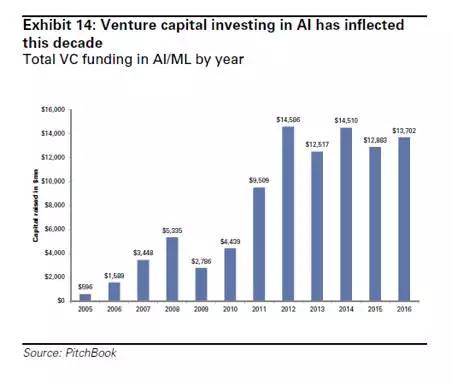
In China, 2016 is often referred to as “Year One of AI,” because the emergence of AlphaGo suddenly ignited a frenzy in AI venture capital and startups. This, however, was essentially a reenactment of the AI investment boom that had taken place in the United States four or five years earlier.
The figure below shows that the wave of AI investment in the United States initially emerged in 2011 or 2012. The year 2012 marked Google’s development of a cat face recognition application using deep learning, which represented the first successful industrial-scale application of deep learning, ushering in the current era of AI. Therefore, to understand the current trajectory of China’s AI industry, the experience of the United States from four to five years ago serves as a valuable reference.
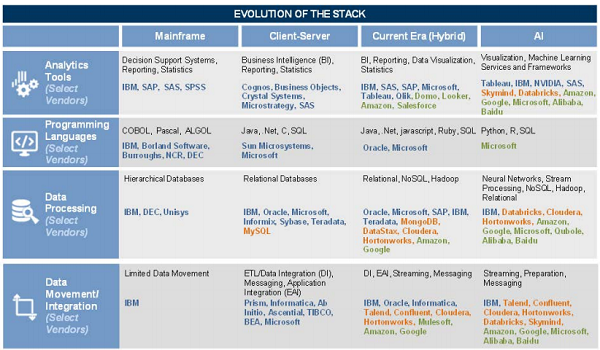
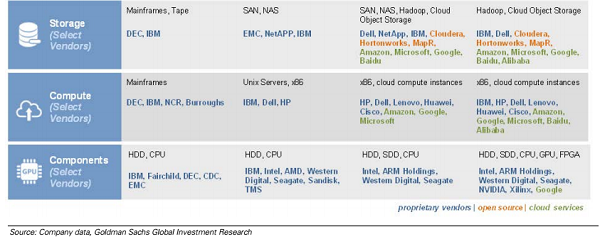
Goldman Sachs’ report provides an overview of the upstream and downstream segments of the data industry, as well as the turnover of key players across these segments with generational shifts (see figure above).
From the top-level analytical application layer to the bottom-level silicon wafer layer, the players in the data industry have undergone significant changes. The emergence of AI has also led to an increasing number of fine-grained niche markets within the entire landscape, thereby fostering a growing number of unicorns. For instance, Databricks, which focuses on data integration, migration, and computational support, has become a new Silicon Valley unicorn by leveraging the tailwinds of AI.
However, in certain segments of the industry, major players are gaining increasing influence due to their monopoly over vast computational resources and data. For instance, the compute and storage components, typically classified under IaaS, are largely controlled by giants such as Amazon and Alibaba. A report from Goldman Sachs suggests that small players may find greater opportunities for breakthroughs in data movement/integration and data processing at the PaaS level, as well as in analytical tools at the SaaS level.
The highlight and focal point of the entire Goldman Sachs report is the formal introduction of the concept of AI-aaS (Artificial Intelligence as a Service), accompanied by a comprehensive analysis of this field. AI-aaS segments the industry based on AI product forms (see figure below), rather than following the traditional SaaS/PaaS/IaaS segmentation model.
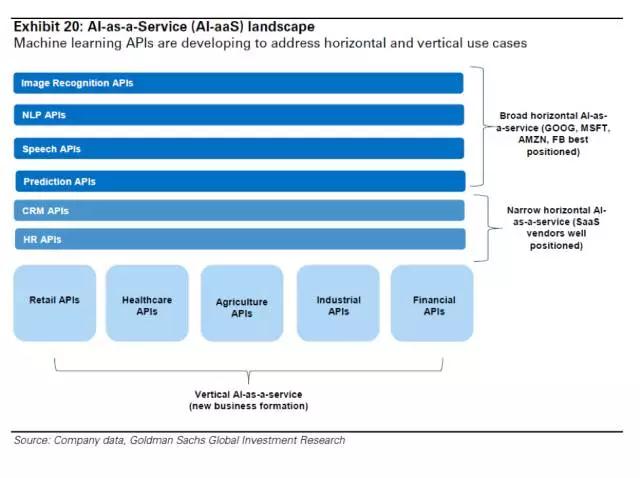
Section 1As a horizontal, general-purpose AI-as-a-Service (AI-aaS) offering, it is built upon four core modules: image recognition, natural language processing, speech recognition, and predictive modeling. These use cases represent demands that arise across nearly every industry and within each business segment of those industries, making them the most universally applicable AI applications. In this sector, Goldman Sachs points out that major players (such as GOOG, MSFT, AMZN, etc.) dominate, as they possess the most comprehensive datasets and the largest-scale computational resources.
Section 2, they similarly span across various industries but manifest as AI applications within different business segments, such as AI models for Human Resources (HR) and AI-driven Customer Relationship Management (CRM) systems. This category of AI applications is most suitable for SaaS providers to enter, as they possess the most granular data within specific business segments. For instance, Salesforce undoubtedly holds the largest volume of CRM data; therefore, it clearly has the greatest advantage when developing horizontal, general-purpose CRM AI tools.
Section 3This approach involves examining the industry from a vertical perspective, segmenting it by sector (such as healthcare, agriculture, retail, and energy), and customizing and optimizing the tools and algorithms mentioned in the previous two sections for specific industries to develop industry-specific applications. The report points out that, currently, this third segment is the most fertile ground for incubating startups and represents the key dimension that AI startups should prioritize.
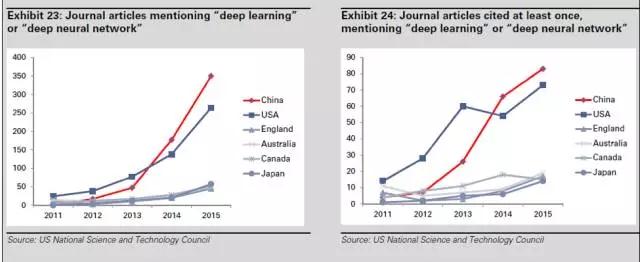
China is the only market, aside from the United States, analyzed in the entire Goldman Sachs report. It is worth noting first the keen sensitivity of Chinese scientists to this emerging industry. According to the latest data (see chart above), China has surpassed the United States to become the global leader in both the total number and citation count of locally published papers featuring the keywords “deep learning” and “deep neural networks.”
Goldman Sachs also provided some interesting data: 60% and 12.5% of China’s AI companies, totaling nearly three-quarters of the entire industry, are focused on computer vision and speech recognition.In the entire AI industry, 70% of companies are engaged in application development, while only 30% focus on AI algorithms themselves.
From this perspective, the Chinese market’s characteristics—being application-oriented, fast-paced, and focused on proximity to monetization—are once again highlighted. In Goldman Sachs’ final global list of AI companies, most of the Chinese entrants are star computer vision (CV) firms similar to Face++. Regarding the global market, Goldman Sachs has undoubtedly given China a very high assessment: “In our view, the key players at the forefront of artificial intelligence are likely to continue to be in the US and China.”
All we hope is that China’s homegrown AI entrepreneurs will prove worthy of such acclaim and recognition over the next decade, and once again outperform the United States, as they did in the era of mobile internet.
Finally, let us turn to the medical AI industry in which the author is engaged. As a vast nation where 17.5% of GDP is allocated to healthcare expenditure and where healthcare has increasingly become a profound social issue, virtually any new business model in the United States can be linked to the medical sector.
Among the several most significant medical applications cited in the Goldman Sachs report, the improvement of pharmaceutical R&D efficiency by pharmaceutical companies, the control of medical expenses, and the enhancement of hospital and physician efficiency, representing the three primary application areas of AI-aaS. For instance, a key AI application highlighted in the report is the use of artificial intelligence to address pain points in pharmaceutical companies’ research and development (R&D).
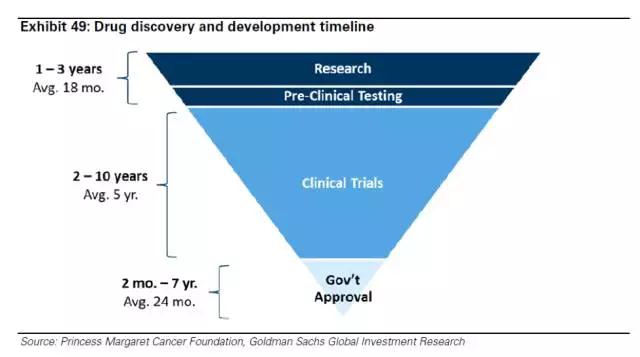
In Western societies, drug development is an extremely long-term process, particularly because drugs must undergo a protracted clinical trial process after leaving the laboratory to obtain FDA approval. As shown in Figure 7, on average, it takes at least 7–10 years for a drug to go from development to approval.
Clinical trials, with their multiple phases, are akin to a series of perilous gateways; failure at any stage means that billions or even tens of billions of dollars in R&D investment have gone down the drain (which is why the stock prices of pharmaceutical companies often surge whenever a new drug successfully passes a particular phase of clinical trials).During the drug development phase, pharmaceutical companies cannot accurately predict a drug’s ultimate efficacy, safety profile, or its likelihood of passing clinical trials and obtaining FDA approval.
This is precisely where AI comes into play, with a large number of AI startups in the U.S. targeting this significant pain point for pharmaceutical companies.Utilizing artificial intelligence methods and evidence from molecular biology and clinical pharmacology to assess a drug’s efficacy, safety, and probability of regulatory approval.
This approach holds the promise of fundamentally disrupting the drug development process, enabling pharmaceutical companies to batch-test a vast array of molecules with different structural configurations while leveraging artificial intelligence to determine which candidates are most worthy of advancement into clinical trials, thereby significantly enhancing R&D efficiency and risk control capabilities.
Another notable case lies in cost containment within health insurance.. It is well known that overmedicalization is a global issue. On one hand, it is driven by financial incentives; on the other, limitations in clinical technology necessitate overmedicalization in certain cases to rule out differential diagnoses and enhance safety margins.
The value of machine learning and artificial intelligence lies in their ability to more accurately assess the appropriateness of medical procedures, thereby effectively reducing unnecessary interventions and expenditures, and achieving cost containment. For commercial insurers, such cost reduction (i.e., lower claims payouts) is a core objective and indeed fundamental to their viability. It is therefore unsurprising that commercial health insurers are willing to invest heavily in acquiring such technological solutions.
However, in China, the aforementioned business model remains fraught with uncertainty. First and foremost, new drug R&D is neither the primary focus nor the core competency of domestic pharmaceutical companies. On the contrary, China’s pharmaceutical market is heavily reliant on sales and distribution channels—a situation largely attributable to the current stage of development of the industry as a whole.
Therefore, clinical trials have never been the core priority for domestic Chinese pharmaceutical companies.. Instead, it is when foreign pharmaceutical companies seek to introduce their products into the Chinese market that additional clinical trial and approval requirements imposed by the China Food and Drug Administration (CFDA) generate substantial related demand. Nevertheless, China’s clinical trial market remains in a very early stage, with various players preoccupied with rapid expansion, securing market share, and establishing their presence. Under these circumstances, the value of AI cannot be most directly demonstrated.
Another potential of medical AIMajor Buyers—Health Insurance Companies, China faces similar challenges. To date, 90% of China’s health insurance market is dominated by government-run basic medical insurance (commonly referred to as social insurance), while commercial health insurance holds only a minimal share. The underlying incentives for cost containment differ markedly between commercial insurers and the government. This distinction can be understood by comparing the differing motivational structures and drivers that planned economies and commodity-based market economies impose on individuals or companies. You know what I mean.
As another major player in the healthcare industry, hospitals face significant challenges in becoming the optimal setting for the commercialization of medical AI in both China and the United States. In reality, hospital operations involve the most numerous and complex workflows, presenting the greatest need for optimization; thus, they should arguably benefit the most from AI-driven business process improvements.
However, from a business perspective, the core imperative for hospitals is not merely profit generation and cost reduction, but rather ensuring medical quality and safety while enhancing clinical and technical expertise, as these constitute the very foundation of a hospital’s existence. In a sense, hospitals are quite similar to universities: while financial considerations are not ignored, an excessive focus on revenue precludes the possibility of becoming a great hospital (or university). Furthermore, due to the extreme emphasis on data security and privacy, coupled with the inherent conservatism and self-contained nature of clinical medicine, the implementation and adoption of AI face even greater obstacles.
Therefore, in the United States, the adoption of medical AI in hospitals often requires pressure from commercial health insurers. Currently, the hospitals most open to AI and digitalization are typically affiliated with large healthcare groups (such as Kaiser Permanente and Mayo Clinic). The defining characteristic of these large healthcare groups lies inThe group comprises both hospitals and insurance companies, with its ultimate profitability relying on health insurance.
Therefore, insurers within the group will “compel” hospitals in the system to open up data and adopt new technologies, thereby facilitating cost containment efforts by the insurers (after all, the most effective means of cost containment lies in directly intervening in clinicians’ decision-making at the point of care, rather than engaging in price negotiations after treatments have already been delivered).
In China, the lack of influence held by commercial health insurance has deprived many economically viable business models of the fertile ground needed for growth, thereby discouraging capital and talent from venturing into the healthcare sector—a closed yet lucrative “gold mine.” Under such circumstances, it is hardly surprising that there is a scarcity of successful cases and products.
Yet we are also seeing an increasing amount of good news. For example, although commercial health insurance in China is still in its infancy, its growth rate has been remarkable, doubling every year. When this “infant” matures and gains bargaining power vis-à-vis hospitals, it will mark the time when medical AI can be deployed at scale. In addition, the growth of non-profit private hospitals (as opposed to for-profit private hospitals such as those associated with the Putian network) and independent third-party medical institutions will inevitably further drive the commercialization of this industry.
As mentioned above,The Fundamental Utility of Artificial Intelligence Lies in Optimizing and Enhancing Productivity, and China’s current healthcare and pharmaceutical market represents a vast blue ocean. In the early stages of chaos as the overall landscape undergoes gradual fragmentation, many companies have been invoking the banner of artificial intelligence while engaging in rudimentary ground-grabbing tactics. This has indirectly led to intense market hype around medical AI, yet successful commercialization cases remain conspicuously absent, thereby fostering concern and hesitation among healthcare professionals regarding the concept of medical AI.
However, in the long run, the development of medical AI will be gradually validated and accepted by the market. As competition intensifies and commercial drivers strengthen, the demands of various institutions for business optimization, efficiency improvement, and cost reduction will become increasingly concrete and quantifiable. When that time comes, AI services that can genuinely enhance productivity will undoubtedly bring new hope to China’s healthcare industry, which is currently facing significant challenges.
Author: Zhang Shaodian, Ph.D. from Columbia University in the United States; Member of the Theory and Education Committee of the Chinese Medical Information Association; Founder and CEO of Shanghai Senyi Medical Technology Co., Ltd.