

IBM Watson Identifies Five Novel ALS-Associated Genes, Accelerating Drug Discovery for Amyotrophic Lateral Sclerosis
Amyotrophic Lateral Sclerosis (ALS) is the full name of the condition commonly known as "Lou Gehrig's disease," with the English abbreviation ALS. It is a fatal neurological disorder characterized by muscle weakness, fasciculations, tremors, degeneration, and atrophy. In severe cases, patients may experience dysphagia, coughing, and respiratory decline, ultimately losing mobility and the ability to perform activities of daily living. Currently, only one FDA-approved drug is available, demonstrating modest efficacy. Public awareness of ALS largely stems from the Ice Bucket Challenge, which gained widespread popularity two years ago. Participants in the challenge poured a bucket of ice water over their heads, recorded the process, uploaded the videos to social media, and made donations to support ALS research.
IBM Watson’s applications in healthcare have primarily focused on the diagnosis and treatment of cancer, and it has now achieved remarkable results in research on amyotrophic lateral sclerosis (ALS). This month, IBM announced that, through collaboration with the Barrow Neurological Institute in Arizona, USA, Watson has identified five genes associated with ALS. This marks the first application of IBM Watson in neuroscience, suggesting its potential for use in research on other neurological disorders.
“There are many opportunities to work alongside Watson,” said Dr. Robert Bowser, Director of the ALS Research Center at the Barrow Neurological Institute. “Watson has greater potential for applications in neuroscience. We aim to leverage IBM Watson’s enhanced capabilities to tackle the complexities of the human body’s most intricate organ, helping us identify innovative and more effective treatments for ALS.”
Watson analyzed all published literature and papers related to amyotrophic lateral sclerosis (ALS), as well as proteins known to be associated with the disease. It evaluated nearly 1,500 genes in the human genome and predicted which ones might be linked to ALS.
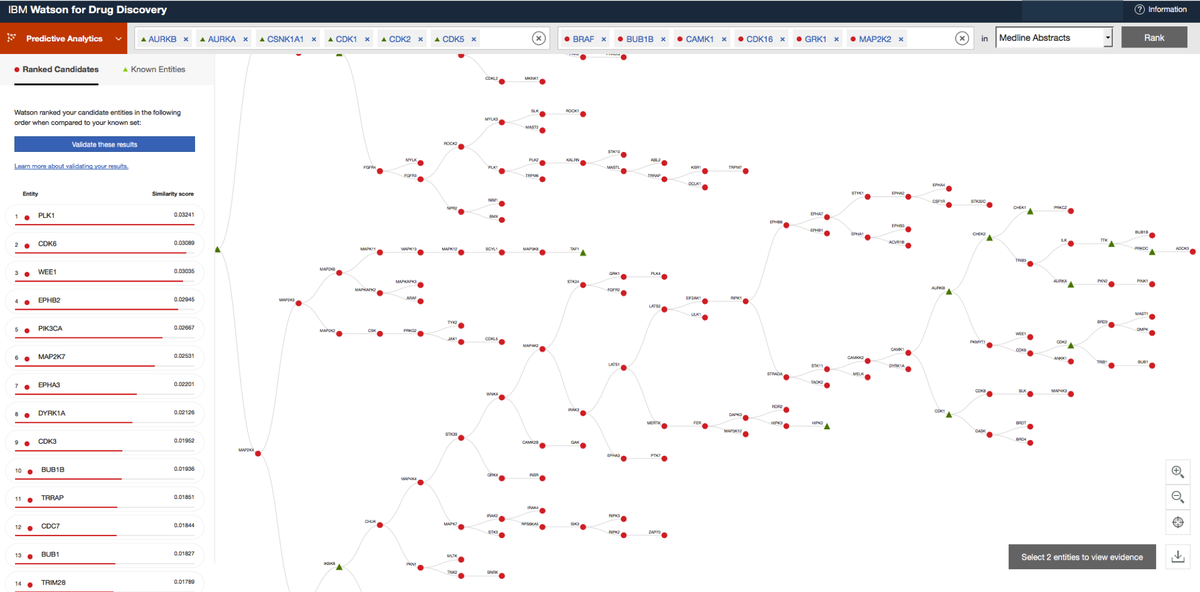
Watson for Drug Discovery System
Through computational analysis, Watson identified a total of 10 genes associated with amyotrophic lateral sclerosis (ALS). The research team at the Barrow Neurological Institute confirmed that eight of these genes are indeed linked to ALS, five of which were discovered for the first time.
This discovery provides new genetic targets for ALS researchers, paving the way for the development of novel therapeutics and offering hope for conquering one of the most devastating and fatal diseases worldwide. The project is named the Watson for Drug Discovery system.
Dr. Bowser stated, “We are very pleased with this discovery.” Watson completed the screening of nearly 1,500 genes within a few months, a process that would have taken human researchers several years.
Dr. Tina Moen, Deputy Chief Health Officer at Watson Health, stated, “Watson for Drug Discovery can help research organizations identify the most promising drug candidates more rapidly. We are honored to have supported Barrow’s research and identified ALS-related genes.”