

Goldman Sachs AI Ecosystem Report: Artificial Intelligence as a Solution for Drug Discovery, Healthcare Cost Control, and Clinical & Hospital Operational Efficiency
At the end of 2016, Goldman Sachs released a landmark 99-page artificial intelligence report titled “AI, Machine Learning and Data Fuel the Future of Productivity.”
This report centers on artificial intelligence (AI), elucidating its ecosystem and future prospects, while illustrating AI’s impact across sectors such as healthcare, agriculture, finance, retail, and energy. The report defines AI as the scientific and engineering discipline dedicated to creating intelligent machines and computer programs capable of learning and solving problems in ways that mimic human intelligence. This field encompasses natural language processing and translation, visual perception and pattern recognition, and decision-making, among other areas. In recent years, the applications of machine learning (ML) and deep learning (DL) have expanded rapidly, with data, faster hardware, and improved algorithms serving as the three foundational pillars driving AI’s advancement. Below, VCBeat (WeChat ID: vcbeat) presents selected excerpts from the report regarding AI’s impact on the healthcare sector, offering a glimpse into the future direction of medical care. The report indicates that by 2025, annual healthcare costs are projected to be reduced by $54 billion.
Machine learning holds broad application prospects in the healthcare sector. The healthcare industry requires rich, well-defined datasets and continuous patient monitoring, while clinical outcomes exhibit significant variability. Machine learning offers the potential for substantial returns across numerous subsectors, including drug discovery, diagnostic testing analysis, treatment optimization, and patient monitoring. With the ongoing integration of artificial intelligence and machine learning, it is expected that “de-risking” will be significantly achieved in the new drug development process. This will not only save approximately $26 billion annually in R&D costs but also enhance efficiency in the global health information sector, yielding cost savings valued at over $28 billion per year.
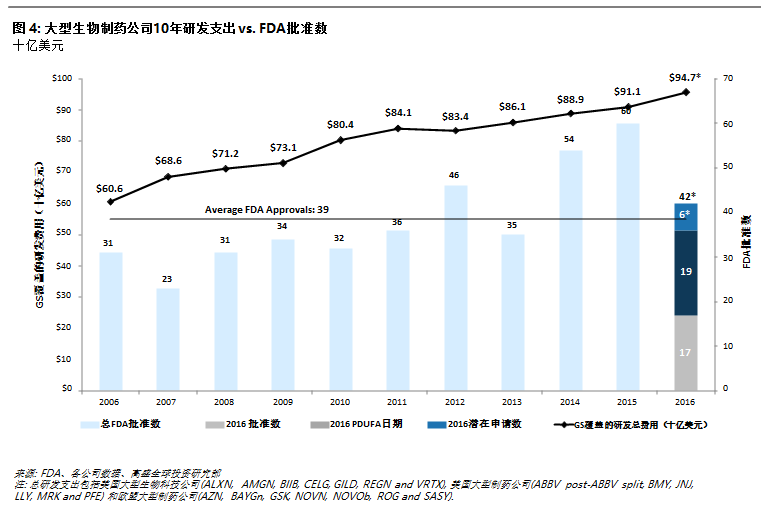
Drug Discovery and Development.Integrating machine learning into the drug development process holds the potential to enhance development efficiency. Machine learning can not only accelerate timelines but also improve the probability of success (POS) for drugs reaching late-stage clinical trials. David Grainger, a partner at Medicxi Ventures, believes that the False Discovery Rate (FDR) is a statistical phenomenon, and mitigating FDR could potentially halve the risks associated with late-stage trials. Furthermore, in the early stages of drug discovery, the prevailing virtual screening method, known as “high-throughput screening,” is highly susceptible to FDR. Halving the risk of Phase III trials could save large pharmaceutical companies billions of dollars, impacting their R&D expenditures—which exceed $90 billion—and delivering meaningful returns. This would enable them to reallocate resources toward pursuing more promising opportunities.
Note: Virtual screening (VS), also known as computational screening, refers to the use of molecular docking software on computers to simulate the interactions between target sites and candidate drugs and calculate their binding affinity prior to biological activity screening. This approach reduces the number of compounds requiring experimental screening while enhancing the efficiency of lead compound discovery.
Although the substantial costs associated with late-stage trials often focus on design elements of clinical trials, we believe that applying AI/ML to optimize decision-making in late-stage phases—such as eligibility criteria, sample size, and study duration—can also achieve meaningful efficiency gains.
Physician/Hospital Efficiency.Due to factors such as regulation and fragmentation, the U.S. healthcare system has historically been slow to adopt new technologies. In addition to systemic challenges, the process from drug discovery to the integration of new medications into clinical practice by physicians and clinics is often protracted and discontinuous.
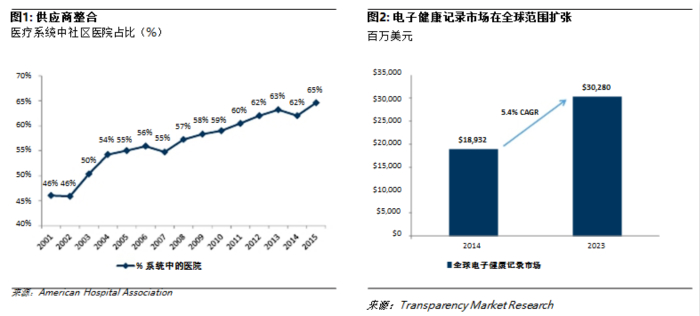
Data from the U.S. market research and consulting firm Transparency Market Research indicates that a series of directives issued by the U.S. government under the American Recovery and Reinvestment Act have driven rapid growth in areas such as electronic health records, with the global market projected to reach approximately $30 billion by 2023. The aggregation of data, continuous improvements in data capture technologies, and the ongoing decline in the number of independent hospitals have created an unprecedented opportunity for large-scale data utilization. These developments will also enhance the capabilities of machine learning algorithms and artificial intelligence, thereby improving speed, reducing costs, and increasing accuracy across various aspects of the healthcare sector.
London-based Google DeepMind is collaborating with the UK’s National Health Service (NHS) to develop an app designed to monitor patients with kidney disease, as well as a platform aimed at supporting diagnostic decision-making, formerly known as “Patients at Risk.” The key to any AI/ML system lies in massive amounts of data; therefore, DeepMind and the NHS have reached a data-sharing agreement under which the NHS will provide DeepMind with dynamic streams of new data and historical data to train its algorithms. Only with such vast datasets is real-time analysis of clinical data feasible. Naturally, if DeepMind can effectively access patient data on an ongoing basis, the insights it can offer will extend far beyond kidney disease.
Drug Discovery and Development.One of the major pain points in the healthcare sector is the time and cost associated with drug discovery and development. According to data from the Tufts Center for the Study of Drug Development, it takes an average of approximately 97 months for a new drug to go from discovery to FDA approval. Although a sustained focus on specialized technologies can help shorten this timeline, the cost of developing new drugs continues to rise. Data from Deloitte shows that since 2010, the cost of developing approved drugs for 12 major pharmaceutical companies has increased by 33%, reaching approximately $1.6 billion per year.
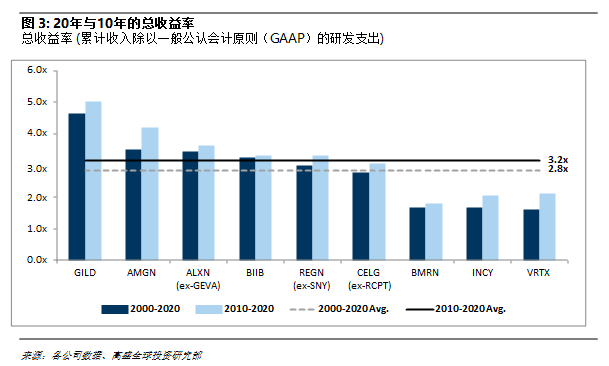
R&D Returns.Productivity in biopharmaceutical R&D remains a highly contentious issue. The cost of developing a successful drug continues to rise, while the revenue return environment for new drug development is far from optimistic due to unfavorable factors in reimbursement systems, declining patient volumes, and intense inter-company competition. Although we projected that R&D returns from 2010 to 2020 would improve relative to those from 2000 to 2010, the actual change between the two periods was negligible. Furthermore, one of the most significant adverse factors affecting R&D returns lies in failed R&D projects, particularly drugs that have reached late-stage clinical trials; the annual costs associated with these failures are estimated to exceed $40 billion.
Efficiency of Doctors/Hospitals.A particular challenge in the medical field remains that physicians’ clinical practice lags significantly behind the approval of new drugs and novel therapies. Consequently, many machine learning and artificial intelligence experts in healthcare are continuously encouraging major healthcare providers to integrate modern machine learning tools into their workflows, thereby enabling them to fully leverage the vast amounts of collected and published medical data.
Machine learning and artificial intelligence hold promise for narrowing the time gap between drug discovery and clinical practice, while also optimizing therapeutic interventions. For instance, a 2009 study on hepatobiliary radiology by the Radiological Society of North America revealed that 23% of second opinions altered diagnostic conclusions—an area that machine learning companies specializing in medical imaging are well-positioned to address. Furthermore, companies leveraging machine learning for disease assessment at the genomic level, such as Deep Genomics, are helping providers precisely target interventions to deliver more effective and personalized treatments.
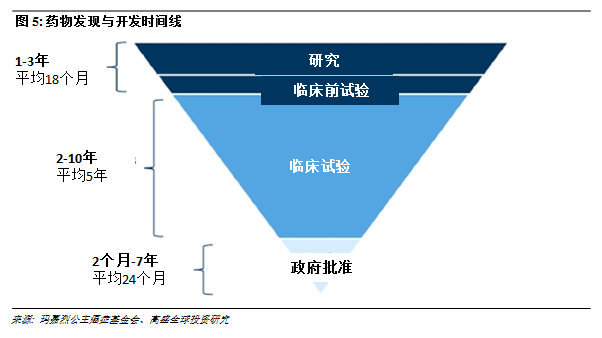
Currently, drug discovery and development is an extremely lengthy process of research, testing, and approval, often spanning more than 10 years. According to the Tufts Center for the Study of Drug Development, it takes an average of 96.8 months for a drug to progress from Phase I clinical trials to FDA approval. The development of novel therapies presents a unique challenge, not only due to the protracted timeline but also because the probability of success (POS) at each stage of the development process remains remarkably low.
Drug discovery begins with initial target identification. Once a target is identified, high-throughput screening (HTS) is typically employed for “hit discovery.” HTS is highly costly and is performed automatically by robots. By conducting millions of assays simultaneously, it identifies compounds with the greatest potential to engage the target, thereby increasing the probability of achieving a “hit” in drug discovery. The resulting hits are optimized into lead compounds, which then undergo further in-depth optimization to prepare for entry into the preclinical drug development process. This entire process usually takes 1–3 years before a drug candidate enters Phase I clinical trials, yet its probability of success (POS) is only 20%.
Phase I: Focus on safety; healthy volunteers (POS 20%).
Phase II: Focus on efficacy; volunteers with a specific disease or health condition (POS 40%).
Phase III: Further collection of information on safety and efficacy, dosage, and drug combinations in diverse populations. The number of volunteers ranges from hundreds to thousands (POS 60%).
In the healthcare sector, there is a wide range of cases that fully leverage the advantages of machine learning and AI. In these instances, decisions and/or predictions are driven not by human understanding or intuition, but by data—specifically, by the consideration of various influencing factors that far exceed the scope of human capability. Deep learning, in particular, has demonstrated its unique potential by utilizing knowledge acquired from different tasks to enhance performance in other tasks.
Reduce discovery failures and increase POS.Significant capital is invested at substantial opportunity costs to explore and research new therapeutic approaches, yet the probability of success (POS) in reaching Phase I clinical trials is only approximately 20%. Consequently, scholars have increasingly advocated for the use of AI/ML to develop effective and accurate virtual screening methods as a replacement for expensive and time-consuming high-throughput screening processes.
Recently, researchers from Google and Stanford have been working on leveraging deep learning to develop virtual screening techniques aimed at replacing or enhancing traditional high-throughput screening (HTS) processes, thereby improving screening speed and success rates. By applying deep learning, researchers can enable information sharing across numerous experiments involving multiple targets. As Bharath Ramsundar et al. stated in one of their machine learning-related papers:
“Our experiments demonstrate that deep neural networks outperform all other methods... in particular, deep neural networks significantly surpass all existing commercial solutions.“It achieved near-perfect predictive quality across many targets, making it particularly suitable for use as a virtual screening tool. In summary, deep learning offers the opportunity to establish virtual screening as a standard step in the drug design pipeline.” (Massively Multitask Networks for Drug Discovery, 2015/2/6)
In 2012, Merck & Co. sponsored a challenge initiated by the data science company Kaggle, aimed at identifying statistical techniques for virtual screening. Currently, Kaggle has begun testing the applications of deep learning and AI, and has entered into a collaboration with Atomwise, an AI-driven drug discovery startup. Recently, Atomwise leveraged AI technology to analyze and test more than 7,000 existing drugs in less than a day, contributing to the search for therapeutic solutions for the Ebola virus. According to the company’s statistics, this analysis would have taken months or even years to complete using traditional methods.
Improve the efficiency of doctors and hospitals.We have already witnessed some early successes in the application of machine learning, such as improving diagnostics (Enlitic, DeepMind Health), analyzing radiology results (Zebra Medical Vision, Bay Labs), advancing genomic medicine (Deep Genomics), and even leveraging AI to treat depression, anxiety, and PTSD (Ginger.io). As the digitization and aggregation of medical data continue to evolve, healthcare data will become more accessible. This enables AI/ML not only to reduce costs associated with administrative tasks but also to integrate previously siloed datasets through algorithms, thereby improving healthcare delivery itself. Ultimately, by accounting for factors beyond human capacity, AI/ML can help providers diagnose and treat patients with greater efficiency.
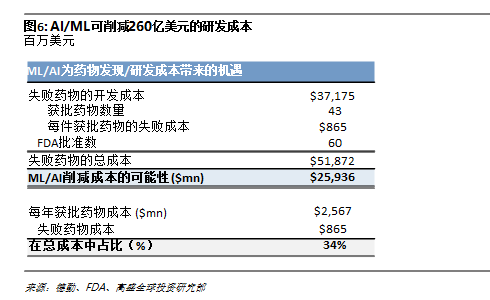
The Cost of Drug Discovery Failures.According to our analysis, by implementing machine learning and artificial intelligence, people are expected to halve the risks associated with drug development and discovery in the following scenarios:
· The average annual development cost for an approved drug is $1.6 billion, including costs associated with failed drugs (Deloitte).
· The annual cost of failed drugs is $30 billion, a sum that could be evenly distributed among the pool of approved drugs (Deloitte).
In 2015, the FDA approved 60 drugs. This means that when accounting for the R&D costs of failed candidates, the cost per approved drug in that year was approximately $698 million, with nearly $42 billion spent on failed drugs. We believe that machine learning and artificial intelligence can halve the risks in the new drug development process: by 2025, the global pharmaceutical industry could save approximately $26 billion annually.
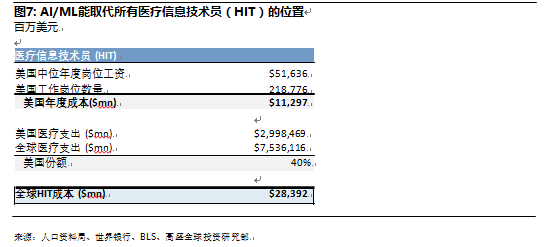
Accelerate the realization of benefits from transitioning to electronic health records.Currently, annual compensation for healthcare information technology professionals in the United States alone has reached approximately $7 billion. According to data from the U.S. Bureau of Labor Statistics (BLS), driven by population aging and government demands for digital transformation, employment prospects for healthcare IT professionals are projected to increase substantially between 2014 and 2024: while the growth rate for all other occupations stands at 7%, this sector is expected to see a remarkable 15% growth, far exceeding the average. However, given that many tasks within this profession are highly susceptible to automation and software-based substitution, we believe that machine learning and AI have the potential to replace nearly all such jobs.
The BLS states that the role of medical information technology professionals is to ensure the quality, accuracy, accessibility, and security of patient medical data used for reimbursement and/or research, while leveraging technical analysis of patient data to improve healthcare quality and control costs. The increasingly widespread application of AI/ML in the healthcare industry is likely to have a significant impact on these occupations. Based on estimates of per capita healthcare expenditure and global spending shares, AI/ML is projected to reduce annual global costs by more than $28 billion by 2025.
In summary, machine learning and artificial intelligence can reduce the costs of drug discovery and development, improve the probability of success (POS), and enhance efficiency for suppliers and healthcare facilities. Consequently, they have the potential to significantly transform the prospects of large pharmaceutical companies and the entire healthcare system. We have good reason to believe that, in the long run, the adoption of machine learning and artificial intelligence technologies will surge, shortening R&D timelines, reducing losses from failed drug candidates, and intensifying competition in drug development.
Furthermore, efficiency gains and automation may cause some disruption among healthcare professionals and companies, particularly between those who interpret medical results and diagnoses—such as radiologists, specialists providing second opinions, and administrative or support staff—and those who directly deliver care or perform surgeries. We believe this disruption will persist in the long term, as many technologies are still in the early stages of development, and the cost of adopting these technologies may be relatively high compared to other improvement mechanisms.
Although AI/ML presents significant opportunities across many subfields of healthcare, barriers to technology adoption remain.
Cost.Implementing AI/ML requires equipping organizations with the necessary tools and capabilities, which can be prohibitively expensive. This is particularly pertinent in the healthcare industry, where medical costs remain a major public concern. To ensure that machine learning algorithms effectively leverage data, substantial capital investment and specialized expertise are required; merely securing sufficient computational power entails significant financial expenditure.
Interpretability.Algorithms need to process multiple datasets, which often creates so-called black boxes. The healthcare industry, which has long been subject to strict regulation, may consequently see a delay in the adoption of AI/ML applications.
Talent.Barriers to adopting AI/ML technologies may also stem from the aggregation of talent in related fields. In 2013, Google paid over $400 million to acquire DeepMind Technologies; according to news reports, the team consisted of only about a dozen members at that time. The difficulty of assembling such a group of highly skilled professionals, along with the resulting high costs, can be daunting.
Data.Although the U.S. government has enacted regulations to facilitate the digitization of electronic health records, transitioning from predominantly paper-based systems to fully electronic ones remains challenging. Furthermore, while many institutions have met the “Meaningful Use” criteria, the fragmentation and limited accessibility of critical patient data continue to impede further progress in healthcare reform.
The above views are derived from Goldman Sachs’ AI report, “AI, Machine Learning and Data Fuel the Future of Productivity,” compiled and translated by VCBeat.