

Grand Rounds Files IPO Prospectus: Leveraging Data Science to Democratize Access to Top-Tier Medical Care
In the spring of 2016, 37-year-old Owen Tripp was living his Silicon Valley dream. His company, Grand Rounds, had raised $100 million in funding and reached a valuation of $1 billion.
But one day, he suddenly noticed something wrong with the hearing in his right ear. Dissatisfied with the specialist recommended by his private physician, Tripp used Grand Rounds, a company he co-founded, to find an MRI specialist. The diagnosis was a schwannoma. He faced two treatment options: preserving his hearing or maintaining normal facial expressions. Due to professional considerations, he ultimately chose to sacrifice the hearing in his right ear. This experience will forever remind Tripp of the direction Grand Rounds continues to strive toward—providing patients with the best possible choices.

In 2011, Tripp co-founder and Stanford University radiologist Rusty Hofmann came up with the startup idea out of “sheer frustration.” Many patients mailed their medical records and documents, hoping that Hofmann, who specializes in diagnosing vascular embolisms, could offer assistance. However, there were many cases where he simply could not help, and the submitted materials often lacked essential information. He wondered why no business existed specifically dedicated to triaging patient needs for medical specialists.
Later, his own son developed aplastic anemia and required a bone marrow transplant. Leveraging his professional network, Hofmann connected with top-tier specialists, enabling his son to successfully undergo the procedure. Hofmann remarked that he could feel the pain inflicted on patients by the scarcity of medical resources in every aspect of life. “My son was cured, but what about those whose fathers are not doctors? Someone must step up to change this status quo.”
He later met with Tripp, the founder of Reputation.com, and the two instantly clicked, turning the idea into a company. Grand Rounds’ initial product was to provide second medical opinions for patients suffering from serious illnesses such as cancer or those undergoing major surgeries. They were surprised to find that, among the first 150 cases, Grand Rounds physicians overturned the initial diagnosis or proposed new treatment plans in two-thirds of the instances, with most errors attributable to the original diagnosing physicians.
Starting with Treatment Improvement, Ending with Doctor-Patient Matching
It is estimated that between 100,000 and 400,000 deaths occur annually in the United States due to medical errors, with the majority of these errors occurring in diagnosis or treatment. A 2012 study indicated that one-third of the U.S. healthcare budget (approximately $750 billion at the time) was wasted on ineffective medical processes.
Thirty years ago, it was common practice for health insurance companies to request a second opinion before patients underwent major surgery. The company name “Grand Rounds” is derived from this longstanding medical tradition, in which multiple physicians consult on complex cases. Their initial objective was to reduce the rate of medical errors.
However, Grand Rounds’ investors saw greater opportunities for the company beyond improving treatment. Bryan Roberts, a prominent investor from Venrock, believed that Grand Rounds could better serve patients by helping them find suitable doctors. A few years ago, he began recommending Grand Rounds’ services to entrepreneurs within Venrock’s portfolio. Within months, he received several thank-you notes saying things like, “Thanks to your recommendation, my father was saved.”
Since then, Grand Rounds has made physician-patient matching its core business. The company’s current “inventory” of physicians stands at approximately 700,000, accounting for 96% of all doctors in the United States, ensuring that patients can readily find suitable providers. Grand Rounds aims to promptly connect patients with physicians who can deliver accurate diagnoses and precisely match them with specialists capable of providing second opinions.
Within Grand Rounds’ vast physician database, every medical specialist is rated based on data from previously handled cases and credentialing levels. The rating system employs an astonishing array of hundreds of criteria, including mortality rates, readmission rates, and complication probabilities, while leveraging machine learning techniques to appropriately assign weights to each metric.

Regarding personalized patient-physician matching, Grand Rounds also employs more than 80 full-time physicians to interact directly with patients. These physicians do not make diagnoses; instead, they specialize in medical administration, responsible for contacting patients, collecting medical records, and asking key questions, such as the maximum distance a patient is willing to travel for care. This critical information is then entered into the physician database to identify the most suitable doctor for each patient.
After patients receive a diagnosis, they also help them understand what the doctor’s diagnosis means. Tripp stated that simply handing the diagnostic report to patients without providing an explanation yields very poor results.
Because Grand Rounds physicians provide additional medical opinions and have fewer ties to the financial interests of healthcare systems, patients are more inclined to trust Grand Rounds over their own health insurance providers. When insurance companies deny coverage, many individuals consult Grand Rounds physicians to assess whether the claim is justified. “No opinion is more objective than that of such a neutral healthcare services company,” said Costco’s employee benefits director.
In other cases, Grand Rounds can also play a crucial role in helping patients secure insurance reimbursements. A woman and her son both suffered from neurofibromatosis. Their physician determined that continuous treatment with Avastin, a cancer drug, was necessary to alleviate their condition, but Aetna Insurance refused to cover the cost. Since their insurance plan included Grand Rounds services, they were able to obtain a prescription for Avastin smoothly through this channel. “This has restored my confidence in the entire healthcare system,” she said.
Grand Rounds provides services to individuals, but the company sees greater opportunity in large corporate employers that hope to reduce additional medical costs caused by misdiagnoses. Major employers such as Comcast, Quest Diagnostics, SC Johnson, Walmart, News Corporation, and Jamba Juice have purchased Grand Rounds’ services for their employees, believing that Grand Rounds can reduce misdiagnoses and unnecessary procedures.
Currently, more than 3 million employees are enrolled in this service, although only a small fraction actually utilize it. For instance, at the U.S. retailer Costco, 2% of employees used Grand Rounds in 2016, and 60% of those who sought a second diagnostic opinion reported a significant improvement in their healthcare experience. Nevertheless, the number of users is rising rapidly: when Costco launched the service last January, there were only 90 cases per month, a figure that has now grown to 150 uses per month.
Although Grand Rounds is reluctant to discuss its revenue, it appears to be growing rapidly. CEO Tripp stated that the company has maintained a 100% annual growth rate over the past three years and has secured major clients, including four of the largest retailers in the United States and three large food manufacturing plants. What he takes the most pride in is that Grand Rounds has now begun providing blue-collar workers with medical services that were previously accessible only to the wealthy.
“I believe Grand Rounds often suffers from the misconception that we are merely enabling the top 1% of people to access the top 1% of premium medical services. This is far from the truth. In reality, we are working on ways to allow 90% of the population to benefit from the top 1% of medical solutions.” If this vision is realized, it could become another remarkable example of how the free market can change the world.
Establishment Date: 2011
Founders: Owen Tripp, Lawrence "Rusty" Hofmann
CEO:Owen Tripp
Headquarters: San Francisco, California
Investors: Venrock, Harrison Metal, Greylock Partners, David Ebersman (CEO of Lyra Health), and Brad Garlinghouse (COO of Ripple)
Funding Round: Series C
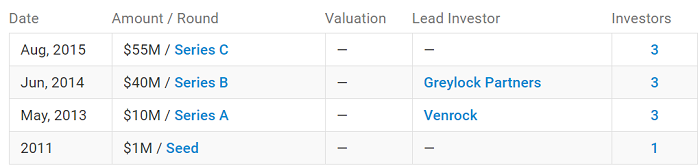
Sourced from Crunchbase, though news reports have mentioned a new $100 million financing round.