

Wandianzhang Files IPO Prospectus: Empowering 5,000 Chain Pharmacies with AI-Driven Operations and Cost Efficiency

“An increase in the chain pharmacy penetration rate is only a matter of time. Currently, numerous listed companies and capital investors are driving this trend. The most critical challenge during expansion is addressing cost and efficiency issues, which is precisely where Wan Dian Zhang serves as an effective solution.”
“We have accumulated years of technical expertise, providing chain pharmacies with comprehensive ‘software + service’ solutions. In the future, we will further deepen our services with an operations-centric approach to add greater value.”
Amid the broader context of healthcare reform, policies such as the removal of restrictions on prescription outflow, zero-markup pricing, Direct-to-Patient (DTP) pharmacies, and tiered diagnosis and treatment are profoundly reshaping the landscape and structure of the pharmaceutical industry, particularly the retail pharmacy sector. The historically hospital-dominated drug distribution model is undergoing a fundamental transformation, with hundreds of billions in pharmaceutical sales shifting toward offline pharmacies and e-pharmacy platforms, predominantly benefiting chain pharmacies.
VCBeat (WeChat ID: vcbeat) conducted an exclusive interview with Zhou Shengqiang, founder of Suzhou Wandianzhang Network Technology Co., Ltd. The “Wandianzhang” mobile operations supervision system he established effectively addresses challenges in remote supervision, foot traffic analytics, and hotspot analysis for chain pharmacies. By helping pharmacies enhance operational efficiency and control costs, the system serves as a valuable tool for reducing expenses and boosting revenue, particularly against the backdrop of rising pharmacy chain penetration rates.

“Based on our preliminary research, the chain affiliation rate of retail pharmacies is high and continues to expand. Large companies are pursuing growth through mergers and acquisitions, while capital is also facilitating the consolidation of regional pharmacy chains. This presents our opportunity,” said Zhou Shengqiang.
According to Zhou Shengqiang, he has worked at Suzhou Keda (603600.SH) for many years and possesses nearly two decades of professional experience in intelligent image development and industry applications. By chance, he began assembling a team three years ago to establish the Keda Retail Division. In mid-2016, the team spun off from Keda to operate independently. In recent years, through in-depth collaborations with leading chain pharmacy operators, the team has gained a thorough understanding of the challenges and pain points associated with on-site management in chain pharmacies. The decision to focus on chain pharmacies stems from the fact that, compared to other retail sectors, the chain affiliation rate in the pharmacy industry still has room for growth. Moreover, chain-based operations represent a future trend in pharmaceutical retail, indicating a substantial market opportunity.
Zhou Shengqiang’s assessment is further corroborated by surveys from professional consulting firms. Data show that the top 100 pharmaceutical chain pharmacies in China hold a 28% market share, with the top 10 accounting for 14%; the largest chain pharmacy reports sales of RMB 9 billion. In contrast, the top three chain pharmacies in the United States command a 47% market share, and the largest chain pharmacy achieves sales of USD 150 billion. The chain affiliation rate in China’s pharmaceutical retail sector stands at approximately 40%, whereas in the U.S., the chain affiliation rate for retail pharmacies has reached 80%.
Several listed chain pharmacy companies have also frequently engaged in cross-regional mergers and acquisitions. For instance, this September, Gansu Zhongyou Health announced its M&A expansion plans after receiving a RMB 500 million investment from the Tasly Great Health Industry Fund; additionally, Yunnan Yixintang spent RMB 158 million last December to acquire 60 pharmacies in Sichuan Province.
Xu Jiaxi, chief pharmaceutical industry analyst at Industrial Securities, previously stated in an interview with reporters that the retail pharmaceutical sector stands to benefit most from the massive shift of prescription drugs out of hospitals. According to his statistics, as of last December, four listed pharmacy companies had announced a total of 21 mergers and acquisitions, while listed pharmaceutical commerce companies had completed 62 M&A deals.
The surge of favorable policies for chain pharmacies has also created significant opportunities for their adjacent businesses. Journalist statistics show that dozens of software and hardware solutions aimed at enhancing the management, operations, and professional services of chain pharmacies have been launched this year alone, focusing on areas such as video surveillance, SaaS, WMS, big data, prescription processing, light consultation, and membership management.
“We may be more inclined toward on-site operations, such as the implementation of pharmacy standardization and the consistency of pharmacy marketing practices.” Regarding the differences from other pharmacy management products, Zhou Shengqiang emphasized the practical execution capabilities of the Wandianzhang system.
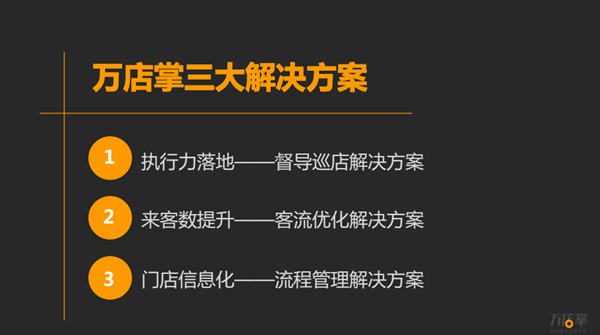
It is understood that Wanzhangdian provides an integrated hardware, software, and service solution encompassing surveillance equipment, mobile supervision software, and operational consulting. The hardware component includes 360° high-definition store-inspection cameras, intelligent customer flow analyzers, and intelligent supervision servers. The mobile supervision software features functionalities such as store inspections, evaluations, and supervisory oversight. Upon identifying issues at retail stores, store operators can submit these issues to Wanzhangdian, whose operations team then provides consulting services to optimize processes and address problems with targeted solutions.
Currently, Wandiannzhang has integrated nearly 10,000 stores. Its star pharmaceutical enterprise clients include Huirentang, Zuojinming, Tianshun Pharmacy, Laobaixing Pharmacy, and Baijiahui.
Wan Dian Zhang focuses on both the decentralization of standards and rapid response. By leveraging surveillance equipment, management can monitor in-store conditions in real time, facilitating store inspections and enabling the immediate identification of operational issues and deficiencies. Store staff can be directed to implement corrective actions instantly, while high-performing stores may receive public commendations. Furthermore, as each employee is assigned an individual account, seamless vertical communication is ensured. The integration of features such as check-ins, performance evaluations, Mobile Academy, and training modules also helps maintain high engagement levels among frontline staff.
This system has gained recognition from LBX Pharmacy, a publicly listed chain pharmacy operator. Feng Yanzu of LBX Pharmacy noted that its chain stores have adopted video-based management. Through this management system, the company can monitor store operations and customer needs in real time, enabling timely supervision and the provision of services tailored to their requirements. Feng Yanzu further emphasized that the management system can be operated via smartphone platforms, allowing him to maintain oversight even while traveling on business or during fragmented periods of spare time.
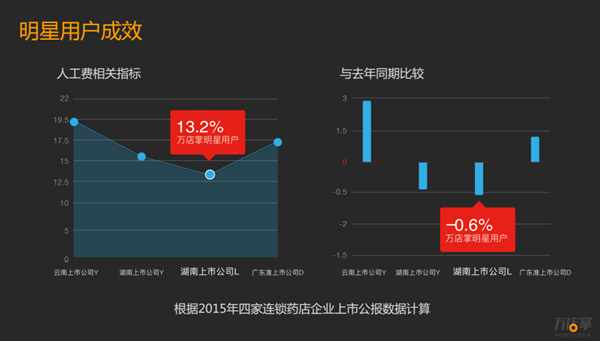
Data shows that Wandianzhang can effectively improve the operational efficiency of chain stores and reduce operating costs.
“Stores are directly linked to the operational performance of chain enterprises and constitute their economic lifeline. Store management has always been a key focus for managers. By leveraging the Wandianzhang system, companies can extend management depth to the grassroots level, enabling them to identify and promptly address frontline issues,” said Zhou Shengqiang.
We interviewed Jiangxi Tianshun Pharmacy, one of Wandiannzhang’s star clients. According to Xiao Hong, the company’s Deputy General Manager, pilot stores have seen a significant improvement in operational performance since adopting the Wandiannzhang system several months ago, with more efficient utilization of labor. “The greatest advantage of this system is that store inspections can be conducted remotely without visiting the physical locations. Through remote monitoring, we can identify issues related to store operations and customer traffic, and require staff to address them immediately, thereby enhancing store-level execution.” Initially, 53 Tianshun Pharmacy stores participated in the pilot program, and it is expected that all 173 stores will fully implement the system in the subsequent phase.
Wandianzhang is not limited to remote management; in the future, it will also tailor more personalized services for chain pharmacies. “Currently, we deliver services through our software platform, with the service itself being the primary output. Later on, leveraging our experience in the chain retail industry, we will provide customized solutions for chain pharmacies, including explorations in marketing, promotions, and management. In the future, we will further deepen our service offerings with a focus on operations, thereby adding value to our services.” Zhou Shengqiang has higher aspirations for the Wandianzhang system. In 2017, Wandianzhang expected to add 30,000 new serviced stores, with this figure projected to rise to 50,000–60,000 the following year.
In terms of financing, Wandianzhang expects to complete its Pre-A or Series A funding round this year, with a target amount of RMB 30 million.