

Yang Dajun and Ascentage Pharma: Showcasing China's Innovation Power on the Global Pharmaceutical Stage
Among the 100 best-selling drugs globally, the United States ranks first, while China has none. China should make breakthroughs in this area, which is also the direction our entire industry is striving toward.
by Yang Dajun, Co-founder, Chairman, and CEO of Ascentage Pharma
In the 1980s, Yang Dajun was admitted to Zhongshan Medical College (now merged with Sun Yat-sen University). At that time, the college established an all-English program. As the name suggests, this program conducted instruction entirely in English, and its faculty comprised renowned professors who had returned from Europe and the United States. Students in the all-English program were required not only to have strong English proficiency but also to possess a solid foundation in professional knowledge. Out of 400 students in the entire grade, only 30 were selected, and Yang Dajun was one of them.
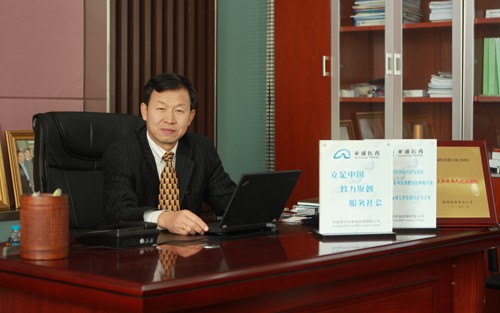
Yang Dajun, Co-founder, Chairman, and CEO of Ascentage Pharma
Even during his student years, Yang Dajun demonstrated entrepreneurial talent. Leveraging his spare time, he participated in the founding of two highly influential magazines at the time: *Chinese Medical Students* and *Family Doctor*.
“When I was a sophomore, I founded Chinese Medical Students, which at its peak had a circulation of 50,000 copies, even though there were only 150,000 medical students in China,” recalled Yang Dajun.
In its third year, Yang Dajun founded Family Doctor, a magazine primarily aimed at general readers. During the 1990s, its peak circulation reached 3 million copies per issue, ranking it among the top ten most influential publications in China. “The financial returns were also substantial at the time, even allowing for bonuses to be awarded to faculty members in the medical school’s technical department.” In terms of both circulation and influence, Family Doctor was a highly successful magazine.
Not only did Yang Dajun build a thriving entrepreneurial venture, but he was also a top student. He was acutely aware of China’s technological shortcomings at the time, recognizing that the country needed robust real-economy industries and advanced technology. “The education I received instilled in me the understanding that we must develop tangible industries and practical technologies. Despite the considerable success of those two magazines and the strong sense of accomplishment they brought me, I ultimately chose to pursue a professional career.”
In 1986, after obtaining his Master’s degree in Medicine, Yang Dajun went to the United States for further studies and earned his Ph.D. from Michigan State University. After graduation, he conducted research at the Lombardi Comprehensive Cancer Center at Georgetown University. “The United States began emphasizing translational research twenty years ago, and we were fortunate to ride that wave. During my time at Georgetown University, I carried out extensive translational research.”
During his time at Georgetown University, Dr. Yang Dajun’s team discovered a novel small-molecule anticancer agent with a unique mechanism of action, AT-101. In 2003, the team’s patent attracted investor interest, leading to the establishment of Ascenta Therapeutics. “This was our first formal entrepreneurial venture. Our advantage lay in the fact that it was a university-based research outcome, backed by patents and preclinical safety data,” Dr. Yang told reporters.
In 2003, the company secured its first round of financing amounting to $5 million, followed by a $30 million Series B round in 2004. In total, Ascent Pharmaceuticals raised approximately $90 million. Judging by both product development and fundraising achievements, Ascent Pharmaceuticals has been a highly successful startup.
In 2005, Yang Dajun resigned from the University of Michigan to embark on full-time entrepreneurship. Driven by the original aspiration of facilitating the internationalization of China’s pharmaceutical industry, Yang Dajun, together with co-founders Professor Wang Shaomeng and Professor Guo Ming, established a China R&D center in Zhangjiang, Shanghai. By basing operations in China while conducting pharmaceutical R&D according to U.S. standards, Yang Dajun’s team achieved significant accomplishments: “We were among the earliest U.S. companies to establish R&D centers in China, and both products licensed by Ascenta Therapeutics to multinational corporations were developed at our Shanghai R&D center.”
Everything was proceeding smoothly. In 2009, Yasheng Pharmaceutical also launched its IPO plan. That year, the global financial crisis erupted, dealing a significant blow to Yasheng Pharmaceutical. Meanwhile, the U.S. company’s lead product failed to meet expected endpoints in clinical trials. Facing pressures on both fronts, the U.S. company decided to shut down its Shanghai R&D center.
Over the course of five years, Yang Dajun and his colleagues invested substantial time and energy into the Shanghai R&D center. The three founders believed that the Shanghai R&D center still held significant value. Consequently, they made a bold decision: to stay.
The trio persuaded the company to transfer its Shanghai R&D center to them at no cost. Seizing this opportunity amid the financial crisis, they relocated to China and established Ascentage Pharma.
At that time, the investment landscape for innovative drugs in China was highly immature, with only a handful of companies daring to pursue drug innovation. The financial crisis further exacerbated the situation for the entire team. Due to inadequate risk forecasting regarding the financial crisis, the company quickly exhausted its funds. “It was indeed a very difficult period. At first, we were unable to pay our own salaries, and later, we could not pay our employees’ salaries either,” recalled Yang Dajun. “We were quite transparent with our staff, explaining that there were several months during which only half-salaries were paid.”
Fortunately, in February 2010, 3SBio invested $3 million in Ascentage Pharma, a sum that Yang Dajun described as “timely assistance in dire straits.” Despite the challenging circumstances, Ascentage Pharma gradually overcame its difficulties by leveraging its robust technology and experienced team. In August 2015, the company secured Series A financing led by Yuanhe Yuandian and Yuanming Capital. Last month, with China Renaissance serving as the exclusive financial advisor, Ascentage Pharma completed its Series B financing round led by SDIC Innovation, raising RMB 500 million. This significant deal marked a notable conclusion to the biopharmaceutical investment and financing landscape in China for 2016.
Looking back on the early days of their startup, Yang Dajun joked, “We were a bit too bold back then. We didn’t just jump into the water to swim naked; we did it in the dead of winter. But we persevered, and in hindsight, our decisions were the right ones.”
Currently, Ascentage Pharma has eight products in its development pipeline, six of which have entered clinical trials. Furthermore, Ascentage Pharma is pursuing a diversified pipeline strategy; in addition to currently popular anti-tumor drugs, it maintains a balanced portfolio across treatments for hepatitis B, anti-aging therapies, and dry age-related macular degeneration.
In response to the current environment and demands of pharmaceutical R&D in China, Ascentage Pharma has strategically focused on two areas in its oncology drug portfolio. The first is a pipeline of apoptosis pathway-targeting products aimed at the global market; among its three candidates, one has already entered clinical development. This represents the first and only such achievement in China.
Yang Dajun believes that although China boasts the world’s second-largest pharmaceutical market, 80% of the innovative drug market lies outside China. To capture this remaining 80%, companies must adopt a global positioning from the outset, secure global patent protection, and possess the capability to develop drugs in accordance with global standards. “This is the standard Ascentage Pharma has consistently upheld,” Yang added.
Furthermore, Ascentage Pharma has also established a presence in the field of drugs targeting mature targets. Mature targets refer to those for which drugs with the same mechanism of action have already been approved and marketed; thus, from the perspective of the target itself, there is essentially minimal risk. The subsequent promotion of such drugs is considerably easier, as their clinical development pathways are well-established. Nevertheless, Yang Dajun emphasized that it remains crucial to pursue differentiation for these products.
He stated, “If a product fails to achieve differentiation, ten or twenty competitors could emerge overnight, making it difficult to articulate its advantages and unique features, and equally challenging to gain recognition from investors and the industry.”
Beyond its product portfolio layout, Ascentage Pharma’s most distinguishing feature is its R&D model—bidirectional internationalization.
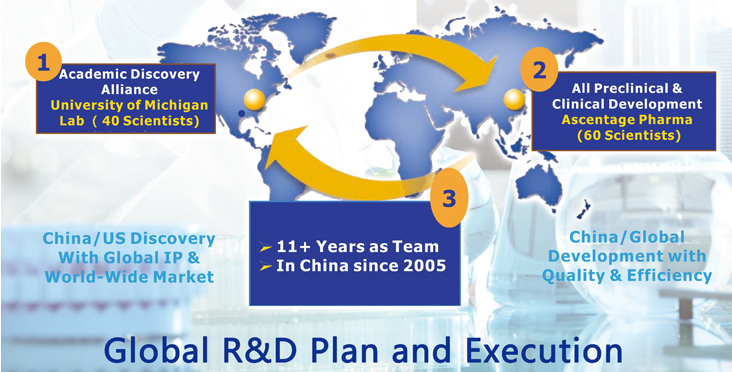
Ascentage Pharma’s R&D Model
The initial discovery and product design work in the early stages of research and development were completed at the University of Michigan in the United States. This has made Ascentage Pharma more readily accepted and recognized by the international market, which acknowledges the quality and R&D capabilities of laboratories affiliated with such a prestigious institution. “International recognition of the source of discovery has laid the foundation for the entire development process. It has also given us both the confidence and the capability to develop original innovative drugs that meet international levels and standards,” added Yang Dajun.
Moreover, most of the team’s core members have worked in this field for over a decade and are well-versed in overseas markets. Yang Dajun compares the team to Lang Ping of the pharmaceutical industry: “People like us were initially educated in China, then went abroad, and later returned to China with advanced technology and experience, leading Chinese teams to expand into the international market.”
Pharmaceutical innovation inherently involves high R&D investment, long development cycles, and substantial risks, making an experienced and capable R&D team crucial. Asymchem’s team has prior successful entrepreneurial experience in the United States and is well-versed in pipeline portfolio strategy and development processes. Compared to many domestic companies, it holds advantages in every stage—from initial target selection and strategic direction to subsequent pipeline planning and development strategies—thereby minimizing risks and maximizing the likelihood of success.
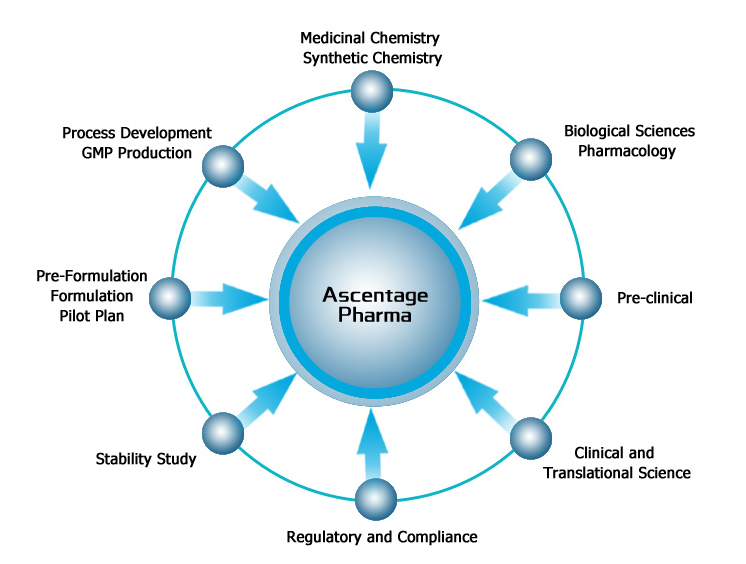
International Standards and R&D Capabilities
Innovative drug development is akin to navigating the open seas, where the experience of the captain and crew is paramount. A team well-versed in both the Chinese and international markets can help a company enter the global arena more rapidly. Companies with a global perspective and international experience also hold a certain degree of initiative in global competition.
Over the past 30 years of reform and opening-up, China’s economy has achieved remarkable accomplishments. As basic needs for food and clothing have been met, people have begun to demand higher levels of health and wellness. Meanwhile, a generation born and raised in a favorable economic environment—often referred to as China’s baby boomers—has emerged as a highly affluent consumer cohort that is now entering old age. From every perspective, both the macroeconomic environment and surging individual health demands are strongly driving the growth of the health industry. In the past decade, pharmaceutical innovation in China has undergone tremendous changes.
At the talent level, a large number of overseas returnees have come back to China, bringing with them advanced technologies and experience. These professionals either join local enterprises to facilitate their internationalization or start their own businesses, driving corporate development according to international standards and injecting new vitality into the entire industry.
At the policy level, the state has explicitly designated innovative drug development as a key priority in its national development plan, driving pharmaceutical innovation through a series of major special projects. This approach not only redefines “innovative drugs” according to global standards but also emphasizes a strategy of prioritizing R&D while maintaining an asset-light model. On one hand, this avoids significant waste of resources; on the other, it enables R&D-focused companies such as Ascentage Pharma to concentrate their efforts fully on research and development. Furthermore, the government has emphasized consistency evaluation for generic drugs and implemented controls on their volume, which will strongly encourage domestic enterprises to pursue innovation-driven growth.
Amid the emphasis on generic drug consistency, a segment of generic drug manufacturers will face survival-of-the-fittest dynamics. “Generic drug companies do not need to bear risks as high as those faced by innovative drug developers; however, with the implementation of consistency evaluations and quantity restrictions, their development prospects will be significantly constrained, thereby compelling these firms to pursue innovation,” stated Yang Dajun.
During this process, a select group of visionary and capable enterprises will achieve transformation through innovation. However, this path is arduous, characterized by long cycles and high investment. More companies will opt for acquisitions or mergers to accelerate their strategic positioning in the field of pharmaceutical innovation. “This will be a future trend; some companies are already engaging in such activities,” revealed Yang Dajun. “The coming years will usher in the most favorable period for the innovative development of China’s pharmaceutical industry.”
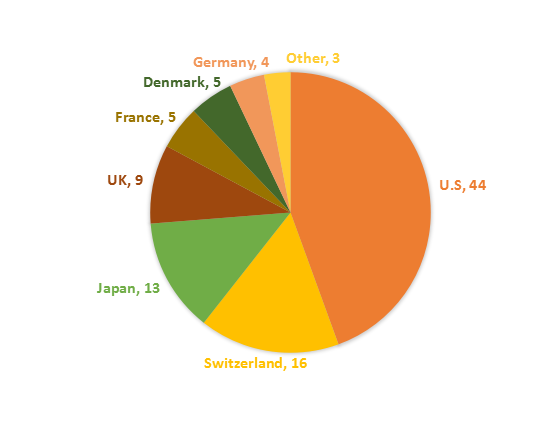
Among the 100 best-selling drugs worldwide, Japan ranks third, while China has yet to break through.
None of the top 100 best-selling drugs worldwide are currently from China. If Chinese original drugs can one day enter the international market and become among the best-sellers, it would mark a milestone for China’s entire biopharmaceutical industry. After 5–10 years of development and groundwork, the next 5–10 years will be a period of output for innovative drugs in China. Yang Dajun stated, “Chinese pharmaceuticals should achieve breakthroughs in the international market, which is also the direction in which Ascentage Pharma and this field are striving.”
Following the Series B financing round, the company will continue to advance the global clinical development of its products while simultaneously establishing industrialization facilities to prepare for product commercialization in two to three years.
According to Yang Dajun, the company has received an official invitation to present at the J.P. Morgan Healthcare Conference. For the biopharmaceutical industry, the J.P. Morgan Conference is akin to an annual pilgrimage, serving as a bellwether for industry trends. The majority of invited companies are either publicly listed or on the verge of going public. This invitation underscores international market recognition of Ascentage Pharma. The company is currently preparing for its listing in the United States.