

The Future of Electronic Medical Records in the Internet Era: Pathways and Prospects
Healthcare Expenditure Remains Substantial, with IT Infrastructure Construction Maintaining Rapid Growth
In 2015, China's total health expenditure exceeded RMB 4 trillion, maintaining a compound annual growth rate (CAGR) of 20.67% over the previous decade. In comparison to the 9% level observed in OECD countries, China's healthcare expenditure accounted for only 6% of its gross domestic product (GDP). Given the substantial population and consumption base, coupled with the onset of population aging, China's medical services market is expected to have significant room for growth in the future. Additionally, the market size of China's healthcare informatization sector will continue to expand, with an estimated market value approaching RMB 40 billion by 2020, and a projected CAGR of up to 11.1% in the coming years.
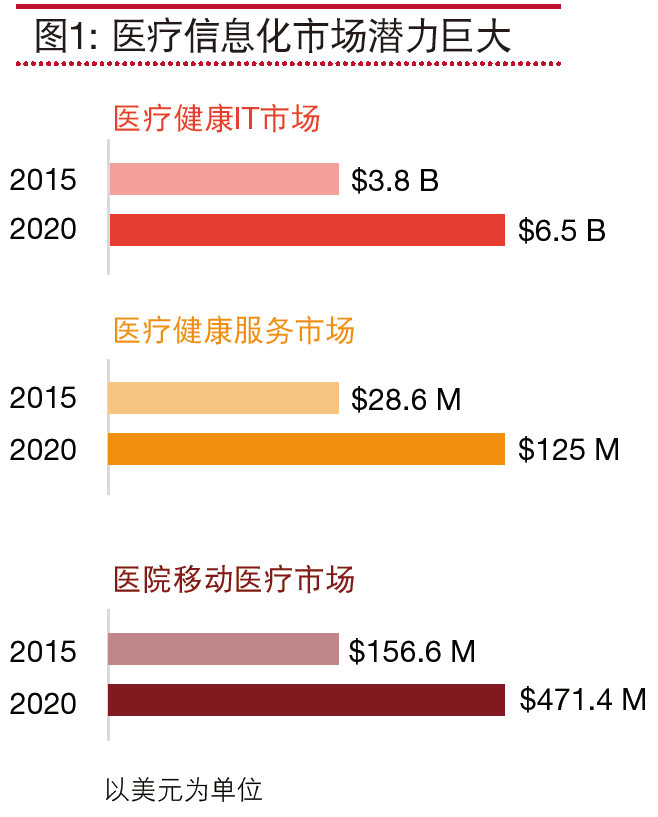
Residents' disposable income continues to rise, and healthcare consumption demand is becoming multi-tiered and diversified.
China’s rapid economic development and the continuous rise in residents’ income levels have brought about a significant shift in public health consciousness. Healthcare preferences are no longer limited to the mere treatment of diseases; instead, there is growing emphasis on personal privacy and information security. The scope of demand for medical services has expanded from simple disease treatment to diversified areas such as health maintenance, nursing care, and wellness. Moreover, consumers are willing to pay a premium for high-quality medical services and professional, advanced medical technologies. These multi-layered and diverse drivers—spanning different demographic groups, age brackets, and specialized fields—are propelling the continuous horizontal and vertical development of the entire healthcare services industry.
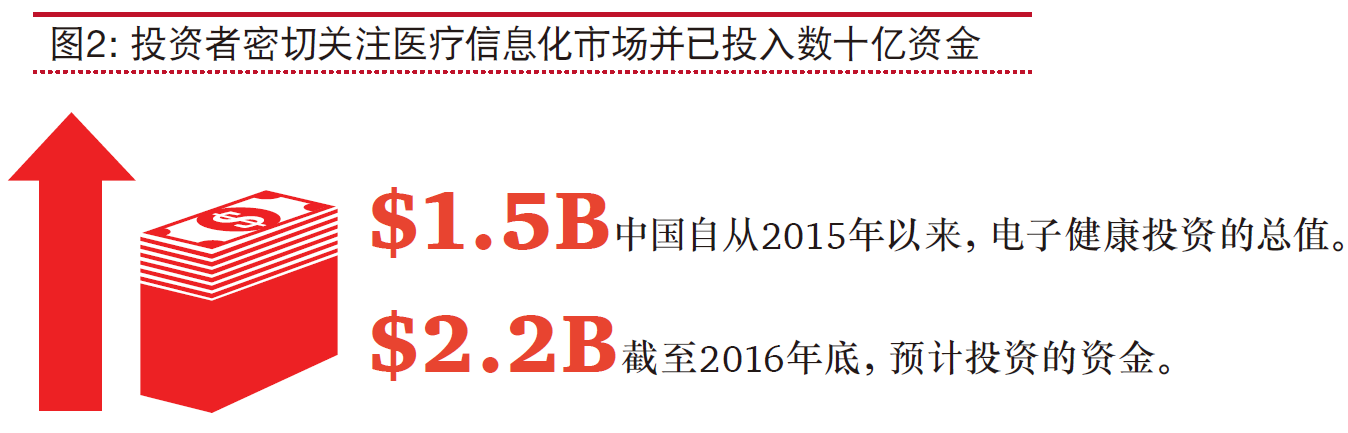
The Healthcare Investment Market Is Experiencing Turbulence as a New Round of Industrial Layout Gradually Unfolds
In recent years, many well-established domestic and international enterprises have recognized the importance of healthcare informatization as a key "enabler" and have invested heavily in the healthcare industry. Compared with countries such as the United States, where internet-based healthcare is more advanced, China’s internet healthcare sector remains in its early stages. Nevertheless, this trillion-yuan market has attracted numerous internet giants, healthcare companies, and insurance firms. These players are establishing their presence in the internet healthcare space either through capital-driven mergers and acquisitions or by collaborating with upstream and downstream partners across the industry chain. As one of the most critical core components, electronic medical records (EMRs) have consistently been a focal point for the market and a key direction for future development, garnering significant favor from the investment community.
Continuous Innovation in Information Technology Drives the Transformation of Future Healthcare Services
The continuous innovation of information technology holds immense potential to fundamentally transform the existing healthcare landscape. Research indicates that China currently has over 500 million smartphone users, with data showing that 94% of online users access the internet via mobile electronic devices. The primary advantages of mobile electronic devices lie in their high portability and accessibility. In the future, relying on on-demand, real-time access to information will become the norm. Electronic medical records (EMRs) will continue to expand their solutions to meet the needs of patients and healthcare service systems, and EMR systems and data will
Continuing the migration to the cloud. HIMSS Analytics predicts that by 2020, 80% of healthcare information and patient data will flow through cloud-based services.
Intensive Policy Push for Electronic Medical Record Construction Ushers Healthcare into the Digital Era
2010
In September, the “Work Plan for Pilot Projects on Electronic Medical Records” was issued, aiming to explore and establish an electronic medical record system suited to China’s national conditions by conducting pilot projects in selected hospitals and regions over a period of approximately one year.
2011
In January, the “Functional Specifications for Electronic Medical Record Systems” was issued to standardize the management of electronic medical records (EMRs) in medical institutions and clarify the required functionalities of EMR systems. In March, the “Technical Solution for Building Hospital Information Platforms Based on Electronic Medical Records (Version 1.0)” was released to support pilot reforms in public hospitals and advance hospital informatization with a focus on EMRs and hospital management.
2014
In June, the “Basic Data Set for Electronic Medical Records” and the “Technical Specifications for Hospital Information Platforms Based on Electronic Medical Records” were issued, providing formal standards and direction for future regional health informatization development.
I. Basic Products
Electronic Medical Record System:A clinical-centric healthcare service system that records the treatment of patients' health conditions by medical institutions, as well as a series of clinical activities performed by related healthcare professionals. Examples include physician workstation systems, nurse workstation systems, laboratory information systems, and order processing systems.
Major Trends:
• System Capability Assessment:Assess the scope and depth of system functionality to serve as a development guide for future system construction, thereby guiding the scientific, rational, and continuous improvement of healthcare institutions’ core IT capabilities (Graded Evaluation of Electronic Medical Record System Functionality Application Levels, HIMSS Evaluation).
• Voice-enabled Electronic Medical Records:Integrate intelligent speech recognition technology into electronic medical record (EMR) systems. Application scenarios include surgical documentation, medical technology departments, and clinical documentation. The three core critical factors are recognition speed, recognition accuracy, and the intelligent recognition of special symbols necessitated by medical professionalism. Meanwhile, unstructured data (such as audio and video) is growing rapidly.
• Quality of Medical Services:The development trend of system functional applications will shift from meeting clinical application needs to using patient-centered improvements in medical quality and safety outcomes as performance metrics and new benchmarks.
II. Intelligent Products
Transform extensive clinical medical cognitive capabilities into an intelligent medical knowledge base to provide clinical consultation, assist in diagnosis and treatment, and support clinical decision-making. This encompasses symptoms, signs, examinations, laboratory tests, diagnoses, treatments, and rational drug use, thereby enhancing the quality of clinical medical services. Examples include Clinical Decision Support Systems (CDSS), rational drug use, and antibiotic stewardship knowledge bases.
Key Trends:
• Machine Learning Capabilities:By leveraging data analytics-driven iterative algorithms, machine learning has the potential to deliver faster and more accurate diagnoses, insights, and predictions.
• Natural Language Processing (NLP):Transform free text into standardized and structured data to support clinical decision-making.
III. Shared Interconnected Products
Based on the exchange and sharing of electronic medical record (EMR) information, healthcare institutions can extend their service radius to patients and enable collaborative medical services among various healthcare providers, such as referrals, transfer for examinations, and consultations. While the collection of electronic clinical data takes precedence over its exchange, the true high value of EMRs lies in the exchange and sharing of data.
Major Trends:
• Cloud Computing Technology:Supporting real-time acquisition of patient data enhances the continuity and accessibility of medical services, ushering hospital informatization into an era of asset-light, low-cost operations.
• Mobile Technology:Mobile devices enable real-time monitoring, collection, and integration of health data into electronic medical records; furthermore, mobile service platforms extend the reach of healthcare services.
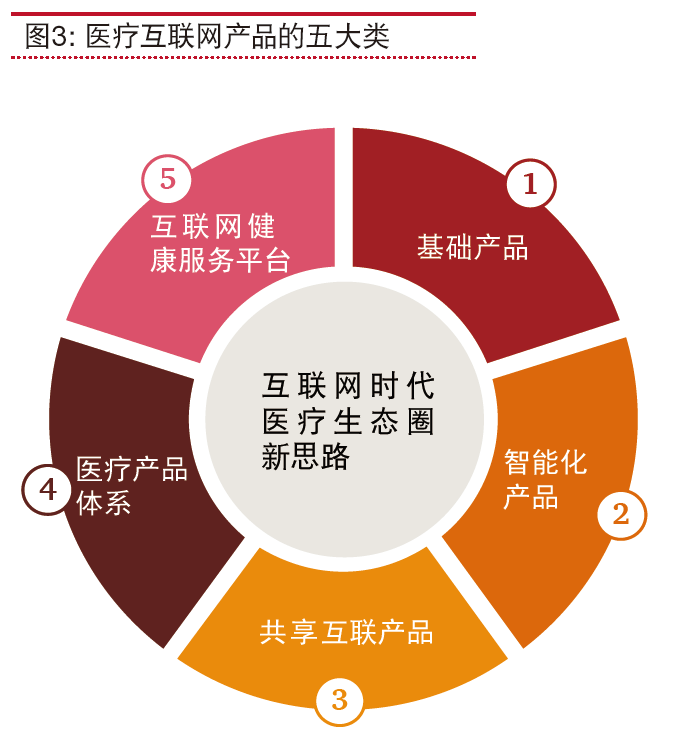
IV. Medical Product Portfolio
The medical information system encompassing an individual’s entire life cycle, from birth to death, includes health check-ups, outpatient care, inpatient care, immunization, and maternal and child health services. Among these, hospital electronic medical records (EMRs) serve as the primary source of information and a critical component, characterized by high purposefulness and abstraction, and possessing the greatest commercial value.
Major Trends:
• Medical Big Data:As various types of medical data continue to accumulate rapidly, there are increasingly higher demands on the capacity for processing traditional data, timeliness of processing, management methods, and analytical targets. The application and analysis of big data will help address the challenges associated with prevention, diagnosis, and treatment in healthcare, and will significantly impact the transformation of this industry.
V. Internet Health Service Platforms:
Centered on health services and spanning healthcare, financial insurance, public security, and family genetics, this internet-based health service platform has been developed. It provides services to various stakeholders in the medical industry, extending beyond just governments and hospitals to include individuals, medical institutions, insurance companies, and pharmaceutical enterprises.
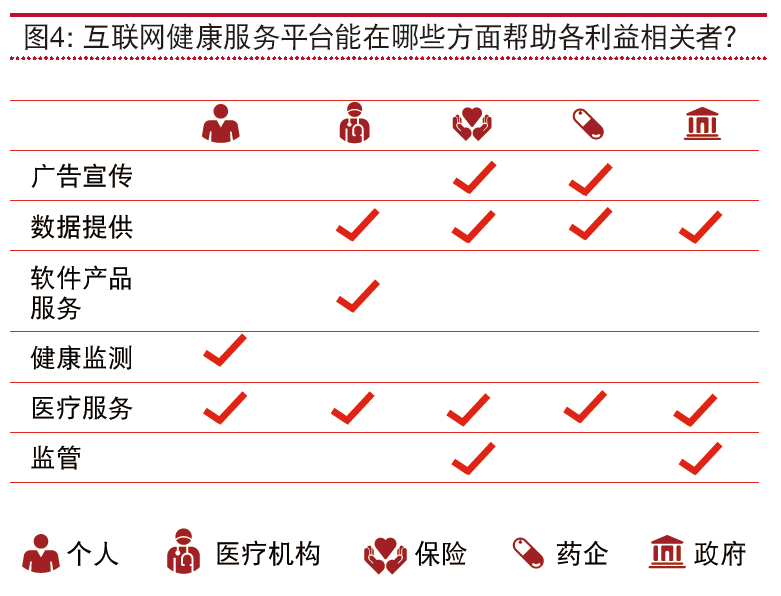
1. The new electronic medical record ecosystem will not only reshape the competitive landscape of healthcare but also expand the boundaries of its services.
2. The business model will transition from the purchase of single-product functionalities to a medical ecosystem service platform that delivers a suite of services.
Reprinted from: PwC