

Lenovo Star's Lu Gang: Medical Investment Shifts from Defensive to Offensive Strategy
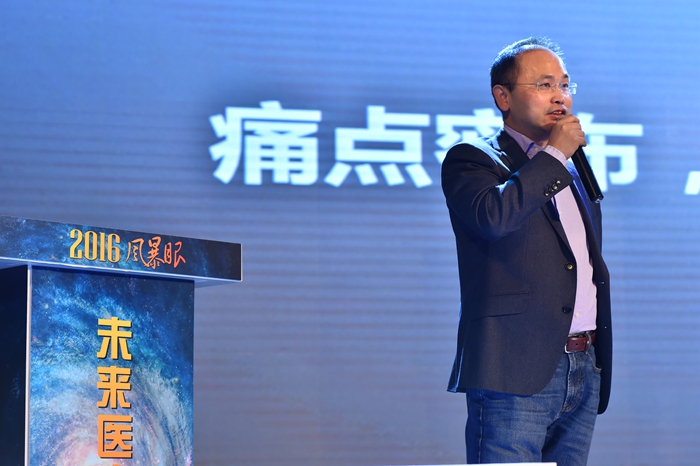
Recently, VCBeat hosted the "Top 100 Future Healthcare Companies" forum, bringing together startups, publicly listed companies, and prominent investors to discuss hot topics in the healthcare sector and analyze the future direction of medical development.
Lu Gang, Partner at Legend Star, shared his views on healthcare investment. He believes that capital is highly liquid and that healthcare will become the next investment hotspot. In terms of investment logic, healthcare has shifted from a defensive to an offensive investment strategy, offering higher growth potential and returns. In the near future, healthcare investments will place greater emphasis on technology- and service-oriented projects, with business models characterized by “innovation,” which will bring about significant transformation to traditional healthcare.
Lu Gang, formerly the asset management representative at Legend Holdings, was responsible for evaluating, investing in, and managing multiple venture capital firms. With in-depth expertise in venture capital investment, he directly facilitated Legend Holdings’ investments in numerous companies across health services, energy conservation and environmental protection, and chip design. Since joining Legend Star in 2009, he has led the establishment of its angel investment team and directly overseen investment activities in sectors such as healthcare.
Lu Gang introduced that the rise of angel investment since 2011 has been driven by two factors: industrial development and capital flow. For early-stage investment institutions, whether angels or VCs, it is essential to monitor the trends in these two factors to distinguish between genuine investment opportunities and speculative bubbles.
Lu Gang recalled, “For first-tier VC funds established between 2009 and 2011, their overall return multiples were likely in the range of 2x to 3x, with IRRs reaching 20% to 30%. By 2010, the angel investment sector began to undergo certain changes, primarily driven by new technologies and the rise of mobile internet; however, the mainstream investment community may not yet have paid attention to this shift.”
“To use an analogy, while venture capital firms have harvested the ‘wheat’ above ground, no one has yet tilled the soil or nurtured the crops still underground.” Recognizing this shift in the broader landscape, Legend Star began to focus on incubating seed-stage projects at the angel investment stage and pursued a diversified investment strategy. At that time, it identified three key sectors: mobile internet, advanced manufacturing, and healthcare.
“From the perspective of the entire angel investment industry, among the top 10 best-performing angel funds established in the past two years, return multiples should range from 5x to 10x.” High returns are also a major reason for the influx of capital into angel investing. “The mobile internet investment boom occurred between 2011 and 2015 but has since begun to subside. In contrast, the current wave of investment in healthcare, which started in 2014, continues to gain momentum.”
The “2016 Special Research Report on Returns of Equity Investment in China,” jointly released by CreditEase Wealth’s Private Equity Fund of Funds and Zero2IPO Research, also notes that technological advantages often create high competitive barriers, thereby yielding robust profit margins. Against the backdrop of population aging and the introduction of new healthcare reform policies, increased government policy support and guidance, coupled with the continuous influx of capital, technology, talent, and equipment, will further drive the sustained and rapid growth of the biotechnology and healthcare sectors, thereby boosting the industry’s return on investment.
In addition to this industrial background, capital flows into the healthcare sector also exhibit a “depression effect.”: The secondary market has crashed, and mobile internet investment has become bubble-like. From mid-last year to this year, stock indices have remained sluggish, with substantial capital withdrawals flowing into other sectors and spawning a wave of new investment hotspots. Furthermore, after experiencing rapid growth since 2009, the mobile internet sector has entered a plateau phase. Few technological breakthroughs or innovative startups have emerged, as the industry consolidates in areas such as social networking, e-commerce, and office collaboration. Consequently, no major new investment themes are expected to arise in the short term.
“Whether it’s new angel funds or venture capital funds, fundraising volumes remain at a high level, with substantial capital yet to be deployed. However, investors have become highly cautious in their investment choices, having learned from past setbacks.” Lu Gang offered an analogy: hot sectors are like pools; while other pools are already overflowing, capital, being fluid, is gradually flowing into the healthcare sector, which still has room for growth.
Driven by capital, the healthcare sector has also undergone certain changes. Lu Gang stated that investment in the healthcare field is shifting from a defensive to an offensive strategy. “Previously, the defensive nature of healthcare investments was reflected in their low sensitivity to market cycle fluctuations, making them a safe-haven option for capital during periods of market volatility. However, recent developments have brought about new changes. Healthcare investment has become a top choice for many investors, with this trend emerging between 2013 and 2014, driven by factors such as technological advancements and shifts in societal demographics.”
From a technological perspective, initiatives such as mobile health and precision medicine have emerged; from the standpoint of social demand, population aging and consumption upgrading are the primary drivers.
Lu Gang provided a detailed introduction, noting that Legend Star has recently invested heavily in a portfolio of biotechnology and precision medicine projects. Biotechnology (Bio-tech), after facing initial skepticism, has gradually gained recognition. In the United States, for instance, the FDA has approved numerous new drugs and therapies derived from biotechnology. Among all newly approved drugs, biologics now account for a significant proportion, even exceeding half, whereas small-molecule chemical drugs were the mainstream over the previous decade. Furthermore, technologies such as CRISPR gene editing, personalized medication, and precision medicine are driving transformative changes in future healthcare services.
“The integration of biotechnology with therapeutics essentially transforms it into a medical service, specifically personalized precision medicine, which is closely intertwined with service delivery. Looking at historical patterns of commercial innovation, whenever technology and services are tightly integrated, it readily fosters the emergence of diverse new business models. This underpins our investment rationale for such projects since 2013–2014,” said Lu Gang.
Taking cancer as an example, even the most skilled physicians at the best hospitals have a very low rate of accurate diagnosis and treatment without the aid of biological targeted therapies and genetic diagnostic technologies. By leveraging biotechnology to tailor targeted medications or develop personalized treatment plans based on patients’ physiological characteristics, genetic data, and tumor profiles, the accuracy of medication and the correctness of diagnosis and treatment can be significantly improved.
“In the pharmaceutical sector, it was previously difficult to integrate technology with services; pharmaceutical products were simply products, and diagnostic and treatment services were purely clinical services. However, there is now a trend toward such integration. The pharmaceutical industry is penetrating upstream into diagnosis and treatment through innovation, while clinical practices are imposing higher demands on pharmaceuticals. This dynamic has spawned innovative opportunities, giving rise to new startups and business models,” explained Lu Gang, describing how technological advancements are reshaping the entire healthcare services market.
As a guest at the “Top 100 Future Healthcare” event, Lu Gang also envisioned the future landscape of healthcare from the perspective of medical investment. He believes that, driven by technological advancements and upgrades in service delivery models, future healthcare will exhibit significant personalization and precision.
Lu Gang stated that the current pain points in the healthcare sector are resource scarcity and imbalanced matching. The first half of healthcare entrepreneurship, such as physician search and consultation, remote diagnosis and treatment, and internet hospitals, has addressed some issues, but key problems remain unresolved. The fundamental solution lies in achieving differentiated matching between medical needs and providers. With the aid of biotechnology, precision medicine, and healthcare big data, every aspect of future healthcare will involve precise matching.
However, in terms of the difficulty of reform, there remains pressure from the “Four Major Families”: large tertiary Grade-A hospitals, senior department heads, major pharmaceutical and medical device companies, and the national social health insurance system. Lu Gang provided a detailed explanation: “Large tertiary Grade-A hospitals” actually create a siphon effect, where high-quality physicians, premium data resources, and even portions of health insurance funds are drawn into these institutions, leaving patients unable to secure appointments; meanwhile, primary care facilities and secondary hospitals see very few visitors. Next are the “senior department heads.” Currently, chief physicians are predominantly concentrated in tertiary Grade-A hospitals, making them scarce in other healthcare settings and resulting in a supply-demand imbalance for such senior experts. Then there are the “major pharmaceutical and medical device companies.” Under the de facto commercial model of “funding healthcare through drug sales,” this sector has not been driven by product innovation; instead, relationship-based networking and operations within “gray areas” have become core competencies. Finally, there is the “national social health insurance system.” With health insurance covering more than 90% of costs, it is under immense financial strain, behind which lies a deeply entrenched and powerful interest chain.
To alleviate these pressures, efforts must focus on establishing information channels, enhancing the capabilities of physician groups, and refining incentive mechanisms. Accordingly, Legend Star will deepen its investments in areas such as technology-enabled services, new business models, and physician communities, aiming to address critical pain points in the healthcare industry.
“We must first understand the environment we are in so that we can draw nourishment from it and grow. Do not blindly obsess over strategy, traffic generation, or platform building. If you lack an understanding of the healthcare industry and fail to approach medicine with rigor and respect, your project is unlikely to succeed.” In closing, Lu Gang cautioned investors and startups that the “explosive growth” often anticipated in the healthcare sector requires time to accumulate; only by staying focused and committing to long-term efforts will one eventually reap the rewards.