

Basetra Secures RMB 36.5 Million Series A Funding to Advance Non-Invasive Prenatal Testing via Rare Fetal Cell Diagnostics
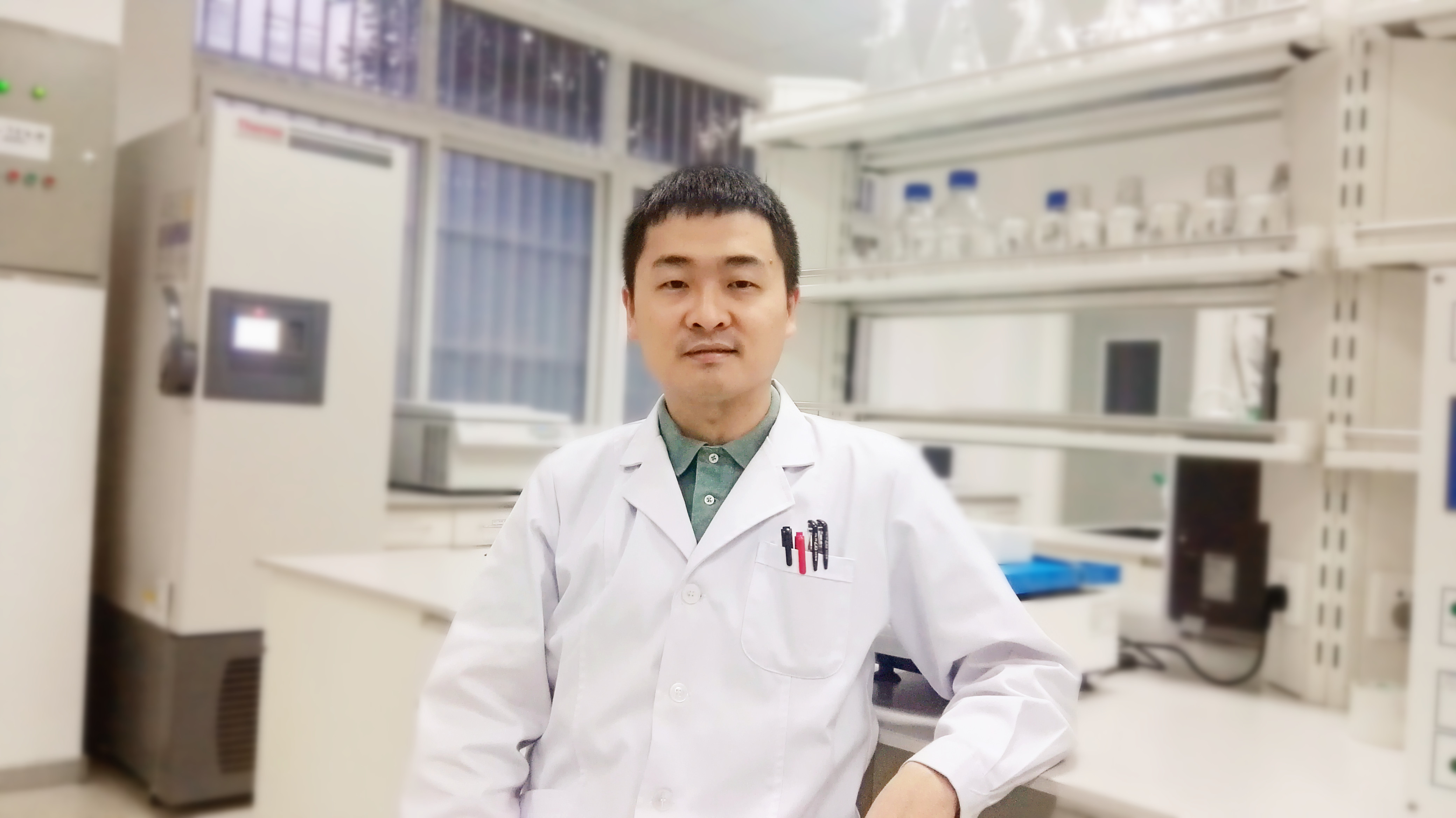
Wu Han, Founder and CTO of BASETRA MEDICAL TECHNOLOGY CO. LTD., was initially reserved but became effusive when discussing technology.
After earning his Ph.D. from Duke University, Wu Han joined the U.S. National Institutes of Health (NIH) and later the Lawrence Berkeley National Laboratory (LBNL), where he conducted research for four years. It was at LBNL that Wu met a group of partners, marking the beginning of his entrepreneurial journey.
At that time, gene sequencing was booming, and non-invasive prenatal testing (NIPT) was also gaining significant traction, driven by rigid market demand. Wu Han identified certain challenges within the industry that could not be adequately addressed with existing technologies. “This might be a promising entry point,” Wu Han reflected at the time.
"One of our partners specializes in hardware, while I have conducted research in molecular and cellular biology for many years, so we possess the necessary technical reserves. 'Combining hardware with my expertise in cell biology, we decided to commercialize these two technologies,' recalled Wu Han."
Preparations and initial infrastructure development began in 2013, with formal registration and establishment completed in 2014; the company has now been operating for three to four years. Unlike other enterprises, BASETRA MEDICAL TECHNOLOGY CO. LTD. did not opt for the highly saturated midstream sequencing services market. Instead, it focused on non-invasive prenatal testing (NIPT) to build an integrated upstream and midstream industrial chain.
Discussing the Limitations of Non-Invasive Prenatal Testing: The Market Needs New Technologies
Down syndrome, also known as trisomy 21, is a disorder caused by chromosomal abnormalities (an extra copy of chromosome 21). Approximately 60% of affected fetuses miscarry early in pregnancy. Survivors exhibit significant intellectual disability, characteristic facial features, growth and developmental delays, and multiple congenital anomalies. With rising economic standards and increased awareness of eugenics and healthy reproduction, most pregnant women, particularly those of advanced maternal age, undergo regular prenatal check-ups during pregnancy, which include screening for Down syndrome.
The most traditional screening method involves detecting proteins associated with Down syndrome, which has low sensitivity. In recent years, with the reduction in gene sequencing costs and technological breakthroughs, non-invasive prenatal testing (NIPT) based on gene sequencing has begun to be adopted in clinical practice. NIPT uses maternal peripheral blood as the sample, isolating cell-free fetal DNA from the mother’s blood for genetic analysis. This approach is minimally invasive and offers significantly improved sensitivity and convenience compared to conventional Down syndrome screening.
However, the fraction of cell-free DNA (cfDNA) of fetal origin in maternal peripheral blood is very low (less than 5%), and the isolated cfDNA is actually a mixed product. Therefore, current non-invasive prenatal testing (NIPT) based on cfDNA involves detecting fetal genetic information within a complex background contaminated with maternal cfDNA, and then using statistical methods to calculate the probability of chromosomal aneuploidy.
In addition to interference from maternal DNA, cell-free DNA is gradually degraded into small fragments after being released from cells; therefore, most isolated cell-free DNA consists of degraded fragments. These two factors limit the scope of non-invasive prenatal testing (NIPT), which is primarily applied to the detection of aneuploidies such as Down syndrome. Consequently, genetic disorders associated with gene mutations, such as thalassemia, cannot be detected using cell-free DNA-based methods.
Wu Han believes that non-invasive prenatal testing (NIPT) is a groundbreaking technology with strong market prospects, but it is limited by certain characteristics of cell-free DNA. “In other words, there is a need for something new in the market,” he stated.
Maternal peripheral blood contains cell-free fetal DNA as well as a small number of circulating fetal cells. Although the isolation of circulating fetal cells is technically more challenging and significantly more costly than the capture of cell-free DNA, its primary advantage lies in the ability to obtain intact fetal cells. These intact fetal cells harbor complete fetal genomic information, enabling not only the detection of trisomy syndromes but also screening for genetic disorders. Furthermore, with no cost constraints, whole-genome sequencing of the fetus can be performed.
Although the current market penetration of non-invasive prenatal testing (NIPT) is less than 10%, and even with future clinical popularization, most expectant mothers will still opt for lower-priced products due to cost considerations. However, Wu Han believes that given China’s one-child or two-child policy environment and the national strategy promoting eugenics and healthy childbirth, the state will inevitably drive the widespread adoption of NIPT technology, leading to a further expansion of its market share. Certain higher-income groups, particularly advanced maternal age patients and those with a family history of genetic disorders, find that existing market offerings fail to meet their needs and will undoubtedly seek more premium solutions.
“We project capturing a 10%-20% share of the overall market,” said Wu Han.
Cell Capture: A Four-Step Enrichment Process
To achieve non-invasive prenatal testing (NIPT) based on cell-free fetal cells, it is first necessary to isolate these fetal cells from maternal peripheral blood. Wu Han explained to the reporter that human blood may contain many rare cell types, such as circulating tumor cells (CTCs), which are now relatively well-known. By leveraging the specific characteristics of these cells, their capture and isolation can be achieved.
Under normal circumstances, only a few circulating tumor cells can be isolated from each milliliter of peripheral blood, while the proportion of fetal circulating cells is even lower, with an average of 0.5 cells per milliliter. “This means that from 109Up to 1010“Isolating individual fetal cells from the mother’s cellular population is technically very challenging,” said Wu Han.
Wu Han introduced BASETRA’s cell capture technology to reporters, which employs a stepwise enrichment method to gradually increase the proportion of fetal cells within the total cell population. After obtaining a blood sample, the majority of red blood cells and serum are first removed via density gradient centrifugation. Next, remaining white blood cells are depleted through negative enrichment. The third step involves further enrichment using the company’s proprietary cell chip, which features microwells with specific pore sizes and shapes that immobilize target cells. Finally, a fourth separation step is performed using the company’s developed microfluidic instrument, where the locations of these cells are identified by scanning for known fetal cell-specific markers via fluorescent antibody staining.
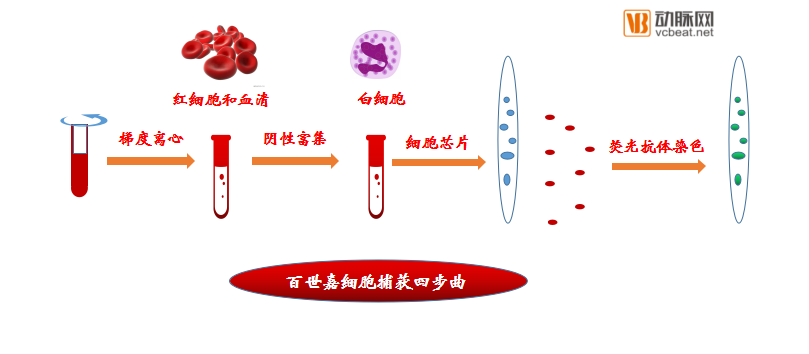
Once the cell positions are determined, individual cells are isolated using a single-cell picking instrument. Each isolated cell serves as a single-cell sample; following DNA amplification, it can be subjected to various established sequencing methods, such as targeted sequencing and whole-genome sequencing, for applications including validation of mutations at sites of interest.
By employing such methods to obtain cell-free fetal DNA, from the perspective of trisomy syndromes alone, the sensitivity of non-invasive prenatal testing (NIPT) using cell-free DNA is comparable to existing technologies, basically reaching 95%-99%; the sensitivity for monogenic disease detection can also exceed 90%. However, Wu Han emphasized: “All currently available non-invasive prenatal technologies serve only as screening tools, playing a supportive role in clinical practice.”
Centered on Non-Invasive Prenatal Testing (NIPT), Each Component Is a Standalone Product
In addition to capturing cell-free fetal cells, BASETRA’s cell capture instrument has other application scenarios. Based on the varying morphology and diameter of cells, different cell chips can be designed for capture, and staining is then performed according to markers on the cell surface or within the cell to determine their location. “During product development, it was designed as a universal cell capture instrument,” Wu Han told reporters. “From the perspective of the instrument itself, its workflow and software are universal; however, you need to provide some cell-related parameters. For any type of cell, as long as it has these parameters and exhibits specificity compared to other cells, it can be captured using this platform.”
Wu Han further introduced that, whether for circulating tumor cells or cell-free fetal cells, the number of cells isolated from a small blood sample is limited. Conventional high-throughput sequencing requires 100 ng (10-9DNA of grade ) or higher, whereas the amount of DNA contained in a single cell is typically 10-12level, and cannot be directly used for sequencing, thus requiring amplification of DNA from a small number of cells.
Therefore, in addition to offering cell-free DNA non-invasive prenatal testing (NIPT) services and cell capture instruments, BASETRA has also developed single-cell amplification reagents. Centered on non-invasive prenatal testing, BASETRA has spent four years building its capabilities and has gradually established an end-to-end industry chain, spanning upstream instruments and reagents, midstream sequencing, and downstream data analysis.
“Initially, the development of these products revolved around our core business line, namely non-invasive prenatal testing. However, each component can be spun off and developed into a standalone product.” Wu Han, who was initially reticent, became more talkative as the conversation turned to technology.
The core team members of BASETRA are mostly returnees from abroad, and the company’s culture and management model lean toward an American style. “The upstream R&D process is arduous; anything with high barriers to entry is inherently challenging.” Wu Han expressed strong confidence in the team’s technical reserves.
Clinical and Research: A Dual-Pronged Strategy
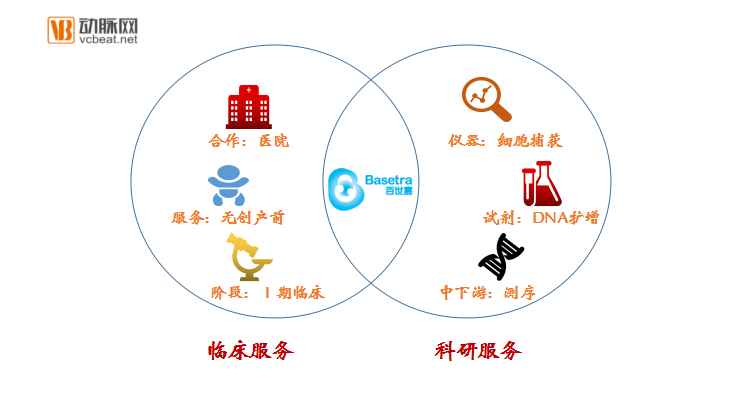
Wu Han introduced that BASETRA currently has two strategic lines of business: clinical applications and scientific research.
Business Model with a Dual-Directional Layout
From a clinical perspective, BASETRA is collaborating with Shanghai Ruijin Hospital and several hospitals in Ningbo to conduct Phase I clinical trials, further validating clinical efficacy. “At the same time, we can accumulate some clinical data and plan to enter the market next year,” Wu Han revealed. “Of course, our product has broader coverage; in addition to trisomy syndromes, it can also be used for screening genetic diseases.”
In the field of scientific research, the company not only provides instruments for cell capture and single-cell amplification reagents, but also offers single-cell sequencing and cell screening services. “We have already entered the market this year, and some companies are interested in collaborating with us. But overall, our operations this year have been on a relatively small scale; we plan to launch a major push next year,” Wu Han said with a half-serious, half-joking smile.
This June, the company secured RMB 36.5 million in Series A financing, primarily allocated to the research and development of instruments and equipment as well as clinical trials. Wu Han stated, “Hardware development and clinical trials are both capital-intensive endeavors. Our prototypes were manufactured in the United States, and our clinical trials involve whole-genome sequencing, all of which entail substantial costs. Our investors are highly visionary.”
Following the completion of Phase I clinical trials, the company currently has plans for Phase II clinical trials and intends to bring on additional strategic partners. Meanwhile, the company plans to integrate its cell screening technology with high-throughput diagnostics to launch tangible products. “Technology is the first step; thereafter, we will design specific products and bring them to market,” added Wu Han. “In addition, we hope to obtain qualifications for clinical laboratory services through applications or mergers and acquisitions, which is a plan for the next one to two years.” It is reported that the company’s next round of financing is currently underway.