

BAT's 2016 Healthcare Strategies: Baidu Builds AI Brain, Alibaba Constructs Platforms, Tencent Focuses on Connectivity
In 2016, the technological advancements and investment and financing activities in the internet healthcare sector have settled. As the three major pillars of China’s internet industry, Baidu, Alibaba, and Tencent (collectively known as BAT) have completed their strategic layouts in the healthcare sector. The development of internet healthcare not only requires the guidance of innovative technologies but also the exploration of innovative business models. As leading enterprises in the mobile internet industry, BAT has not only achieved breakthroughs in technology but has also made significant investments across the entire mobile internet ecosystem. Over the past five years, these three giants have invested in more than 30 listed companies and hundreds of unlisted ones. Notably, behind 80% of the unicorns in the primary market, you will find the presence of BAT.
China’s internet-driven transformation of healthcare is ongoing. Perhaps, through the integration of innovative technologies, it can help address the global challenge of “difficulty in accessing medical care.” VCBeat (WeChat ID: vcbeat) has summarized the major events and investment strategies of BAT (Baidu, Alibaba, and Tencent) in the internet healthcare sector in 2016, aiming to provide insights into the future development trajectory of the healthcare industry.
Tencent's Market Cap Surpasses Alibaba's, with Baidu Trailing at the Bottom
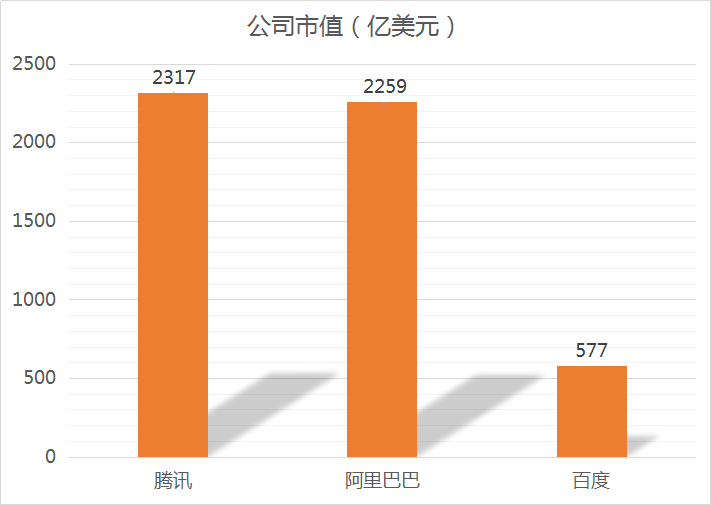
Baidu was listed on NASDAQ in 2005, Alibaba on the NYSE in 2014, and Tencent on the Hong Kong Stock Exchange in 2004. Following Tencent’s release of its second-quarter 2016 financial report, its stock price surged, surpassing Alibaba to become China’s most valuable technology company by market capitalization. As of January 2, 2017, Tencent’s market cap reached $231.7 billion, with Alibaba close behind at $225.9 billion, while Baidu trailed at $57.7 billion.
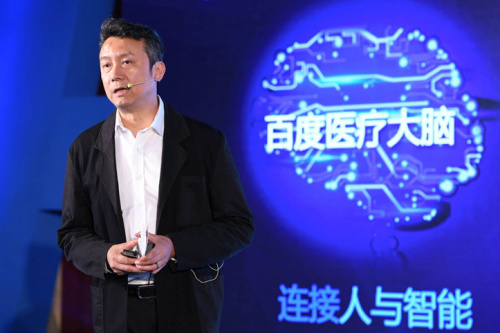
In October 2016, “Baidu Medical Brain” was launched in Beijing. “Baidu Medical Brain” is an AI-driven product designed through the collection and analysis of massive amounts of medical data and professional literature. It simulates the clinical consultation process, engages in multi-turn interactions with users, identifies potential conditions based on reported symptoms, performs iterative verification, and provides final recommendations. During this process, it collects, aggregates, categorizes, and organizes patients’ symptom descriptions, alerts physicians to additional diagnostic possibilities, and assists primary care physicians in conducting consultations.
Powered by Baidu Medical Brain and Baidu Open Cloud, Baidu Healthcare integrates cloud computing, big data, and artificial intelligence with the traditional healthcare industry. By leveraging richer datasets to construct precise user health profiles, it delivers more accurate medical matching services, driving a revolutionary advancement in internet healthcare platforms.
Baidu’s initial foray into the healthcare sector primarily involved providing search services for medical information, later expanding to partner with renowned hospitals and third-party platforms to offer appointment registration services. However, Baidu found itself at the center of public outrage during the “Putian Network” scandal in 2015 and the “Wei Zexi” incident in 2016. In the first half of the year, Baidu’s healthcare business faced intense criticism from internet users. In response to requirements from the Cyberspace Administration of China, Baidu implemented rectification measures, removing listings for 2,518 medical institutions and taking down 126 million pieces of medical-related information. Later, at the B20 Summit in early September, Robin Li stated in an interview with CCTV: “Due to the healthcare-related incidents over the past few months, we actually cut RMB 2 billion in revenue in a single quarter.”
In the second half of the year, Baidu unveiled its latest research achievement in applying artificial intelligence to healthcare—Baidu Medical Brain—and stated that it aims to benchmark against similar products from companies such as Google and IBM. At the Wuzhen Internet Conference in November, Robin Li further elaborated on how AI is transforming healthcare. He pointed out that the development of AI and big data in healthcare can be categorized into four levels: intelligent triage via medical O2O platforms, AI-assisted intelligent consultation, genomic analysis and precision medicine, and big data-driven new drug development. He believes that the singularity of AI-powered health big data—from triage to new drug R&D—is approaching. In the aftermath of the Wei Zexi incident, Baidu has placed greater emphasis on corporate social responsibility, seeking to apply artificial intelligence to the healthcare sector.
The market capitalization figures cited earlier pertain to Alibaba Group, whereas its current investments and strategic initiatives in the healthcare sector are carried out by its subsidiary, Ali Health. Listed on the Hong Kong Stock Exchange, Ali Health was formerly known as CITIC 21st Century. On January 23, 2014, CITIC 21st Century issued 4.4 billion shares to Alibaba and Yunfeng Capital, making Alibaba the company’s controlling shareholder. In October of the same year, the company was officially renamed “Ali Health Information Technology Limited.”
Alibaba’s acquisition of CITIC 21st Century was primarily driven by the latter’s accumulated expertise in the pharmaceutical industry and its ownership of the China Drug Electronic Supervision Network. CITIC 21st Century is also the indirect controller of 95095, the first third-party online retail pilot platform for pharmaceuticals in China.
Building a Platform-Based Pharmaceutical E-Commerce System
In April 2016, Alibaba Health issued an announcement stating that it had entered into a three-year service agreement with Tmall, a subsidiary of Alibaba Group. Under the agreement, Alibaba Health provides outsourcing and value-added services to Tmall, including merchant acquisition, customer service, and operations for Tmall’s pharmaceutical and healthcare e-commerce business, while Tmall pays service fees to Alibaba Health.
However, in August, the pilot program for online retail of pharmaceuticals via third-party internet platforms was suspended. On July 29, Tmall Medicine issued a notice to merchants on its platform, announcing that it would cease online pharmaceutical transaction services effective August 1. In fact, prior to the implementation of this policy, many relevant enterprises had already transitioned from the B2C model to the O2O (Online-to-Offline) model. For instance, AliHealth began laying the groundwork in May by spearheading the establishment of the China Pharmaceutical O2O Pioneer Alliance and collaborating with hundreds of offline pharmacy chains, thereby covering tens of thousands of pharmacy outlets across hundreds of cities nationwide. Nevertheless, analysts suggest that Alibaba’s strength lies in building platforms, providing technical support to merchants, and collecting commissions. From the current perspective, AliHealth is likely to follow a similar path.
On August 16, Alibaba Health announced the acquisition of 100% equity in Guangzhou Wunianqian Pharmaceutical Chain Co., Ltd., thereby obtaining the qualification certificate for online drug trading services to individual consumers. This move marked its strategic focus on developing self-operated online retail of over-the-counter (OTC) drugs. Within less than a month, Alibaba Health’s self-operated “Liangxin Pharmacy” officially launched and began operations on Tmall, effectively taking over from Tmall’s third-party pharmaceutical platform. Alibaba Health has been striving to build an ecosystem encompassing merchants, service providers, and consumers through a “platform-based” approach, aiming to better serve both merchants and consumers. Kang Kai, a director at Alibaba Health, previously stated that the company would continue to pursue a platform-oriented strategy as much as possible.
Alibaba's Self-Built Traceability Platform
The major business acquired through the acquisition of CITIC 21st Century—China Drug Electronic Supervision Network—was in February 2016China Food and Drug AdministrationPause. At that time, the operation and maintenance of the Electronic Supervision Network accounted for nearly all of AliHealth’s revenue. In November 2016, AliHealth released its semi-annual report for the six months ended September 30, which showed a revenue of RMB 55.02 million for the period, representing a 220% increase from RMB 17.19 million in the same period last year. The pre-tax loss stood at RMB 104 million, slightly higher than the RMB 103 million recorded in the corresponding period of the previous year. Broken down by specific business segments, the Electronic Supervision Network was the primary source of revenue, generating RMB 48.983 million during the period, accounting for 89% of total revenue. Revenue from outsourcing and value-added services provided to the Tmall entity amounted to RMB 3.07 million, while B2C pharmaceutical business contributed RMB 1.38 million. This clearly underscores the significance of the Electronic Supervision Network within AliHealth’s business portfolio.
Three months after the suspension of its electronic regulatory operations, Alibaba Health has relaunched its third-party drug information traceability platform, “Ma Shang Fang Xin” (Code of Assurance). Launched on June 13, the new platform is compatible with the original drug electronic supervision code system and serves brand owners, distributors, government agencies at all levels, and consumers. The platform also offers free onboarding services to healthcare institutions and pharmaceutical enterprises that were previously registered on the former China Drug Electronic Supervision Network. Furthermore, over the next three years, Alibaba Health will waive fees for basic traceability services—such as code issuance and distribution tracking—for participating enterprises, charging only for technical support services like data storage and API calls. In its semi-annual report, Alibaba Health noted that the “Ma Shang Fang Xin” platform and its self-operated “pharmacy” business had just begun operations, so their contribution to revenue was not yet reflected. The revenue growth driven by these two new businesses is expected to become apparent following the release of the company’s 2016 annual report.
According to information released by Alibaba Health, the “Code of Assurance” traceability platform is fully compatible with the traceability standards of the “China Product Quality Electronic Supervision Network” and the “China Drug Electronic Supervision Network,” supporting the seamless migration of enterprises’ historical data from both networks. The platform helps brand owners continuously improve their product traceability systems, enables distributors to record or label the products they purchase and sell, provides professional consulting services to governments at all levels for formulating plans for important product traceability systems, and offers permanent free query services to the public.
More than 2,000 enterprises have already joined the “Ma Shang Fang Xin” platform. On August 18, Panlong Yunhai signed an agreement with Ali Health to list its “Notoginseng Powder” on the Ma Shang Fang Xin platform. Users can scan the QR code using Alibaba’s shopping and payment apps to view information on product origin, sales, and distribution channels. On September 26, Ma Yinglong also announced its entry onto the Ma Shang Fang Xin platform, with traceability codes affixed to its various pharmaceutical products to enable verification of authenticity.
Following the China Food and Drug Administration’s decision to suspend the electronic supervision code system, Alibaba Health rapidly established a third-party product traceability system, which effectively supports its strategic layout in the healthcare sector. Previously, insiders from Alibaba Health told VCBeat that the company’s business segments could be categorized into four areas: pharmaceutical e-commerce, medical networks, health management, and product traceability. How to achieve synergy among these segments has been a ongoing consideration for Alibaba Health; it now appears that the traceability system may serve as the integrating mechanism.
Build the “Nourish China” Brand
On October 9, Alibaba Health and Tmall Medicine jointly launched the “Nourish China” brand. This marks the first brand strategy introduced by Tmall Medicine since its integration into the Alibaba Health ecosystem, aimed at facilitating the transformation and upgrading of China’s traditional tonic industry. The “Nourish China” initiative involves collaboration with local governments and brand enterprises to label recommended high-quality tonic products, thereby enabling consumers to easily identify and select products on the Tmall Medicine platform. Additionally, the establishment of the “Nourish China Traceability System” was announced. Leveraging Alibaba Health’s “Ma Shang Fang Xin” (Code for Peace of Mind) platform, this system enables “one product, one code” traceability for relevant tonic products. Consumers can scan the codes using the Mobile Taobao, Tmall, or Alibaba Health apps to verify product authenticity.
Infusing “Intelligence” into Smart Devices
On October 19, the “Smart Care Initiative,” jointly launched by Alibaba Health and dozens of smart medical and health device brands, was officially inaugurated in Beijing. Alibaba Health announced its collaboration with Alibaba Smart and nearly 20 well-known manufacturers of smart health devices and services, including Sinocare, Haier Medical, Pocket Glucose Doctor, Yuwell, Roche, Bayer Contour, and Omron, to provide consumers with health devices such as smart blood glucose meters, smart blood pressure monitors, smart thermometers, and smart body fat scales. The covered health management areas cater to virtually every member of the household.
The “Smart Care Initiative” refers to leveraging mobile internet and data technologies to upload health data collected by consumers via smart health devices to a platform through GPRS, Bluetooth, Wi-Fi, and other connectivity methods. It automatically generates health trend reports based on the data and integrates ongoing professional medical and health management services. Alibaba Health provides consumers with personal electronic health record tools through an integrated approach combining smart detection devices with chronic disease or health management programs. Timely interventions are delivered via backend medical and health management services to enhance consumers’ ability to manage their own health.
Reviewing the major events that befell Alibaba Health in 2016, we can see that the company was hit by two black swan events: the suspension of the electronic supervision code system and the halt of the pilot program for online retail of pharmaceuticals by third-party internet platforms. However, Alibaba Health swiftly organized self-rescue efforts, reshaping its business system by acquiring Guangzhou Wuxiannian Pharmaceutical Chain Co., Ltd. and building its own product traceability platform. In line with the “platform-based” operations at which Alibaba-affiliated enterprises excel, Alibaba Health was no exception, establishing a “sales (Tmall Medicine Pavilion, Liangxin Pharmacy)Platform“Brand Platform (Nourishing China),” “Quality Traceability Platform (Code for Peace of Mind),” and “Health Management Platform (Smart Care Initiative)”—in 2016, Alibaba Health established a platform based on its pharmaceutical sales system and medical services.
Baidu excels in data processing and search; therefore, its Baidu Medical Brain leverages information collection and intelligent algorithms to process incoming and feedback data, aligning closely with its core business scope. Alibaba specializes in developing transaction models and platforms, so its healthcare initiatives are largely centered around these capabilities. Tencent, with its strengths in communication and social networking, aims to enter the healthcare market by leveraging its advantages in communication and social software to connect patients with doctors, using traffic entry points as its strategic foothold.
At the National “Internet + Healthcare” Innovation and Entrepreneurship Conference held this October, Tencent provided a detailed overview of its “Internet + Healthcare” strategy: it is committed to building foundational capabilities in medical cloud computing, big data, and artificial intelligence; focusing on its proprietary platforms—including WeChat Official Accounts, City Services, and WeChat Pay—to drive the implementation of mobile healthcare solutions; and fostering an “Internet + Healthcare” ecosystem through three dimensions: investment and collaboration, support for innovation and entrepreneurship, and open, win-win partnerships.
Tencent has invested in numerous healthcare companies, including four star players in the internet healthcare sector: WeDoctor, DXY, Zhuojian Health, and Medlinker. In Tencent’s strategic layout, these enterprises serve to connect doctors, patients, and hospitals, thereby establishing its own healthcare ecosystem. WeDoctor Group incorporates offline hospitals that lack brand recognition but have physical facilities into its internet hospital operations through a franchise chain model, integrating with WeChat and QQ to provide interfaces for hospitals and physicians. Zhuojian Health focuses on digital transformation for large and medium-sized hospitals, offering services such as operations maintenance and app development. DXY primarily provides medication assistance tools and community clinic services. Through its investment in Medlinker, Tencent has made in-depth strides in building physician communities.

Tencent Industrial Investment Fund: Healthcare Investment Deals in 2016
In 2016, Tencent’s industrial investment fund completed a total of four financing transactions in the healthcare sector, sequentially investing in big data companies such as iCarbonX, Sipe Network, and Clear Labs. Chen Guangyu, General Manager of Tencent’s Internet Plus Cooperation Division, once stated: “The healthcare industry faces three major pain points: a mismatch between supply and demand for medical resources; uneven levels of informatization coupled with fragmented data; and variable quality and low accuracy of medical information. Tencent aims to leverage its proprietary big data capabilities, user reach, and Internet Plus resource integration strengths to work with partners in building an efficient healthcare distribution platform.”
Users engage with Tencent’s products, including QQ, WeChat, and Qzone. Every day, 600 billion messages are sent across Tencent’s platforms, 20 billion targeted internet advertising recommendations are delivered, and over 1 billion images are shared, disseminated, and stored. These figures represent only Tencent’s internal data. Behind these massive numbers lies immense potential for growth. By leveraging Tencent’s technological capabilities and solutions in social networking, more innovative “Internet Plus Healthcare” models can be created.
Nearly 20,000 hospital official accounts have completed verification on Tencent’s WeChat Official Accounts Platform, with nearly 100 million patients accessing professional medical services and information through these accounts. Among the more than 1,200 Grade A tertiary hospitals in China, over 80% have launched WeChat official accounts, and 60% offer appointment and consultation services. Through WeChat Pay, thousands of hospitals across China provide convenient payment services to nearly 500,000 patients daily, significantly reducing queueing time. Tencent’s online registration platform has covered 1,443 hospitals in 156 cities nationwide.
In addition to its investment layout in healthcare, Tencent’s proprietary brand in this sector is “TengAi Doctor,” under which it has launched smart medical devices such as the TangDaFu blood glucose meter. On March 10 this year, TengAi Doctor officially went live with the simultaneous onboarding of nine major physician groups. Against the strategic backdrop of “connecting everything,” Tencent’s Internet+ healthcare landscape appears to be expanding ever further. Within Tencent’s broader strategic framework, VCBeat has summarized Tencent’s Internet healthcare layout into the following three points:
Tencent has not become any medical entity;
Tencent is striving to establish communication channels among all medical entities;
Tencent is striving to become the primary gateway connecting every healthcare entity.
At the 2016 China “Internet + Healthcare” Summit Forum hosted by Tencent, Ding Ke, Vice President of Tencent, stated that “Internet + Healthcare” empowers healthcare providers, enhances the efficiency of medical services, builds trust between doctors and patients, and fosters a collaborative and integrated healthcare ecosystem. Therefore, the three core elements of “Internet + Healthcare” are summarized as connectivity, trust, and integration. Among these, connectivity is what Tencent prioritizes most.