

Huawei Partners with Lepu Medical to Launch NB-IoT-Powered Smart Healthcare Devices, Files IPO Prospectus
According to reports, Huawei, Lifesense Medical, and Guangdong Unicom have completed service debugging for smart blood pressure monitors on Guangdong Unicom’s live NB-IoT network. This milestone marks the emergence of smart healthcare devices based on NB-IoT technology, signifying that NB-IoT applications have broken through into the smart medical device sector.
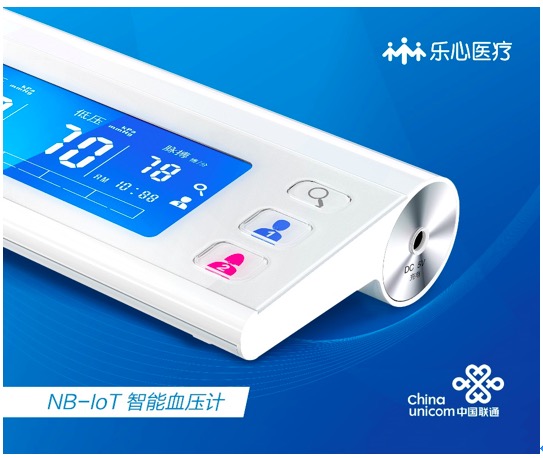
Huawei, Lifesense Medical, and China Unicom Guangdong Branch initiated their collaboration in November. Following preliminary technical discussions on solutions and equipment selection, the three parties confirmed the launch of a partnership for NB-IoT-enabled smart blood pressure monitors. After nearly two months of joint technical efforts, service debugging for the smart blood pressure monitors was successfully completed within the live NB-IoT network environment of China Unicom Guangdong Branch.After each use, the smart blood pressure monitor automatically uploads measurement data via the NB-IoT wireless network to the Smart Health Cloud Platform for analysis and organization. It then generates real-time health charts and analytical reports, which are delivered to users through a mobile app or WeChat Official Account. This enables users to monitor personal and family health data and track health trends anytime, anywhere.Leveraging the technical advantages of NB-IoT, such as low power consumption and deep coverage, the product enhances energy efficiency. It also resolves the issues associated with traditional GPRS-based wireless backhaul, including poor signal coverage in certain areas and difficulties in data upload, thereby further improving the customer experience.
NB-IoT (Narrow Band Internet of Things) is a cellular-based narrowband IoT technology and an important technical branch within the Internet of Things (IoT) domain. Built on cellular networks, NB-IoT consumes only approximately 180 kHz of bandwidth and can be directly deployed on GSM, UMTS, or LTE networks to reduce deployment costs and enable seamless upgrades.
There are many wireless communication technologies for the Internet of Things (IoT), which can be mainly divided into two categories: one includes common short-range communication technologies such as Zigbee, Wi-Fi, Bluetooth, and Z-Wave; the other is LPWAN (Low-Power Wide-Area Network). NB-IoT is a technology within the LPWAN category that supports efficient connectivity for devices with long standby times and high requirements for network connections. It is reported that the battery life of NB-IoT devices can be extended to up to 10 years, while also providing comprehensive indoor cellular data coverage.
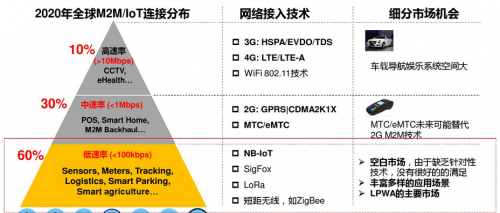
As shown in the figure above, high-rate wireless services primarily utilize 3G and 4G technologies, while medium-rate services mainly rely on GPRS technology. Low-rate services currently lack adequate cellular technological support; however, they encompass a diverse range of application scenarios. In many cases, data uploads are forced to rely on suboptimal GPRS connections. In early 2013, Huawei began collaborating with industry vendors and carriers to develop narrowband cellular IoT solutions, ultimately leading to the creation of NB-IoT technology. NB-IoT offers unique advantages not found in other technologies, including extensive coverage, low power consumption, massive connectivity, low cost, high security, and plug-and-play functionality. It holds broad application prospects in fields such as smart parking, wearable devices, smart healthcare, and smart home appliances.
Founded in 2002, Lifesense focuses on the smart health sector, currently prioritizing two main directions: “smart wearables” and “mobile healthcare.” Its product portfolio includes hardware devices such as wearable fitness bands (watches), electronic health scales, body fat analyzers, and electronic blood pressure monitors. Additionally, it provides integrated software and smart hardware solutions for areas including fitness-based weight loss and chronic disease management. On November 16, 2016, Guangdong Lifesense Medical Electronics Co., Ltd. was officially listed on the ChiNext Board of the Shenzhen Stock Exchange, becoming the first publicly traded company in the smart hardware sector.