

Nokia's Withings Follows Fitbit's Fate? Apple Quietly Removes Its Health Devices Amid Patent Dispute
Recently, Apple quietly removed all products from Nokia’s subsidiary Withings during the Christmas holiday period, including iOS-compatible devices such as the Body Cardio scale and wireless blood pressure monitors.
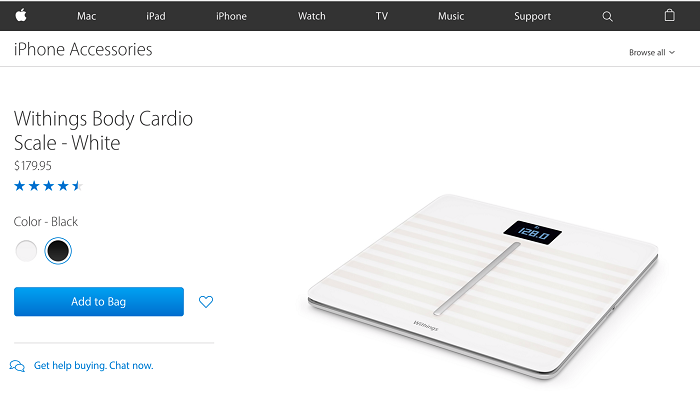
Withings, formerly sold in iPhone AccessoriesBody CardioThe smart scale has disappeared.
The delisting date remains unknown, but Withings products are no longer visible on Apple’s official website or in its physical stores. Apple has moved swiftly; not only have the products disappeared, but all other Withings-related content has also vanished from their databases. For instance, auto-suggestions for “Withings,” “Body Cardio Scale,” “Wireless Blood Pressure Monitor,” and “Smart Body Analyzer” in the iOS input method are now completely gone.
Apple’s move appears clean and decisive, yet the underlying rationale is far more complex than it seems on the surface.
Withings is a company specializing in health and medical accessories. It has enjoyed a pleasant partnership with Apple for over two years, maintaining a mutually beneficial relationship. Although some of its products, such as the Steel smartwatch, compete with Apple’s offerings, most Withings products outside this competitive sphere are labeled as iOS-compatible, thereby reaping numerous benefits from the Apple App Store.
Former mobile phone giant Nokia has lost its competitive edge in today’s market, but it appears to be taking an interest in smart health and medical device companies and is increasing its investments in this sector. In April of this year, Nokia acquired Withings for $192 million, after which Withings’ products continued to be sold in Apple Stores. However, recent patent disputes seem to have soured this partnership.
Last week, Nokia filed lawsuits against Apple in Germany and the United States, alleging that Apple infringed upon 32 patents covered under agreements from 2013 and 2016. The legal action has since expanded to 11 countries, totaling 40 separate lawsuits.
“Thanks to our years of investment, research, and development in technology, Nokia has laid the foundation for many of today’s mobile device technologies. Apple’s products have also benefited significantly,” said Ilkka Rahnasto, Head of Patent Business at Nokia, in a statement. “After years of negotiations with Apple to secure the patent compensation we deserve, without success, we have decided to take action to protect our rights.”
Apple, in turn, struck back at Nokia with an antitrust lawsuit, accusing it of orchestrating a patent conspiracy by removing certain patents from the 2011 agreement (which was reportedly valued at $720 million) to “extort higher fees” from smart-device vendors such as Apple; it also alleged that Nokia fragmented its patent portfolio and colluded with patent assertion entities such as Acacia and Conversant to split licensing profits.
“We respect intellectual property rights and are more than willing to purchase, at reasonable prices, all patented technologies we wish to incorporate into our products, ensuring that we never infringe upon the rights of patent holders,” Apple stated to the tech blog TechCrunch. “Unfortunately, Nokia has now escalated its efforts by attempting to claim Apple’s own patents as its own, seeking to extract additional revenue from Apple through unfair enforcement tactics. Apple will lead by example in safeguarding the rights of creators worldwide and combating such blatantly anti-competitive behavior.”
At present, Apple has not explicitly acknowledged that the removal of Withings products is related to patent disputes, nor do the lawsuits involve Withings’ patents. However, the timing of these two events coincides, inevitably prompting speculation about a potential causal link. Apple has previously removed products from sale due to disputes with companies; for instance, in November 2014, Apple delisted all Fitbit products from its physical stores and official website, reportedly because Fitbit refused to integrate its app into Apple’s HealthKit platform.