

StartUp Health Releases 2016 Annual Digital Health Investment Report: Mega-Deals Dominate the Landscape
As 2016 draws to a close, the healthcare sector has witnessed several notable developments. For instance, numerous large-scale financing and investment deals have accounted for more than half of the total investment volume, seemingly debunking the notion of a “capital winter.” However, an analysis of capital flows and financing timelines reveals that the duration from seed round to Series A completion has slowed down in 2016 compared with the fervent years of 2014 and 2015. StartUp Health has released its 2016 Digital Health Funding Report, which VCBeat (WeChat ID: vcbeat) has summarized for you to review the unicorn companies and intriguing investment firms that emerged over the past year.
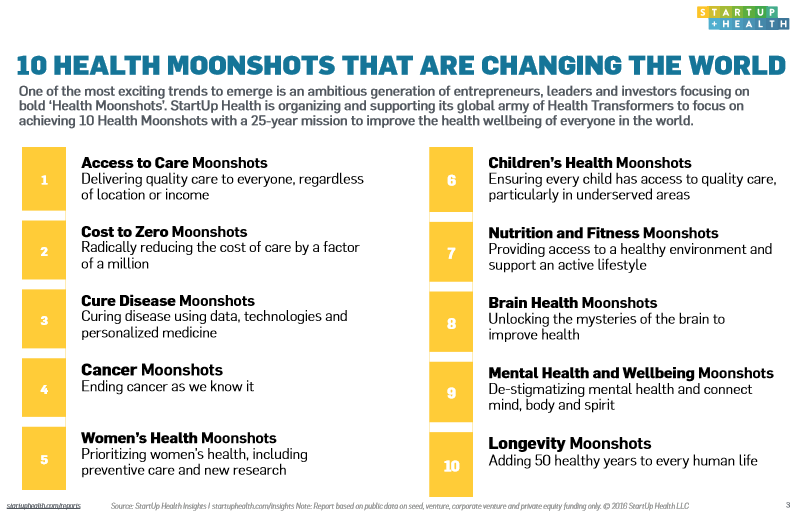
One of the most exciting trends to emerge this year is that an ambitious generation of entrepreneurs, founders, and investors is focusing on bold “Health Moonshots.” StartUp Health is organizing and supporting its global community of Health Transformers, dedicated to achieving 10 Health Moonshots with a mission to improve the health and well-being of every person in the world over the next 25 years. These 10 Moonshots are:
1、Nursing for the General Public.Provide high-quality care to everyone, regardless of location or income.
2、Reduce healthcare costs.Fundamentally reduce healthcare costs.
3、Disease Cure. Achieving disease cures through big data, new technologies, and personalized medicine.
4、Cancer.The fight against cancer will continue.
5、Women's Health.Focus on Women's Health: Preventive Care and New Research
6、Child Health.Ensure that every child has access to high-quality care, especially in underdeveloped areas.
7、Nutrition and Fitness.Provide a healthy environment to support an active lifestyle.
8、Brain Health.Unlocking the Mysteries of the Brain, Enhancing Brain Health.
9、Mental Health.Recognize the Importance of Mental Health: Reconnect Mind, Body, and Spirit.
10、Longevity.Extend Every Life by 50 Years.
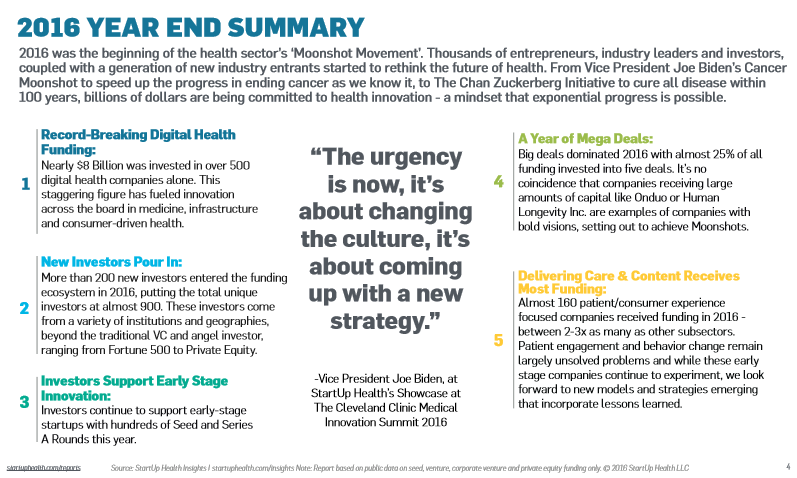
2016 marked the inaugural year of the “Moonshot” movement in healthcare. Thousands of entrepreneurs, industry leaders, investors, and a new generation of market entrants began to rethink the future of the healthcare sector. From Vice President Joe Biden’s “Cancer Moonshot” initiative aimed at accelerating progress toward ending cancer, to Mark Zuckerberg’s pledge to cure all diseases within 100 years, billions of dollars have been invested in health innovation. It is foreseeable that exponential advancements in this field are achievable. Below are the five most representative events and trends of 2016.
1. Record-Breaking Financing
More than 500 digital health companies have raised nearly $8 billion. This surprising surge in capital has spurred comprehensive innovation across healthcare, infrastructure, and consumer-driven health models.
2. Influx of New Investors
In 2016, more than 200 new investors entered the substantive funding ecosystem, bringing the total number of healthcare investors to nearly 900. These investors hailed from diverse institutions and regions, ranging from Fortune 500 companies to private equity firms, going beyond traditional venture capital and angel investors.
3. Investors Focus on Early-Stage Startups
Investors continued to support early-stage startups, such as those in seed and Series A financing rounds, this year.
4. Large Transactions Dominate
In 2016, mega-deals dominated the landscape, with nearly 25% of capital invested in just five transactions (detailed data provided below). Companies that secured substantial funding, such as Onduo (diabetes) and Human Longevity Inc. (genomics), are typical examples of ventures with bold visions.
5. Patient-Centered Enterprises Are the Most Numerous
In 2016, nearly 160 companies primarily focused on patient/consumer experience secured total financing that was two to three times greater than that of other types of companies. Although these early-stage companies continue to exert effort, patient engagement, management, and behavior change remain significant unresolved challenges in the healthcare sector. Drawing on lessons learned, we anticipate the emergence of new models and strategies.
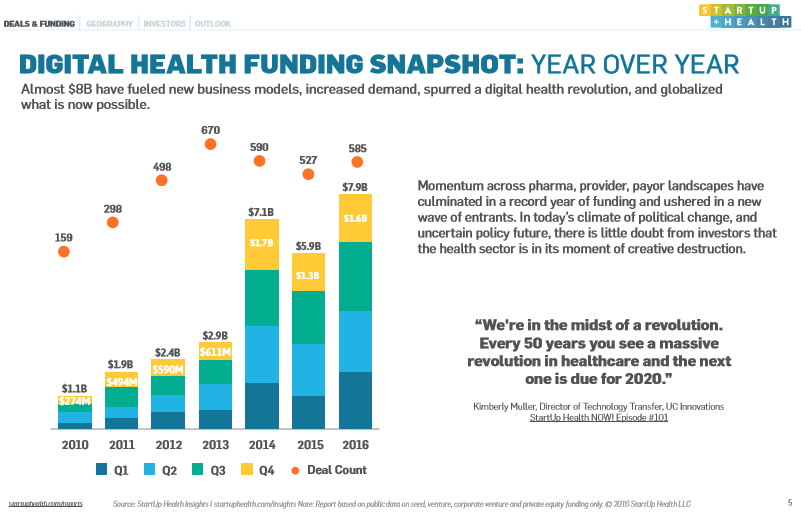
Annual Data Analysis.The total funding of $7.9 billion this year, spanning pharmaceuticals, medical suppliers, payers, and other sectors, has driven the formation of new business models, increased demand, stimulated the digital health revolution, and enabled globalization. Amid today’s atmosphere of political change and policy uncertainty, the healthcare sector is undoubtedly undergoing a period of creative destruction, with transformative innovations expected by 2020.
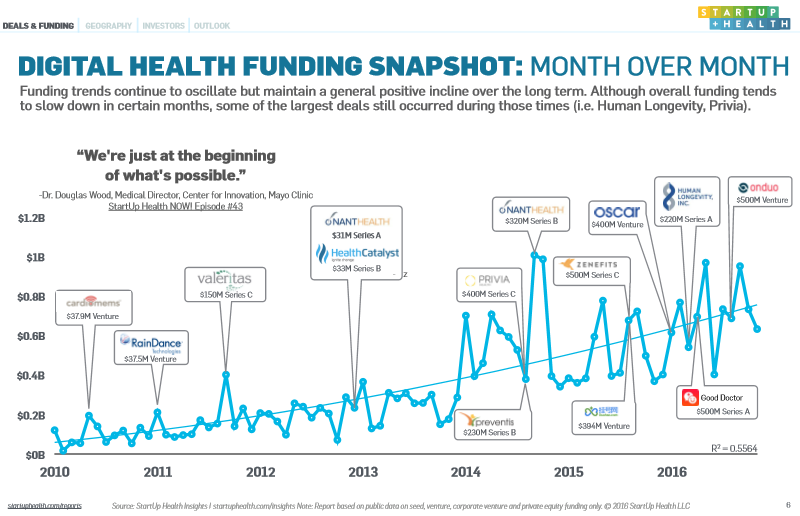
Monthly Data Analysis.The financing trend curve continues to oscillate but maintains a normal positive slope in the long term. Although overall funding slowed in certain months, some of the largest deals still occurred during those periods (i.e., Human Longevity, Privia).
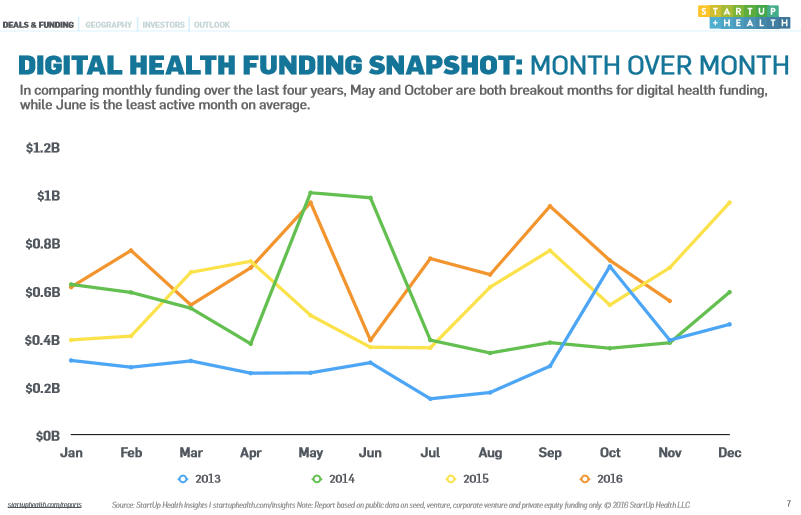
Monthly Data Analysis.A comparison of monthly funding over the past four years reveals that May and October were peak months for digital health financing, while June was the least active.
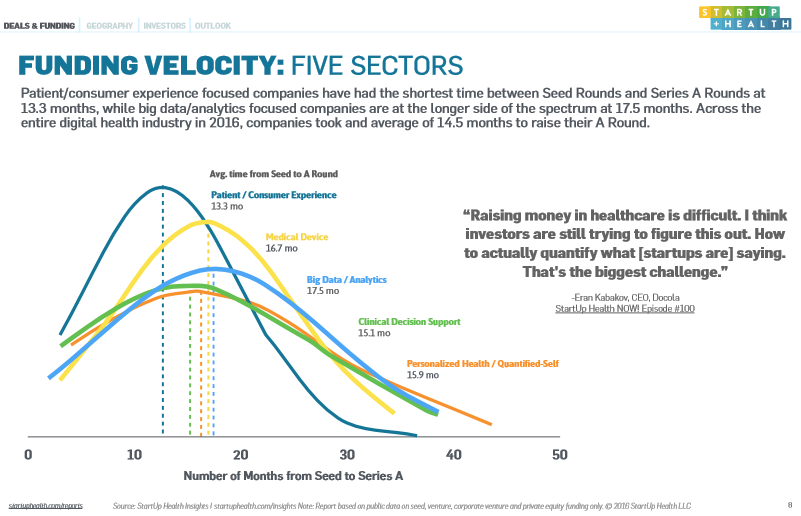
Fund Flow: 5 Categories.The average time from seed round to Series A for companies focused on patient/consumer experience was the shortest at 13.3 months, while companies specializing in big data/analytics took the longest at 17.5 months. Others followed in order: health devices at 16.7 months, personalized medicine at 15.9 months, and clinical decision support at 15.1 months. Across the entire digital health industry in 2016, all companies spent an average of 14.5 months to achieve Series A financing.
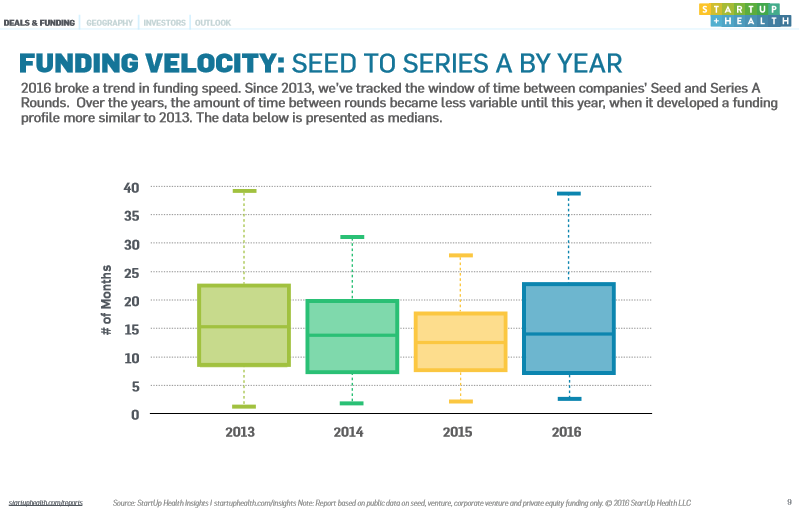
Capital Flow: Seed Round to Series A, Annual Analysis.The above data are presented as medians. The trend in funding speed was broken in 2016. Since 2013, StartUp Health has tracked the time windows for companies to achieve seed and Series A financing. Over the years, the duration between rounds remained relatively stable, until this year, when it more closely resembled the funding profile and timeframe observed in 2013.
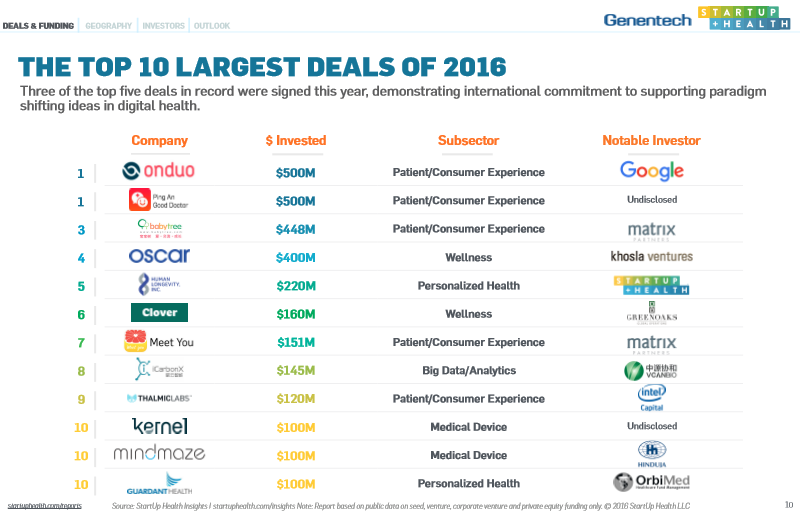
Top 10 Transactions of the Year.The three highest-level transactions completed this year have demonstrated that a global consensus has been reached in support of the paradigm shift in the digital health sector.
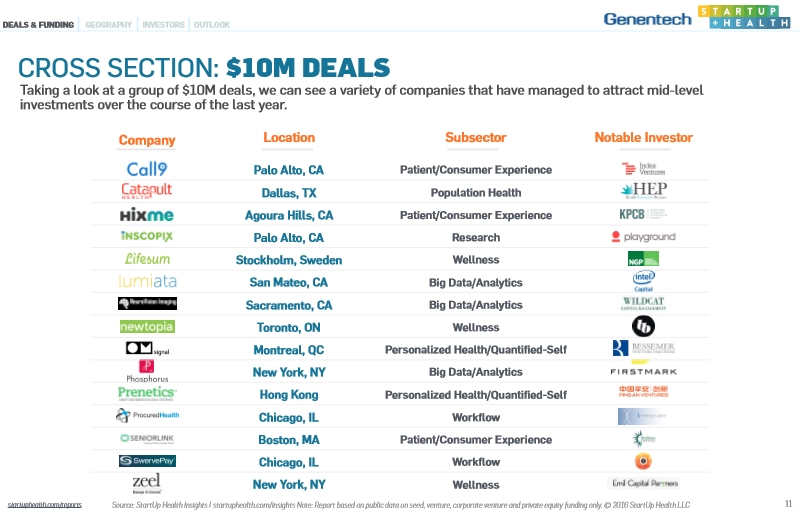
$10 million transaction.Looking at a set of $10 million deals, we can see that various companies have attracted mid-sized investments over the past year.
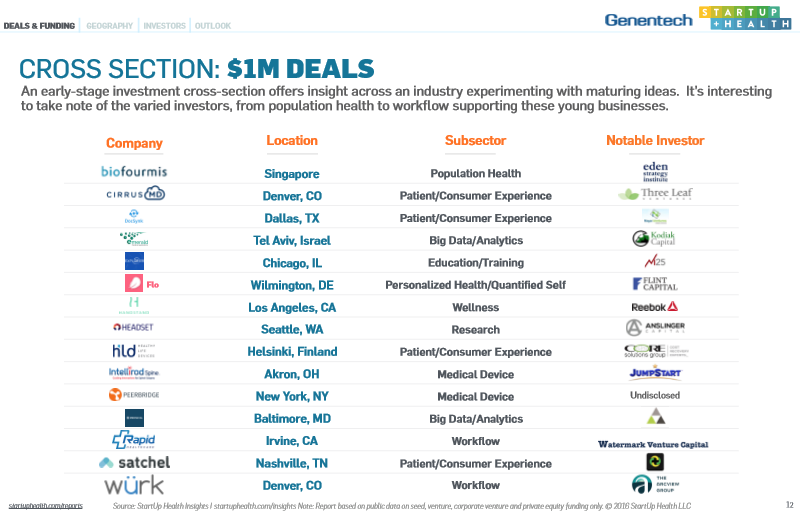
$1 Million Deal.Investments in early-stage companies provide insights into mature concepts within the industry. Interestingly, a diverse range of investors—from those focused on population health to those in workforce management—support these young enterprises.
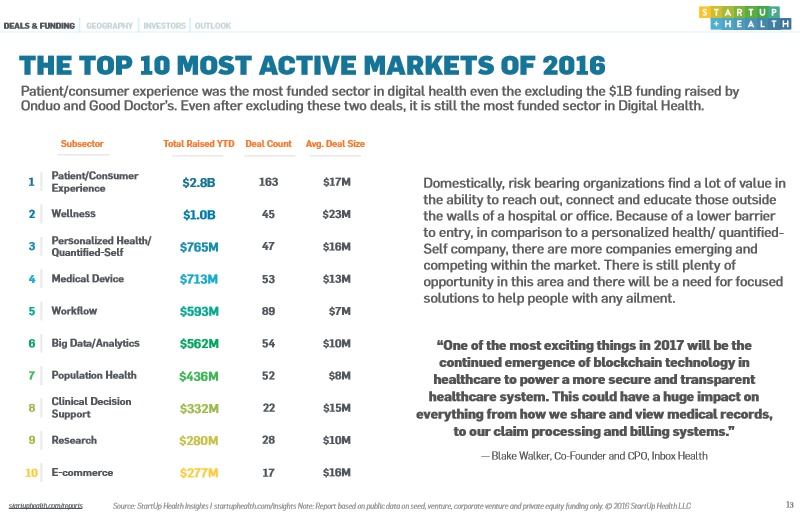
Patient/consumer experience is the most heavily funded sector in digital health, even excluding the $1 billion raised by Onduo and Good Doctor. The top ten sectors are, in order: patient/consumer experience ($2.8 billion, 163 companies), health management platforms ($1 billion, 45 companies), personalized medicine ($765 million, 47 companies), productivity enhancement ($593 million, 89 companies), big data/analytics ($562 million, 54 companies), population health management ($436 million, 52 companies), clinical decision support ($332 million, 22 companies), research ($280 million, 28 companies), and e-commerce ($277 million, 17 companies). In China, risk-bearing organizations offer significant value in their ability to reach, connect with, and educate individuals outside hospitals or beyond the hospital walls. Due to lower barriers to entry, more companies have entered the market and are competing compared to those in the personalized health sector. There remain substantial opportunities in this field, with a continued need for targeted solutions to help people manage and treat diseases.
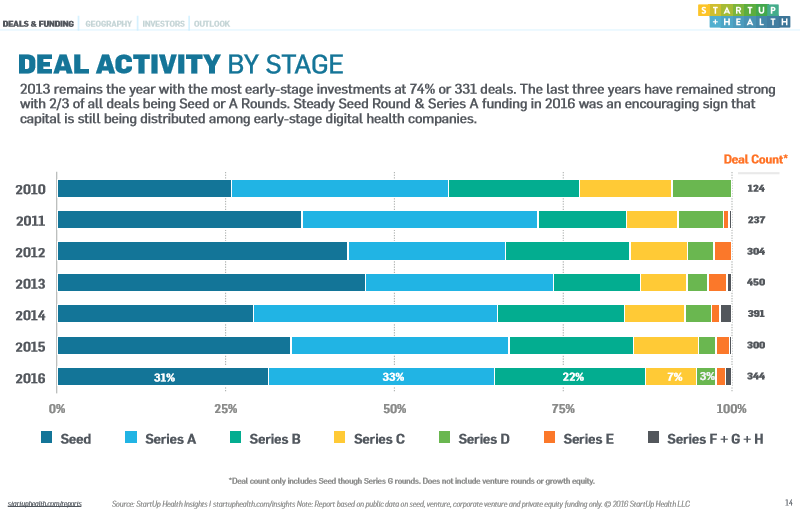
2013 remained the year with the highest volume of early-stage investments, accounting for 74% of the total, with 331 deals. The sector has maintained strong momentum over the past three years, with two-thirds of all transactions being seed or Series A rounds. The steady pace of seed and Series A financing in 2016 is an encouraging sign, indicating that capital continues to seek opportunities in early-stage digital health companies.
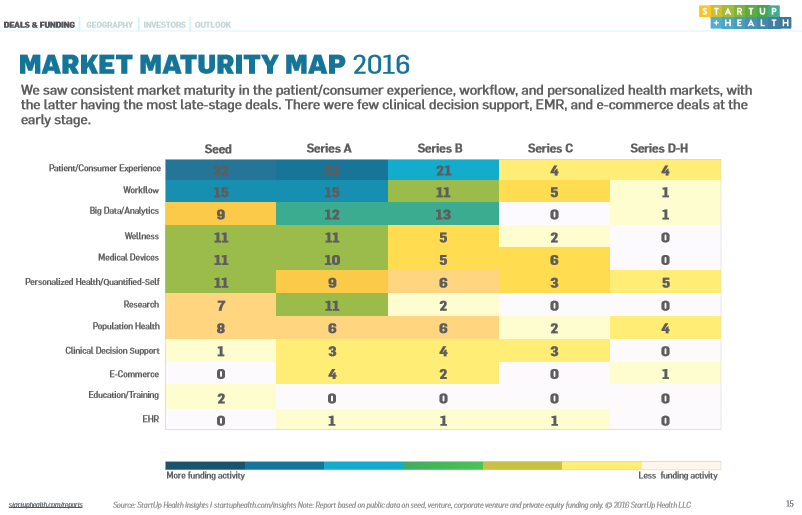
2016 Market.The markets for patient/consumer experience, workflow efficiency improvement, and personalized medicine are relatively mature. Very few companies in the fields of clinical decision support, EHR, and electronic transactions remain in the early stages. (From left to right, funding activity shows a decreasing trend.)
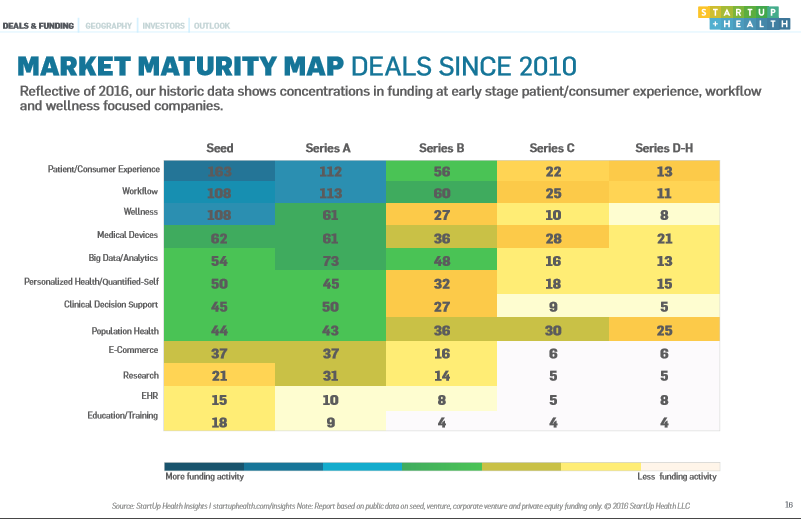
Market since 2010.Compared with the 2016 data, our historical records indicate that capital is concentrated in companies focused on patient/consumer experience, workflow efficiency improvement, and early-stage health management. (From left to right, funding activity shows a decreasing trend.)
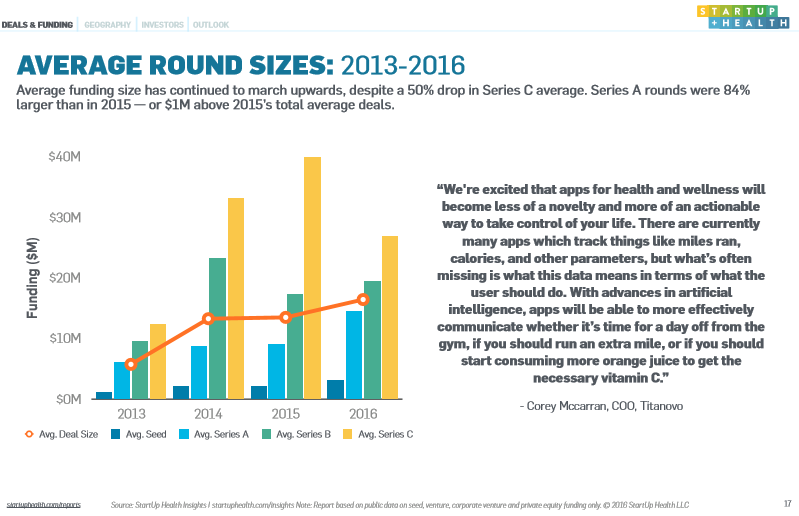
From 2013 to 2016, the average transaction amount continued to rise, despite a 50% decline in the average size of Series C financing. Series A transactions increased by 84% compared to 2015, representing an increase of $1 million over the 2015 average transaction value.
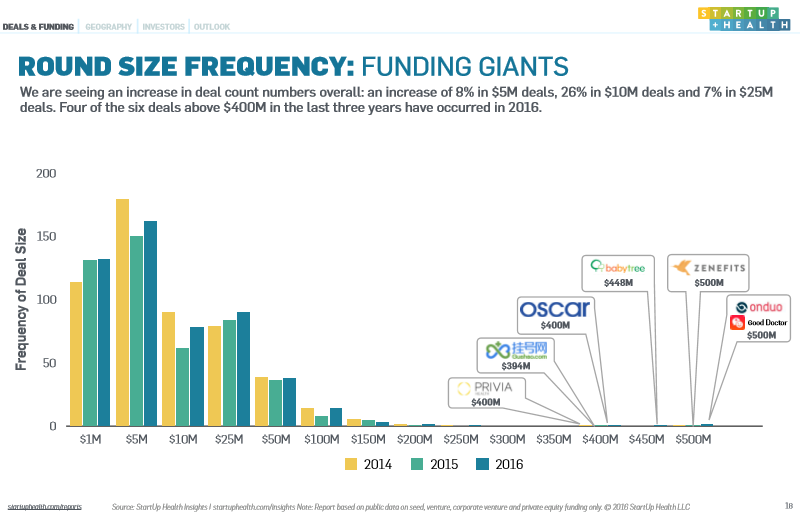
Frequency of Different Financing Transaction Sizes, 2014–2016.Overall transaction volume increased, with $5 million deals rising by 8%, $10 million deals growing by 26%, and $25 million deals increasing by 7%. Four of the six transactions in the past three years exceeded $400 million, all of which occurred in 2016.
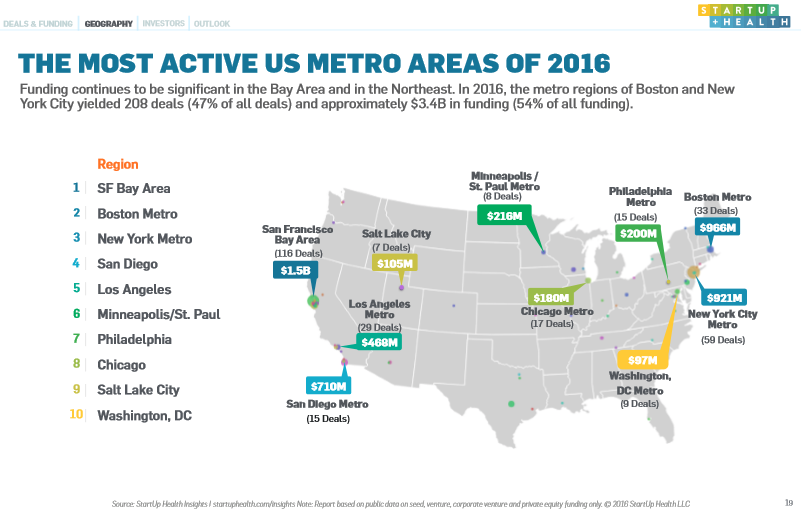
United States.Capital continues to concentrate in the Bay Area and the Northeast. In 2016, Boston and New York City accounted for 208 deals (47% of all deals) and approximately $3.4 billion in funding (54% of total funding).
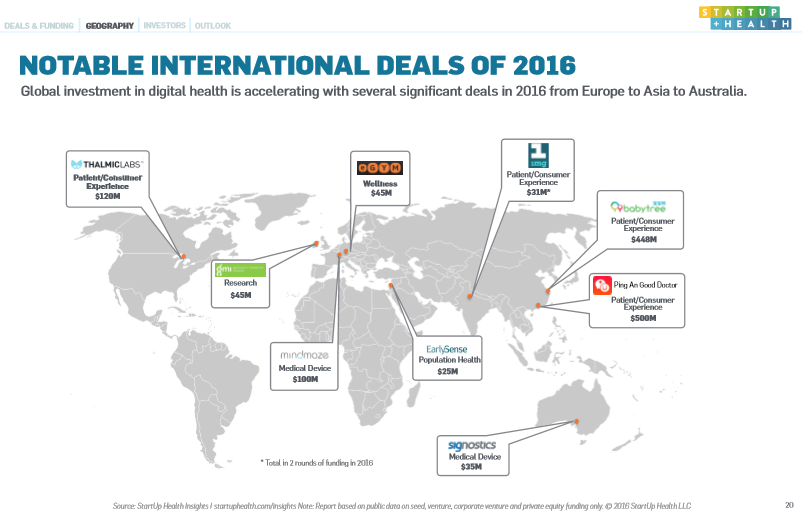
Global.In 2016, global investment in digital health was accelerating, with several significant deals closed across Europe, Asia, and Australia.
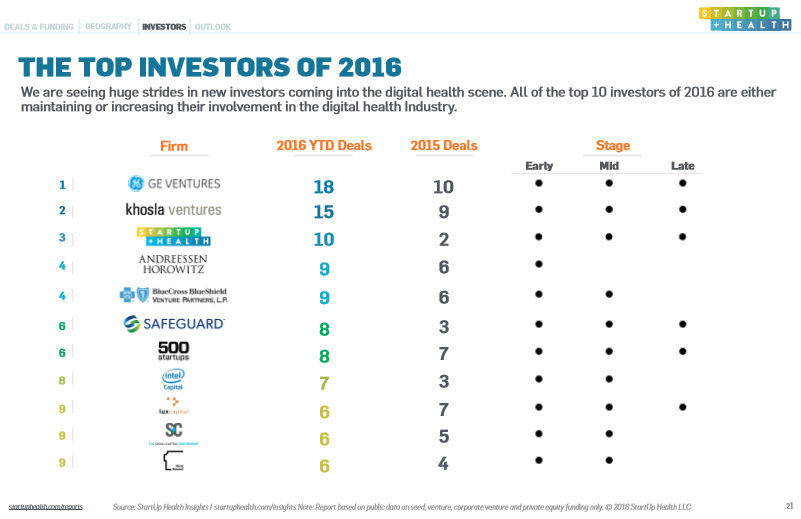
We are seeing many new investors entering the digital health sector. The top 10 investors prior to 2016 have all maintained or increased their engagement in the digital health industry.
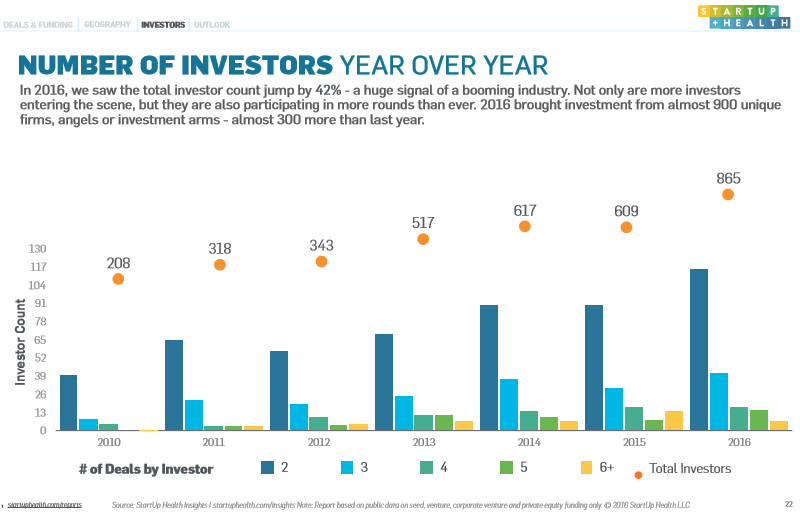
Annual Number of Investors, 2010–2016. In 2016, we observed a 42% increase in the total number of investors, a strong indicator of robust industry growth. Not only did more investors enter the market, but they also participated in more investment rounds than ever before. In 2016, 900 companies received investments from independent corporations, angel investors, or institutional investors, representing an increase of nearly 300 companies compared to the previous year.