

How IoT and Big Data Are Transforming Healthcare: Insights from dorsaVi and THINKmd
The Internet of Things (IoT) is penetrating various industries, enabling devices to “speak,” with every bit of information subject to the keen scrutiny of big data. The healthcare industry has substantial demands for data recording in both scientific research and clinical treatment; therefore, IoT-enabled big data will undoubtedly unlock its greater potential.
In the United States, where the Internet of Things (IoT) is more mature, the applications of the Medical Internet of Things (IoMT) primarily focus on three major areas: wearables, remote patient monitoring, and telemedicine. All three areas are centered on tracking what happens to specific individuals at specific times. According to market forecasts by Allied Market Research, the global market value for healthcare IoT—including medical devices (such as wearables, implantable medical devices, and other sensors), medical systems and software (networks, databases, and analytics layers), and services (including architecture, consulting, and development)—is projected to reach $136.8 billion by 2021.
This article discusses two representative companies in the Medical Internet of Things (IoMT) that effectively integrate healthcare with forward-looking technologies and data, thereby extending the reach of high-quality medical services to a broader population.
dorsaVi: A Company Addressing Muscle Pain and Injury
Founded by Andrew Ronchi, a physiotherapist from Melbourne, Australia, dorsaVi is dedicated to using medical-grade sensors and software to address injuries that may occur in three settings: manual labor, clinical practice, and professional sports training.
In response to these scenarios, dorsaVi has introduced three distinct solutions. The first, ViSafe, is designed to enhance workplace safety by measuring the range of motion and work intensity of employees (such as material handlers in warehouses) while they perform their tasks. The second, ViMove, includes sensors with varying firmware and analytical tools that visualize the mechanics of various postures and their impact on the body. While primarily used in clinical physical therapy, it can also capture movement data during daily activities and provide timely alerts when problematic exercise postures are detected. The third solution, ViPerform, targets elite competitive athletes, ensuring their movement patterns are both highly efficient and healthy.
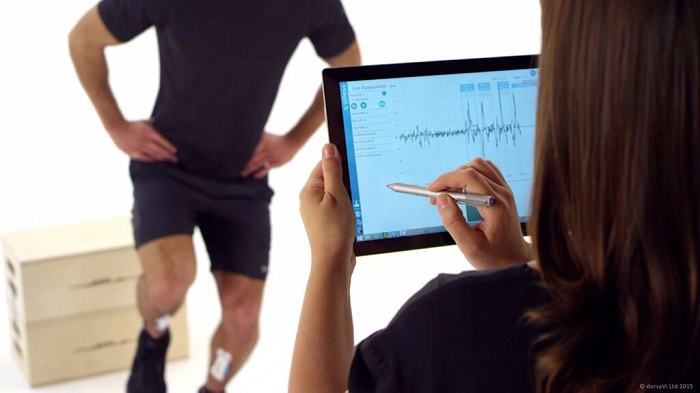
dorsaVi’s motion sensors can transmit data to devices.
All product lines from dorsaVi incorporate two distinct types of sensors within their accelerometers, magnetometers, and gyroscopes. One type measures the range of motion for joint flexion, torsion, or stepping; the other monitors muscle activity to quantify the force exerted during these movements. The company’s first-generation products transmitted data locally via Wi-Fi, where algorithmic software provided exercise guidance. The upcoming next-generation products will utilize Bluetooth technology to connect to local computers for processing, while storing de-identified data in the cloud for long-term trend analysis. Cloud storage is employed to address a key characteristic of IoT data: individual data points may appear insignificant initially, but gradually reveal greater value and insights as they accumulate over time.
dorsaViThe Company's Most Widely UsedProduct, there is also ViSafe, which can reduce occupational hazards. A report from the U.S. Bureau of Labor Statistics indicates that in 2015, nearly 2.9 million non-fatal injury incidents occurred in private companies across China, with 75% taking place in the service sector and 25% in the manufacturing industry. However, the value of ViSafe stems from its continuous analysis of data and the ongoing correction and adjustment of improper practices.
THINKmd: A Company Combining Clinical Guidance with Population Health Statistics
The second company to be discussed here also boasts a clear vision, robust technology, and an expanding team, gradually making its mark on the international stage. THINKmd, headquartered in Burlington, Vermont, is a global medical technology company whose solutions are bringing healthcare into communities and benefiting more households. Their goal is to provide tools and information to caregivers lacking formal medical training, empowering any community health worker to maximize their positive impact.
THINKmd’s first product, MEDSINC, was conceived by the company’s founder, Barry Finette, a pediatrician at the University of Vermont. While providing medical aid in countries with scarce healthcare resources, Finette observed that many children died from non-fatal diseases—deaths that could have been entirely prevented with minimal training for local caregivers. According to a 2015 UNICEF report, nearly 6 million children under the age of five die each year from preventable diseases such as pneumonia, dehydration, and infectious diseases. MEDSINC addresses this global challenge in pediatric healthcare by leveraging software that rapidly generates diagnostic assessments and treatment recommendations, thereby improving therapeutic outcomes and reducing child mortality rates.
“With no more than two hours of training, community healthcare workers can master the operation of the MEDSINC platform, entering key clinical and treatment data via smartphones or tablets, after which the system generates comprehensive assessments, disease diagnoses, and therapeutic recommendations,” explained Dr. Finette. He added that the specially designed backend algorithms of the MEDSINC platform can mimic pediatricians’ diagnostic processes, yielding highly credible results while simultaneously evaluating multiple critical conditions.
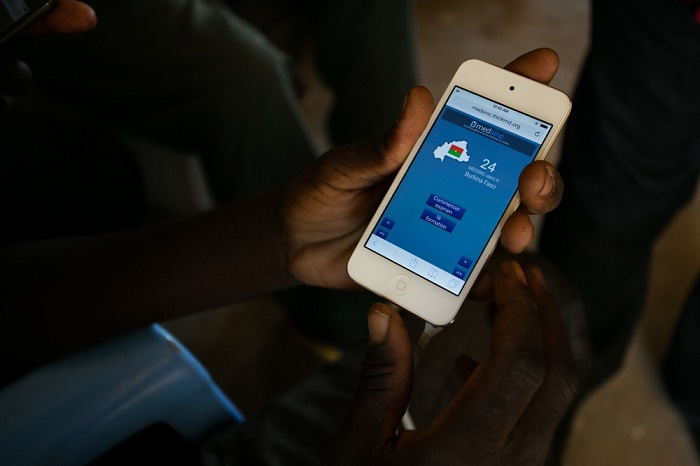
THINKmd Mobile Clinical Guidance Software
In addition to providing clinical guidance to frontline healthcare workers, MEDSINC also serves as a data capture platform. During each clinical assessment, the system captures 40–50 data points related to population health and epidemiology. All personally identifiable information has been fully anonymized; however, the data retain geographic and temporal markers, thereby effectively supplementing population health data in regions with limited healthcare resources and sparse data availability.
Once widely deployed, THINKmd’s medical data will exert a significant impact. MEDSINC will collect extremely valuable medical datasets from various regions in developing countries, with the key utility lying in its ability to rapidly track the spread of infectious diseases. Currently, the most common approach to understanding disease situations remains obtaining situation reports from affected areas; however, both data acquisition and feedback involve certain delays, leading to substantial deviations when predicting the timing of potential disease outbreaks. THINKmd’s approach represents nearly the optimal application of big data in population health—rapidly acquiring first-hand, real-world information to enable global health agencies and governments to take swift action and save lives.
Conclusion
The product development journeys of dorsaVi and THINKmd are remarkably similar—healthcare professionals identified a need, driven by a sense of responsibility, they integrated their clinical expertise with technological solutions, and after achieving favorable outcomes, brought these innovations to market.
There are many other companies, such as dorsaVi and THINKmd, that will gradually “expand” the Internet of Medical Things (IoMT). Data flow among various medical units will become as agile as communication between neurons in the brain, turning the industry into a thinking “brain” that continuously generates bright ideas and new insights.