

India's Troubled Generic Drug Clinical Trial Industry: Data Manipulation and Cost-Cutting Practices Persist
India’s generic drug industry is a lucrative market, but it faces numerous challenges. The 2016 data fabrication scandal at Semler Research Center had a significant impact on companies cited in announcements by the WHO and the FDA. This incident also triggered strong protests from Indian pharmaceutical companies and even the Indian government. Reuters has offered some reflections on the current state of the generic drug industry, which VCBeat (WeChat ID: vcbeat) has compiled for you.
Three years ago, Vasudeva Prakash quit his job as a mechanic in Hyderabad to pursue what he believed was a more “lucrative” career: participating in clinical trials for generic drugs.
Over the past two years, Prakash has participated in clinical trials for drugs treating HIV/AIDS and other diseases, conducted by Contract Research Organizations (CROs) affiliated with international pharmaceutical companies. In India, undergoing CRO testing is a critical step for drug approval, enabling global distribution and sales.
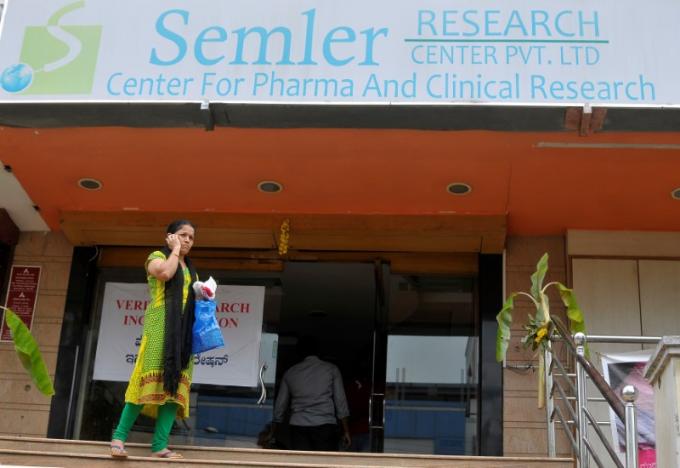
The clinical research and bioanalysis conducted at the Semler Research Center in Bangalore had serious data integrity issues and has been shut down.
However, Prakash did not follow international testing guidelines for drug trials, nor did the CRO organization that employed him require him to do so. He stated that, in order to earn more money, he continuously participated in multiple drug trials one after another, with intervals of only a few weeks or even days between consecutive studies, rather than waiting 90 days as recommended by the World Health Organization.
Among more than a dozen generic drug clinical trial volunteers interviewed by Reuters in Chennai, Hyderabad, Bengaluru, and New Delhi, half reported that the interval between consecutive drug trials was less than 90 days. Over the past three to four years, they have spent months traveling across multiple cities in one go to participate in as many research studies as possible and maximize their income.
Documents provided by Prakash demonstrate that he participated in short-interval trials conducted by the Canadian pharmaceutical company Apotex at Apotex Research Pvt Ltd, as well as at Lotus Labs, which belongs to the U.S. generic drug giant Actavis, Inc.; Ethics Bio Lab, which has been part of the U.S. pharmaceutical company Par Pharmaceutical Companies, Inc. since last year; and Semler Research Center Pvt. Ltd. in India, among others. Neither Ethics Bio nor Apotex responded to the incident. Lotus Labs and Semler stated that they have established systems to check whether trial volunteers are concurrently participating in multiple drug trials.
The World Health Organization’s guidelines dictate that the approval of drugs marketed in several countries should be based on the UN Model List of Essential Medicines; however, these guidelines are not legally binding for contract research organizations (CROs). Although India also has clinical trial guidelines, they do not specify the exact duration of the interval that participants must observe between trials.
Nevertheless, the sequential clinical drug trials involving these volunteers have raised new questions about the regulatory standards of India’s generic drug testing industry, particularly after certain CRO organizations underwent recent international regulatory scrutiny. Last year, investigations revealed that clinical trial data for generic drugs in India had been falsified, prompting the European Medicines Agency to ban approximately 700 medications across Europe.
International medical experts believe that continuous clinical trials jeopardize the health of participating patients. However, the clinical data collected from these trials can support regulatory approval, allowing pharmaceutical manufacturers to market their generic drugs worldwide.
WHO Chief Inspector Stephanie Croft explained, “The interval between participation in two different drug trials should be at least 90 days. Incomplete or inaccurate clinical trial data may pose a serious threat to the life and health of patients taking the medication.”
Gyanendra Nath Singh, head of India’s national drug regulatory agency, the Central Drugs Standard Control Organization (CDSCO), stated that over the past two years, they have been striving to inspect more contract research organizations (CROs). The regulatory body is also considering the introduction of a traceability system that would enable tracking of patient participation in CRO-led clinical trials. He further revealed to Reuters, “In fact, we have consistently worked to enforce stringent regulation, but some reports indicate that CROs have deviated from the established system.”
The Indian Ministry of Health did not respond to this.
Several major international pharmaceutical manufacturers, including Teva Pharmaceutical Industries Ltd. (TEVA.TA) and Mylan NV (MYL.O), rely on Indian CROs to conduct testing on low-cost versions of branded drugs.The purpose of these so-called “bioequivalence” studies is to verify whether non-branded drugs are as safe and effective as brand-name drugs. The faster the trials are conducted, the sooner the drugs can reach the market.。
In major markets such as the United States, the establishment of a generic drug exclusivity framework ensures a period of market exclusivity, enabling companies to generate millions of dollars in sales revenue.
As pharmaceutical manufacturers increasingly shift clinical trial operations to the Indian market to cut costs, international and local regulatory agencies are striving to keep their oversight pace in step with the rapid expansion of this industry, which surged in 2000. According to the consulting firm Frost & Sullivan, the market was valued at over $1 billion in 2016.
Over the past two years, international regulatory agencies have suspended or banned drugs tested by four Indian CROs after uncovering fabricated clinical trial data and other violations.
“Contract research organizations (CROs) in India have found that ‘this has become a major issue and is attracting increasing attention from various agencies,’” said Anders Fugerson, a consultant and former regulator who conducts CRO audits and inspections worldwide on behalf of international regulatory authorities and companies.
Last year, the European Union banned approximately 700 drugs whose clinical data had been submitted for approval based on trials conducted by GVK Biosciences, India’s largest contract research organization (CRO). European regulators stated that they found GVK had manipulated cardiac reading data from patients participating in the studies. However, GVK denied any wrongdoing. Several major pharmaceutical companies that relied on GVK’s data to obtain marketing authorization for their drugs have also been required to reapply for approval, submitting new clinical study data.
"Pharmaceutical manufacturers are all grappling with the prospect of re-conducting clinical trials for their drugs, as it is quite costly and leads to substantial sales losses due to delays," said Nilesh Gupta, Managing Director of Lupin Ltd. (LUPN.NS) in India.
Shankar Chelluri, a spokesperson for the company, stated that GVK is part of India’s GVK Group, which has limited its business in generic drug testing.“Overall, the generic drug testing business is already quite sluggish,” said Chelluri.。
According to inspection reports from the World Health Organization (WHO) and the UK Medicines and Healthcare products Regulatory Agency (MHRA), it was discovered last year that another CRO organization, Quest Life Sciences, had manipulated data in certain clinical trials. Meanwhile, regulatory authorities in Spain and Germany also identified issues with Quest. The WHO stated that Quest is suspected of fabricating drug data, including for the antibiotic doxycycline hyclate and the HIV medications lamivudine, zidovudine, and nevirapine.
Quest’s General Manager, Jaishankar, stated that their CRO partners, including India’s top pharmaceutical manufacturer Sun Pharmaceutical Industries (SUN.NS), have conducted dozens of generic drug trials and subsequently made substantial investments to enhance their systems, which have now been approved by all international regulatory authorities. In a response to Reuters,“A spokesperson for the European Medicines Agency said they are ‘closely monitoring’ Quest’s drug approval.”。
Like other countries, India has its own ethics committees—panels of independent experts tasked with approving the design and conduct of clinical trials. Their formal approval is a prerequisite for foreign regulatory agencies to permit the sale of generic drugs. However, these committees rely on reimbursements from contract research organizations (CROs) for their survival, effectively exchanging favorable reviews for compensation. Three reviewers cited by Reuters stated that national guidelines fail to clearly define their roles and responsibilities.
According to consultants and industry executives, scandals involving the manipulation of clinical trial data by CROs have gradually come to light over the past three years, prompting many large pharmaceutical companies, including Swiss giant Novartis, to shift more critical trials to the United States and Europe.
Bodo Lutz, Head of Data Integrity at Novartis in Switzerland, stated that they are also shifting inspection focus toward Indian CROs. Furthermore, Bodo Lutz said at a conference held in Hyderabad in July, “We cannot rely solely on regulatory authorities; we are strengthening our own audit capabilities.。”
Prakash, a former mechanic, stated that he was never asked by CRO organizations or their management personnel whether he had ever participated in clinical trials.
“Once you start making money, it becomes difficult to quit and withdraw, almost like an addiction. Everyone finds it hard to avoid this reaction,” said Prakash.
He stated that after participating in a clinical trial for the first time, he began receiving regular messages via phone and Facebook, typically from agencies representing Contract Research Organizations (CROs), notifying him of ongoing clinical trials seeking volunteers. These messages primarily included three key pieces of information: the city where the trial was being conducted, the compensation offered, and the volume of blood required from volunteers.
Venkatesh, a volunteer from southern India, stated that he traveled across four cities—from Chennai to Hyderabad, and then from Bengaluru to Mangaluru—solely to participate in different clinical trials conducted in each location.
“I know of several individuals who participated in three or four trials within the same month,” said Venkatesh. Two months ago, he stopped volunteering for clinical trials and got married. He preferred not to disclose his full name.
Prakash stated that he received compensation ranging from 10,000 to 30,000 rupees ($147–$441) for each trial, with the amount depending on the duration and type of the drug trial. At just 25 years old, his health began to decline last year, prompting him to cease participation.
He currently works at a call center, earning a monthly income of only 20,000 rupees. However, despite being aware of the physical harms associated with participating in clinical trials, he has recently undergone two more trials to raise some cash.
“I desperately needed the money, so I went back, but I won’t do it again,” he said.
By: Zeba Siddiqui | HYDERABAD
Source: Reuters