

CES 2017 Preview: Women's Health Emerges as a Blue Ocean Amid Breakthroughs in AR/VR, Wearables, and AI
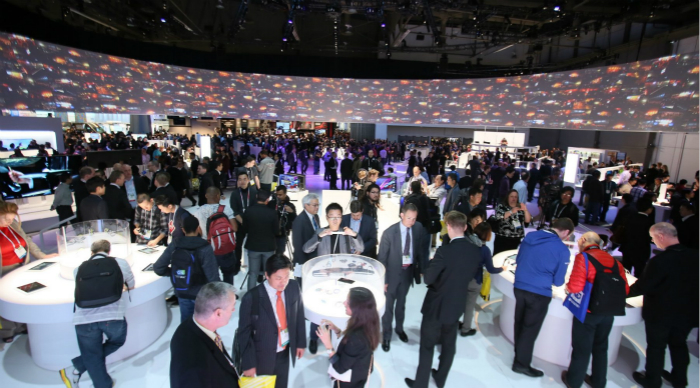
This year marks the 50th anniversary of CES. Over the past half-century, amidst changing tides, it has consistently explored the possibilities of closely integrating high-end consumer technology with daily life, thereby expanding its frontiers. If many consumer technologies were still in their nascent and untamed growth stages in 2016, then 2017 is clearly a year trending toward maturity.
Virtual reality (VR) and augmented reality (AR) may have already reached the mainstream; autonomous vehicles are brimming with limitless imagination; smart homes and the Internet of Things (IoT) have undergone further upgrades, with tech giants deeply entrenched in these sectors; 5G and cloud computing lay the foundation for faster, more efficient, and boundless connectivity; artificial intelligence is now widely used in agriculture, finance, retail, energy, and healthcare, where growing data volumes, more powerful hardware, and iterative algorithms are driving efficiency gains.
Although the vast array of startups at CES showcased dazzling technologies, not all of them achieved commercial viability; nevertheless, they did not hinder the paradigm shifts driven by technological innovation. The focus of technological development from 2017 onward will shift to the software layer, with enhanced interactivity, mobility, and connectivity in daily life emerging as future trends. As the industry most closely related to the general public, healthcare demonstrated strong momentum at this year’s CES, particularly in women’s health, augmented reality (AR) and virtual reality (VR), wearable devices, and artificial intelligence (AI), which may signal new directions for this year and beyond. VCBeat (WeChat ID: vcbeat) has provided a detailed review and report on these developments.

Ava, Which Predicts Women's Ovulation Periods, Raised $9.7 Million in Funding Last Year
“Femtech” is a buzzword that only began to appear frequently in 2016. Typically, the emergence of such a term indicates that the industry is still a blue ocean, not yet saturated into a red ocean market. In the past, digital tools developed specifically for women were scarce. However, since last year, a wave of wearable and biotechnology companies focused on female fertility has emerged, suggesting that the field of women’s health may be at a tipping point. At this year’s CES, women’s health devices are among the most anticipated highlights. These include Ava, which predicts ovulation, and Trakfertility, a sperm testing device (assisted reproductive technologies also fall under this category).
The global market size for assisted reproductive technology reached $22.3 billion in 2015 and is projected to reach $31.4 billion by 2023. Although the World Health Organization has classified infertility as a disease, fertility services still face challenges related to cost and technology. Clearly, female fertility care is an essential need with a vast consumer base.
In terms of product functionality and form, the core focus is on fertility assistance. Celmatix utilizes big data and genomics to improve assisted reproductive technologies; Prelude is dedicated to helping couples leverage technology to enhance fertility services; Progyny has begun offering premium services such as in vitro fertilization (IVF), egg freezing, adoption support, and fertility benefits (along with website updates); the telemedicine company Nurx is providing prescriptions for contraceptives and the HIV pre-exposure prophylaxis drug Truvada through a mobile application; Planned Parenthood’s Spot On app tracks symptoms such as menstruation, fatigue, cramps, bloating, and stomach pain, while also providing users with strict contraceptive reminders. Last July, Ava launched a wearable fertility tracking device capable of accurately recording ovulation periods to assist conception; priced at $199, it is classified as a Class I medical device and has received FDA approval.
In terms of financing, companies such as Bloomlife, Clue, Ava, OWHealth, and Progyny have secured funding, with Ava’s fundraising reaching the tens of millions of dollars. Ava, which maintains offices in both San Francisco and Switzerland, raised $9.7 million last November. The Ava bracelet uses sensors to monitor the fertile window in real time throughout a woman’s menstrual cycle, tracking nine physiological indicators corresponding to hormone levels and identifying ovulation timing through rising hormone levels. A clinical study conducted by the University Hospital Zurich demonstrated that the device accurately identified an average of 5.3 fertile days per cycle, with an accuracy rate of 89%. Larger-scale studies are planned for the future.
Of course, female digital health devices also face certain challenges, such as data privacy, data accuracy, and the need for further refinement in clinical applications.
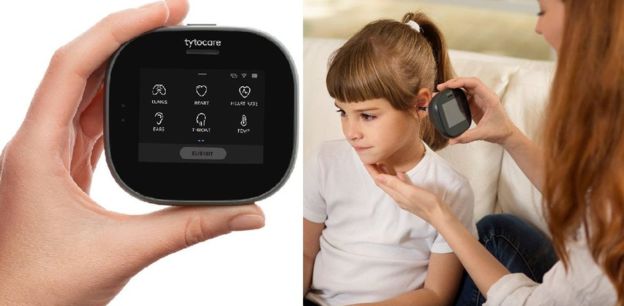
TytoHome can detect data from multiple organs and send it to doctors.
The Wearable Device Industry Has Been Anything But Calm This Year. Apple Watch appears to have stalled in innovation, Android Wear has been abandoned by manufacturers, and the prospects for the few remaining industry giants are far from optimistic. Jawbone’s UP line has been discontinued; Pebble, a pioneer in wearables, was acquired by Fitbit amid its CEO’s departure, with the transaction valued at under $40 million. Unicorn Fitbit has seen its valuation decline, coupled with dismal sales during the holiday season.
Nevertheless, strategic initiatives centered on general health and fitness remain the core focus of wearable devices. In this industry, not only have tech giants such as Google, Apple, and Microsoft all converged on heart rate monitoring wearables, but data tracking is also becoming increasingly concentrated beyond mere step counting and heart rate monitoring.
Beyond serving as health trackers, this year’s CES will showcase a variety of intriguing wearable technologies located beyond the wrist, such as clothing with embedded sensors and even exoskeletons. These include Milo Sensors, touted as the world’s first wearable device for detecting blood alcohol content; TytoHome, which assesses the condition of organs such as the heart, lungs, throat, and abdomen and shares the data with clinicians; ActiveProtective, expected to demonstrate a prototype smart belt for older adults that detects falls; Inemotion, which has developed ski racing suits with similar fall-detection capabilities to prevent injuries on the slopes; and Wair, a French company that produces anti-pollution smart scarves that also function as air filters.
Whether these devices will secure FDA approval in the future remains uncertain, as does the sustainability of their hardware-centric business model. What is beyond doubt is that data from wearable devices hold significant value for drug development and clinical guidance. It is conceivable that an all-in-one wearable device capable of diagnosing and monitoring all diseases may eventually emerge.

At CES, ODG will showcase new smart glasses offering augmented reality experiences and 3D gaming interfaces.
VR/AR has extensive applications in medical education, such as virtual simulation-based medical training at medical training centers, physiological therapy for pain relief, psychotherapy for depression, health management, virtual sports training, remote surgery, and rehabilitation therapy.
This year marks the largest VR exhibition in CES history, with more than 70 companies participating—a 48% increase from 2014. The exhibition space dedicated to AR has doubled in size compared to last year, featuring 20 companies including Alphabet, Google’s parent company. Clearly, 2016 was a breakout year for the VR/AR industry. The momentum continues this year, remaining a game dominated by tech giants, albeit gradually entering its second half. In 2017, major players continue to spare no effort in product launches, leveraging Android Daydream and Microsoft’s software platforms alongside Qualcomm and Intel’s hardware platforms.
HTC may launch a new generation of the wireless HTC Vive. Facebook’s Oculus, which has been the leader in the VR industry since its debut in 2013, has maintained a low profile. Rumors suggest that Oculus’s all-in-one VR headset powered by the Snapdragon 835 chip is not scheduled for release at CES. In addition to these two major players, Sony recently launched its own kit, and Huawei has just hired Steve LaValle, the mastermind behind Oculus. Compared with VR, the development of AR has been relatively steady, although there have been episodes such as Magic Leap’s exaggerated marketing claims. Given the significant interests last year in products like Microsoft’s HoloLens, along with Google’s Project Tango depth-sensing technology and Intel’s Alloy project, we should expect to see a shift from purely professional products toward those with greater consumer appeal, such as the latest smart glasses from Osterhout Design Group, which were unveiled at CES.
It is foreseeable that the focus of CES 2017 will be on showcasing experimental features, such as disruptive inside-out tracking technology, gesture control, and all-in-one devices, with a number of interesting products expected to emerge. Fove is a VR headset equipped with eye-tracking capabilities, allowing players to translate their gaze into control actions; new foot controllers guide in-game characters’ walking movements; sensor-laden T-shirts track torso motion; and various haptic devices aim to enable consumers to feel virtual objects.
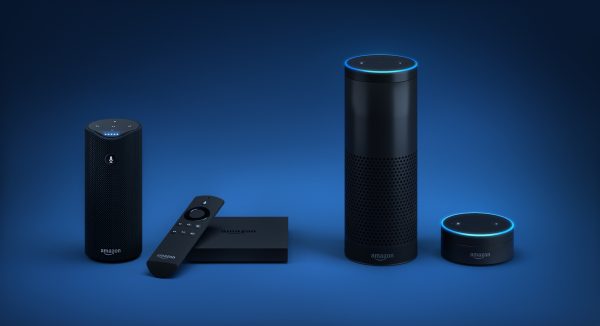
AmazonEcho: AI Has Become the Core of Products
Artificial intelligence has now become the core of many products, integrating seamlessly with them. Virtual reality, the Internet of Things, voice control, and the Internet of Vehicles,Intelligent Robots,Healthcare, robotics, and device and system security all require the application of AI technologies. This year’s CES will witness a surge in artificial intelligence, which may even dominate the entire exhibition. By leveraging algorithms and programs such as deep machine learning, natural language processing, and data analytics, AI can significantly enhance the efficiency of existing systems, solutions, and methodologies.
At this year’s CES, the most noteworthy AI developments began with the virtual assistants from the three tech giants—Amazon, Microsoft, and Google: Amazon’s Alexa, Microsoft’s Cortana, and Google Assistant. This is currently one of the most widespread and mature areas of AI application. By leveraging voice-controlled interfaces to create interactive home robots, such as Amazon Echo and Google Home, and integrating them with home sensors and IoT systems, immediate practical benefits can be realized. In particular, there is immense potential in elderly home healthcare and intelligent reminders within the medical and health sector. From a corporate perspective, combining AI with patient/consumer experience represents a win-win model that yields results most rapidly.