

Beyond CGM: Key Diabetes Innovations to Watch in 2017
It has become a New Year’s tradition to look ahead at the emerging technologies and tools expected in 2017. In fact, even before 2017 arrived, we had already predicted that it would be a pivotal year. After all, Medtronic released the first-ever hybrid closed-loop system in the spring of 2016, ushering in a new era for artificial pancreas technology. Moreover, this is just one of several exciting research and development advancements we anticipate this year.
ForTo forecast other emerging trends in 2017, we have been closely monitoring earnings conference calls and engaging in discussions with corporate executives, industry professionals, and public relations (PR) teams. These insights will be incorporated into the following report.
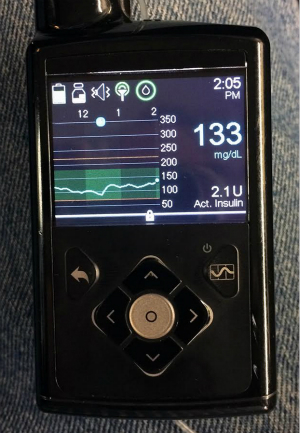
Medtronic MiniMed 670G: In September 2016, following FDA review, the MiniMed 670G was set to become the world’s first system capable of adjusting insulin delivery based on continuous glucose monitoring (CGM) values, enabling users to maintain blood glucose levels as close as possible to the target of 120 mg/dL. The device itself features a vertical layout and a color display. However, it does not support data sharing. The MiniMed 670G utilizes the new Guardian 3 CGM sensor, which Medtronic has improved in terms of accuracy and reliability. The system directly interfaces with the Bayer Contour Link 2.4 fingerstick meter; introduced by Ascensia Diabetes Care in 2016, this meter allows for remote control of insulin bolus delivery. Regarding the release date of the 670G, Medtronic only stated that it would be “early 2017.”
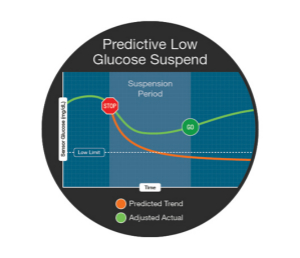
Tandem Diabetes Care's First-Generation Automated Insulin Delivery (AID) System: The manufacturer of the insulin pump plans to release the first-generation closed-loop system by the end of 2017. A key feature of this device is Predictive Low Glucose Suspend (PLGS), which in many respects reflects the primary requirements for MedT systems. Tandem Diabetes Care’s production line demonstrates the current landscape as well as the company’s development plans for the coming years.
Other Artificial Pancreas Systems: Yes, we are also monitoring many other closed-loop system projects—Bigfoot, iLET, etc.—but we do not expect these to be realized in 2017, as they still require ongoing research and development (R&D).

Apart from the closed-loop initiative (or what some may refer to as a cross-functional project, depending on whom you ask), Medtronic has informed us that it is exploring a “holistic” approach that integrates continuous glucose monitoring (CGM), mobile applications, and data analytics. According to spokesperson Pam Reese, this is likely the initiative to watch for in 2017.
Standalone CGM“Developing an independently operated CGM system will be our first step. This standalone CGM system can administer insulin to users based on real-time data from sensors on their smartphones. The system also features text message alerts, enabling caregivers to receive notifications of hyperglycemia or hypoglycemia via mobile phones. Furthermore, the system will offer the option to automatically upload daily sensor data to the CareLink Professional software, allowing healthcare providers to access valuable information, deliver care to patients with diabetes, and adjust treatment plans as needed. This will provide clinicians with more granular data points on blood glucose trends, helping them identify emerging conditions and optimize treatment strategies for patients with diabetes.”
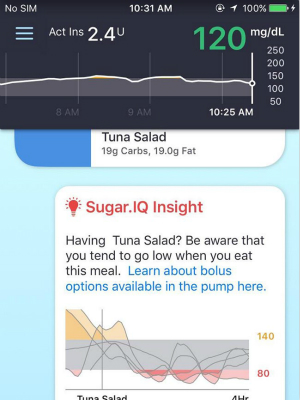
Sugar.IQ App“The first cognitive app we developed in partnership with IBM Watson Health leverages this type of data to help detect critical symptoms and blood glucose trends in patients with diabetes. The Sugar.IQ app utilizes IBM Watson’s analytical methods to analyze data patterns and deliver real-time, actionable, and personalized insights. This enables individuals with diabetes to enjoy greater freedom in their daily lives. The app provides personalized guidance, offering insights into condition management and supporting day-to-day diabetes care solely through diabetes-related data and observations collected via the app platform.”
We cannot determine the specific timeline for any new tool, but we hope to hear more about them at the ADA Annual Meeting in June.
Dexcom is a leader in innovative products, consistently committed to launching a select range of novel devices. Although Dexcom has already submitted three devices to the FDA, we anticipate that the fourth device will be submitted to the FDA in the coming months:
1. Touchscreen Receiver: Positioned as an upgraded version of the current Dexcom receiver, it will feature improvements in durability and speaker performance.
2. New One-Step Insertion Device: Expected to be released mid-year. Based on the prototype images we have reviewed, this device appears similar to Medtronic’s Enlite sensor inserter and can be operated with one hand.
3. Compact G5 Transmitter: It will be more compact than the current G6 and even smaller than the previous G4 model.
4. Next-Generation G6 Sensor: Due to the exciting FDA clearance received by Dexcom in December, the launch plan for Dexcom’s new 2016 sensor was delayed. However, the initiative is expected to commence in early 2017, with a potential market release by year-end. The G6 will represent a true leap forward in CGM technology, extending the current wear period from 7 days to 10 days, reducing daily calibration frequency from twice to once, and improving accuracy and reliability. This demonstrates the rapid progress made by the FDA in diabetes technology in recent years, and we remain optimistic!
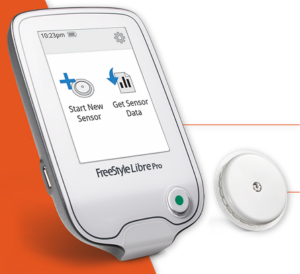
We hope that Abbott’s innovative FreeStyle Libre flash glucose monitoring technology will enter the U.S. market in 2017. This system combines fingerstick blood testing and existing continuous glucose monitoring (CGM) with a single-point non-invasive technology. In other words, the system consists of a small white prototype sensor applied to the skin and a “receiver” resembling a handheld personal diabetes manager (PDM). Users can move the sensor to obtain blood glucose readings via a wireless connection.
You can use it frequently or as desired, serving as an alternative to conserve expensive test strips, and allowing you to avoid running a full CGM system if you prefer.
In early 2016, Abbott Laboratories received FDA clearance for the Libre professional version for clinical use and had already completed development of the consumer home-use version. Thus, its market launch was only a matter of time. Patients are undoubtedly thrilled about this prospect!
Vibe Plus: Vibe Plus is the new name for Johnson & Johnson’s next-generation insulin pump, as OneTouch has removed “Animas” from its branding and appears to be consolidating all products under the OneTouch brand portfolio. In December 2016, the FDA approved the product just six months after submission.
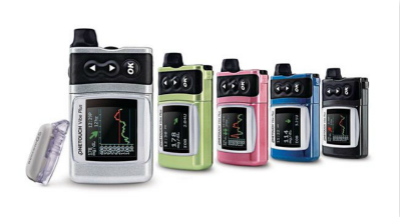
Key Features: The product retains a capacity of 200 insulin units (consistent with the previous model), is waterproof, and is compatible with the Glooko-Diasend data-sharing software. Unlike the Ping, it does not include a meter remote control and cannot be upgraded at home. However, J&J informed us that “remote update capability is a consideration for our future products.” The Vibe Plus is available in five colors (blue, black, silver, pink, and lime green) and offers eight personalized skins.
A Johnson & Johnson OneTouch spokesperson told us that they are evaluating the release timeline and the features to be offered after the system upgrade.
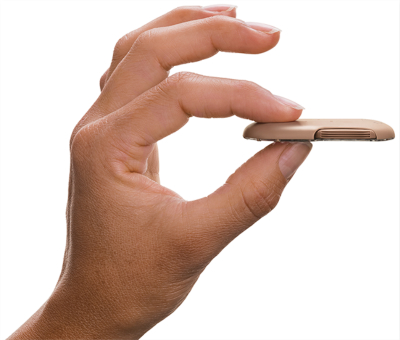
OneTouch Via: Yes, after we introduced OneTouch Via (previously known as Calibra Finess) in 2016, OneTouch Via became a project under observation. It is a wearable insulin delivery device limited to patch-based administration. It offers highly stable performance and can be worn for up to three days. It contains 200 units of rapid-acting insulin, and by pressing the button on the right side of the patch, people with diabetes (PWDs) can administer two units of insulin without requiring a separate control unit. This patch-based alternative to traditional insulin pumps received FDA approval in 2010 for the treatment of both type 1 and type 2 diabetes. In 2012, Johnson & Johnson’s OneTouch brand acquired this technology. However, the technology was never commercially implemented and seemed to have been forgotten—until now! If Johnson & Johnson’s OneTouch can organize its product launch plan effectively, we eagerly anticipate seeing this product hit the market in 2017.
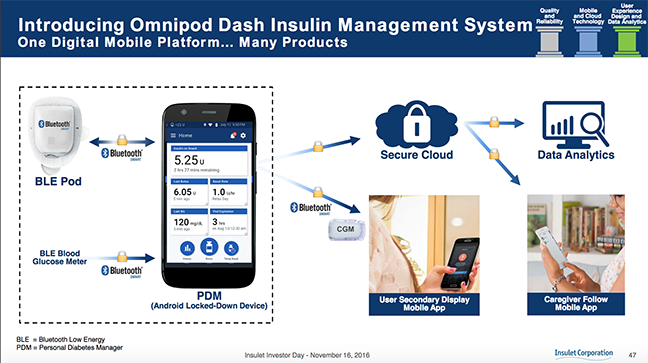
At the technology session of the ADA Annual Meeting to be held in the summer of 2017, we look forward to seeing the new OmniPod PDM (called “DASH”). During the “Investor Day” last November, Insulet Corporation detailed plans for the new Bluetooth-controlled OmniPod to debut at the end of this year.
Although this tubeless insulin pump retains the same form factor, it incorporates low-energy Bluetooth wireless functionality, enabling connectivity with the new color touchscreen PDM. This also allows connection to a Bluetooth-enabled lancing device; however, this means that the next-generation OmniPod DASH, like the current insulin pump, will not include a FreeStyle blood glucose meter. This is a significant drawback for users who prefer all-in-one devices.
A notable advantage is that the new BT insulin pump and PDM will connect directly to a smartphone app, allowing users to track insulin on board (IOB), view dosage records, and access CGM data on both the smartphone screen and the new PDM. To facilitate carbohydrate counting, the new PDM is equipped with a comprehensive food database. Users can manually enter blood glucose (BG) values or use an intuitive touch scroll wheel to navigate and input other data. The new touchscreen interface will be built on the Android operating system. App data will be secured to prevent interference from other cellular data connections.
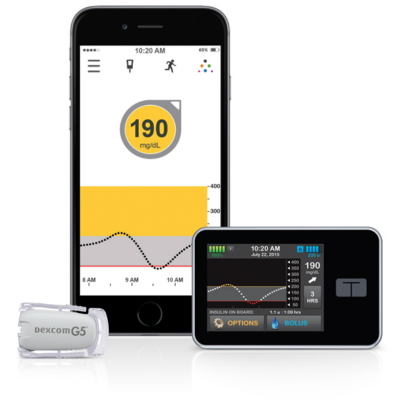
Thanks to the new X2 insulin pump, Tandem Diabetes Care can now provide remote users with the capability to update their devices at home, eliminating the need to upgrade or trade in their units as required by current D-series models. This technology enables integration with the Dexcom G5 continuous glucose monitoring system, a feature that Tandem plans to submit to the FDA for approval, with an anticipated market launch in mid-2017. Their integrated system also includes predictive low-glucose suspend functionality; existing users will be able to update their devices to access this feature once it has been validated and cleared.
Over the past few months, we have reported on two innovative initiatives released by Becton Dickinson:
For Type 2 Patch Pumps: This product is entirely disposable, can be worn for three days, and is available in both basal-dose and single-dose formulations. Although specific product details remain unclear, it is expected to be unveiled at the 2017 annual financial conference.
Smart Pen Tip Technology: This also means that Bluetooth pen tip technology enables dose data sharing, as BD is committed to bringing greater diabetes interoperability management to its product portfolio. The pen tip technology currently under development is compatible with all types of insulin pens. Regarding this—
Companion Medical's InPen: In July 2016, the FDA approved this product, which could become available as early as 2017. The following points summarize the product features mentioned in its initial report released in July 2015:

The product foundation incorporates computer chip technology, including Bluetooth LE wireless functionality.
Refillable with Lilly or Novo insulin cartridges (the only two types of insulin cartridges available in the United States)
The pen contains a temperature sensor. If the pen's temperature drops below freezing or rises above body temperature, it can trigger an alarm in the app to ensure the insulin remains intact and undamaged.
Collect user information and transmit it to the app, which contains a dose calculator capable of real-time calculation of insulin on board (IOB).
Smartphone apps can also allow users to set reminders for meal and snack times; if you do not take your medication within the scheduled time, the app will issue a warning.
Remote Monitoring Enabled—Users can configure the app to automatically send text messages, with the capability to send messages to up to five recipients simultaneously. The message content includes not only the insulin dosage but also blood glucose (BG) and carbohydrate values (if manually configured)—all information will be contained within a single text message.
In late July 2016, the FDA stated that InPen is indicated for patients aged 12 years and older. Sean Saint, Partner and CEO of Companion Medical, said the San Diego-based company plans to launch the product “sometime in 2017.”
We anticipate a significant influx of blood glucose meters entering the market in 2017. Of particular note are two outstanding products from Ascensia (formerly Bayer Diabetes Care) and Roche Diabetes Care, both of which were unveiled in recent months. We have previously reported on the Accu-Chek Guide blood glucose meter, which we also forecasted earlier this year. While its design closely resembles existing devices, it introduces many innovative features, including a spill-resistant test strip vial. We are also pleased to announce the new Bluetooth-enabled Ascensia Contour Next One blood glucose meter. Recently approved, this device can connect to a mobile app to help identify conditions and track blood glucose trends. It is scheduled for release in 2017.
Certainly, in light of the new Dexcom dosing requirements, fingerstick blood glucose testing is no longer a mandatory step for CGM users. With FreeStyle Libre poised to enter the U.S. market, we must consider how much longer the traditional blood glucose meter market can sustain its growth.Undoubtedly, much will unfold in 2017 regarding research and promotion, as well as critical issues such as product access pathways and affordability. We will continue to provide timely updates on industry insights, as always!
Article: healthline.com
Author: Mike Hoskins