

PeptiGrowth Biopharma: Unlocking China's Diabetes Drug Innovation Through a Landmark Collaboration with Pfizer
201612In [Month], global pharmaceutical giant Pfizer signed a cooperation agreement with Chinese biopharmaceutical company PegBio, granting PegBio the license to develop cutting-edge glucokinase activators in the field of diabetes tailored for Chinese patients.GKA) drugs, for over China's1.14A boon for hundreds of millions of diabetes patients.
It is reported that this marks the first time Pfizer has partnered with a domestic Chinese company for new drug development. By pioneering a novel model of collaboration with local enterprises in China, Pfizer has broken new ground in R&D partnerships. What competitive advantages enabled PegBio to become Pfizer’s first Chinese partner in this endeavor? To find out, VCBeat interviewed Xu Min, Founder and CEO of PegBio.
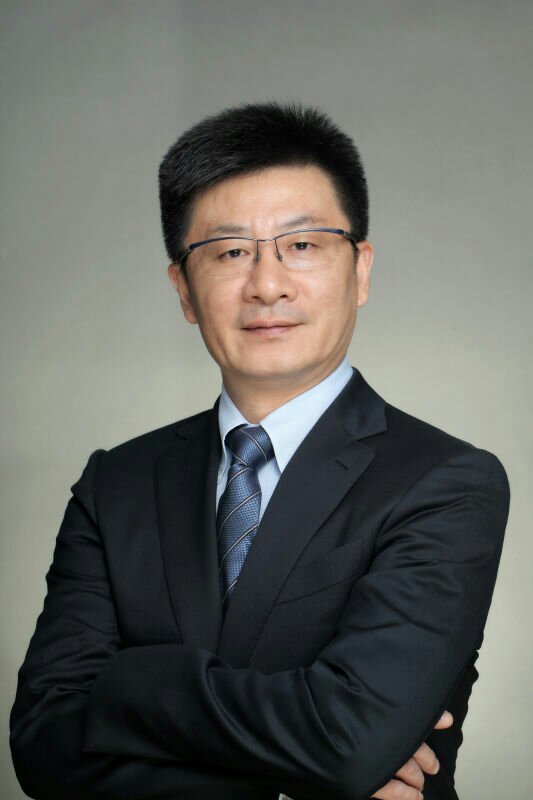
Xu Min, Founder and CEO of PegBio
From Venture Capital to Startups: China Needs Pharmaceutical Innovation
After graduating from Xiangya School of Medicine, Xu Min pursued advanced studies in the United States and earned a Ph.D. from Columbia University. He returned to China in 1997, becoming one of the earliest overseas students to come back from the U.S. at that time. Xu Min spent five years working in venture capital within China’s healthcare sector, during which he conducted extensive research on the country’s pharmaceutical industry, with a particular focus on biopharmaceuticals. After gaining an initial understanding of the Chinese pharmaceutical market, Xu Min discovered that China’s capacity for medical innovation was extremely limited.
“In 2002, the investment and policy environment for innovative drugs was not as favorable as it is today; basically, no investment firms could allocate hundreds of millions to fund new drug R&D,” recalled Xu Min. “On one hand, China lacked new drugs; on the other, there was little support for their development.”
At this point, Xu Min considered PEGylation technology. Most protein and peptide drugs have relatively low molecular weights and are readily metabolized and excreted by the kidneys after entering the human body. By covalently conjugating drug molecules to polyethylene glycol (PEG) molecules, the strong hydrophilicity of PEG causes the PEG-drug conjugates to absorb a large number of water molecules upon entering the bloodstream. This increases the effective molecular volume and creates a steric hindrance effect. As a result, the originally small molecules are less susceptible to renal metabolism, thereby prolonging the drug’s duration of action in the body.
“I was wondering at the time whether PEGylation technology could reduce the risks associated with new drug development.” With this idea in mind, Xu Min established the predecessor of PegBio as early as 2002.
Early Stage: Funding Is the Biggest Challenge
Even today, every company encounters various difficulties at different stages of its development, let alone during the era when Xu Min embarked on her entrepreneurial journey. New drug research and development (R&D) requires substantial capital; however, few investment institutions were willing to invest in pharmaceutical innovation companies at that time, making it even more challenging for the company to secure the necessary funds for innovative drug R&D.
“In the early stages, the biggest challenge was securing financing. There are already few investment institutions willing to invest in innovative drug R&D, and given the lengthy development cycles involved, funds capable of sustaining support for new drug developers over periods exceeding ten years are exceedingly rare.” The hardships of the startup’s early days remain vividly fresh in memory.
Turning Point: ChinaBio Conference’s Most Investment-Potential Biotech Companies in Asia
Initially, the company adopted a business model of providing technical services to pharmaceutical manufacturers. Xu Min hoped that this approach would generate cash flow, or even profits, to support his own new drug research and development. However, things did not go as smoothly as planned. Even though pharmaceutical companies had such needs, they were often unable to allocate substantial funds. The company’s team made every effort to secure more clients, but the results were far from satisfactory.
After four to five years of arduous struggle, the company reached a turning point. In 2007, it was invited to attend the inaugural ChinaBio conference held in Shanghai. ChinaBio is a highly professional organization dedicated to promoting healthcare and innovative medical technologies. Fortuitously, the company was among the first batch of enterprises selected to participate in the roadshow. At this conference, it was recognized as the biotechnology company with the greatest investment potential in Asia. This recognition drew attention from investment institutions, enabling the company to gradually emerge from its difficulties and embark on a path of sustainable growth. To date, the company has secured multiple rounds of financing, with investors including Legend Star, Junlian Capital, Mingxin China Growth Fund, and Yuanhe Yuandian, among others.
Innovative Drug R&D: The Team Is the Core Force
Throughout this journey, Xu Min believes that the core strength of innovative drug R&D enterprises lies in their teams. From both technical and managerial perspectives, a strong team not only enhances corporate cohesion but also serves as a navigational guide in selecting technological development directions. For new drug R&D companies, choosing the right product direction is crucial. Products must be market-oriented, meet market demands, and possess distinct features and advantages over competing offerings. “If a product lacks unique characteristics and demonstrates no superiority in efficacy and safety, its competitiveness in the market will be limited,” Xu Min emphasizes. “Innovative drug R&D companies must never engage in development for development’s sake alone. It is essential to understand market dynamics and patient pain points, and to address the shortcomings of existing products to create market demand. Only with market viability can a company achieve growth, gain recognition from investors, and secure the support needed for further development.”
Over the past few years, the company has developed several proprietary products, with PB-119, developed using PEGylation technology, being the most advanced. PB-119 is a long-acting GLP-1 analog drug for the treatment of type 2 diabetes. Xu Min revealed that the drug has completed Phase I clinical trials in both the United States and China, with Phase II and Phase III trials scheduled to commence soon. Another product for the treatment of non-alcoholic steatohepatitis (NASH) is simultaneously seeking clinical trial approval in both the United States and China. For the glucokinase activator (GKA) class of drugs involved in this collaboration, Pfizer has completed preclinical pharmacodynamic and safety assessments, and clinical trials are expected to begin shortly.
Independent and Open, Bidirectional Mode
Despite possessing strong R&D capabilities, PegBio has always maintained an open attitude toward collaborative development. Xu Min believes that, based on the company’s understanding of its disease-focused product portfolio, engaging in appropriate collaborations with domestic and international companies will not only strengthen its product pipeline layout in specific therapeutic areas but, more importantly, provide patients with more treatment options in the future.
“PegBio differs from many other companies. On one hand, we have the in-house capability for drug development; on the other, we are open to collaboration.” Xu Min refers to this approach as a “dual-track model.” The company’s independently developed drugs have also attracted interest from multinational corporations, which seek to bring PegBio’s innovative drugs developed in China to the international market. Meanwhile, the company remains open to collaborating with peers to develop innovative drugs with superior efficacy and safety profiles for global markets, thereby providing more treatment options for patients worldwide. It is reported that PegBio is currently in discussions with multiple enterprises within the therapeutic areas aligned with its own product pipeline.
Perhaps it was precisely this open, two-way model that earned PegBio recognition from Pfizer. PegBio is positioned as an innovator in the research and development of novel drugs for diabetes and metabolic disorders, aligning perfectly with Pfizer’s search for Chinese companies with distinctive expertise and strength in this field.
From Pfizer’s perspective, the company seeks patient-centric enterprises dedicated to bringing more advanced therapies to Chinese patients. Additionally, potential partners must possess strong capabilities and potential in innovative R&D, with prior experience in drug development in developed markets such as Europe and the United States. From PegBio’s standpoint, the company has robust in-house R&D capabilities and is open to collaboration with multinational pharmaceutical companies. These complementary factors facilitated the partnership between the two parties.
Partnering with Pfizer: A Strategic Win-Win
This marks Pfizer’s first collaborative development effort with a Chinese domestic enterprise, and also PegBio’s first partnership with a foreign company. For both parties, this represents an exploratory journey. “Much alignment of philosophies and approaches is still required during this process, as each company operates differently. How to organically integrate these two distinct mindsets is what the two companies need to explore and strive for in the next phase,” said Xu Min. “What is certain, however, is that this collaboration will significantly bolster China’s innovation capabilities. For both sides, such a partnership constitutes a strategic win-win.”
On the one hand, PegBio has established precedents and capabilities in innovation; on the other hand, these capabilities require continuous enhancement. Pfizer has already completed early-stage target and mechanism exploration, and even conducted Phase I and Phase II clinical trials in humans, thereby accumulating substantial data and experience. Effectively leveraging this data for product development in China, while integrating local contextual factors with Pfizer’s data and expertise, would accelerate the advancement of products into clinical trials and ultimately secure market approval. This process would also serve to strengthen and elevate PegBio’s own capabilities.
On the other hand, this arrangement is also highly advantageous for Pfizer. Previously, Pfizer typically imported into China products that had already been approved and launched in Europe and the United States. As a result, product launches in China generally lagged behind those in foreign markets by 5–6 years. Given that China boasts the world’s largest patient population, this delay effectively meant Pfizer was missing out on 5–6 years of market access in China. Through this new model, Pfizer can accelerate the entry of its drugs into the Chinese market, providing Chinese patients with innovative therapies or alternative treatment options.
Aligning with patient interests, the pharmaceutical market is driven by patient demand.
From a disease perspective, the number of diabetic patients in China is continuously increasing, with trends even suggesting an outbreak. This indicates substantial future market demand. From a consumption standpoint, as the economy develops, people are placing greater emphasis on health standards and possess the financial capacity to afford higher-level healthcare expenditures.
“Drug development requires two conditions: first, safety and efficacy; second, a viable market. New drug R&D involves significant time and financial investment, so the market must be sufficiently large,” said Xu Min. “From the perspective of disease burden and market demand, the drug being developed through this collaboration holds great promise.”
Enhancing drug development efficiency, reducing error rates, and maximizing cost control. For patients, this means access to higher-quality products at lower prices; for investors, it undoubtedly reduces investment risks, further supporting new drug R&D in China, driving the development of the entire industry, and bringing benefits to patients.
Moving forward, the company will further advance clinical trials and accelerate technology development. In terms of pipeline strategy, it will expand its proprietary R&D portfolio while leveraging flexible collaboration models with other companies to broaden product coverage, thereby delivering a greater number of high-quality, more effective products to the market.
At the end of the interview, Xu Min told reporters that his greatest wish is to develop products that benefit patients. It was precisely by recognizing the future needs of patients that Xu Min chose to start his own business despite an environment unfavorable to innovative drug R&D. “Patient needs” is the phrase Xu Min mentioned most frequently. Whether during the financially constrained early days of his startup or now, having achieved modest success and partnered with global pharmaceutical giants while gaining recognition from capital markets and the industry, Xu Min has always prioritized patient needs. This affirms the saying: “Stay true to your original aspiration, and you will achieve your ultimate goal.”