

2017 Healthcare Trends Forecast: Wearables Face Transformation, Telemedicine Set for Widespread Adoption
The first month of 2017 marked not only the beginning of a new year, but also the start of a new presidency in the United States, the world’s most powerful nation, signaling an impending shift away from the policies of the Obama administration over the previous eight years. Following discussions with experts and incorporating insights from the prominent healthcare media outlet MobiHealthNews as well as my own perspectives, we hereby present the following predictions for the development of the healthcare sector in the coming year. Compiled by VCBeat (WeChat ID: vcbeat).
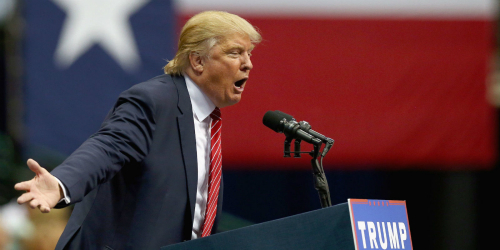
Although most matters related to President Donald Trump remain in a state of uncertainty, John Moore, Founder and Co-Managing Partner at Chilmark, believes that this uncertainty alone will lead to job losses or at least forced furloughs for many individuals involved in large-scale healthcare IT projects.
John Moore believes that, “precisely because of this uncertainty (such as regarding the potential repeal of the ACA), I believe healthcare providers and healthcare administrators need to adopt a very cautious approach in their future work. Therefore, I think many large startups in the health IT market will lose momentum in 2017. However, if they have already signed contracts, this would involve an extensive EHR replacement process or program; although some projects may still continue, I believe more projects are likely to be put on hold. Whether these initiatives proceed in the future will depend on what unfolds.”
John Moore believes that value-based healthcare is a trend that will continue regardless of Donald Trump’s future policy direction. However, it is worth noting that funding shortfalls in the Medicare sector could slow the development of this value-based business model across the entire healthcare industry.
The NIH-funded Precision Medicine Initiative and the Cancer Moonshot program could proceed in either direction. Reports indicate that President Trump and Vice President Mike Pence have incentives to support these initiatives; however, given Trump’s need to cut spending, all of his planned initiatives and scientific expenditures remain in a state of uncertainty. Dr. Eric Topol, who leads the Scripps Research Translational Institute, received a grant of up to $207 million from the Precision Medicine Initiative (PMI). Shortly after the election, he told BuzzFeed, a prominent news website, that he was “very concerned” about the election outcome and believed that NIH investment and biomedical research funding were “almost certainly at risk.”
Fred Wilson, co-founder of Union Square Ventures, wrote on his blog,Trump’s tax plan could lead to unexpected cash flow issues for companies, but it may also spur a boom in mergers and acquisitions within the healthcare sector.. In the field of digital health, there has been a growing number of mergers and acquisitions in recent years, with substantial continued capital flow throughout this process. Therefore, when we observe even larger capital flows and more frequent M&A activities in 2017, we should not be overly surprised.
Additionally, Snapchat predicts that 2017 may also spark a wave of tech IPOs, with some digital health companies potentially caught up in this trend. As for which companies will have the opportunity to go public next year, I’ll leave that question to you. If you have what you believe to be a suitable answer, let me know via email or text message. You can also share your predictions on social media platforms such as Twitter regarding which companies will successfully complete an IPO in the coming year.

Each year, pharmaceutical companies are making broader and larger-scale investments in digital health. Examples include Eli Lilly’s investment in smart injectors, the consumer-facing applications jointly launched by AstraZeneca and Novartis, and Johnson & Johnson and Roche’s continued investment in mobile devices to enable rational and effective management of diabetes. Meanwhile, we have reason to believe that this trend will not continue into 2017.
Moore stated that the pharmaceutical industry is gradually evolving. Although it began to attract public attention several years ago, it has now truly entered the digital health and healthcare space.
“If you look back five years, you’ll find the pharmaceutical industry was very oppressive and burdensome, as pharmaceutical manufacturers kept raising drug prices,” he said. “Nowadays,Pharmaceutical manufacturers have been able to effectively and formally collect each patient’s true response to medications, using this data to set prices.. Because if studies clearly demonstrate favorable treatment outcomes, certain pricing bonuses will be associated with recommendations for the use of their drugs.”
In most cases, health insurance companies have shown little sign of making significant investments in related health sectors. This year is different. The adoption of improved applications and video consultations, along with the use of wearable devices and wellness programs tied to payment incentives, all demonstrate that the healthcare sector is currently thriving, although these changes tend to be limited in scope and gradual. Nevertheless, even small startup insurers such as Oscar Health have begun to venture into non-traditional digital health and telemedicine product markets.
The fact is,The U.S. “Affordable Care for All Act” and the turmoil surrounding the repeal and replacement of the ACA have consumed the full attention of major health insurance companies., but instead left some mainstream digital innovations without sufficient funding and support to continue.
Among these plans, the tax-exempt provisions have endured. However, repealing the ACA does not mean that the trend of consumers bearing increasing out-of-pocket costs will change. Nevertheless, Ralph Derrickon, CEO of Carena, believes that this trend will lead hospitals to provide more assistance to patients, helping them understand the associated treatment costs.
“We are focusing on the rise of consumerism,” said Ralph Derrickon. “This is absolutely true, but how does this trend manifest in real life? Patients will receive medical services first, then receive the bill, and only then pay it, rather than paying before receiving care. This shift will compel healthcare systems to have a stronger incentive to understand what is truly happening with patients and what medical services they should receive, thereby increasing their chances of getting paid.”
It seems safe to predict that telemedicine will continue to grow, but this forecast appears almost too straightforward. Companies like Teladoc have been consistently setting new monthly records for the number of telemedicine visits, underscoring the enormous potential of this market. The reasons why people opt for telemedicine are also evident—The out-of-pocket medical costs for in-person visits are becoming increasingly burdensome for consumers. As a result, there is a growing expectation for the healthcare industry to adopt a direct-to-consumer online model, similar to those already established in the banking and tourism sectors.。
However, amid competition among major telemedicine companies, they are seeking new ways to differentiate themselves. This year, Teladoc’s U.S. branch has been continuously exploring entry into new specialties such as behavioral health and dermatology, a trend that is likely to continue into next year. Furthermore, we have begun to see many companies, including American Well partners Tytocare and EarlySense, embarking on new initiatives. Previously, Doctor on Demand partnered with CliniCloud to provide consumers with a range of robust health devices and services through telemedicine. These devices are targeting greater market demand, while connected devices also offer video-visit providers another means of distinguishing themselves from competitors.
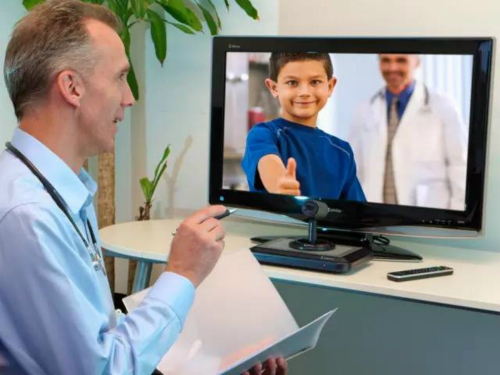
Another development has paved the way for the growth of telemedicine. The year 2017 was filled with promise, as many previous regulatory barriers began to show signs of easing. The Federation of State Medical Boards (FSMB) has now enacted legislation in 18 of the 50 U.S. states to participate in the Interstate Medical Licensure Compact, with Michigan set to officially join in February. This legislative progress marks the final resolution of the long-standing legal standoff between Teladoc and the Texas Medical Board.
Moore tells us,Once legislative barriers are removed, the biggest obstacle to telemedicine will be reimbursement, a situation that could disrupt market equilibrium.。
“The biggest issue in telemedicine has always been the reimbursement model. For instance, how do self-insured employers cover treatment costs? What are the reimbursement rates?” he said. “Companies like Teladoc have performed well in this field, but it remains difficult to clearly determine the total number of patient visits across China on any given day and what proportion of those visits constitute telemedicine consultations. Therefore, we are still only at the beginning.”
2016 was an exceptionally challenging year for the development of wearable devices. Pebble, Basis, and Microsoft all failed to sustain their efforts. Although Jawbone appeared to have weathered the storm, there is no doubt that 2016 was a difficult year for all companies engaged in the research and development of wearables. For instance, fitness-related wearables have lost their luster; while they initially attracted considerable attention as trendy novelty gadgets, they ultimately failed to demonstrate their true value as health devices, leading to their gradual decline. This inevitably raises the question: what will be the next trendsetting device?
Dan Ledger, founder of Path Collaborative, has engaged in negotiations with several wearable device companies, arguing that wearables require more novel innovations and should not be confined solely to the sports-related domain. This could signal the opening of an entirely new frontier in the wearable technology sector.No one has yet been able to master truly high-quality data, such as data related to people's stress levels and sleep quality.If a wearable technology company can effectively and accurately track users’ stress parameters and leverage this data to help them alleviate stress, thereby further improving their sleep quality, it could potentially unlock a larger market. However, ultimately, Dan Ledger states that the next step for wearable devices may involve more fundamental transformations.
“If Apple and Fitbit make no progress, and if today’s technological approaches yield no results, then we need other companies to adopt more radical methods, you know? It may not necessarily have to be a wearable device. Perhaps we need to change everything; maybe this is not a device we need 24 hours a day, but rather one that each of us would use for only five minutes a day,” said Ledger. “I believe that those who are unafraid to question any parameters, such as form factor and modality, will usher in the next wave of innovation here.”
Apple to Accelerate Its Healthcare Push, While Verily May Not
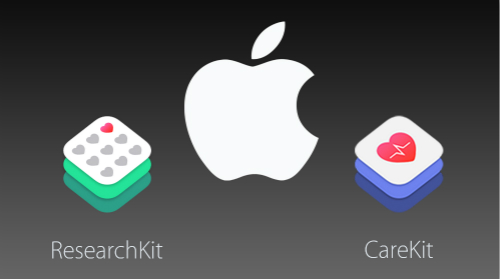
Prior to the investigation report,Numerous reports have revealed that Apple engaged in intense discussions with the FDA regarding a Parkinson’s disease diagnosis app and two cardiac devices.There are even rumors that Apple is developing many mainstream healthcare devices. Since launching HealthKit in 2014, Apple has introduced more digital health products at its WWDC each year, such as ResearchKit in 2015 and CareKit in 2016. Whatever they are currently working on, there is a high probability that Apple will announce new healthcare products or services this June.
On the other hand, Alphabet has stepped away from this arena, making Verily’s future highly uncertain. The company has not yet announced a new partnership, and Verily and Novartis have recently delayed the launch of their jointly developed smart contact lens. We can considerAlphabet Inc. sought to adopt a more prudent development model in 2017, focusing its efforts on the research and development of Liftware-related products.。
Source: MobiHealthNews,AuthorJonah Comstock,Does not represent the views of VCBeat.