

Former Alibaba Health Executives Co-found Purun Medical to Enhance Radiotherapy Standards in Grassroots Hospitals
According to data published by the WHO, approximately 70% of cancer patients require radiotherapy; current figures in Europe and the United States stand at 60%, whereas only 20% of patients in China receive radiotherapy., with tremendous room for growth.With the advancement of treatment concepts and the promotion of national tiered diagnosis and treatment, primary care hospitals have gradually recognized the importance of radiotherapy. A considerable number of these hospitals have established radiotherapy departments and purchased radiotherapy equipment. However, due to the limited expertise and knowledge among primary care physicians, they encounter certain difficulties in the practical implementation of radiotherapy, includingThe most urgent need is the development of radiotherapy plans and delineation of target volumes.
On December 11, 2016, the First National Workshop on Advances in Radiation Therapy Techniques and Target Delineation concluded successfully in Qingdao. The three-day conference was fully attended at every session, with over 500 onsite participants and more than 2,000 online viewers watching the live stream. This strong turnout clearly demonstrates the importance of target delineation and the urgent need among grassroots physicians to enhance their professional skills.
With the state’s increasing emphasis on primary healthcare and growing investment in medical funding, radiotherapy centers are experiencing rapid growth, as mid- and downstream hospitals actively upgrade and introduce advanced equipment. However, primary-care hospitals still face practical challenges such as a shortage of specialized technical personnel, outdated medical concepts, and a severe lack of clinical experience. Consequently, there remains a significant gap between their current capabilities and the actual treatment needs of cancer patients, highlighting an urgent need to improve the level of care at the primary level.
In China, the average monthly number of patients undergoing radiotherapy was approximately 80,000 in 2015. Each treatment course involves dozens of radiation sessions over a period of 30 to 45 days. Patient compliance is high, and there is also a willingness to pay for services provided by highly skilled physicians., however, the scarcity of highly skilled radiation oncologists at primary healthcare institutions has made it extremely difficult for patients to seek medical care. Taking treatment in Beijing as an example, patients need to wait nearly one month to secure an appointment with a specialist and around two months for hospital bed availability. Such prolonged waiting periods not only significantly increase medical expenses but also risk delaying critical treatment.
For grassroots radiation oncologists, constrained by their own expertise, they are unable to retain patients with significant economic and research value, while hesitating to accept cases with excessive clinical complexity. Although these physicians seek to enhance their capabilities through communication and training, they rarely have opportunities to engage with experts, leading toWaste of radiation oncologist resources at primary care levels and significant underutilization of newly purchased radiotherapy equipment have led to a patient attrition rate of 60%-75%.
Beijing Purun Kangqiao Medical Technology Co., Ltd. (hereinafter referred to as “Purun Medical”) is a comprehensive cloud-based service platform dedicated to the field of oncology radiotherapy. VCBeat interviewed its founders, Zhang Yang and Shi Cunyi, to understand how they address these pain points for patients and physicians.
Purun Medical is dedicated to delivering high-efficiency solutions for the radiation therapy industry through innovative product and technology integration, establishing a Multidisciplinary Team (MDT) center in the field of radiation oncology. CEO Zhang Yang holds a Master’s degree in Management and previously worked at Bristol Myers Squibb (BMS) and Ali Health, bringing eight years of experience in pharmaceutical sales management and Alibaba project management. COO Shi Cunyi holds a Master’s degree in Medicine and formerly served at Roche and Ali Health, with seven years of experience in the pharmaceutical sector and Alibaba project operations.
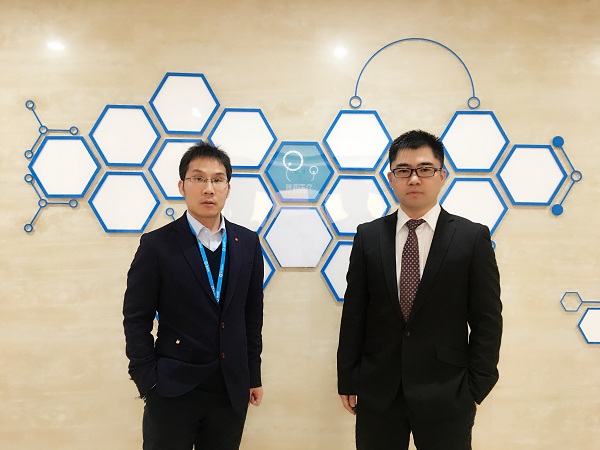
From left: COO Shi Cunyi, CEO Zhang Yang
Radiotherapy can be understood as “non-invasive surgery,” which imposes extremely high requirements on the precision of its design and implementation;The workflow is as follows: formulation of the radiotherapy plan – acquisition of imaging data – delineation of radiotherapy target volumes – calculation and optimization of the radiotherapy plan – verification and implementation.Throughout the entire process, treatment planning and target volume delineation serve as the “electronic prescription” for cancer patients. The quality of these steps directly determines the efficacy of radiotherapy, making their meticulous execution critically important.
Through Purun Medical’s platform, once a patient is diagnosed with cancer, there is no need to seek treatment in major cities such as Beijing, Shanghai, or Guangzhou. Primary care physicians can use Purun Medical’s mobile app and web-based system to transmit the patient’s medical records and imaging data to radiation oncology experts.Experts determine the need for radiotherapy, formulate radiotherapy plans, and perform precise delineation of target volumes.The response time for experts is within 24 hours.
orPhysicians can engage in real-time video consultations with specialists based on patient requests.Through the Purun Cloud Delineation Platform, every step taken by experts in delineating target volumes is demonstrated in real time on the screens of primary care physicians. Meanwhile, patients can also be informed of the treatment plan or any modifications to the target volume delineation. The response time for this approach is 48 hours.
Once the treatment plan was finalized, the patient remained in their local area for care, where costs were low and covered by medical insurance. In contrast, after another round of price increases, expenses at major hospitals in Beijing, Shanghai, and Guangzhou reached three times those of grassroots-level treatment and were largely ineligible for medical insurance reimbursement.
Moreover, seeking medical treatment in Beijing, Shanghai, and Guangzhou often entails substantial expenses for companionship, accommodation, and transportation over periods of thirty to forty days. There is also the risk of delayed diagnosis and treatment due to difficulties in securing specialist appointments. In this process, primary care physicians not only help retain patients within their departments and hospitals but, more importantly, gain valuable experience through communication with specialists.
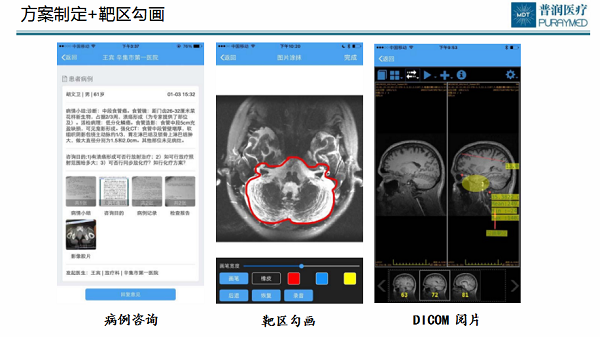
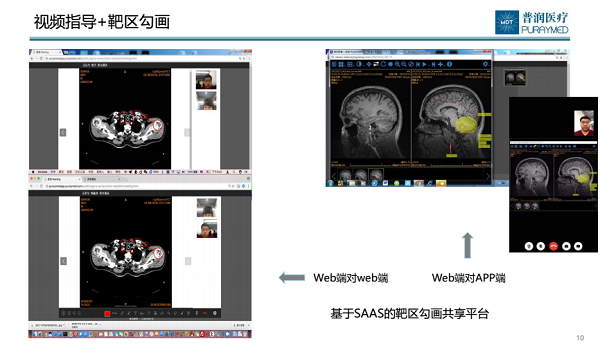
As an integrated service platform for physicians and patients, Purun Medical benefits a larger patient population by delivering high-quality services to physicians, while also assisting departments and doctors in promotion and radiotherapy-related outreach. These initiatives and services have received strong support from hospital presidents at primary care institutions and directors of radiotherapy departments.
Zhang Yang introduced that Purun’s promotion team is composed of sales elites from the oncology divisions of top pharmaceutical companies such as Roche and AZ, while its operations team includes experts from Alibaba and Gome. These professionals have cultivated their respective regions for many years and possess extensive industry resources and experience.
Currently, Purun Medical has already partnered with entities from the United StatesMD Anderson Cancer Center, has established collaborations with hundreds of top-tier experts from institutions such as the Texas Medical Association in Japan, the Cancer Hospital of the Chinese Academy of Medical Sciences, Beijing Cancer Hospital, Peking Union Medical College Hospital, Peking University First Hospital, and the PLA General Hospital (301 Hospital), covering all types of oncological diseases. The services currently offered by the platform include treatment regimen formulation, target volume delineation, personalized planning, expert training, and remote ward rounds.
Regarding Future Development, Zhang Yang told reporters that Purun has established strong collaborations with numerous oncology associations. In the future, leveraging its technological advantages, industry resources, and extensive accumulated case data, the company will develop applications of artificial intelligence, VR, and AR in the field of radiotherapy. This aims to automate a significant portion of physicians’ routine tasks and enhance interactive experiences, ultimately benefiting more cancer patients.
In terms of market expansion, Purun plans to achieve nationwide coverage of hospitals equipped with radiotherapy equipment by the end of 2017, supporting brand operations and patient management for radiation oncologists, and establishing a comprehensive radiotherapy platform featuring a three-tier physician collaboration network linking “overseas–Beijing/Shanghai/Guangzhou–grassroots levels.”
In terms of financing, Purun Medical completed its angel round last year and is currently preparing to launch its next round of funding. The proceeds will be primarily allocated to marketing promotion, product research and development, and corporate operations.