

Yixintang Announces $215 Million Private Placement to Expand TCM and Retail Footprint
On January 5, Yunnan Hongxiang Yixintang (002727.SZ) issued 14 consecutive announcements. Combined with the three announcements released on the 4th, the total number of announcements over the two days reached 17.
Key highlights from the announcement include: first, a “private placement of shares,” with plans to introduce investors such as Guangzhou Baiyunshan, Shenzhen Qianhai Nanshan Finance, and New Era Trust; second, “expansion,” whereby funds raised through the private placement will be used for projects including capacity expansion for traditional Chinese medicine (TCM) decoction pieces, store construction, information technology infrastructure development, and store acquisitions. In particular, Yixintang stated that it will open 340 new directly operated stores in Yunnan and Guizhou provinces, and will spend RMB 65.77 million to acquire 39 directly operated stores and inventory from Chengdu Tongle Kangqiao.
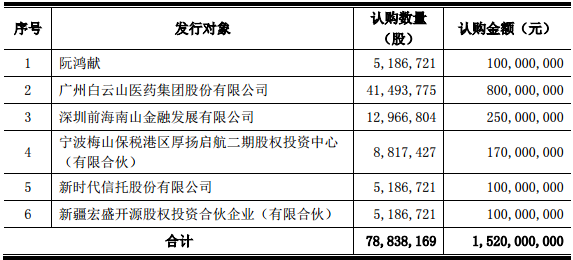
According to Yixintang’s “Share Subscription Agreement with Specific Objects Subject to Conditions Precedent,” Yixintang entered into share subscription agreements with Ruan Hongxian, Guangzhou Baiyunshan Pharmaceutical Holdings Co., Ltd., Shenzhen Qianhai Nanshan Financial Holdings Co., Ltd., Ningbo Meishan Bonded Port Area Houyang Qihang Phase II Investment Partnership (Limited Partnership), New Era Trust Co., Ltd., and Xinjiang Hongsheng Kaiyuan Investment Co., Ltd. The largest subscription amounts were made by Guangzhou Baiyunshan and Qianhai Nanshan Financial, reaching RMB 800 million and RMB 250 million, respectively. The total number of shares issued in the private placement amounted to 78.838 million shares, with a total value of RMB 1.52 billion. The transaction was settled in cash, and the subscribed shares are subject to a three-year lock-up period.
The subscription price for this private placement plan is RMB 19.28 per share, with the pricing benchmark date set on January 4. The transaction price is determined at 90% of the average trading price over the 20 trading days preceding the pricing benchmark date. This round of transactions has been reviewed and approved by the Board of Directors of Yixintang, but it still requires approval from the China Securities Regulatory Commission (CSRC).
The net proceeds from this private placement, after deducting issuance expenses, will be allocated to several areas, including the expansion of production capacity for traditional Chinese medicine (TCM) decoction pieces, the construction and renovation of retail stores, information technology infrastructure development, and the supplementation of working capital.
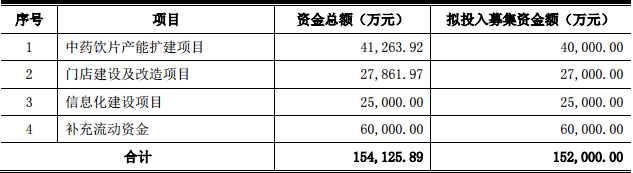
Yixintang stated that, in order to seize the development opportunities presented by the “Healthy China” initiative and the growth of the traditional Chinese medicine (TCM) industry, and to fully leverage Yunnan Province’s abundant resources of TCM materials, the company plans to expand its production capacity for TCM decoction pieces through this private placement, based on current market conditions and its business scale. The implementation of the “TCM Decoction Pieces Production Capacity Expansion Project” will enlarge the scale of the company’s TCM decoction pieces production business, further optimize its strategic layout within the TCM industry, and effectively enhance its profitability and core competitiveness.
Expanding into pharmaceutical manufacturing is a key strategic direction for Yixintang in the near future. According to its 2015 annual report, retail revenue accounted for 94.64% of its total revenue of RMB 5.321 billion, while other business segments contributed only 3.12%. The recent partnership with Baiyunshan is expected to significantly bolster Yixintang’s production capacity for traditional Chinese medicine (TCM) decoction pieces.
From a broader industry perspective, it is imperative for pharmaceutical companies to enter the pharmaceutical retail and e-commerce sectors. For instance, Tasly’s Big Health Industry Fund invested RMB 500 million in Zhongyou Health, a leading pharmacy chain in Northwest China. Subsequently, Tasly made another significant move in the chain pharmacy sector by investing RMB 580 million in Shandong Lijian, setting a new record. Other pharmaceutical companies, such as Renhe Pharmacy and Conba, have also begun to build or acquire pharmaceutical e-commerce platforms.
Connecting these phenomena reveals a convergence trend in the pharmaceutical commerce sector: pharmaceutical companies are no longer confined to drug R&D and manufacturing but seek deeper penetration into pharmaceutical distribution channels, both online and offline. This explains why numerous retail pharmacy chains and pharmaceutical e-commerce platforms have become favored targets for investment by pharmaceutical companies.
Returning to the capital injection by Baiyunshan into Yixintang, both parties anticipate industrial synergies: retail pharmacies will gain improved drug supply and bargaining power, while pharmaceutical manufacturers can align production with retail feedback.
As the first publicly listed chain pharmacy company, Yixintang’s expansion pace has drawn significant attention from industry insiders. Taking just the past year as an example, the 2015 annual report showed that Yixintang operated approximately 2,500 stores in Yunnan Province. By the time its third-quarter report for 2016 was disclosed, the company’s nationwide store count had reached 3,877 (excluding the 242 stores included in a pending acquisition offer). In merely one year, the number of stores increased by nearly 1,000, reflecting an astonishing rate of expansion.
In mid-November last year, Yixintang announced that its subsidiaries in Sichuan and Guangxi would spend a cumulative total of RMB 126 million to acquire 176 stores. In early December, it further announced the acquisition of 60 stores owned by Laobaixing in Mianyang and Guangyuan, as well as by individual investors, for RMB 150 million. Coupled with the more than 380 newly built and acquired stores disclosed this time, the number of newly added stores in the recent period will reach 600.
In fact, this expansion by pharmacies aligns with the overall trend in the retail pharmacy sector, namely, the increasing rate of chain affiliation. According to statistical data from relevant institutions, the chain affiliation rate among China’s more than 400,000 pharmacies has approached 50% and is expected to continue rising in the future.
In this process, capital plays an indispensable role in facilitating mergers and acquisitions (M&A), with the majority of such funding originating from healthcare-related sectors, including pharmaceutical manufacturing, pharmaceutical distribution, and pharmaceutical retail enterprises.
From a macro perspective, there are clear reasons why capital markets are bullish on the development of retail pharmacies. Under the influence of policies such as the “Two-Invoice System,” the separation of prescribing and dispensing, the reduction of the drug revenue share, and the outflow of prescriptions from hospitals, retail has gradually become a major channel for pharmaceutical distribution. The pharmaceutical retail landscape is shifting from the previous 20/80 split (20% retail pharmacies, 80% hospitals) toward an 80/20 structure (80% retail pharmacies, 20% hospitals). However, unlike many other industries, the pharmacy sector has high entry barriers. As the overall retail scale expands, the number of pharmacies has not seen significant growth, which implies that the average revenue per store is continuously increasing.
Therefore, under these circumstances, in addition to expanding their market share, established chain pharmacy giants are placing greater emphasis on enhancing their services. VCBeat (WeChat ID: vcbeat) has learned that several chain pharmacies have begun introducing services such as medical consultations, health management, chronic disease management, and personal health records. By deeply exploring the “pharmaceuticals plus services” model, they aim to become a key gateway for residents’ comprehensive healthcare, potentially rivaling clinics and primary care hospitals.
“Pharmacies today, especially chain pharmacies, are becoming increasingly comprehensive in their functions. Previously, non-pharmaceutical peripheral services might have been treated merely as marketing tools, but these functions are now becoming an integral part of pharmacy services and will continue to deepen. Those who excel in this area will hold greater influence in the future.” This is how a head of a pharmacy chain views the “path to advancement” for pharmacies.
Amid the surging wave of interest, other pharmacy chains have not remained idle. In addition to Yixintang, Laobaixing, and Yifeng Pharmacy, Dashenlin and Shuyu Pingmin Pharmacy have also successively listed on securities markets. The New Third Board market has been even more “lively” for pharmacy chains, with nine such enterprises—including Dushi Pharmaceutical, Shangyuantang, Quanyuantang, and Kangzhijia—listing one after another.
Another trend among chain pharmacies is the integration of online and offline operations. As previously mentioned, Yixintang, Laobaixing, and Yifeng all have e-commerce operations, and several chain pharmacies listed on the New Third Board have also made significant strides in pharmaceutical e-commerce.