

ForceClouds Files IPO Prospectus to Challenge Veeva in Global Life Sciences SaaS Market

“Oracle founder Larry Ellison mentioned that the next era is, in fact, the era of life sciences. We are entering this vertical industry to gain a deep understanding of it and address its challenges through software and data technologies.”
“We hope to expand beyond the Chinese market and enter the Asia-Pacific or North American markets, with”VeevaEngage in positive, one-on-one competition.”
VCBeat (WeChat ID: vcbeat) conducted an exclusive interview with Zhang Yingnan, founder of CloudPower Software, discussing SaaS services, market demands, and development trends in the life sciences sector. His company is a SaaS solutions provider dedicated to serving life sciences enterprises, offering comprehensive SaaS solutions to manufacturers in pharmaceuticals, medical devices, nutritional health products, and crop science. Established in October 2015, CloudPower Software has secured cumulative financing of RMB 51 million. A new round of financing has been finalized, with total funding from the angel, Pre-A, and Series A rounds expected to exceed RMB 100 million. Meanwhile, the company’s sales revenue reached RMB 15 million in 2016.
With the rapid development of China’s economy and the swift proliferation of internet applications, Chinese enterprises are increasingly investing in information technology. Large corporations are striving to achieve digital transformation and refined management, while small and medium-sized enterprises (SMEs) aim to streamline processes and control costs, thereby driving the rapid growth of the Software-as-a-Service (SaaS) market.
Driven by multiple factors, the fundamental conditions for an explosion in domestic enterprise-level applications are now in place. On a macro level, China’s network infrastructure has become increasingly robust, and cloud service architectures have achieved widespread adoption. The rapid proliferation of the internet and mobile internet, along with their deep penetration into work processes and marketing activities, has cultivated enterprises’ willingness to pay for software services. Fuelled by capital investment, SaaS startups have emerged in large numbers, continuously educating corporate clients. These elements have formed a positive feedback loop, benefiting both the SaaS service market and its providers.
Broadly speaking, SaaS encompasses all enterprise-oriented information technology tools, including collaborative office solutions, Office Automation (OA), email, Customer Relationship Management (CRM), human resources, performance management, and marketing management software. SaaS providers can be categorized into traditional enterprise application vendors (such as SAP and Oracle) and specialized functional application providers (such as Salesforce). In terms of target industries, SaaS solutions are divided into horizontal (cross-industry) applications and vertical (industry-specific) applications. Notably, the vertical SaaS market is growing at a faster rate than the horizontal enterprise application market.
In the life sciences industry, corporate production and marketing practices differ significantly from those in other sectors, driving more specialized and refined demands for SaaS services. This has also given rise to a cohort of SaaS vendors primarily serving the life sciences sector. For instance, Veeva Systems in the United States, which exclusively serves the life sciences industry, has achieved sustained profitability. After its listing on the New York Stock Exchange, its market capitalization approached $6 billion, making it a veritable “unicorn.”
“I graduated from Dalian University of Technology in 2008, and subsequently worked at Microsoft, Johnson & Johnson, and Veeva. By the time I founded my own company, I had accumulated extensive experience in pharmaceutical operations and enterprise software, which enabled me to understand the needs of the pharmaceutical industry, build IT frameworks, and translate business requirements into product specifications.” This is how Zhang Yingnan evaluated the impact of his professional background on his choice of industry.
Zhang Yingnan introduced that during his tenure in national pre-sales for Microsoft’s CRM products after graduation, he gradually discovered that the standard version of CRM had very limited applications in vertical sectors. Zhang Yingnan believes that a high-quality CRM product should be optimized around industry-specific systems, whereas generic management software exhibits many shortcomings in this regard.
Consequently, Zhang Yingnan decided to shift his focus to vertical sectors, with life sciences capturing his attention. “Larry Ellison, the founder of Oracle, once stated that the next era will be the era of life sciences. We are entering this vertical industry to gain an in-depth understanding of it and address its challenges through software and data technologies.” This endorsement from a tech luminary played a certain role in motivating Zhang Yingnan to pursue the life and health industry as his career direction.
Thus, in 2009, Zhang Yingnan joined Johnson & Johnson Pharmaceuticals, where she was responsible for managing sales operations and sales data in China, leveraging information technology tools to enhance sales operations and efficiency. While working full-time at Johnson & Johnson Pharmaceuticals, Zhang Yingnan also explored potential entrepreneurial opportunities. In her spare time, she assembled a team of like-minded colleagues to embark on a startup venture, initially focusing on building a database of hospitals and physicians.
The rationale for choosing this direction is that Veeva began expanding its business in China, but encountered significant resistance. At the time, Veeva’s core product functionality was CRM; however, a standalone CRM solution failed to address the needs of Chinese clients. Many Chinese customers had previously implemented similar software, whether traditional off-the-shelf solutions or self-developed systems, which ultimately failed primarily due to unresolved issues with foundational data quality.
“If a company implements an information system but fails to manage its master data effectively, the system will become cluttered with garbage data within two to three years. Consequently, management will abandon it, as it delivers no tangible value.” Zhang Yingnan believes that Veeva CRM has not adequately addressed the challenge of master data management. Therefore, he has positioned his startup’s focus in this area, aiming to create synergies with Veeva and support the expansion of Veeva’s business in China.
Fortunately, the hospital and physician database was launched after six months of development and quickly attracted the interest of a small- to medium-sized Danish pharmaceutical company, which was also a Veeva client. This led to a collaboration between the two companies. “Veeva provided its CRM services, while we contributed our data capabilities; by working together, we achieved success in the project,” said Zhang Yingnan, noting that the partnership involved both companies leveraging their respective strengths.

Zhang Yingnan, Founder of Yunshi Software
Zhang Yingnan said, “That collaboration actually left a deep impression on Veeva. At the end of 2012, it had not yet gone public (Editor’s note: Veeva listed on the New York Stock Exchange on October 16, 2013). Such a successful project in China excited its global senior leadership. They believed that the future direction for their products was to integrate CRM with data.”
As the collaboration continued, Veeva extended an olive branch to Zhang Yingnan and his team by proposing to acquire the data products of the company where Zhang was employed. At the time, Zhang reasoned that as a startup, the company required continuous investment; moreover, since he had not yet resigned from Johnson & Johnson, his ability to commit resources was quite limited. Consequently, he accepted Veeva’s acquisition offer. The acquisition was finalized in May 2013, with Veeva requiring Zhang Yingnan and his core team to remain with the company for at least one year.
At Veeva, Zhang Yingnan’s role was to implement the product by integrating it into Veeva’s product portfolio, making it an integral part of the lineup. This effort proved highly successful, as the products developed by Zhang Yingnan and his team have become the core of OpenData, a flagship offering currently promoted by Veeva. Leveraging his expertise in data processing, he also oversaw the development of Veeva Network, a master data management platform launched by Veeva for customers in the healthcare and life sciences sector.
“In summary, my personal journey reflects the making of a product manager. My tenures at Microsoft and Johnson & Johnson Pharmaceuticals gave me deep insights into the requirements of mature IT products and the pharmaceutical industry. I excel at translating business needs into product language and rapidly implementing them,” said Zhang Yingnan. She noted that her work experience with leading pharmaceutical companies and IT firms has been highly rewarding, shaping her product-manager mindset.
In August 2014, after the expiration of his tenure associated with Veeva’s acquisition, Zhang Yingnan embarked on a new entrepreneurial venture. He remained committed to collaborating with Veeva, as he believed at the time that Veeva’s clients needed more than just a standalone CRM system; they required an integrated sales performance management module to comprehensively drive improvements in overall sales team effectiveness. Since Veeva did not yet have a product line for sales performance management, Zhang decided to fill this gap by developing Incentive Power, a Sales Performance Management tool, thereby partnering with Veeva to deliver comprehensive solutions to customers.
During the process of business development in the market with Veeva, Zhang Yingnan identified deficiencies in its China market strategy. Veeva’s client base remains predominantly composed of large multinational corporations, with insufficient support for smaller multinationals, leaving a market gap in this segment. Furthermore, Veeva has not placed adequate emphasis on Chinese local companies, resulting in shortcomings in pricing and product localization.
“We identified this market opportunity and did not want to miss the window period, so we began competing head-on with Veeva in certain areas, thereby ending our strategic partnership,” recalled Zhang Yingnan.
In May 2016, Yunshi secured tens of millions in investment from Sanhang Capital, Shuzhi Jiangren, and Huaruan Investment. The company rapidly mobilized its R&D resources, and its CRM-centric product line was officially launched in August. Currently, Yunshi’s offerings encompass five major solution areas: Customer Relationship Management (CRM), Data Management (DATA), Business Decision Intelligence (INSIGHT), Sales Territory Management (TERRITORY), and Sales Performance Incentive Management (INCENTIVE). This comprehensive product portfolio is designed to meet the marketing management needs of the broader healthcare industry.
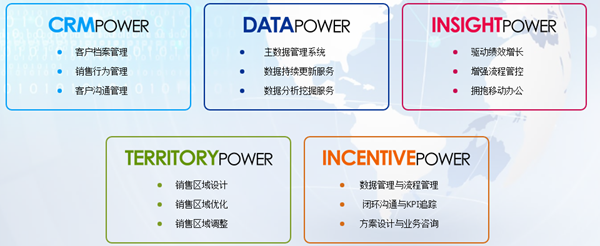
SaaS Solutions Provided by Cloud Power for Life Sciences Companies
After finalizing its product line, Yunshi began to focus on customer acquisition, with its comprehensive solutions and service capabilities gaining recognition from numerous multinational corporations and domestic pharmaceutical companies.
“We are currently acquiring customers at a relatively fast pace, with more than ten very large clients, including several Fortune 500 companies. We also serve several major publicly listed companies in China, with annual revenues in the range of RMB 2–3 billion,” said Zhang Yingnan.
Yunshi Software currently has a team of approximately 100 employees, with a core team of more than 10 members. In Zhang Yingnan’s view, the core team has distinct characteristics: all members come from large B2B companies. Their experience working at major corporations gives them a clear understanding of the needs of such enterprises. Some team members were also university classmates; they have been interacting and collaborating for over ten years and share a common vision—to build a great SaaS company.
“First, I have brought product development capabilities to the team, enabling us to enrich our product portfolio. Second, we possess strong sales expertise; my co-founder, Meng Fanlong, previously oversaw Veeva’s sales in China, helping grow its annual revenue in the Chinese market from a few million dollars to over $50 million, demonstrating deep insight into SaaS software sales. Third, we have exceptional implementation capabilities. From product development and sales to final deployment, we have a highly capable team with strong collaborative synergy.” Zhang Yingnan described his team as a “gold-standard team.”
When asked about the company he benchmarks against, Zhang Yingnan replied that it is his “former employer,” Veeva. He noted that if one considers the entire U.S. SaaS industry, Veeva’s market capitalization likely ranks among the top ten. However, in terms of profitability, Veeva is undoubtedly in the top three. Therefore, given the CloudAtlas team’s background and their field of operation, their development trajectory is clearly aligned with that of Veeva.
In China’s SaaS market, after gaining capital recognition and attracting investment in 2014 and 2015, the industry initially followed a model mimicking U.S. companies, with Salesforce and Workday serving as key benchmarks. However, as the first wave has subsided, large-scale, general-purpose platforms spanning multiple industries have begun to emerge. The future development path will likely mirror that of the United States, shifting toward vertical-specific solutions, exemplified by companies such as Veeva and Textura.
The United States has been able to produce SaaS “unicorns” in vertical sectors due to high corporate willingness to pay and well-developed internet infrastructure. Although China’s current demand for SaaS differs slightly from that of the U.S., its vast number of enterprises and rapid growth have also yielded significant dividends.
Zhang Yingnan stated, “The reason for choosing the life and health industry is its high willingness and strong capacity to pay. The pharmaceutical industry has high entry barriers, resulting in very few small companies and a high growth rate.”
Authoritative data further corroborates this point. According to the National Bureau of Statistics, the growth rate of the pharmaceutical manufacturing industry has remained at approximately 10%, exceeding both the national economic growth rate and the global average for the same period. The revenue growth rate of listed pharmaceutical companies has surpassed 15%, with key leading enterprises achieving over 20%, thereby driving increased demand for information technology services among pharmaceutical companies.
“The market we are targeting is of high quality, and market education has been largely completed. In the next 3–5 years, China’s vertical SaaS sector is poised for explosive growth,” Zhang Yingnan assessed.
Yunshi aims to deepen its presence in the life and health industry by providing enterprises with integrated business information suites, covering a product roadmap that extends from CRM to data solutions. Particularly for the pharmaceutical industry, it will offer end-to-end management solutions spanning new drug R&D, clinical trials, drug sales, and internal operations, thereby achieving full-process management and establishing a closed-loop product ecosystem.
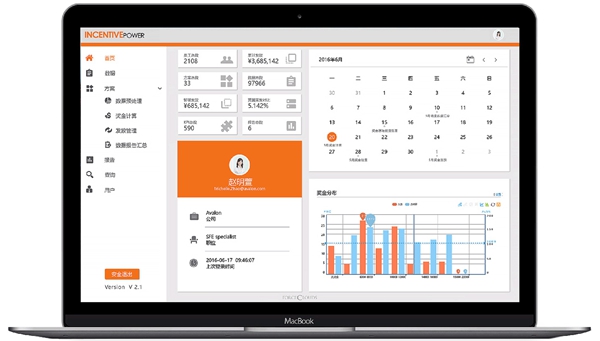
Yunshi Software Performance Management Software Interface
In terms of competition, Zhang Yingnan has a very clear strategy. He outlined several major categories of competitors and highlighted his company’s differentiators. First are traditional vendors such as SAP and Oracle. Zhang believes that these companies will find it difficult to pivot quickly to the cloud-based trend represented by SaaS, as their transition to the cloud will be a gradual process. Second are general-purpose SaaS providers, which differ from Yunshi in their sales models; their standardized products are not easily implemented in vertical sectors. Zhang estimates that general-purpose SaaS solutions can meet only about 30% of the business needs in the life and health industry, whereas Yunshi can address up to 70%. Third are vertical SaaS players like Veeva, currently the industry leader. If Veeva intensifies its efforts in the Chinese market, it could pose a significant threat. However, Yunshi holds advantages in the domestic market, with a comprehensive product portfolio and practical service strategies. Fourth are other custom development firms, whose costs, processes, and post-deployment optimization still lag behind those of Yunshi, given Yunshi’s deep expertise and long-term immersion in the life and health sector.
“We currently serve more than ten major clients, including large multinational corporations such as AstraZeneca, Mundipharma, and Bayer, as well as Sino-foreign joint ventures and domestic enterprises like Hisun-Pfizer and China Resources Saike. Our business portfolio spans four sectors within the broader health industry: pharmaceuticals, medical devices, nutritional supplements, and crop science,” said Zhang Yingnan.
In fact, Yunshi’s sales revenue reached RMB 15 million in 2016, achieving break-even. Zhang Yingnan projected that its 2017 revenue could reach RMB 30 million, maintaining a 100% growth rate in the following years and becoming a leader in China’s life and health SaaS market.
“Our ultimate goal is to expand beyond the Chinese market, extending our business into the Asia-Pacific region or selected markets in North America to compete with Veeva. We believe this company remains ambitious.” Zhang Yingnan’s long-term plan is to provide high-quality SaaS services to the global life and health industry.