

Former National Health and Family Planning Commission Director Li Bin's 'Two Verticals and Three Horizontals' Strategy for Advancing Primary Healthcare Reform
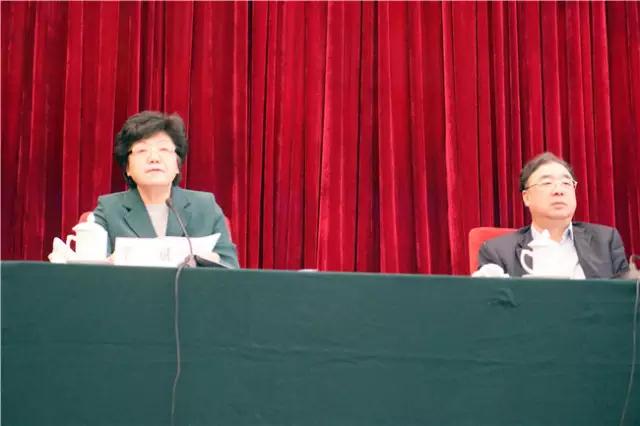
On January 6, the National Health and Family Planning Commission convened the 2017 National Conference on Primary Healthcare in Beijing. The main objectives of the conference were to thoroughly implement the spirit of the National Health and Wellness Conference, creatively apply the Party’s guidelines on health and wellness under the new circumstances, unify thinking, clarify tasks, enhance service capacity, stimulate operational vitality, and fully advance the reform and development of primary healthcare, thereby ushering in a new era for primary healthcare work. Li Bin, Director of the National Health and Family Planning Commission, attended and delivered a speech, while Deputy Director Ma Xiaowei presided over the meeting and provided concluding remarks.
Li Bin pointed out that primary-level institutions bear the heavy responsibility of providing public health and basic medical services to the people, serving as the foundation of the tiered diagnosis and treatment system and acting as the “gatekeepers” of residents’ health.
It has always received high attention from the CPC Central Committee and the State Council. Since the 18th National Congress of the Communist Party of China, the CPC Central Committee with Comrade Xi Jinping at its core has attached great importance to people's livelihood, prioritizing the development of primary healthcare as a key area. Efforts have been made to establish and improve the primary healthcare service system, consolidate and enhance the basic medical security system at the primary level, and deeply implement public health and basic medical services. These measures have significantly improved the equity and accessibility of medical services and medical security, making fundamental contributions to achieving overall better performance in major resident health indicators than the average levels observed in upper-middle-income countries.
Li Bin emphasized that in 2016, the Central Committee of the Communist Party of China and the State Council convened the National Conference on Health and Wellness, putting forward the Party’s guidelines for health and wellness work under the new circumstances. By giving prominent priority to primary care, the conference reflected the central leadership’s profound understanding and precise grasp of the critical role played by primary healthcare in safeguarding the health of the people. From now until 2020, we are in the decisive stage of building a moderately prosperous society in all respects, a crucial period for advancing the Healthy China initiative, and an important strategic window of opportunity for significant progress in primary healthcare. Primary healthcare work must adhere to the general principle of pursuing progress while maintaining stability, aim to provide equitable, accessible, and high-quality services, further improve the new operational mechanisms at the primary level, stabilize and optimize the workforce, steadily promote family doctor contract services, continuously enhance the public’s sense of gain and satisfaction, and lay a more solid foundation for building a Healthy China.
Li Bin called for advancing primary healthcare work in accordance with the “two verticals and three horizontals” roadmap. The “two verticals” refer to strengthening the construction of rural and urban primary healthcare service networks, while the “three horizontals” focus on effectively addressing key issues in basic public health services, workforce shortages, and health insurance guidance and support at the grassroots level in both urban and rural areas.
Prioritize the implementation of “Two Strengthenings and Three Improvements”: Focus on improving mechanisms to strengthen service capacity at the grassroots level in rural areas, striving to achieve “strong county-level facilities, vibrant township-level services, stable village-level operations, integrated vertical coordination, and seamless information connectivity”; leverage family doctor contract services as a key instrument to significantly enhance community health service capacity in urban areas. Improve the performance of basic public health services to increase resident satisfaction and sense of gain; enhance the quality of the grassroots health workforce, ensuring that talent can be “attracted, retained, and effectively utilized”; and strengthen the regulatory and supportive role of basic medical insurance to facilitate the development of a tiered diagnosis and treatment system. We must further enhance our sense of responsibility and mission, strengthen organizational leadership, increase investment, reinforce grassroots Party building, and promote exemplary cases to ensure the effective implementation of all policies and measures for grassroots health, thereby striving to create a new phase of progress in grassroots health work.
In his concluding remarks, Ma Xiaowei called for upholding the principles of emancipating the mind and seeking truth from facts, actively promoting the development of “medical alliances” and “medical consortia” centered on “vertical integration and horizontal coordination,” steadily advancing family doctor contract services, launching the “Year of Enhancing Primary Healthcare Service Capacity” initiative, and further advancing the establishment of a tiered diagnosis and treatment system.
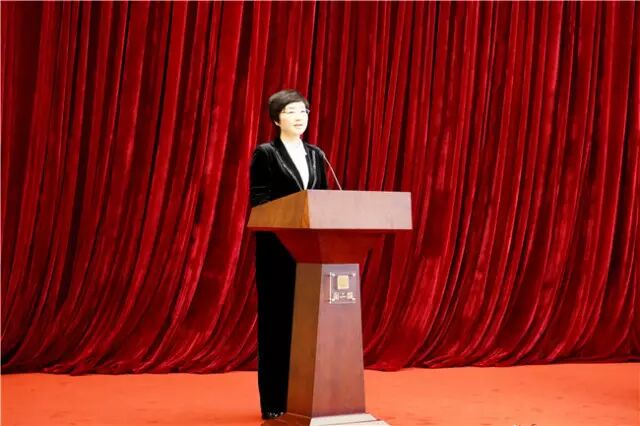
Plaques were awarded to representatives of township health centers that had earned public satisfaction during the 2015–2016 period. The Chinese Family Doctor Contracted Services Information Network Platform was launched and demonstrated, and relevant provinces and municipalities exchanged experiences on reform and development in primary healthcare. Attendees included principal leaders and officials in charge from the Health and Family Planning Commissions of all provinces, autonomous regions, municipalities directly under the Central Government, cities with independent planning status, and the Health Bureau of the Xinjiang Production and Construction Corps; heads of relevant departments and bureaus within the National Health and Family Planning Commission as well as certain directly affiliated and associated institutions; and experts in primary healthcare along with representatives engaged in primary healthcare work.