

Guangzhou Internet Hospital Officially Launches, Establishing First Internet Medical Hub in a Tier-1 City to Serve Guangdong and Radiate Across South China

Mr. Liao Jieyuan, Chairman and CEO of WeDoctor, introduced the service model of Wuzhen Internet Hospital to Secretary Ren Xuefeng.
In May 2016, a delegation led by Secretary Wei Xuefeng of Guangzhou visited Wuzhen Internet Hospital to examine its service and operational models. During the visit, they formally expressed their hope to establish an internet hospital in Guangzhou, aiming to build the first such facility among China’s top-tier cities (“Beijing-Shanghai-Guangzhou-Shenzhen”) to serve the residents of Guangzhou and the entire province.
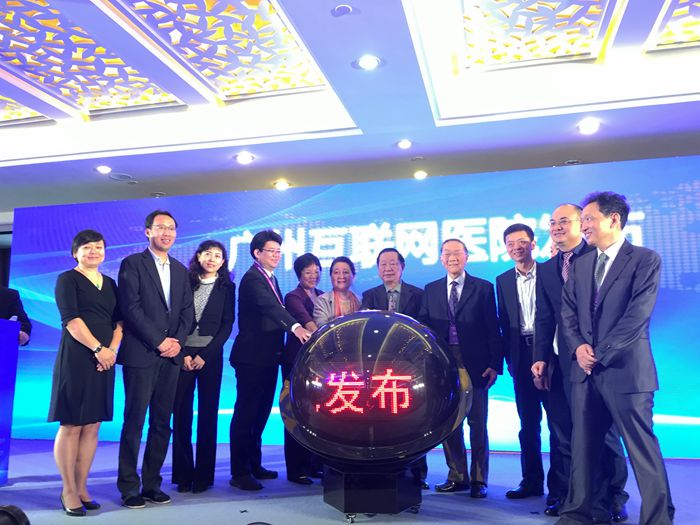
On January 7, 2017, at the “High-Tech Medical Development Trends Summit Forum – Guangzhou Stop,” jointly hosted by the Chinese Medical Journal, WeDoctor, and Wuzhen Internet Hospital, the Guangzhou Internet Hospital was officially launched. At the event, Li Ming, Deputy Mayor of Guangzhou, expressed his expectation that the Guangzhou Internet Hospital would be “based in Guangzhou, serve Guangdong, and radiate across South China.”Guangzhou Internet Hospital will take this as its starting point, leveraging the advantageous resources of “Internet+” to rapidly facilitate and advance the development of “Healthy Guangzhou.”
Li Ming, Deputy Mayor of Guangzhou; Professor Cheng Long from the Health Development Center of the National Health and Family Planning Commission; Jiang Xiaodong, Deputy Director of the Guangdong Provincial Health and Family Planning Commission; Xu Qingfeng, Director of the Guangdong Provincial Administration of Traditional Chinese Medicine; and other government officials, along with top medical experts including Academicians Liao Wanqing and Xia Zhaofan of the Chinese Academy of Engineering, Academician Peng Shuyou of the European Society of Surgery, Chen Xinshi, Editor-in-Chief of the Chinese Medical Journal, and Lü Yubo, Honorary President of Guangdong Provincial Hospital of Traditional Chinese Medicine, among more than 300 renowned medical experts, attended the launch ceremony.
The healthcare industry is an emerging sector with enormous market potential. The 13th Five-Year Plan proposed the grand strategy of "Healthy China," marking the entry of China's healthcare industry into a period of rapid development and bringing unprecedented opportunities and challenges. The advent of the "Internet Plus" era has provided new insights for the development of the traditional healthcare industry. Currently, internet-based healthcare is exhibiting a diversified development trend, with various specialized segments, such as internet hospitals, emerging accordingly.
At the policy-driven level, national, provincial, and municipal governments have successively introduced supporting policies to foster the development of internet-based healthcare. These policies advocate for the active development of mobile medical services, providing patients with convenient online services such as appointment scheduling, waiting reminders, price calculation and payment, access to diagnostic reports, and medication delivery. By leveraging the internet, patient queueing and waiting times will be significantly reduced, offering great convenience. Furthermore, there is active encouragement to establish cross-hospital medical data sharing and exchange systems, promoting the digitization of medical imaging, health records, case histories, and laboratory test reports.
The “Internet Plus” Action Plan of Guangdong Province (2015–2020) explicitly requires advancing the pilot development of online hospitals. It mandates that the number of online hospital pilots reach 10 by the end of 2017 and 20 by the end of 2020. The plan also proposes establishing a provincial medical big data platform, promoting the application of electronic prescriptions and electronic medical records, and facilitating the networked sharing of medical resources and data.
In July 2016, the "Key Points of Guangdong Province's Deepening Medical and Health System Reform in 2016" was released, proposing to build a medical and health information system and actively promote "Internet + Healthcare" services. It aims to integrate health management and medical information resources, promote services such as appointment-based diagnosis and treatment, online payment, online follow-up visits, and online inquiry of examination and test results, and actively develop business applications including telemedicine, disease management, and pharmaceutical care services.
During the 13th Five-Year Plan period, Guangzhou fully launched the “Internet Plus” action plan, deeply integrating it into various aspects of production and daily life. In the realm of “Internet Plus” medical services, Guangzhou has taken a leading position nationwide, accumulating substantial experience and expertise. Meanwhile, the city is comprehensively advancing the construction of a national health information service system and vigorously promoting the application of “Internet Plus” healthcare solutions, such as telemedicine, mobile health, smart healthcare, and personalized medicine.
Guangzhou serves as the medical center and pharmaceutical distribution hub for South China. Currently, Guangzhou has established a "Three Centers, Multiple Zones" industrial park layout, with Guangzhou International Bio Island, Guangzhou Science City, and Guangzhou International Health Industry City at its core, complemented by the coordinated development of specialized biotech industrial parks. The city has developed a comprehensive and diversified service network encompassing healthcare, elderly care, health maintenance, and health insurance, with its medical services extending their reach across South China and even into Southeast Asia.
Driven by the Guangzhou Municipal Government, the Guangzhou Internet Hospital was developed and operated by WeDoctor.The project plans to invest $100 million to establish the WeDoctor South China Center, which will include an imaging center and an operational customer service center, incorporating the Guangzhou Internet Hospital. Leveraging big data and information technologies such as genetic testing, digital pathology, and remote consultations, the center will serve over 100 million users in South China.
On May 12, 2016, WeDoctor South China Center obtained its business license and confirmed the project site at Guangzhou International Bio Island; on December 9, 2016, it was approved for a Medical Institution Practicing License.Guangzhou Internet Hospital is the first true internet hospital among China’s Beijing-Shanghai-Shenzhen-Guangzhou tier.
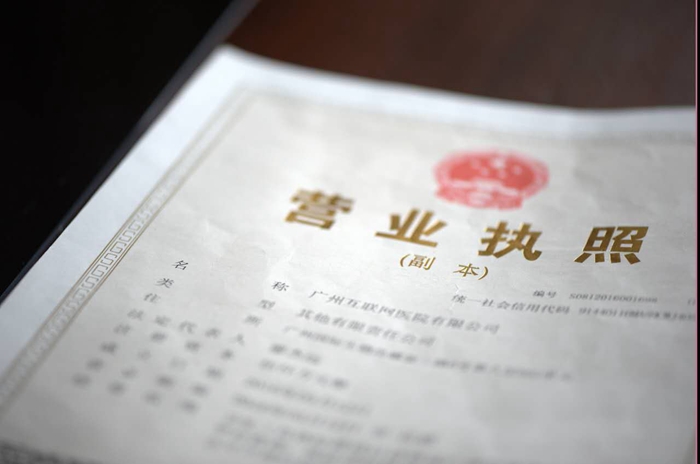
Duplicate of Business License for Guangzhou Internet Hospital
Guangzhou Internet Hospital is an online diagnosis and treatment platform that provides online medical services and remote consultation services. It offers features such as precise appointment scheduling, online follow-up visits, remote consultations, electronic prescriptions, extended medical orders, and home medication delivery. Its core business focuses on online doctor-patient consultations and remote doctor-to-doctor consultations, aiming to decentralize high-quality medical resources to the grassroots level and enhance the overall medical service capacity at the primary care level.
Guangzhou Internet Hospital is committed to achieving deep integration between “Internet+” and the traditional medical and pharmaceutical industries. By leveraging advanced technologies such as mobile internet and big data, it aggregates high-quality medical service resources, facilitates the decentralization of top-tier medical resources to primary care levels, enhances the allocation and utilization efficiency of healthcare resources, optimizes patient care processes, and establishes a sound tiered diagnosis and treatment system. This aims to create a healthcare delivery pattern characterized by “initial consultation at the primary level, two-way referrals, separate management of acute and chronic conditions, and coordinated care between upper- and lower-level institutions.”
Meanwhile, by leveraging innovative healthcare delivery models such as family physician services, online consultations, and remote multidisciplinary consultations, patients and the general public can access high-quality health and medical services from home, thereby reducing both direct medical costs and non-medical expenses.
At the press conference, Liao Jieyuan, Chairman and CEO of WeDoctor, provided us with a detailed introduction to the mission and functions of the Guangzhou Internet Hospital, which primarily encompass the following dimensions.
Based in Guangzhou, Serving Guangdong, Reaching South China
Guangzhou Internet Hospital is anchored in Guangzhou, serves the entire province, and extends its reach across South China. It provides remote diagnosis and treatment services to residents of Guangzhou and the broader population of Guangdong Province, leveraging innovative approaches to build an internet-based tiered diagnosis and treatment platform with distinct Guangzhou characteristics, thereby delivering remote medical consultations to users.
Promote the “Dual Downward Flow” and “Dual Improvement” of Medical Resources
Enhancing Medical Services: By integrating the implementation of multi-site practice into internet hospital platforms, physicians can provide high-quality online medical services through these platforms, thereby fully supporting innovations and reforms in Guangzhou’s healthcare system.
Management of Follow-up Patients: Leveraging the unique characteristics of internet hospital services, with a focus on serving patients with chronic diseases, those requiring follow-up visits, and those in rehabilitation. Internet hospitals refer appropriate initial-diagnosis patients to physical hospitals, while physical hospitals provide laboratory and diagnostic testing services for these patients.
Establishment of Health Records: Provide equipment to community medical institutions across the province to conduct patient examinations including electrocardiogram (ECG), blood pressure, blood oxygen saturation, pulse, blood lipids, and B-mode ultrasound; simultaneously build health records and outpatient visit records to provide data support for remote diagnosis and treatment;
Enhancing Primary Healthcare Service Capabilities: Teleconsultation and referral services also provide training and learning opportunities for primary care physicians, helping community medical institutions improve their diagnostic and treatment capabilities, referral capabilities, laboratory and imaging testing capabilities, and pharmaceutical supply capabilities;
For follow-up patients, who are a key service demographic, internet hospitals not only facilitate the diversion of patients to primary care institutions but also channel high-quality medical resources down to the grassroots level, closely aligning with the policy of “Dual Diversion and Dual Enhancement.”
Implementing the Family Doctor Contract System
The Internet Hospital Platform provides a subscription service system for family doctor contracts, strengthening communication and interaction between patients and their assigned physicians. Patients can access remote diagnosis, treatment, and management services, while physicians can monitor the health status of contracted families in real time. This facilitates systematic and comprehensive patient management, enhances health management services, and reduces healthcare expenditures.
Establishing the South China Center for Internet Hospitals
As the South China hub for internet hospitals, Guangzhou Internet Hospital has simultaneously established a data center and an imaging center on the foundation of its tiered diagnosis and treatment platform. By leveraging big data insights from genetic testing, digital pathology, and remote diagnostics, it has introduced advanced medical models such as multidisciplinary team (MDT) consultations and precision medicine to build a comprehensive online healthcare service system. The hospital provides patients with one-stop, personalized medical services covering preoperative diagnosis, surgical treatment, and postoperative rehabilitation, thereby launching the “Precision Medicine Consultation Center.”
Exploring New Models of Internet-Based Medical Services Aligned with Guangdong’s Local Context
Guangzhou Internet Hospital enhances the service capabilities and scope of Guangdong Provincial Hospital of Traditional Chinese Medicine in internet healthcare through “Internet+” initiatives. The jointly established Renowned Physician Consultation Center and Renowned Physician Surgery Center are primarily operated by Guangdong Provincial Hospital of Traditional Chinese Medicine, while Guangzhou Weiyi Internet Hospital provides the operational model, software and hardware infrastructure, and access to top-tier external expert resources on its proprietary platform, thereby further improving the service capabilities and reach of both centers.
Meanwhile, by integrating their respective advantageous resources, the two parties have deepened their collaboration in discipline construction and the inheritance of Traditional Chinese Medicine (TCM) theoretical frameworks, thereby exploring new approaches to further promote appropriate TCM technologies, enhance TCM service capabilities, leverage the distinctive advantages of TCM, and wholeheartedly serve the general public.
Supporting the Development of "Smart Guangzhou"
Building upon the Guangzhou Internet Hospital platform and the subsequent establishment of a health big data center and an imaging center, the Guangzhou Internet Hospital has further integrated hospitals across Guangzhou into its platform to create the Guangzhou Medical Consortium. It is gradually incorporating medical resources from healthcare institutions at all levels throughout Guangdong Province, with the aim of progressively establishing the Guangzhou Medical Consortium, the Guangdong Provincial Medical Consortium, and the South China Center for Internet Hospitals. These initiatives will further support the development of the regional health informatization platform in South China, facilitate the implementation of tiered diagnosis and treatment, and enhance regional medical service capabilities.
Supporting Health Poverty Alleviation in Guangdong
Guangzhou Internet Hospital plans to establish the Guangzhou Health Poverty Alleviation Platform, connecting medical institutions at all levels across Guangzhou and Guangdong Province to enable interoperability and resource sharing. This initiative aims to channel high-quality medical resources from within and outside the province down to primary care facilities in South China, thereby enhancing the professional competence and service capabilities of grassroots physicians and achieving local healthcare-based poverty alleviation. Currently, Meizhou and Guangzhou Internet Hospital have reached a cooperation agreement to integrate Meizhou Shejiang Hospital into the Guangzhou Internet Hospital platform. Additionally, by donating all-in-one health kiosks to more than 80 poverty-stricken villages in the area, the project will establish health records for residents, thus facilitating targeted health-focused poverty alleviation for the local population.