

IBM's '5 in 5' Health Tech Innovations: AI-Powered Diagnostics, Lab-on-a-Chip, and Super Imaging Set to Transform Medicine Within Five Years
Observing IBM’s technological journey, from physical devices to advanced software tools, all convey a consistent spirit: the relentless pursuit of cutting-edge technological tools, seeking new knowledge from the unknown, and exploring the microscopic world within the macroscopic realm.
In the healthcare sector, IBM is also continuously exploring new frontiers. A simple search yields a plethora of news articles on IBM’s medical research initiatives, such as using audio recordings for the diagnosis of mental disorders, leveraging the Internet of Things (IoT), big data, and artificial intelligence to optimize medical experiments and clinical care, and employing nanoscale chips for disease tracking.
Not long ago, IBM Research published this year’s “5 in 5” predictions on its official website, highlighting five technological innovations likely to disrupt people’s lives over the next five years, with healthcare being a major focus. Join VCBeat (WeChat ID: vcbeat) as we take a comprehensive look at these groundbreaking technologies favored by IBM.
Within five years, our spoken and written language may serve as indicators for assessing both psychological and physical health. Emerging cognitive systems will analyze specific patterns in people’s speech and writing, making early signs of neurodevelopmental disorders, mental illnesses, and neurodegenerative diseases increasingly apparent. At that time, both physicians and patients will leverage AI tools to predict, monitor, and document disease progression.
Current Status: Brain disorders, including neurodevelopmental disorders, mental illnesses, and neurodegenerative diseases, impose substantial physical, psychological, and economic burdens on individuals. For instance, in the United States today, one in five people suffers from a mental illness such as depression, bipolar disorder, or schizophrenia, with approximately half of these patients receiving no treatment at all. Global expenditures on mental health are projected to reach a staggering $6 trillion by 2030.
Outlook: Cognitive computing will identify subtle indicators of mental health issues from human speech and notes by analyzing three dimensions: semantics, syntax, and prosody. Integrating these measurements with data from wearable devices and medical imaging (such as MRI or EEG) can create a more comprehensive and multidimensional profile of an individual, aiding in the understanding and treatment of potential disorders. Patients with Parkinson’s disease, Alzheimer’s disease, Huntington’s disease, post-traumatic stress disorder (PTSD), and even developmental conditions such as autism spectrum disorder and attention-deficit/hyperactivity disorder (ADHD) will benefit from this approach.
At IBM: Researchers are using machine learning techniques to analyze handwritten notes and audio recordings from patients’ psychotherapy sessions, enabling precise diagnosis of psychosis, schizophrenia, mania, and depression. Currently, IBM’s technology can predict potential psychosis using just 300 words.
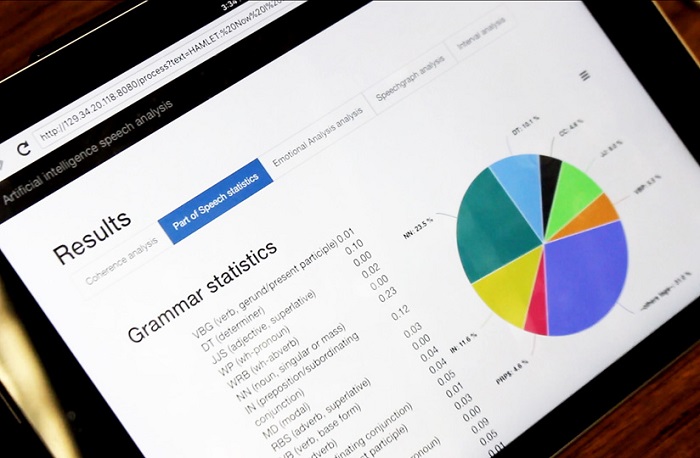
Record the patient’s monologue, “to be or not to be,” and analyze it using IBM Research’s mobile app.
Within five years, new super-imaging devices will integrate with AI, enabling us to transcend the limitations of visible light and leverage a broad spectrum of electromagnetic waves to uncover more scientific principles or reveal dangers imperceptible to the naked eye. Most importantly, these devices will be portable, affordable, and widely accessible, making superhero-like vision an everyday experience for ordinary people.
Current Status: Over 99.9% of the electromagnetic spectrum is invisible to the naked eye. Over the past century, scientists have invented devices capable of transmitting and receiving electromagnetic waves of various wavelengths, which are the machines we use today for medical imaging, security screening, and enabling aircraft to land accurately in heavy fog. However, these tools remain highly specialized and expensive, and they only utilize limited portions of the electromagnetic spectrum.
Outlook: Electromagnetic waves invisible to the human eye may be leveraged to enhance vehicle safety. For instance, super-imaging technologies that integrate millimeter-wave imaging, cameras, and other sensors can help vehicles avoid traffic accidents in adverse weather conditions such as heavy fog or rain, warn of thin ice on road surfaces, and provide information on the size and distance of objects not visible to the naked eye. Artificial intelligence technology can analyze this data to identify the characteristics of obstacles ahead.
At IBM: Scientists at IBM are currently building a compact super-imaging chip platform capable of “seeing” across all frequency bands of the electromagnetic spectrum from a single platform. If successfully developed, it will become the core technology for a wide range of practical, low-cost devices.
By integrating this chip into smartphones, we can effortlessly capture images to analyze the nutritional content or safety status of food. Even a quick scan of medications or checks with a super-imaging device can distinguish authentic items from counterfeits. Things beyond our visual range will be seen with crystal clarity.
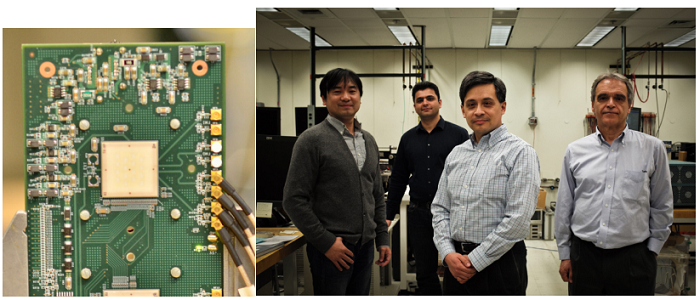
IBM’s Millimeter-Wave Phased-Array Sensor (One of the Hardware Modules for Portable Super Imaging Devices) and Its Development Team
Within five years, we will leverage machine learning algorithms and software to organize the vast information of the physical world, aggregating complex data from hundreds of millions of devices. We refer to this technology as “Macroscopic Visibility Technology”—it is not merely the microscopic world observed through microscopes, nor solely the distant cosmos viewed through telescopes, but rather a grand synthesis of both, extracting critical spatiotemporal insights from the massive, chaotic data streams worldwide.
Current Status: The material world we see today is merely the tip of the iceberg of a complex, interconnected ecosystem. Data has grown to such an extent that it is measured in exabytes (2^16), yet much of it remains disorganized. In fact, scientists spend 80% of their time organizing data.
Thanks to the advent of the Internet of Things (IoT), data is pouring in. From everyday items like refrigerators, light bulbs, and heart rate monitors to sophisticated technologies such as drones, cameras, satellites, and telescope arrays, there are now 6 billion devices connected to the network, growing at an annual rate of 30%. After successfully digitizing information, business transactions, and social interactions, humanity has embarked on the process of digitizing the physical world.
Outlook: While macroscopic technologies are transforming various industries, they also help uncover the root causes of certain existing problems, such as access to food, water, and energy. Data can clarify the relationships among climate, soil, water sources, and irrigation, enabling modern farmers to choose optimal harvest times, planting locations, and more. Looking to the cosmos, macroscopic technologies can predict asteroid collision events from data collected by telescopes and provide deeper insights into the material composition of celestial bodies.
At IBM: Since 2012, IBM has been putting the concept of “Smarter Planet” into practice through E. & J. Gallo Winery, integrating data on irrigation, soil, and weather with satellite imagery and other sensor data to optimize the yield and quality of wine grapes. In the future, this approach may be adopted worldwide.
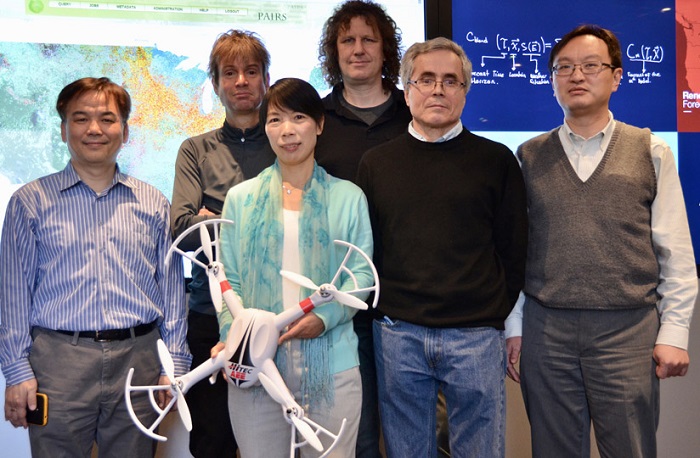
The IBM Research Team That Created the World’s First Global Data Platform
Within five years, medical laboratories may be condensed onto a single chip—nanotechnology-based “health detectives” capable of detecting disease risks in bodily fluids and alerting individuals to seek medical attention when necessary. The ultimate goal is to perform all essential diagnostic procedures on a silicon wafer, thereby eliminating the need for large-scale laboratory testing.
Current Situation: We frequently emphasize that early diagnosis is key; the earlier a disease is confirmed, the greater the likelihood of control and cure. However, diseases such as cancer and Parkinson’s are difficult to detect before symptoms appear. Yet, biological particles present in saliva, tears, blood, urine, and sweat can reveal substantial health information. Existing technologies still struggle to capture and analyze these particles, which are thousands of times smaller than the cross-section of a human hair.
Outlook: Lab-on-a-chip technology will ultimately be integrated into many convenient handheld devices, enabling individuals to frequently measure biomarkers in bodily fluids at home and securely transmit test data to the cloud. Furthermore, data from lab-on-a-chip devices can be combined with information from certain wearable devices within the Internet of Things (IoT), allowing artificial intelligence systems to derive deeper insights. This facilitates timely alerts at the earliest signs of health issues, thereby nipping diseases in the bud.
At IBM: Scientists at IBM Research are developing a lab-on-a-chip nanotechnology capable of isolating biological particles with a diameter of 20 nanometers. This level of precision enables the analysis of DNA, viruses, and exosomes, thereby allowing for the detection of disease markers before overt symptoms appear. Known as liquid biopsy, this technique is significantly more convenient and comfortable than conventional tissue biopsies and cancer screening methods.
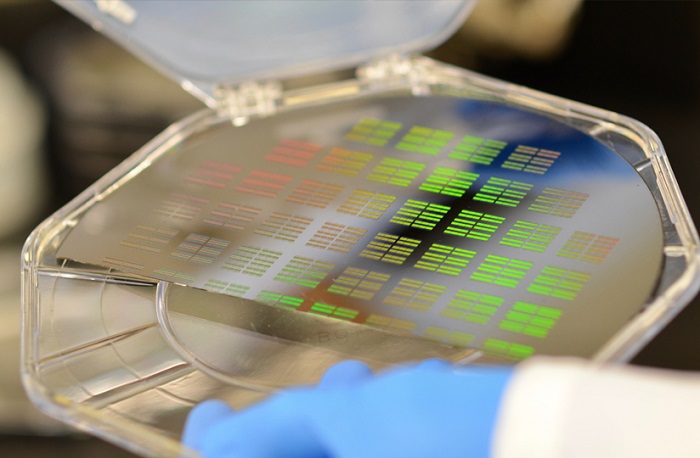 IBM Scientists Invent Silicon Chip for Bodily Fluid Detection
Within five years, new sensors will be deployed at natural gas wells, warehouses, and transmission pipelines, enabling industries prone to industrial pollution to monitor pollutant leaks in real time with precision.
Current Situation: Most pollutants are invisible to the naked eye, and their gradual accumulation can lead to severe consequences. For example, methane, the primary component of natural gas, is often regarded as a clean energy source; however, its contribution to the greenhouse effect is second only to that of carbon dioxide.
Outlook: Cloud-connected wireless sensors in the Internet of Things (IoT) will continuously monitor gas-producing equipment, enabling natural gas leaks that previously took weeks to track to be resolved within minutes, thereby preventing catastrophic pollution incidents.
At IBM: IBM scientists are collaborating with natural gas suppliers such as Southwest Gas to develop an intelligent natural gas monitoring system. At the core of this research is silicon photonics, a technology that enables data transmission at the speed of light. This technology can be embedded in ground-based sensor networks or industrial equipment, and can even be deployed on drones for high-altitude pollution monitoring. By integrating monitoring results with real-time wind direction data, satellite data, and historical source information, the system creates a sophisticated environmental analysis model capable of rapidly identifying pollution sources and assessing the extent of contamination.
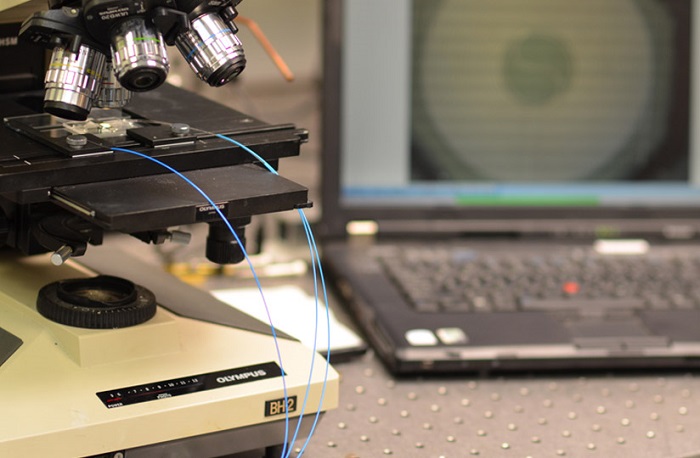 IBM Uses Microscopes to Manufacture Infrared Optical Sensors for Monitoring Methane