

Puti Medical Files IPO Prospectus Highlighting Its Three Pillars: AI-Powered Cloud Platform, 50,000+ Doctors Network, and Cross-Border Healthcare
After launching its AI-integrated medical cloud platform, the company signed contracts with 50,000 physicians and ventured into cross-border healthcare. Throughout the year, many speculated about the strategic intentions of the typically low-profile Puti Medical. In the Shibei District of Qingdao, VCBeat met with Song Qing, CEO of Puti Medical Group. During a brief one-hour interview,Faced with numerous questions,She shared her thoughts with the reporter.

Song Qing, CEO of Puti Medical Group
Back in June 2016, Qingdao Municipal Hospital (Group) had just signed a strategic cooperation agreement with Puti Medical Group. At that time, building a regional medical information platform, smart hospitals, and telemedicine platforms, as well as establishing a cloud hospital service system, became Puti Medical’s primary objectives.
It was also at that time that Puti Medical launched the Puti Medical Cloud, hailed as the “strongest brain” in the medical industry. This system not only incorporates IBM Watson’s cognitive technologies but also leverages big data to provide physicians with clinical decision support, making it one of the most advanced intelligent solutions worldwide.
Within this cloud-based AI system, the Puti Medical Cloud incorporates a journal-like repository that aggregates core medical journals from around the world. When physicians input keywords related to disease diagnoses, the system leverages cognitive computing technologies to automatically cross-reference the database and deliver results to the physicians, including information such as research findings or patient diagnostic recommendations. In effect, this equips physicians with a knowledgeable medical assistant.
Regarding the Advantages of Bodhi Medical Cloud,Song Qing held up three fingers:
First is safety and stability. Why has the process of hospital informatization been so slow? A major reason is data security concerns. It is necessary to have industry-level applications while ensuring system security, data security, and operational safety.
Therefore, Song Qing and his team partnered with Fortune 500 companies IBM and Oracle, as well as Datang Gaohong, leveraging their robust mainframes and databases to ensure rapid data processing and read/write capabilities. This collaboration also strengthened the security of medical service operations and data, thereby enhancing the efficiency of healthcare operations.
Second is professionalism. Including Song Qing, the core members of Puti Medical all have a background as doctors. Relying on their profound understanding of healthcare, Puti Medical's system can closely align with the operational needs of medical institutions.
Third, it is free. Backed by Baiyang Pharmaceutical Group, Puti Medical enjoys robust industrial support. This enables Puti Medical to offer basic services free of charge, with fees applied only for value-added services such as customization. Unlike many health IT companies that rely solely on software revenue, Puti Medical has adopted a different business model.
Whether it is information silos or security concerns, these challenges can technically be overcome by enterprises. From the perspective of national policy, the encouragement for various regions to establish regional medical data centers is precisely aimed at facilitating information sharing. Currently, some hospitals claim to have assembled IT teams of over 100 people to develop their own cloud systems. Nevertheless, each hospital remains an information silo within its respective region.
Song Qing and Bodhi Medical’s idea was simple,The goal is to help medical institutions, particularly primary care facilities, establish third-party data platforms to facilitate information sharing.
With a medical backgroundSong Qing is well aware that medical practice is impossible without face-to-face interaction between doctors and patients. Therefore, she has a clear positioning for Puti Medical Cloud: initial consultations should be conducted offline, while follow-up visits should take place online.
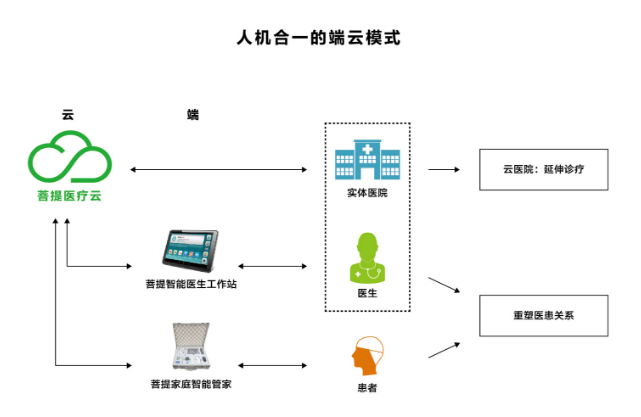
To achieve this goal, the support of a cloud platform is crucial. As an edge-cloud system, Puti Medical Cloud connects physicians through its intelligent physician workstation on one hand, and on the other hand, throughBodhi Smart Home Assistant, to connect the patient.
Patient information collection is a dynamic process. First, the Bodhi Home Smart Caregiver collects health data such as blood pressure and blood glucose from patients through detection devices and transmits it to the Bodhi Medical Cloud.Bodhi Medical Cloud viaIntelligent computation and analysis of information are performed, with diagnostic results then relayed to both patients and physicians. This approach enables physicians to assist patients in health management while empowering patients to engage in self-management, rendering the entire process both simple and efficient.
For doctors, a simpleIntelligent Doctor Workstation, enablingRapidly access patient information and data via the cloud. With intelligent AI-driven decision support, chronic disease management for patients can be completed quickly and accurately.
On June 6, 2016, the General Office of the State Council issued the “Guiding Opinions on Advancing Family Doctor Contract Services,” requiring that by 2020, efforts be made to expand family doctor contract services to cover the entire population, establish long-term and stable contractual service relationships, and basically achieve full coverage of the family doctor contract service system.
In the same month, Puti Medical and the Chinese Medical Doctor Association jointly launched the “Intelligent Doctor Project” and officially released the Puti Intelligent Doctor Workstation, becoming China’s first intelligent hardware solution specifically developed for physicians’ needs. To date, over 50,000 physicians have signed up.
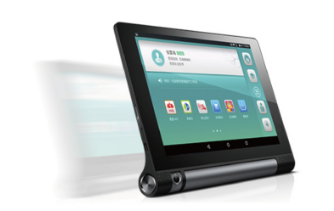
Bodhi Intelligent Doctor Workstation
Song Qing is quite optimistic about the prospects of this entire end-to-cloud system.Bodhi Medical’s acquaintance-based doctor-patient model not only facilitates long-term and comprehensive communication between doctors and patients, enabling disease tracking and early intervention, thereby reducing overall healthcare expenditures, but also helps mitigate doctor-patient conflicts to some extent through improved service quality.
The shortage of general practitioners and the difficulties in triage and referral are significant factors constraining the development of primary healthcare in China. On this issue, Song Qing’s view is straightforward: it is unrealistic to expect primary care institutions to spend tens of millions on purchasing a single system. However, without an information technology system, how can two-way referrals between primary care institutions and large hospitals be achieved?
In response, Song Qing told VCBeat, “Once the Puti Medical Cloud is fully established, a wide variety of SaaS-level services will be linked to it. Large hospitals will connect to the Puti Medical Cloud via integration platforms, while smaller hospitals will do so through Puti Medical’s primary care platform.”
As such, the application scenarios for Puti Medical Cloud are numerous. It not only facilitates information interoperability between large medical institutions and primary care facilities but also addresses challenges such as tiered diagnosis and treatment and physicians’ multi-site practice. Furthermore, primary care physicians can leverage its intelligent AI “superbrain” to rapidly assume the role of general practitioners.
Currently, in addition to Qingdao Municipal Hospital (Group), Puti Medical has also partnered with public hospitals such as Beijing Tsinghua Changgung Hospital. Through the Puti Medical Cloud, it helps these hospitals establish regional medical centers, thereby driving the development of primary care institutions within the region.
Cross-border healthcare is a form of transnational telemedicine. Last year, while in the United States, Song Qing consulted the director of Stanford Medicine’s International Health Services department, asking whether they welcomed large numbers of foreign patients, including Chinese nationals, seeking care at Stanford. The answer she received was no. The director told her, “Stanford’s medical resources are equally scarce; what hospitals truly need are appropriate patients, not everyone."These words proved immensely beneficial to Song Qing."
In October 2016, Puti Medical signed a strategic cooperation agreement for overseas medical projects with the U.S.-based Hope Light Medical Group. As agreed, both parties will join forces to provide services such as “medical education, telemedicine, practice repatriation, and cross-border healthcare” to overseas physicians.
On October 24, Puti Medical entered into a strategic cooperation agreement with SecondOpinionExpert, Inc. (a U.S.-based telemedicine company). Leveraging SecondOpinionExpert’s advanced telemedicine platform and its network of distinguished U.S. physicians, the partnership aims to provide cross-border medical services to Chinese patients with genuine needs at reasonable costs, while also offering corresponding assistance for travel to the United States for select individuals.
“Bodhi Medical has established cross-border healthcare collaborations with U.S. companies, primarily aiming to provide channel services for patients with genuine needs. Bodhi Medical does not participate in the payment process; it merely serves as a platform to facilitate communication between the parties.”Song Qing told VCBeat.
Last year’s biggest trend was undoubtedly internet hospitals. Broadly speaking, there are two primary models: one is the WeDoctor model, which expands from online services to offline operations; the other is the First Affiliated Hospital of Zhejiang University School of Medicine (Zhejiang No. 1) model, in which large hospitals leverage internet technologies to serve a broader patient population.Song Qing’s viewpoint is clear:“There is no need to pit one model against another to determine which is superior; any approach that leverages internet tools to enable physicians to serve a larger patient population is a good one.”
Bodhi Medical engages in both models. On one hand, it is responsible for building the smart hospital infrastructure for the entire Qingdao Municipal Hospital Group, connecting more than 20 medical consortium members via the Bodhi Medical Cloud to achieve regional healthcare informatization. On the other hand, Bodhi Medical has established its own cloud hospital, which also leverages a cloud platform to serve patients across various regions, representing another operational model.
In response, Song Qing offered an analogy to the reporter: The reason MinuteClinics in CVS pharmacies in the United States did not exist in the past but do now is precisely the result of pursuing medical efficiency. Take mobile phones as an example: a few years ago, they were called “smartphones,” but now that people have become accustomed to them, they are simply referred to as “mobile phones.”
Therefore, it is not essential for enterprises to brand themselves as “Internet hospitals” or “cloud hospitals.” The key lies in leveraging Internet technologies to unlock the value of physicians and expand the boundaries of healthcare institutions—this is what truly matters.。
In the healthcare industry, Puti Medical is not “Fighting Alone”, established in 2005,Focused on Investment and Operations in the Health IndustryBaoyang Pharmaceutical Group serves as the most solid backing for Puti Medical. In terms of positioning, Puti Medical is a health service brand under Baoyang’s investment portfolio. Including Puti Medical, Baoyang operates four ecosystem circles: the International Brand Ecosystem, the Health Services Ecosystem, the Financial Services Ecosystem, and the Internet Applications Ecosystem.
The health services ecosystem, centered on Puti Medical, encompasses the development of the Puti Medical Cloud, the construction of physical medical institutions and integrated medical-care centers, as well as real estate operations.
In terms of functional division, Puti Medical Cloud provides modern hospital informatics solutions for Chinese medical institutions, including hospital information integration platforms, primary care platforms, and regional health platforms, thereby optimizing medical resources, improving healthcare quality, and reducing medical expenditures.
Bodhi’s physical medical institutions and integrated medical-nursing centers are currently primarily located in Qingdao. On one hand, they serve as modern healthcare facilities built on advanced concepts, catering to both physicians and patients. On the other hand, they function as training bases for Bodhi Medical’s healthcare professionals. This model leverages clinical practice to drive regional development, while using regional resources to support medical services.Baiyang Real Estate has alwaysdevelopment model.
According to VCBeat, Puti Medical boasts three major advantages: first, it has built a self-developed cloud platform; second, it has access to a network of over 50,000 contracted physicians; and third, it benefits from the supply chain and industrial support of Baiyang Pharmaceutical Group.
At present, there are virtually no companies that possess all three of these attributes simultaneously. Typically, those with technology lack resources, while those with resources lack distribution channels; thus, Puti Medical is an exception. AndIt is precisely because of the backing of stable, profitable conglomerates like Baiyang that Puti Medical can implement its business more from an industry and sector perspective, with greater strategic foresight.
Having established a firm foothold in Qingdao, Song Qing is now planning to expand Puti Medical’s presence into regions such as Shenyang, Zhejiang, and Guangxi.
Medical payment is the only segment that Puti Medical has not yet entered. On this point, Song Qing appears somewhat resigned. At the current stage, China’s medical payment market remains closed, with social health insurance holding a dominant position while commercial insurance is largely marginalized. As a result, companies have no viable entry point for developing medical payment solutions.
To truly align with national policies and achieve medical insurance cost containment and tiered diagnosis and treatment,The optimal approach is to adopt the HMO model, on which several industry pioneers—including Ping An Good Doctor, WeDoctor, and Bodhi Medical—have surprisingly aligned objectives. According to Song Qing’s vision, in the future,Improve public health and reduce overall healthcare expenditures through health management., is an irreversible trend. With the gradual relaxation of national policies, the entry of commercial insurance payment is only a matter of time.
Like Song Qing, there is no shortage of medical entrepreneurs with a physician background who are deeply immersed in the wave of reform. From the depths of their hearts,TheyAll aspire to leverage their own strength to transform certain entrenched aspects of the healthcare industry. The capital winter has washed away the bandwagoners chasing pseudo-demands, while truly responsible enterprises are continuing their arduous quest along this winding path.