

SenAI Intelligence Secures Nearly RMB 10 Million in Seed Funding to Advance AI-Powered Structured Medical Data for Secondary Applications
Senyi Intelligence exclusively disclosed to VCBeat:The company has completed its angel round of financing, raising nearly RMB 10 million. The lead investor was ZhenFund, with Huayan Capital and Shulan Healthcare participating as co-investors.
As a company dedicated to leveraging artificial intelligence for the automated analysis of medical texts and the secondary application of data, Senyi Intelligence brings U.S. expertise in medical informatics back to China, transforming the country’s vast electronic health record resources into healthcare productivity.
“The domestic medical data industry faces numerous challenges, which I believe are primarily due to three reasons:”
First, the state has yet to issue a comprehensive set of industry standards for medical information, while the IT systems currently employed by individual hospitals remain isolated from one another, making standardization difficult.
Second, the lack of standards and data interoperability has prevented the emergence of large-scale medical big data, making it even more difficult to discuss data mining and value extraction.
Third, the public healthcare system lacks sufficient commercial incentives to generate enough use cases.“Senyi Intelligence CEO Zhang Shaodian pinpointed the root causes of China’s healthcare informatization challenges in an interview with VCBeat.”
While studying in the ACM Class of the Department of Computer Science and Engineering at Shanghai Jiao Tong University (named after the Association for Computing Machinery, with the aim of cultivating computer scientists), Zhang Shaodian interned at Microsoft Research Asia, focusing primarily on the research and development of natural language processing algorithms. During this period, he published papers on natural language processing and later received an offer from Columbia University for its program in Medical Informatics.
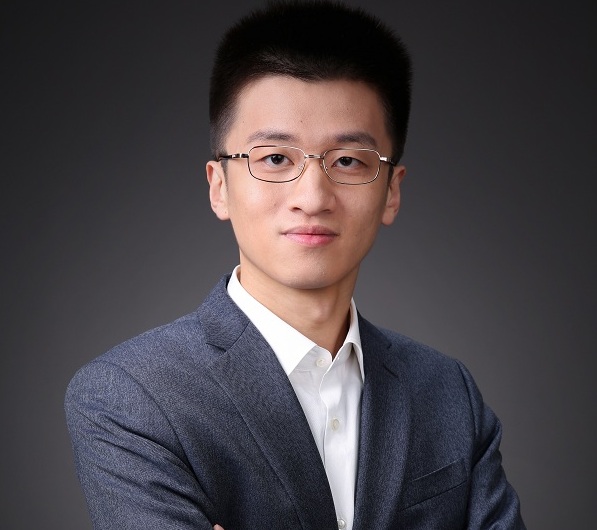
Zhang Shaodian, CEO of Senyi Intelligence
Columbia University is home to the premier Department of Biomedical Informatics in the United States; its founder was also among the world’s first inventors of medical AI products.
By the late 1990s, the United States had essentially completed the informatization of mainstream hospitals. The current focus of medical informatics has shifted from the initial phase of system construction to the second phase, namely the secondary utilization of data. Furthermore, the United States has begun to address issues of efficiency, safety, and universality from a medical perspective.
China is currently in a transitional phase from Stage 1 to Stage 2. Although the informatization of mainstream hospitals is nearly complete, issues such as incomplete systems, lack of interoperability, and insufficient systematization persist. Consequently, despite the existence of infrastructure, data mining challenges remain unresolved, let alone the secondary utilization of data.
In addition, the United States has established a comprehensive talent development system for medical informatics, providing a foundational workforce for the construction of medical information systems, whereas China currently lacks specialized training programs for such professionals.
Against this backdrop, Zhang Shaodian founded Senyi Intelligence, which leverages artificial intelligence to structure electronic medical records and provides secondary data application services to enterprises such as insurers and pharmaceutical companies.
Senyi Intelligence addresses the needs of B-side clients—including healthcare IT companies, insurers, pharmaceutical firms, and hospitals—by structuring and visualizing case-based medical records, and applying the processed data to areas such as health insurance cost containment, drug research and development, and clinical decision support.
Senyi Intelligence’s AI system, like an experienced physician, can accurately and comprehensively interpret the meaning conveyed in medical records and resolve any ambiguities therein.. The system utilizesNatural Language Processing Technology, deeply mine and analyze information from medical texts. It can rapidly extract data from medical records in bulk to generate a structured database, reducing a process that would otherwise take physicians months to just seconds.
#The system currently achieves an overall departmental accuracy rate of 90.2%, capable of identifying 13 major categories of clinical variables and recognizing linguistic associations among 19 variable types., enabling the fully automated generation of structured databases. More importantly, Senyi’s natural language processing does not rely on any manual rules; when confronted with new disease types or novel medical records, it completes model building entirely through machine learning, thereby allowing the product to achieve flexible customization and rapid iteration across different scenarios.
While each medical data company specializing in data structuring may have its own natural language processing (NLP) algorithms, the core competency of a medical AI company lies in its application of machine learning to NLP, as well as its accumulation of corpora and knowledge bases.
Precisely because of the system’s high speed and accuracy, Senyi Intelligence can rapidly structure the data required by various stakeholders—including chronic disease management programs, health platforms, insurance companies, Hospital Information Systems (HIS), and pharmaceutical companies—despite the lack of standardization across current hospital IT systems. This capability enables the creation of compelling, evidence-based case studies that drive industry advancement.
The secondary application of such data plays a significant role in medical insurance cost control, drug safety, and decision support.For example, Inovalon, a U.S.-based healthcare insurance forecasting company, has helped 760,000 American physicians and associated insurance companies save billions of dollars in insurance costs.
For another example, CLOUD MEDX, a Silicon Valley startup, has developed an intelligent readmission monitoring system that analyzes patient data to reduce client hospital readmissions by 30%, saving each hospital an average of $2 million in annual costs.
Zhang Shaodian stated, “If medical data is a gold mine, Senyi Intelligence aims to be the water supplier to the miners. By leveraging artificial intelligence, we automatically extract and transform unstructured information that cannot yet be processed into analyzable formats, thereby supporting healthcare big data applications for enterprises and hospitals.”
Currently, Senyi Intelligence has provided automated medical record structuring and information extraction services to Zhongshan Hospital, Xiangya Hospital, Changzheng Hospital, and others.Currently, there are two primary revenue models, mainly targeting the B2B sector. The first is offering a Chinese medical record semantic API, providing institutions with pluggable modules for seamless integration across different platforms and systems.
Second, it provides AI-powered medical record analysis services to replace manual processes for third-party management companies such as insurance providers., supplemented by market segmentation reports based on first-line clinical data, precise fee calculation support, and in-depth risk assessment, to comprehensively enhance the quality and efficiency of medical insurance.
Regarding future development, Zhang Shaodian revealed that R&D efforts in the near term will cover a broader range of medical text types. Currently, the system’s overall accuracy across all departments stands at 92%.For specific specialties, techniques such as transfer learning will be employed to enhance the models.。
Regarding long-term development planning, Senyi Intelligence will focus on the broader application of natural language processing technology in the healthcare sector, such asMachine translation and automated question-answering, such as creating a Siri-like assistant equipped with professional medical knowledge to automatically address patient concerns.。