

Alzheon Enlists Nobel Laureate Stanley Prusiner in Advancing Precision Therapy ALZ-801 for Alzheimer’s Disease
Some biotech startups are now redeveloping a previously failed drug candidate, aiming to treat Alzheimer’s disease with precision. A prominent figure involved in this endeavor is Dr. Stanley Prusiner, a Nobel laureate and pioneer in prion research related to Alzheimer’s disease.
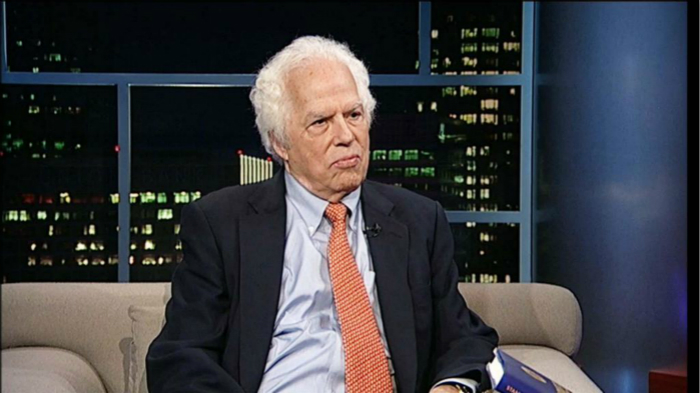
Nobel LaureateStanley Prusiner, biologist at the University of California, San Francisco
Dr. Martin Tolar, Founder and CEO of Alzheon, announced that Stanley Prusiner, a biologist at the University of California, San Francisco, will join Alzheon as Chairman of its Scientific Advisory Board.
The Real Culprit Behind Alzheimer’s Disease
Alzheon isAn emerging small biotechnology company is joining the ranks of those developing new drugs for Alzheimer’s disease (AD). Its novel candidate, ALZ-801, is an optimized prodrug derived from tramiprosate (homotaurine), a previously shelved β-amyloid antagonist that had its development halted a decade ago. Alzheon believes that, in light of recent advances in Alzheimer’s research, ALZ-801 holds the potential for a remarkable resurgence, offering hope to a subset of patients with Alzheimer’s disease.
Growing evidence from experiments suggests that Alzheimer’s disease can be defined by the relationship between amyloid-beta plaques and tau tangles—protein aggregates that share characteristics with prions. The unusual “infectious proteins” discovered by Prusiner in the 1980s may well be the true culprit behind Alzheimer’s disease. As prions self-replicate and accumulate, they can also trigger various neurodegenerative disorders, such as Creutzfeldt-Jakob disease.
Specifically, current research has demonstrated that tau protein and amyloid-β self-assemble into aggregates, similar to the role of proteins in prion diseases; these aggregates originate from a single abnormal molecule and subsequently propagate throughout the entire brain.
Tolar stated, “The lead compound developed by Alzheon inhibits the aggregation and proliferation of amyloid proteins.” These amyloid proteins exist in the brain as sticky plaques, which are now recognized as a distinctive hallmark of Alzheimer’s disease. Additionally, another protein implicated in Alzheimer’s disease appears to form fibrous tangles in the human brain through a similar prion-like propagation mechanism.
Stanley Prusiner was awarded the 1997 Nobel Prize in Physiology or Medicine for his outstanding contributions to prion research.
Alzheon clearly hopes that Stanley Prusiner’s expertise will be beneficial to the company, and this collaboration is mutually beneficial. Alzheon is currently studying 5,000 sets of molecules, experiments that may also advance Prusiner’s ongoing prion research at UCSF. Tolar first met Prusiner in the 1990s, when he was invited as a graduate student to participate in discussions on various biological topics with numerous renowned biologists at the University of Cincinnati College of Medicine, which is affiliated with the Royal Medical Research Center.
Precision Therapy for Alzheimer's Disease
Alzheon’s lead compound, ALZ-801, is a molecule that failed in Phase 3 clinical trials nearly a decade ago under Neurochem, a company that has since gone bankrupt.
However, Alzheon has reframed its approach as a “precision therapy for Alzheimer’s disease,” positing that the compound is most effective in treating Alzheimer’s patients who carry two copies of the ApoE4 gene variant. The company plans to conduct clinical trials this year exclusively in patients with two copies of the ApoE4 variant, an effort that may provide a more robust platform for demonstrating the efficacy of ALZ-801 (also known as tramiprosate).
The compound ALZ-801 can keep amyloid proteins soluble, preventing them from aggregating into plaques that damage neuronal synapses in the human body.
In a statement reported by STAT, Prusiner said, “We should take note of the impasse surrounding the ‘complex compound’ that has plagued Alzheimer’s disease research. Meanwhile, the path forward before us is to bring together all scientists with experience in developing novel drugs around a potentially promising new idea. This is why I have chosen to collaborate with Alzheon, and I look forward to contributing my own expertise and insights to the development of ALZ-801.”
Early signs suggest that ALZ-801 has demonstrated robust effects on memory and cognition in ApoE4 carriers in clinical trials, thereby eliminating the need to enroll thousands of patients simultaneously. Although the details of these trials have not been disclosed due to ongoing negotiations with the U.S. Food and Drug Administration, Tolar believes that these studies could be adequately powered with only a few hundred participants.
This article is sourced from STAT and translated by VCBeat.