

Every 3D Printer as a Mini Personalized Parts Factory: New Playbook in Additive Manufacturing
From product design to production, 3D printing is increasingly being integrated into manufacturing processes across various industries. Many companies in sectors such as aerospace, engineering, automotive, and healthcare have recognized the opportunities presented by 3D printing, which offers a unique advantage that sets them apart.
It enables us to profoundly rethink how people create and manufacture products, and to fundamentally reassess supply chain design. Beyond its significant impact on manufacturing, 3D printing is also one of the major disruptive trends poised to reshape the logistics industry in the near future. This is due to its immense potential for on-demand production and distribution models, allowing both companies and consumers to print complex objects on a single printer.
DHL, the globally renowned postal and logistics group, has gained a profound understanding of the impact of 3D printing on future manufacturing and logistics industries. In late 2016, it released a report introducing 3D printing. VCBeat (WeChat ID: vcbeat) has excerpted the section on medical 3D printing from the report for you. Let us review the current applications and future development trends of medical 3D printing.
3D printing, also known as “additive manufacturing,” has garnered increasing attention from mainstream industries following new technological breakthroughs and the release of novel applications. Beyond transforming the manufacturing methods of certain products, 3D printing offers significant benefits to the production of medical devices and the entire healthcare supply chain. DHL’s 2016 Trends Report highlights that 3D printing not only substantially reduces the complexity of product manufacturing but also possesses numerous advantages over traditional production technologies.
3D printers obtain printing information from digital files and then continuously deposit materials such as plastics and metals to construct three-dimensional solid objects.. Therefore, a wide variety of products can be manufactured using just a single 3D printer, thereby reducing the number of steps in the production chain and enabling manufacturing companies to achieve significant savings in logistics and production costs. Consequently, companies adopting 3D printing technology can realize additional cost savings by minimizing production waste and promoting sustainable business development.
In the healthcare sector, 3D printing has already found various meaningful applications, such as in the production of prosthetic implants and limbs, as well as dental prosthetics. As the current medical industry actively promotes the personalization of healthcare services, reports estimate that by 2019,3D Printing Will Be Regarded as a Key Tool in Healthcare, applied in more than 35% of surgical procedures requiring the placement of prostheses and implantable devices within or around the body; by that time,In developed countries, 10% of people have at least one 3D-printed item on or in their bodies.。
Researchers at the McKinsey Global Institute estimate thatBy 2025, the market value potentially impacted by 3D printing could reach up to $550 billion annually.. However, DHL does not believe that this technology will completely replace current mass production practices, but rather will serve as a complement to them.
3D printing is being widely adopted in the specialized field of personalized healthcare to enhance patient experience and the quality of medical services. Temporary prosthetics represent one application of advanced 3D printing equipment. Furthermore, new manufacturing processes are driving significant changes across various subfields, ranging from orthopedic surgery to restorative dentistry. Similar approaches are gaining increasing acceptance in orthodontics, particularly in the fabrication of dental prostheses. Dental professionals use laser scanners to create 3D models of patients’ teeth and then employ computational methods to determine the appropriate designs for replacements such as dental crowns.
NextDent is one such 3D printing company.It is a subsidiary of Vertex Dental, a Dutch manufacturer of dental restorations and implants, primarily producing customized dental crown products.. The manufacturing process primarily involves 3D scanning of the teeth, followed by 3D printing using resin materials. All materials employed are biocompatible, allowing for a wide range of applications. Furthermore, the company offers materials in various colors, with selection depending on the specific use case.
Another advantage is that the resin storage trays on the platform can be easily swapped, resulting in time savings and greater workflow flexibility. Consequently, NextDent’s application of 3D printing technology ensures precise aesthetic outcomes and functional suitability for patients. Another example is Renishaw, a UK-based engineering company, which operates three 3D printers capable of sintering 200 personalized cobalt-chromium crowns and bridges per batch. This process is faster and more cost-effective than traditional ceramic products. Dental laboratories across Europe can order these products from Renishaw’s facility.
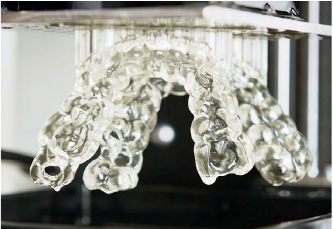
Personalized Dental Crowns Are Now a Reality | Image Source: NextDent
In the realm of corrective insoles, the U.S. startup SOLS is offering its orthotic sole products through two business models: customers can either self-scan their feet or have them scanned by an orthopedist, then submit the scans to SOLS, which directly ships the finished 3D-printed soles to the customers. Additionally, companies such as Feetz and 3DShoes.com currently provide personalized athletic shoes: customers use their smartphone cameras to scan their feet and select their desired shoe design, color, and materials. After submitting this information to the company, customers receive a pair of custom-made shoes in just three days, with prices ranging from $50 to $180. Sportswear giants Adidas and Nike are also following this trend, beginning to test similar services in their stores.
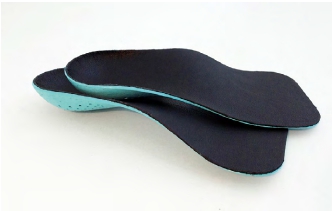
3D-Printed Shoe Sole. Image Source: SOLS
Robohand, a company from the United States, is another example of innovative personalized healthcare through 3D printing. The company produces a snap-on prosthetic hand that can adapt to different hand sizes. The product design is available for free online, and the total cost to produce a Robohand is under $100. Although this prosthesis may lack medical robustness, it is convenient to print and easy to obtain, serving as a temporary support until patients receive more sophisticated prosthetics.
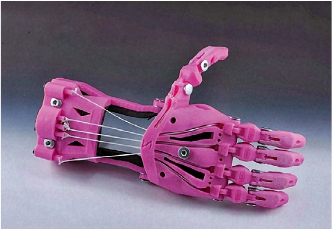
Robohand’s Snap-On Prosthetic Hand; Image Source: Rasterweb
Surgeons Have Begun Testing the Use of Various 3D-Printed Components Within the Body. Recently, surgeons in Bangkok, Thailand, successfully implanted a titanium device into the hand of a female patient: this 3D-printed bone prosthesis, fabricated by engineers at Chulalongkorn University, successfully replaced the patient’s severely damaged thumb bone.
The aforementioned examples of personalized medical device production using 3D printing represent only a small fraction of the intriguing applications of this technology in healthcare. Over time, the adoption of 3D printing in the medical field is poised to become increasingly widespread.
The Impact of 3D Printing on the Future Development of Medical Devices and Supply Chains
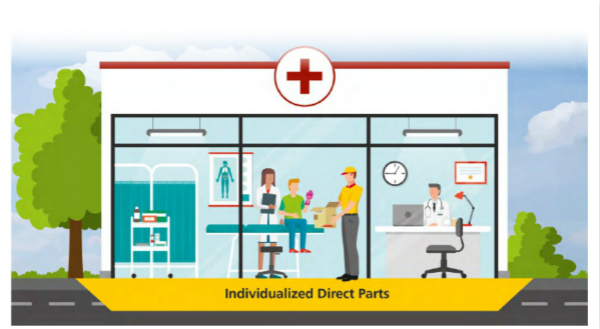
3D Printing Enables a High Level of Customization
High-level customization is an inherent advantage of 3D printing. When customers require highly customized products, 3D printing can serve as a source of competitive advantage for manufacturers; in this competitive landscape, companies are also incentivized to develop customized parts that can be rapidly delivered and put into use.
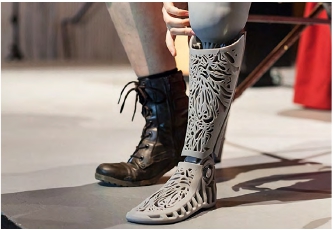
From Dental Crowns to Prosthetics, 3D Printing Reaches New Heights; Image Credit: Lumecluster
Therefore, manufacturing companies can partner with logistics providers such as DHL to create a network of 3D printers, effectively turning each printer into a small-scale factory. These printers can be deployed in regional warehouses or local distribution centers and labeled with OEM branding.
The healthcare industry is a key sector capable of leveraging the aforementioned concepts. Currently, it has adopted 3D printing technology across many different fields, achieving quality standards comparable to those of traditional manufacturing methods.Whether small medical practices or large general hospitals, various healthcare institutions can collaborate with medical companies and logistics providers to create end-to-end 3D printing services, reducing costs and complexity through economies of scale.。
For example, by partnering with medical companies and logistics providers, hospitals no longer need to juggle multiple suppliers and various product deliveries on a daily basis. A 3D-printing warehouse operated by the logistics provider can handle material procurement and the manufacturing of personalized components (such as custom restorations and patient-specific knee replacement implants). The logistics provider can also ensure that each part is delivered quickly and safely to the correct location when needed.
Another vision for the future is the manufacturing of personalized components.. In the future, the manufacturing of various components will no longer be fixed in static locations such as warehouses, but will instead take place in mobile vehicles. This can further reduce delivery times. For example,Online retail giant Amazon has filed a patent for trucks equipped with 3D printers, enabling the manufacturing of products en route to customers’ destinations.. In terms of scale, this enables the company to produce components that most closely align with customer needs, thereby significantly reducing the lead time for delivering personalized components to customers.