

How Huayi Xincheng Doctor Group Serves as Both 'Coach' and 'Player' for 800 County Hospitals
On January 6, it was revealed that the “Huayi Xincheng” Physician Group, spearheaded by renowned domestic cardiovascular experts including Huo Yong and Ge Junbo, had secured RMB 100 million in angel investment, a development that promptly attracted extensive media coverage.
Previously, industry insiders noted that financing institutions’ enthusiasm for investing in physician groups waned in the second half of this year, with some even announcing their dissolution. However, Huayi Xincheng’s securing of substantial funding has reinvigorated the sector.
Subsequently, Huayi Xincheng unveiled its latest development roadmap: to provide assistance to more than 800 county-level medical institutions within three years, assess the competencies of over 6,000 cardiovascular physicians, and sign contracts with more than 3,000 doctors, while a number of experts are currently undergoing review and evaluation.
So, how does this cardiovascular-focused physician group support county-level medical institutions?
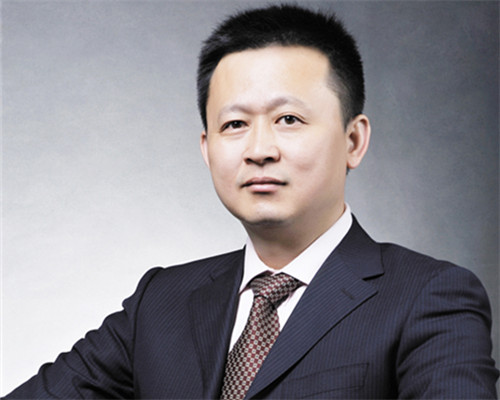
Marketing Director, Huayi Xincheng
Generally speaking, county-level hospitals are clinical treatment-oriented institutions and serve as the primary venues for public healthcare access. They function as centers for the diagnosis and treatment of common yet clinically challenging conditions, frequently occurring diseases, and acute or critically ill patients. As the leading component of the three-tier rural medical network, their objective is to ensure that “major illnesses are treated within the county (or city).”
The new healthcare reform explicitly establishes a three-tier medical service network with county-level hospitals as the lead, township health centers as the backbone, and village clinics as the foundation. In addition to providing treatment and emergency care for critically ill patients, county-level hospitals will also assume responsibility for offering professional technical guidance and training to rural healthcare institutions.
However, county-level hospitals are currently grappling with widespread challenges, including shortages of talent and technical expertise, as well as difficulties in patient retention. “The national healthcare reform also expects county-level hospitals to assume the role of regional centers, vigorously promoting and supporting lower-tier hospitals, which places higher demands on these institutions,” said Liu Wei.
Liu Wei, currently the Marketing Director at Huayi Xincheng, has over 20 years of experience in marketing pharmaceutical products for foreign enterprises and possesses extensive familiarity with the healthcare industry.
Through Liu Wei’s field visits and research, it was found that the total population of each county currently ranges from several hundred thousand to over one million. How can healthcare services be effectively delivered to such large-scale, densely populated regions?
In Liu Wei’s view, the most critical priority is to strengthen the functions and capabilities of county-level hospitals, thereby enhancing their self-sustaining capacity. This includes initiatives in talent development, improvement of disciplinary systems, and upgrades to both hardware and software infrastructure.
According to data, the number of patients with cardiovascular disease in China has reached 290 million, meaning that one in every five adults suffers from cardiovascular disease. In addition, there are nearly 100 million individuals at high risk for cardiovascular disease. Undoubtedly, cardiovascular disease has become a major public health issue in China.
Of particular concern is that since 2000, the incidence of cardiovascular disease in rural areas has risen rapidly and surpassed that in urban areas, with cardiovascular disease becoming the leading cause of death among both rural and urban residents. According to epidemiological survey data, it is unlikely that the incidence and mortality rates of cardiovascular disease in China will show a downward trend over the next decade.
In recent years, the focus of cardiovascular disease prevention and control in China has shifted from urban to rural areas. This shift is partly because rural residents have not yet adopted healthy lifestyles, but more importantly, it is due to the relatively low level of primary healthcare services and the significant challenges in building a competent medical workforce.
“Reducing the incidence of cardiovascular disease hinges on prevention and primary care-based management; strengthening cardiovascular disease prevention and control at the primary care level is now urgent,” pointed out Ge Junbo. “Faced with 290 million cardiovascular patients who have a narrow window for emergency treatment and require lifelong rehabilitation guidance, primary care intervention is the optimal approach for preventing and managing cardiovascular disease.” Unfortunately, the weak medical infrastructure at the primary care level remains a persistent challenge.
“The original intention behind the establishment of Huayi Xincheng was to focus on building a comprehensive cardiovascular care system and enhancing overall standards,” said Huo Yong. “We aim to improve the prevention and treatment of cardiovascular diseases at the primary care level in China, provide a platform for highly skilled cardiovascular specialists to practice at multiple institutions, and achieve talent development and technical support for county-level primary healthcare facilities by integrating and allocating the most advanced medical technologies and human resources from tertiary Grade A hospitals. This will ensure that high-end medical expertise truly serves primary healthcare institutions and patients.”
Unlike other general practitioner groups, Huayi Xincheng has chosen to focus on the specialized field of cardiovascular care and county-level medical institutions. “We aim to enable more medical institutions and clinicians to truly master standardized clinical diagnosis and treatment techniques in the cardiovascular field, rather than simply providing high-end medical technologies,” said Huo Yong. “It is not just about transfusing blood; we must also enhance the grassroots capacity for self-sustained development.”
“During the current design of assistance programs, Huayi Xincheng is expected to deploy a team of at least 15–20 experts to support individual county-level hospitals, providing medical technical expertise, assisting in talent training, enhancing technical and managerial capabilities, and facilitating the development of disciplinary systems,” said Liu Wei.
The preliminary research and assessment alone require at least one month. Once the entire assistance program is launched, the implementation process must be carried out in a systematic and complex manner, typically involving 3–5 years of structured support. Accordingly, reasonable fees for professional services and management will be charged.
Huo Yong pointed out, “Medical services need to be streamlined. The core of building county-level hospitals into robust medical service centers lies in strengthening primary care; without strong county-level hospitals, primary care cannot be strengthened.” He expressed hope that by improving the diagnosis and treatment capabilities for cardiovascular diseases at primary healthcare institutions, major illnesses could be managed within counties. Additionally, he aims to establish offline high-end clinics and online platforms catering to the general public’s needs for cardiovascular disease treatment and rehabilitation, as well as create a comprehensive service platform for cardiovascular physicians across China, offering innovation support, training, academic exchange, and media promotion.
To achieve this goal, Huayi Xincheng has proposed an innovative solution: First, establish a socialized governance mechanism for healthcare human resources and build a third-party medical human resource allocation platform; Second, provide comprehensive assessments of physicians’ competencies to facilitate the establishment of a multi-site practice platform; Third, based on the needs of building a specialized cardiovascular care system, deliver end-to-end solutions for constructing cardiovascular disease prevention and treatment systems in primary care hospitals.
So, how can this work better serve grassroots healthcare? Liu Wei believes that the key lies in systematization and personalization. “We have a set of processes and standardized evaluation systems. First, we conduct specialized assessments of county-level hospitals, covering equipment, talent, technology, management, local demographic conditions, and gaining an understanding of the disease spectrum and various treatment scenarios among their patient populations. Second, we establish objectives—for example, in the management and treatment of chronic diseases, we identify priority conditions and develop targeted support plans along with supporting systems.”
Therefore, the entire assistance process is quite complex and involves a substantial workload. Much like student development, different curricula must be arranged for each stage. Consequently, Huayi Xincheng Physician Group assumes a dual role akin to both “coach” and “athlete,” providing mentorship while also personally demonstrating techniques and completing portions of the work.
Overall, assistance plans should be formulated based on the needs and current circumstances of county-level hospitals. For instance, this includes determining the theoretical frameworks and training required for chronic disease management, as well as providing technical and procedural training. Physicians needing advanced training should be assigned mentors and given opportunities to participate in various surgical procedures, thereby improving their competencies through both theoretical instruction and hands-on practice. Additionally, to address managerial staffing needs, experts should assist in designing relevant management frameworks and guide hospital staff in their implementation.
Two hospitals have been signed on so far: Wugong County People's Hospital in Shaanxi Province and Wuzhong City People's Hospital in Ningxia Hui Autonomous Region, with the aim of establishing them as model hospitals for assistance and support.
During the field visit to Wugong County People’s Hospital, Huo Yong personally led the team, underscoring experts’ strong commitment to advancing initiatives at grassroots hospitals. This is a highly meaningful endeavor, as experts aim to ensure their work yields tangible, on-the-ground results.
Following research and evaluation, and based on the current status and objectives of the hospitals, tailored follow-up support plans have been developed for two hospitals.
It can be seen that the external support provided by Huayi Xincheng Physician Group may be more conducive to the development of primary healthcare institutions.
Background Information:
Huayi Xincheng Physician Group was established in March 2016, founded by eight cardiovascular experts including Professor Huo Yong, Director of the Heart Center at Peking University First Hospital, and Academician Ge Junbo from Zhongshan Hospital, Fudan University in Shanghai.
Within less than a year from the initiation of preparations to its formal establishment, Huayi Xincheng has achieved rapid development, completing a series of key initiatives including product system design and preliminary validation, assembly of an expert team, creation of a physician management model, and formation of the corporate management team. Currently, Huayi Xincheng has established an Expert Committee comprising 23 renowned authorities and has systematically commenced professional physician recruitment as well as research, negotiation, and contracting with partner hospitals. It has emerged as the most prestigious, largest-scale, and most promising physician group in China’s cardiovascular specialty sector.