

Google Ventures Leads $20 Million Series C Investment in Aledade, Betting on Primary Care-Driven Value-Based Healthcare
On January 10 (U.S. time), Aledade, a Maryland-based company, secured $20 million in Series C financing. The company’s core business involves partnering with primary care physicians to create technology-driven accountable care organizations (ACOs). This round was led by Google Ventures, Biomatics Capital (founded by Boris Nikolic, former Chief Science and Technology Advisor to Bill Gates), and the Maryland Venture Fund. Existing investors Venrock and ARCH Venture Partners also participated. The company’s total funding has now reached $54.5 million.
Aledade was founded in 2014 by Dr. Farzad Mostashari, who previously held a senior health technology position at the Office of the National Coordinator for Health Information Technology (ONC). Aledade specializes in transitioning physicians to value-based healthcare models, operating within value-based payment structures with the aim of keeping physicians independent, improving patient care, and reducing overall costs. The platform provides primary care physicians with everything needed to create and operate Medicare Shared Savings Program (MSSP) Accountable Care Organizations (ACOs), offering regulatory expertise, health IT services, data analytics, and a network community comprising more than 1,000 primary care physicians.
Unlike the HMO model, which is primarily insurer-driven, the ACO model builds upon cost containment by integrating health management organizations and healthcare providers into a tightly coordinated entity. This approach not only assists members in developing personalized health management plans but also proactively intervenes in their health through precision medicine and other advanced methods. Under this framework, healthcare institutions, members, and insurers can all maximize their benefits. Consequently, the ACO model has become a key direction for the future development of healthcare systems.
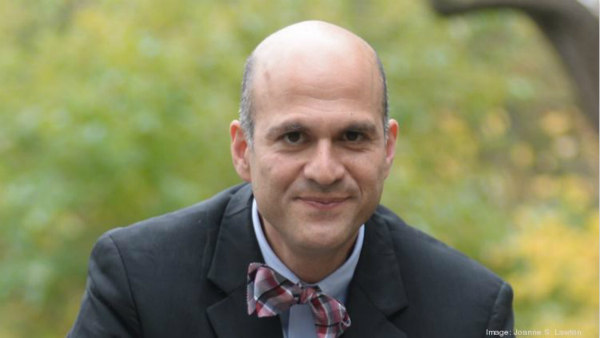
Aledade CEO and Co-Founder Farzad Mostashari
Dr. Farzad Mostashari, CEO and Co-Founder of Aledade, stated in a press release: “In just the past six months, our network has grown from zero to 100,000 commercially insured patients. With this new funding, we will expand the Aledade model to all other patient and payer populations, including the Medicare Advantage healthcare system.”
Krishna Yeshwant, a partner at Google Ventures, stated regarding this collaboration: “Aledade’s physician-serving model enables providers to succeed in the emerging value-based healthcare market. As commercial payers continue to implement new payment models, physician-led models will become increasingly valuable.”
Regarding the use of proceeds following the financing round, Aledade announced at the Morgan Stanley conference in San Francisco that the funds would be used to expand its network of healthcare providers and secure new partnerships through Medicare Advantage and commercial health plans.
The rationale for expanding the scope of collaboration is that Aledade has extended its partnerships beyond contracts under the Medicare Shared Savings Program (MSSP)—which facilitates the participation of fee-for-service providers in Accountable Care Organizations (ACOs)—to include other major payers, such as Blue Cross and Blue Shield of Kansas. Aledade’s current network comprises more than 200 independent, physician-led organizations across 15 states, directly covering approximately 240,000 lives.
An Accountable Care Organization (ACO) is composed of physicians, hospitals, and other healthcare providers or institutions that collaborate with Medicare to improve the quality of care and reduce patient costs. In simple terms, it is a U.S. healthcare organization characterized by unique payment models and healthcare delivery systems. Its objective is to lower Medicare reimbursement expenditures and conduct quality assessments to reduce medical costs for designated patient populations.
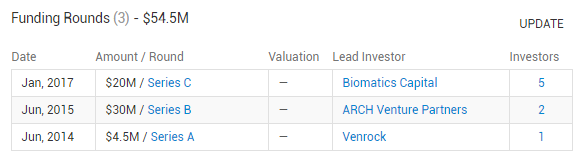
Aledade’s Funding: Total of $54.5 Million Raised Across Three Rounds
Accountable Care Organizations (ACOs) are composed of stakeholders involved in various segments of healthcare delivery. They adopt specialized payment models during clinical practice, such as fee-for-service arrangements under shared savings programs and capitation. The significance of the ACO model lies in integrating all participants across the care continuum—including hospitals, physicians, and nursing facility providers—while providing incentives to deliver high-quality care and simultaneously control costs.
Aledade CEO and co-founder Mostashari revealed that in 2015, the company’s ACO network saw an average 251% increase in preventive care visits and a 174% average increase in transitional care services. It also helped small practices achieve an average revenue increase of $50,000.