

How HMOs Grew in the U.S.: A Blueprint for Ping An and WeDoctor
China’s healthcare reform has entered the “deep-water zone” of coordinated development among medical services, health insurance, and pharmaceuticals. The latest round of adjustments to the National Reimbursement Drug List (NRDL) and the introduction of医保 payment standards are further strengthening the bargaining power of payers. Cost containment in health insurance is moving into a phase of refined management. Both managed care and liability-based health insurance emphasize the integration of cost control with the quality of medical services, representing highly instructive models for reference.
Currently, major Chinese companies are actively expanding into this sector. For instance, Ping An is building an HMO model, while WeDoctor is developing an ACO framework, establishing comprehensive healthcare ecosystems through in-house development or partnerships. Their industrial chains involve commercial health insurance providers, healthcare service companies, and PBM/GPO firms. As a benchmark for learning and reference, what challenges and opportunities have characterized the development of HMOs in the United States? This report compiled by VCBeat provides a comprehensive answer.
This report serves as the inaugural installment of Ping An Securities’ series on insights from U.S. healthcare reform. It primarily examines the development trends of U.S. healthcare reform, focusing on historical milestones—namely the 1973 HMO Act and the 2010 Affordable Care Act (ACA)—as well as recent healthcare policy proposals under the Trump administration. These developments have given rise to the most representative business models: Managed Care Organizations (MCOs) and Accountable Care Organizations (ACOs). By analyzing benchmark companies such as Kaiser Permanente and Oscar Health, this report aims to uncover growth trajectories and investment opportunities within the corresponding industries. Ping An Securities presents the following four key viewpoints:
The Health Maintenance Organization Act of 1973 is a landmark in U.S. healthcare reform, driving the rapid growth of Health Maintenance Organizations (HMOs) and achieving significant success in reducing healthcare costs;
The greatest advantages of HMOs are the integration of healthcare and insurance, along with a strict tiered diagnosis and treatment system; after 2000, they comprehensively evolved toward managed care.
Managed care maintains high growth, forming a structure dominated by commercial health insurance with social health insurance as a supplement; the industry chain involves three parties: commercial health insurers, healthcare institutions, and pharmacy benefit management (PBM) companies.
As the pioneer of the Health Maintenance Organization (HMO) model, Kaiser Permanente offers dual advantages in health service delivery and cost control, covering the full spectrum from disease prevention and diagnosis to post-treatment rehabilitation.
2.1 The Nixon Administration Promoted the Enactment of the Health Maintenance Organization Act (HMO Act)
Background of the Enactment of the Health Maintenance Organization Act (HMO Act).In the 1960s, the United States established its social health insurance system, introducing Medicare for the elderly and Medicaid for low-income individuals. Since traditional health insurance largely adopted a cost-sharing model—requiring policyholders to bear a portion of medical costs through deductibles and copayments in an effort to curb healthcare expenditures—it still failed to address the problem of moral hazard. As a result, U.S. healthcare spending grew at a compound annual rate of 11%, with its share of GDP continuing to rise and approaching 10%.
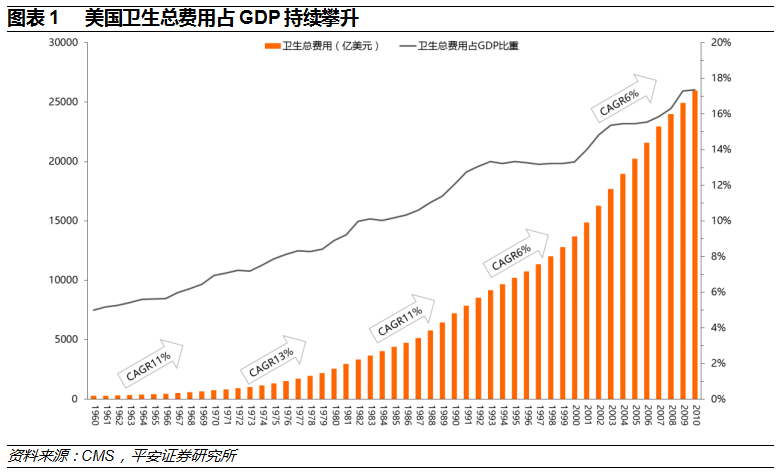
The Nixon administration promoted the enactment of the HMO Act.In the 1970s, the Nixon administration sought to control rapidly rising healthcare costs by promoting universal health coverage and implementing cost-containment measures. In 1973, Congress passed the Health Maintenance Organization Act (HMO Act of 1973), which spurred the rapid development of Health Maintenance Organizations (HMOs), making them the most significant model of health insurance in the United States for the subsequent decades.
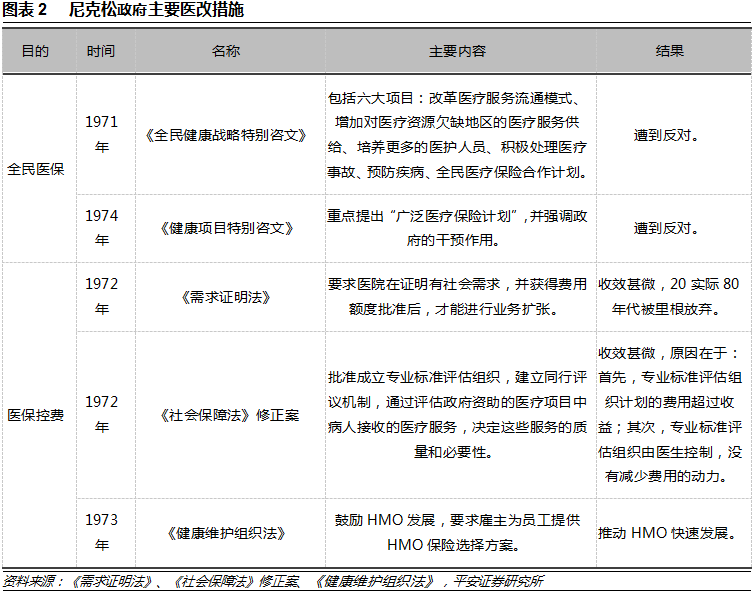
2.2 Three Core Elements of the HMO Act: Providing Financial Support, Removing Legal Restrictions, and Opening the Corporate Insurance Market
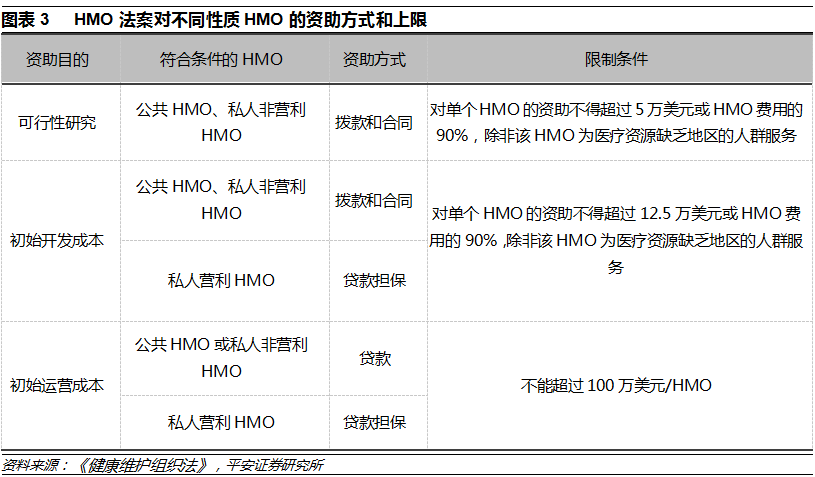
First, the federal government provides financial support for the development of HMOs through direct grants or loans.The legislation proposed that the federal government provide a total of $375 million in funding to support the development of Health Maintenance Organizations (HMOs). This included $325 million in direct grants or loans to support HMO construction and operations, as well as $50 million to fund research on healthcare quality. Eligibility for this funding was contingent upon HMOs meeting certain statutory requirements, such as minimum benefit coverage, open enrollment policies, and methodologies for setting community-rated premiums. Furthermore, the funding mechanisms and caps were determined based on the nature of the HMO and its target population. Additionally, President Nixon recognized the role of HMOs in lowering barriers to accessing healthcare services and provided substantial financial support to HMOs serving populations in medically underserved areas.
Secondly, eliminate the legal restrictions imposed on HMOs.In addition to recognizing the legal status of Health Maintenance Organizations (HMOs), the Act stipulates that qualified HMOs are exempt from complying with restrictive state-level provisions. Prior to Nixon’s administration, HMOs had not received formal government recognition, and nearly half of the states maintained legal barriers hindering HMO development, such as requirements for HMOs to hold substantial reserves akin to insurance companies and restrictions on delegating tasks to allied health professionals. This provision of the HMO Act removed obstacles to HMO operations and expansion across states, thereby alleviating public concerns about participating in HMO plans.
Finally, employers are required to provide employees with the option to join an HMO, thereby opening up the corporate insurance market.The legislation mandates that any enterprise with more than 25 employees must, in addition to continuing to provide traditional indemnity health insurance, offer employees the option to enroll in HMO plans that comply with the act. This provision, known as “dual choice,” has opened up a vast corporate employee insurance market for HMOs, thereby addressing the constraints on HMO development from the demand side.
2.3 Rapid Growth of HMOs and Their Effectiveness in Reducing Health Insurance Costs
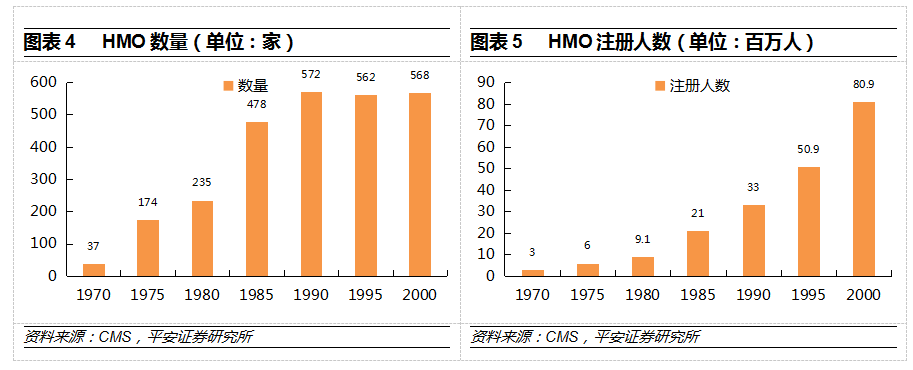
From the passage of the HMO Act in 1973 to its expiration in 1995, Health Maintenance Organizations (HMOs) experienced a golden age of development. As the public grew willing to trust that HMOs could deliver healthcare services of comparable quality at lower costs, both the number of HMOs and their enrollment figures surged dramatically. In 1970, there were only 37 HMOs nationwide with 3 million enrollees; by 1995, the number of HMOs had reached 562—a 15-fold increase—while enrollment climbed to 50 million, representing a 16-fold growth.
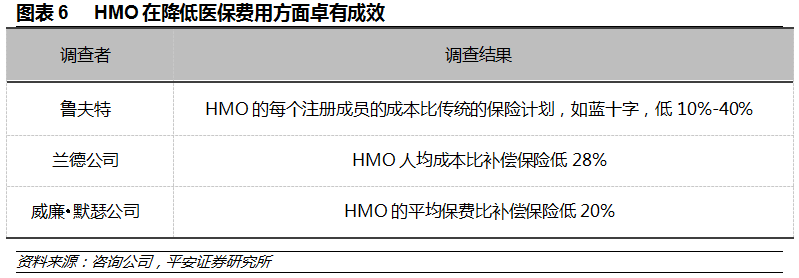
HMOs have been highly effective in reducing healthcare costs.HMOs adopt a prepaid payment model to enable healthcare institutions to jointly bear cost risks and introduce competitive mechanisms among healthcare providers. On one hand, healthcare institutions are willing to collaborate with insurers by offering discounted rates to attract more patients; on the other hand, HMO members, after paying their health insurance premiums, are required to pay only a small registration fee when seeking medical care, with virtually no additional out-of-pocket expenses. Several surveys conducted following the implementation of the HMO Act have shown that HMOs can reduce costs by approximately 10%–40% compared with traditional indemnity insurance. The greatest savings are seen in hospitalization costs, which are reduced by about 30% relative to traditional health insurance models.
3.1 The Greatest Advantage of HMOs: Integration of Healthcare and Insurance, and a Strict Tiered Diagnosis and Treatment System
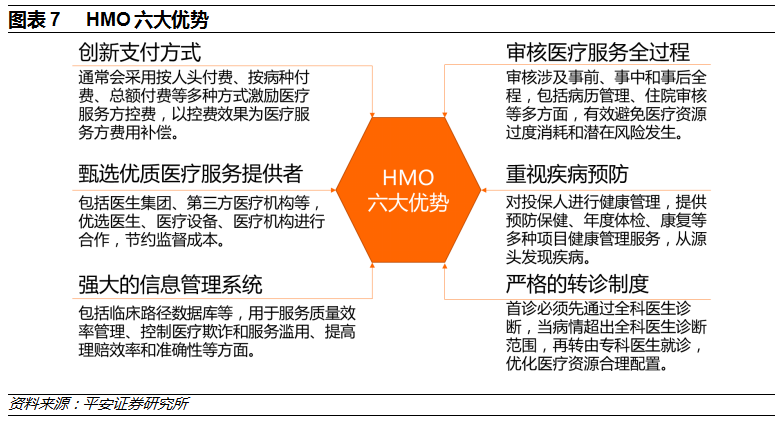
Health Maintenance Organizations (HMOs) are health insurance entities that closely integrate insurers with healthcare providers, merging medical insurance (the third-party payer) and medical services (the supply side) into a unified system. With aligned interests between the two parties, healthcare providers are incentivized to proactively reduce medical costs. HMOs offer six major advantages:
(1) Select high-quality medical service providers. This includes physician groups and third-party medical institutions, prioritizing collaborations with top-tier physicians, advanced medical equipment, and reputable healthcare facilities to reduce supervision costs.
(2) A strict referral system. Initial consultations must first be diagnosed by general practitioners; when the condition exceeds the scope of general practice, patients are then referred to specialists, thereby optimizing the rational allocation of medical resources.
(3) Emphasize disease prevention. Implement health management for policyholders by offering a range of services—including preventive care, annual physical examinations, and rehabilitation—to detect diseases at an early stage, thereby reducing the incidence of serious illnesses and the substantial financial burdens they entail.
(4) Innovative payment models. Capitation, diagnosis-related group (DRG)-based payment, and global budgeting are commonly employed to incentivize healthcare providers to control costs, with cost-containment performance serving as the basis for provider reimbursement.
(5) Review the entire process of medical services. The review covers the pre-event, during-event, and post-event stages, including aspects such as medical record management and inpatient admission audits, to effectively prevent excessive consumption of medical resources and mitigate potential risks.
(6) A robust information management system. This includes clinical pathway databases, among others, utilized for managing service quality and efficiency, controlling healthcare fraud and abuse, and enhancing the efficiency and accuracy of claims processing.
3.2 Mainstream HMO Operations Adopt a More Flexible IPA Model
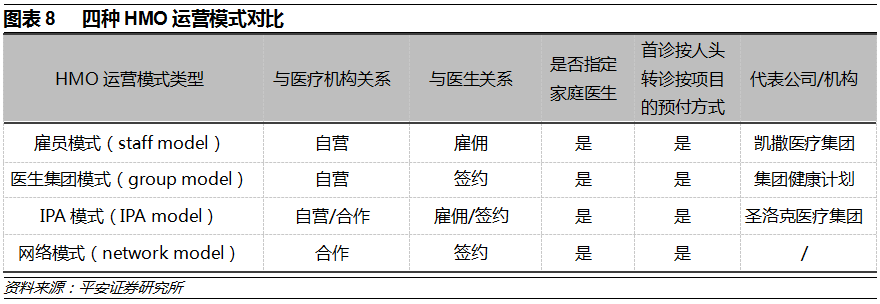
HMOs primarily operate under four models: the staff model, the group model, the Independent Practice Association (IPA) model, and the network model. Their common features include the designation of primary care physicians, a prepaid payment system using capitation for initial consultations and diagnosis-related groups (DRGs) for referrals. The key differences lie in their relationships with healthcare institutions and physicians.
For example, Kaiser Permanente, the pioneer of HMOs, adopts the staff model, while St. Luke’s Health System is the most representative of the IPA model, engaging in referral collaborations with more than 5,000 hospitals across the United States and tens of thousands of medical institutions worldwide.
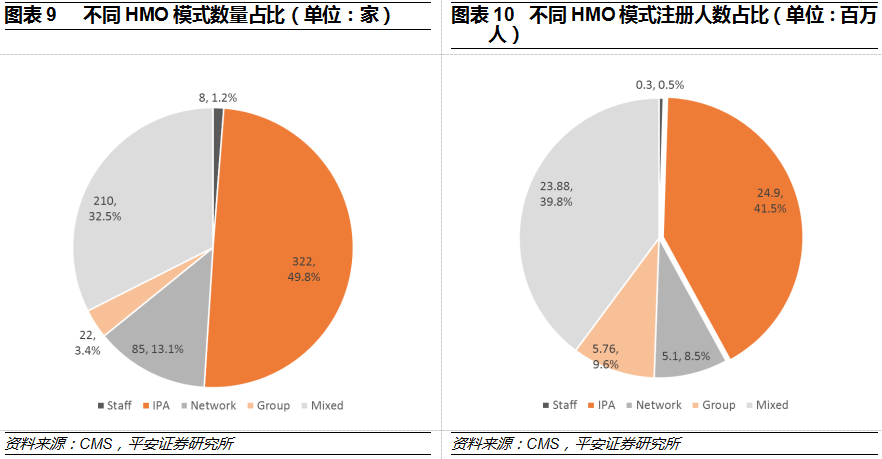
Currently, the mainstream HMOs adopt the more flexible IPA model, accounting for 49.8%; the network model accounts for 13.1%; the staff model and the medical group model each account for only 4.6%; and the remaining 32.5% are mixed models (Mixed Model).
3.3 HMOs’ Comprehensive Expansion into Managed Care
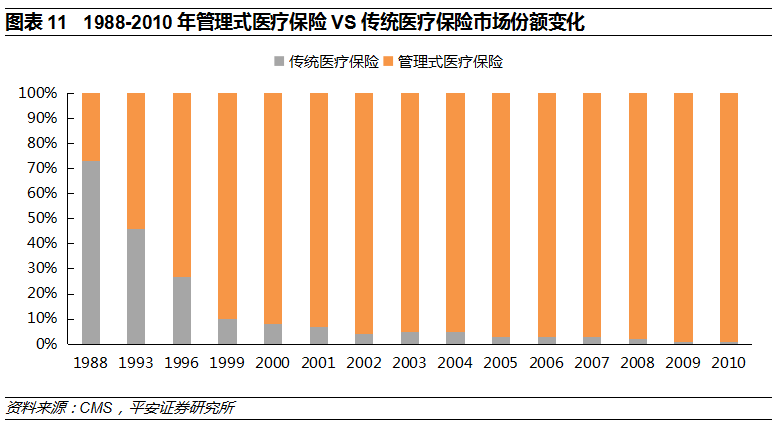
HMOs progressed from their initial growth phase (1930s–1970s) through an explosive expansion phase (1970s–1995), and have currently entered a phase of comprehensive development toward Managed Care (1995–present). In 1988, traditional health insurance held a 73% market share, while managed care accounted for 27%. By 2010, the former had declined to merely 1%, whereas the share of managed care rose to 99%, marking the completion of the transition from traditional health insurance to managed care.
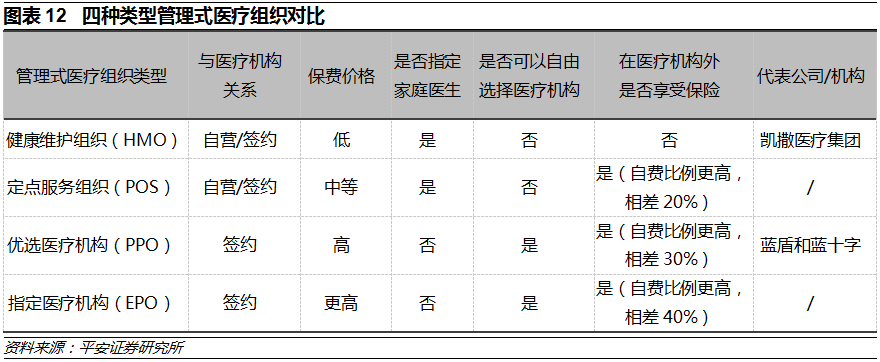
Managed care organizations can be categorized into four major types: Health Maintenance Organization (HMO); Point-of-Service (POS); Preferred Provider Organization (PPO); and Exclusive Provider Organization (EPO).
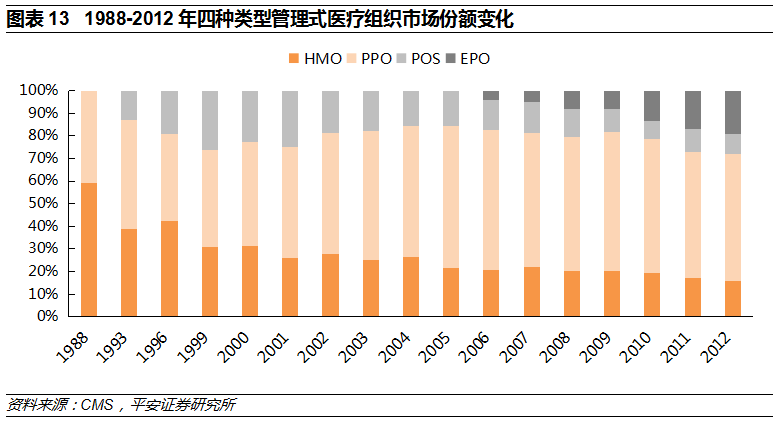
Although the PPO model has the highest premiums, it has become the dominant form of managed care organizations due to greater tax advantages and the highest level of flexibility, with its market share rising significantly from 28% in 1996 to 56% in 2012. The exclusivity of the HMO model has limited its expansion, causing its market share to decline from 31% in 1996 to 16% in 2012. The POS model has remained stable at around 10%, while the EPO model, offering a high degree of freedom, has rapidly grown to capture nearly 20% of the market share.
4.1 Managed Care Maintains High Growth, Forming a Landscape Dominated by Commercial Health Insurance with Social Health Insurance as a Supplement
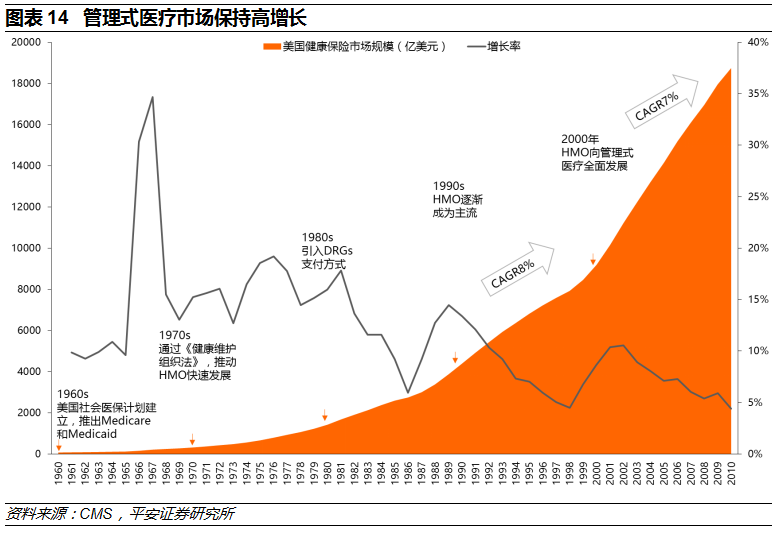
After HMOs became the market mainstream in the 1990s, the managed care insurance market maintained a compound annual growth rate of nearly 10% over the subsequent decade (2000–2010), reaching a total size of $1.8 trillion by 2010. This period also saw the formation of a market structure dominated by commercial health insurance, which accounted for 65%, with social health insurance programs (Medicare and Medicaid) playing a supplementary role, accounting for 35%.
4.2 The managed care industry chain involves three parties: commercial health insurance companies, healthcare institutions, and PBM companies
The managed care industry chain is extensive, primarily involving three key parties: commercial health insurance companies, healthcare providers, and Pharmacy Benefit Managers (PBMs). Commercial health insurers enter the managed care sector by securing medical resources as a core competitive advantage to increase market share. Healthcare providers engage in managed care to leverage synergies in customer resources and operational efficiency. PBMs participate in managed care by representing the interests of payers, thereby enhancing their bargaining power with pharmaceutical companies.
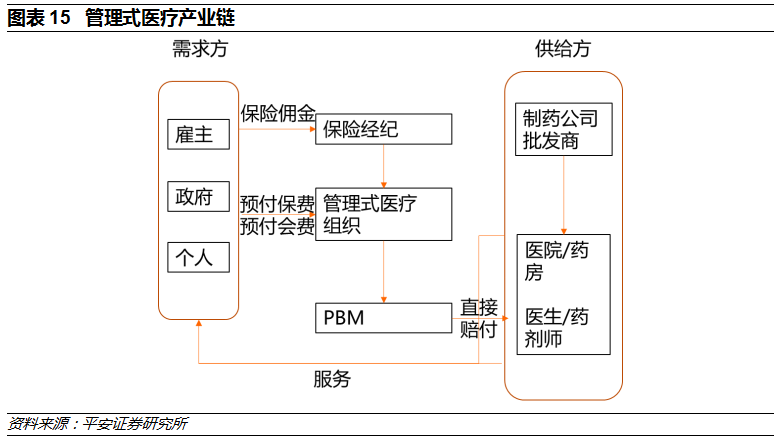
4.3 High Market Concentration in Managed Care, with Cooperative Medical Centers Pervasive Among Listed Healthcare Service Companies
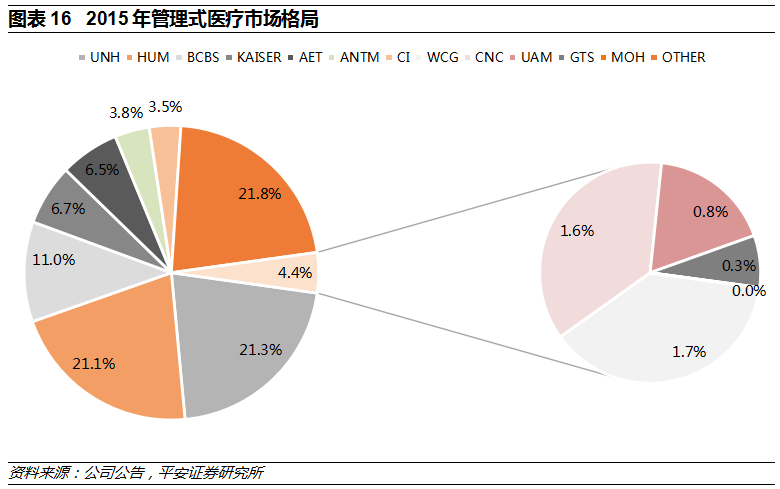
The managed care market is highly concentrated. In addition to Kaiser Permanente, the earliest entrant into managed care, and the non-profit Blue Cross Blue Shield (BCBS), which held market shares of 6.7% and 11%, respectively, in 2015, the top five U.S. commercial health insurers—UnitedHealth, Humana, Aetna, Anthem, and Cigna—all operate managed care businesses. Their respective market shares in 2015 were 21.3%, 21.1%, 6.5%, 3.8%, and 3.5%. The combined market share of the top seven managed care organizations reached 73.8%, indicating a very high level of market concentration.
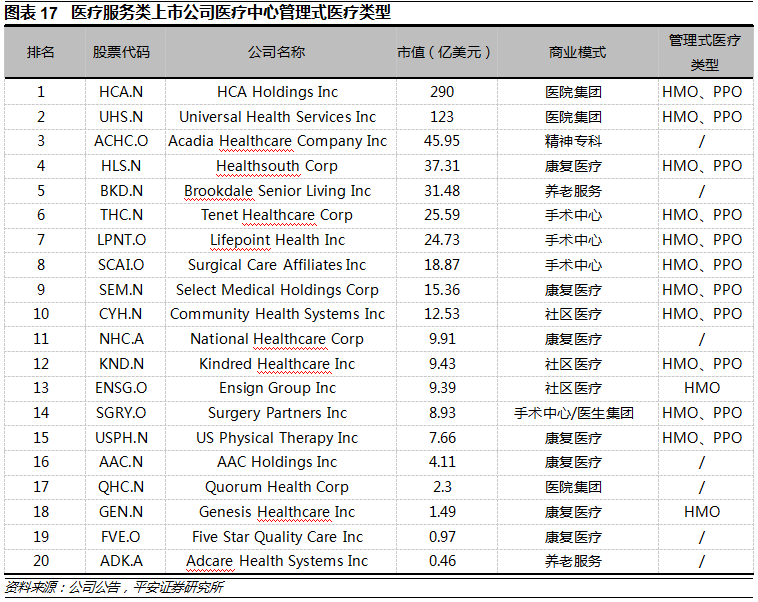
Cooperative medical centers are widespread among publicly listed healthcare service companies. The business models of the top 20 U.S. publicly listed healthcare service companies encompass various forms, including hospital groups, surgical centers/physician groups, psychiatric specialty care, rehabilitation services, and elderly care. These entities maintain partnerships with managed care insurance providers, serving as medical hubs within the managed care system, primarily adopting HMO and PPO models.
5.1 Operational Status of Kaiser Permanente
Kaiser Permanente, founded in 1945, has evolved from a primary care group into a global healthcare model and is hailed as the pioneer of Health Maintenance Organizations (HMOs). Its model offers dual advantages in health services and cost control, covering disease prevention, diagnosis and treatment, and post-illness rehabilitation. In 1973, it accounted for 70% of the entire HMO market, and by 2015, it held a 6.7% share of the health insurance market.
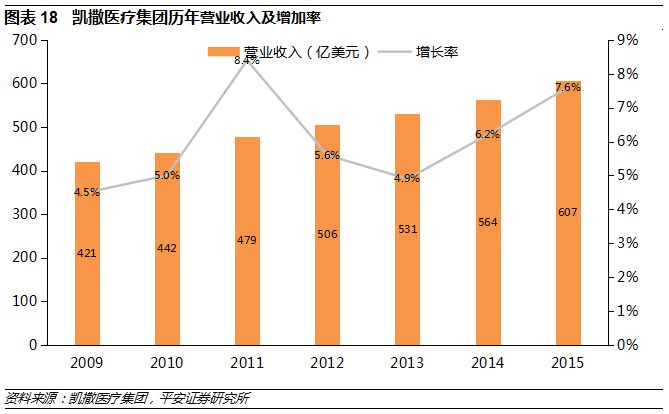
As of June 2016, Kaiser Permanente had a total of 10.6 million members, 18,652 physicians, 51,010 nurses, 189,302 employees, as well as 38 hospitals and 626 medical centers nationwide. In 2015, Kaiser Permanente reported operating revenues of $60.7 billion and net income of $3 billion, with a compound annual growth rate (CAGR) of 6% over the previous five years. Of its primary revenue streams, 78% came from commercial health insurance, 17% from public health insurance programs, and 5% from individual enrollments.
5.2 Kaiser Permanente's Business Model
The Kaiser Permanente Model integrates financing and payment systems with service delivery, while also aligning the interests of patients and physicians. By merging health insurance with medical services to provide users with closed-loop care, it aims to control healthcare costs and improve service quality, thereby enabling centralized management of healthcare expenditures and risks.
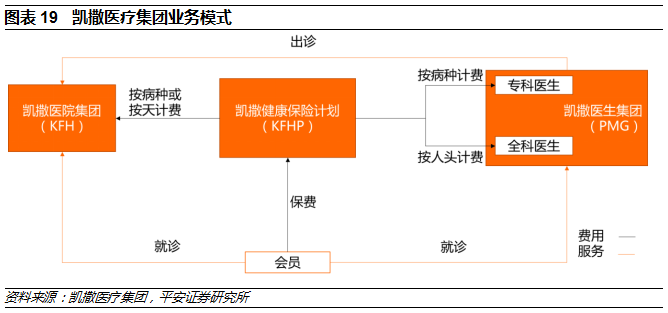
The basic structure of Kaiser Permanente comprises three components: the Kaiser Foundation Health Plans (KFHP), which issues insurance plans and generates revenue from premiums; the Kaiser Foundation Hospitals (KFH), which operates all affiliated hospitals and medical centers to provide healthcare facilities; and the Permanente Medical Groups (PMG), which manages its physician groups to deliver medical services to members.
Kaiser Permanente's Service Process:
Cost: Members purchase health insurance plans and pay premiums to the Kaiser Foundation Health Plan (KFHP). KFHP reimburses the Kaiser Foundation Hospitals (KFH) and The Permanente Medical Group (PMG) on a per-case, capitation, or per-diem basis.
Service: When members seek medical care, they are required to first visit a designated general practitioner (GP) for an initial consultation. GPs can address 80–90% of patients’ healthcare needs, while the remaining 10–20% of complex or refractory cases are referred to specialists.
This report is reprinted from:Ping An Securities——《Insights from U.S. Healthcare Reform: The HMO Model—Integration of Insurance and Care, Tiered Diagnosis and Treatment》