

Trump's Call to Pharma: Bring Asian Manufacturing Back to the U.S.
Obama Just Delivered His Farewell Speech in Chicago. On Wednesday, Trump Criticized the Pharmaceutical Industry at His First Press Conference Since the Election, Slamming Drugmakers for Preferring to Produce Medications Overseas Rather Than in the United States.
“We must bring the pharmaceutical industry back to American soil,” Trump declared at a press conference. “They supply raw materials for drugs, but most of them are not processed or manufactured in the United States.” Clearly, pharmaceutical executives have long feared that Trump would seize on this issue, and it now appears the moment to evade it has passed.
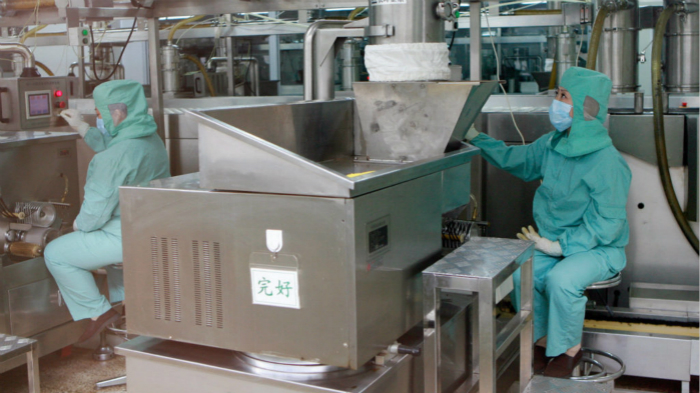
Many active pharmaceutical ingredients in drugs sold in the United States are indeed manufactured abroad, generally originating from generic drug supply chains dominated by China and India, or from complex supply chains for advanced biologics led by Singapore and South Korea. Trump is well aware of this situation and disapproves of outsourced production.
“Our pharmaceutical industry is catastrophic,” he said. “They are drifting further and further away from their original mission.”
However, it remains unclear what specific pressure Trump might exert on the pharmaceutical industry. Some pharmaceutical manufacturing facilities in India and China could be targeted due to their repeated violations of safety and quality standards. Even before Wednesday’s press conference, biopharmaceutical executives and government officials from Asia had already begun to worry that Trump might impose heavy tariffs on active pharmaceutical ingredients (APIs) entering the United States or crack down on overseas contract manufacturing.
Singapore, South Korea, and Australia should theoretically be exempt from tariffs due to their existing free trade agreements with the United States. However, the issue is that Donald Trump has pledged to withdraw from the Trans-Pacific Partnership (TPP) trade pact—a deal that the Japanese government and ten other nations had painstakingly negotiated with the Obama administration in recent years. As a result, the protections previously afforded against protectionist policies may come to naught, and these countries could face new tariffs.
Clearly, Trump’s remarks have heightened anxiety in Asia. Robert Lighthizer, Trump’s lawyer and the U.S. Trade Representative, has been highly critical of China’s trade practices.
Deborah K. Elms, Executive Director of the Asian Trade Centre in Singapore, stated, “Pharmaceutical companies must determine how to address the entrenched challenges that have solidified like rock over the years.” She predicted that some companies might shift manufacturing to countries such as Singapore and South Korea, where free trade agreements with the United States provide greater certainty for stable trade policies. Other firms may reshore manufacturing to the United States, although she noted, “I believe pharmaceutical companies are likely to continue waiting for further developments before making decisions, as doing so indeed entails higher costs.”
Singapore-based supply chain consultant Per Karsten Stolle, who previously worked for Zuellig Pharma, a company specializing in emerging market access, stated, “In Asian countries such as India and China, manufacturing costs are significantly lower—in some cases, one-fifth of those in developed markets.”
Furthermore, some Asian countries require pharmaceutical companies to establish at least a minimal level of local manufacturing, thereby mitigating the risk of losing access to large-scale markets, such as Indonesia’s population of 258 million. Despite these barriers, advocates for U.S. manufacturing have made efforts to bring job opportunities back to the United States.
The Massachusetts-based nonprofit Drew Quality Group aims to boost the production of generic drugs in the United States. It is advocating for tax incentives to encourage the establishment of manufacturing facilities in economically depressed areas, which may welcome the introduction of low-cost medications, while also seeking support from health insurers.
“Our goal is to manufacture critical drugs that have been listed as being in short supply,” said Deborah Drew, Commissioner of the U.S. Food and Drug Administration (FDA). “The key lies in improving efficiency and making U.S. manufacturing cost-effective. We cannot return to the old business model. Our aim is to reduce costs, leverage new technologies, and implement rigorous quality control.”
In fact, the White House had already begun supporting these initiatives during the Obama administration. Last month, the U.S. Department of Commerce announced $70 million in grants to support a new National Institute for Innovation in Manufacturing Biopharmaceuticals. The goal is to expand the domestic production of complex biopharmaceuticals in the United States. Many of these drugs are currently manufactured in Asia at facilities approved and regularly inspected by the FDA.
Singapore boasts a high-end manufacturing supply chain. Over the past five years, companies such as AbbVie, Amgen, and Novartis have invested hundreds of millions of US dollars in building facilities for the production of biopharmaceuticals. US-headquartered Sigma-Aldrich and Thermo Fisher Scientific also provide manufacturing support products and services from their hubs in Singapore.
India is also going all out to attract investment from these pharmaceutical companies, aligning with Prime Minister Narendra Modi’s “Make in India” initiative. South Korea has also witnessed explosive growth in biomanufacturing, with Samsung Biologics now operating state-of-the-art manufacturing facilities that serve Bristol-Myers Squibb and Roche. The company also produces biosimilars approved in Europe and the United States, including highly profitable blockbuster drugs ranging from the autoimmune treatment Enbrel to the breast cancer therapy Herceptin.
Just this week, South Korean Finance Minister Yoo Il-ho stated that the country would vigorously defend its manufacturing sector against any “irrational U.S. demands” in trade.
Deborah Elms, Executive Director of the Asian Trade Centre in Singapore, stated that pharmaceutical companies with established overseas supply chains should be particularly wary of threats by Trump to impose import tariffs on goods manufactured abroad. She described this as a highly ambiguous issue for the industry. “An increase in import taxes would clearly only impact medicines manufactured abroad and imported back into the United States, rather than tariffs per se.”
One thing is certain: import tariffs are not their only concern. Pharmaceutical companies are also worried that Trump will seize on the issue of rising drug prices, which could trigger a sharp plunge in stock prices. Ultimately, however, a trade war may have a greater impact on their bottom line.
“Ironically, of course, the pharmaceutical industry should regret its vehement opposition to the TPP back then,” said Elms. “If they hadn’t been so hostile to the agreement earlier, we would have secured a deal, and their manufacturing options would now be improved.”
The views expressed in this article are sourced from STAT and have been translated and compiled by VCBeat; they do not represent the views of VCBeat.