

Infervision Secures RMB 50 Million Series A Funding to Deploy AI Medical Imaging System Across Nearly 1,000 Primary Healthcare Institutions
Recently,As the first deep medical AI company in China to achieve clinical application, Infervision has secured RMB 50 million in Series A financing. This round was led by Sequoia Capital China, with co-investment from GF Securities’ direct investment division.In February 2016, Infervision completed a RMB 12.5 million angel financing round, with investors including Inno Angel Fund, Zhenyun Venture Capital, and Lu Chuanwei, the former CEO of Kuaidi Dache, in his personal capacity.
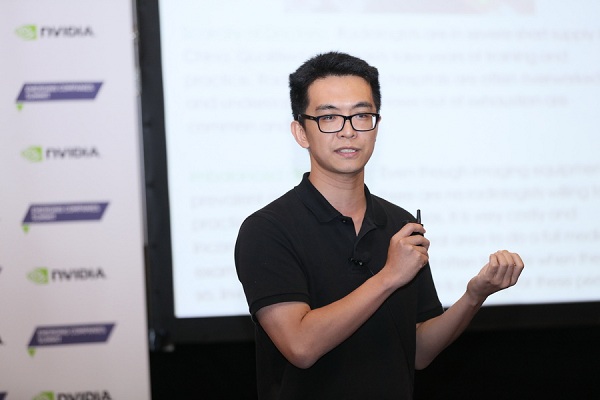
Chen Kuan, Founder of Infervision
The Series A funding is primarily allocated for market promotion and product research and development.。Infervision will focus on building its sales force and expanding business channels this year,Infervision’s intelligent medical imaging system, INFERVISION, has been deployed in the radiology departments of hundreds of primary-care hospitals., and is rapidly iterated and updated based on real-world data across different disease types and clinical scenarios, with application scenarios covering X-ray, CT, MRI, ultrasound, and pathological imaging.
Currently, Infervision is actively expanding its marketing and technical teams. The company maintains particularly stringent hiring standards, requiring review by a majority of its management and technical staff, resulting in an acceptance rate of less than 5%. Nevertheless, Chen Kuan revealed that the process is progressing quite smoothly.
Meanwhile, we will continue to refine our products in the area of product research and development., integrate cross-departmental multimodal imaging and unstructured data to build a more comprehensive intelligent model for assisted diagnosis and treatment with broader coverage of clinical pathways.
Founded in early 2015, Infervision is the first deep medical AI company in China to achieve clinical application. Leveraging AI technology and domestic data, the company aims to integrate artificial intelligence into the medical field. By using AI to automate physicians’ heavy and repetitive tasks, Infervision seeks to assist in medical diagnosis, alleviate shortages in healthcare capacity, and unlock high-quality medical resources.
According to Chen Kuan, Infervision’s mature products will be deployed in thousands of primary healthcare institutions this year, leveraging the internet and third-party imaging centers to extend services to more grassroots medical facilities.
More than 50% of radiologists work over 8 hours per day, with 20.6% averaging more than 10 hours of daily work.
Currently, the annual growth rate of medical imaging data in China is approximately 30%, while the annual growth rate of radiologists is only about 4.1%, resulting in a gap of 23.9%. The increase in the number of radiologists falls far short of the surge in imaging data. This implies that radiologists will face escalating pressure in processing imaging data in the future, potentially exceeding their workload capacity by a significant margin.
Radiologists face a heavy workload every day, particularly between 3 and 4 p.m., when they are most prone to fatigue and diminished concentration. This increases the likelihood of overlooking symptoms on imaging studies, thereby significantly raising the probability of diagnostic errors. Consequently, physicians seek to reduce work-related stress and enhance efficiency, while hospital management aims to strengthen monitoring of healthcare service quality.
Infervision’s intelligent medical imaging system leverages artificial intelligence technology to assist physicians in diagnosis, particularly in primary healthcare institutions., as most grassroots radiologists still lag behind experts in technical proficiency.Chen Kuan stated that Infervision’s products integrate artificial intelligence technology with the expertise of medical specialists, aiming to help primary-care physicians improve diagnostic accuracy and enhance efficiency.
In a previous interview with VCBeat (WeChat ID: vcbeat), Chen Kuan mentioned that Infervision ultimately aims to have its products assist physicians in diagnosis and automatically generate diagnostic reports, thereby improving diagnostic accuracy while reducing physicians’ workload. To this end, the company has been refining its algorithmic models while collaborating closely with physicians to produce preliminary diagnostic reports; if physicians are not satisfied, revisions are made based on the initial drafts.
Currently, the automatically generated diagnostic reports for cardiopulmonary applications produced by their products exhibit approximately 90% concordance with physicians' reports. Moreover, Infervision is capable of iterating its product roughly every three days, resulting in continuously improving accuracy. Chen Kuan told reporters that this constitutes Infervision's current competitive advantage.
As algorithmic models continue to be refined and iteration speeds accelerate, the scope of services is gradually expanding into areas such as thoracic, abdominal, and femoral head imaging, as well as pathology and ultrasound, covering more than 100 diseases. Leveraging experience in thoracic diseases will significantly accelerate research progress in other fields.
According to Chen Kuan, the primary reasons for attracting Sequoia Capital and GF Securities were his business model and team.Currently, while some AI companies are still exploring their paths, Infervision already has mature commercial cases, which is highly valued by investors. Additionally, the background of Infervision’s team is another reason why investment institutions favor them (for team information, please click on the VCBeat article: “Infervision: The First Deep Medical AI Company in China to Achieve Clinical Application”).
In fact, many investment firms have shown strong interest in Infervision; the reason for choosing Sequoia Capital and GF Securities wasChen Kuan stated that the primary consideration was their resources in the fields of artificial intelligence and healthcare, which would provide substantial support for the future development of Infervision.