

From Vibrating Pillowcases to Smart Sleepwear Belts: Sleep Tech Takes Over Global Markets
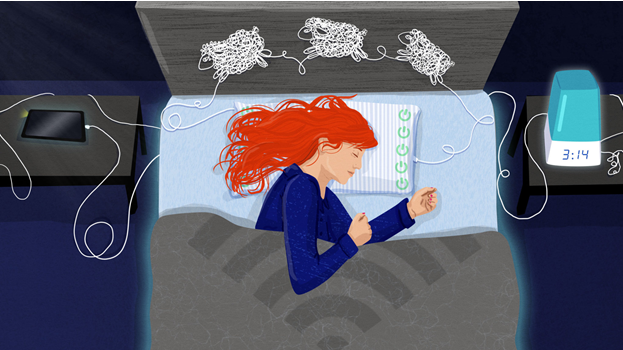
Companies from around the world urged attendees at this year’s CES in Las Vegas to give them a chance—by taking off their shoes and taking a nap on their products to test their latest sleep technologies. It’s hard to say you’ll find much comfort on the exhibition floor amid tens of thousands of tech enthusiasts, but manufacturers have done their best.
They showcased asphyxia-inducing headphones, smart pillowcases, in-bed foot warmers, and waistbands capable of tracking every toss and turn during sleep. One intriguing design was a smart alarm clock engineered to rouse you from bed on Monday mornings in the most pleasant way possible. Additionally, there is an app that records your snoring as well as everything you say while asleep.
All these inventions were supposed to help us sleep better. Yet we remain uncertain about what to do with the data generated by these products.
“Sleep psychologist Michael Breus says, ‘There is an inherent problem: while medical devices now offer methods to monitor our physiological signals, they have yet to develop clinically effective ways to interpret the full range of issues these signals may indicate.’”
Let’s take a look at these hot-selling gadgets in the sleep technology market and the reasons behind their popularity:
Today’s sleep trackers are becoming increasingly high-tech. One smart device, 2breathe, is worn around the waist before bedtime. Priced at $180, it detects your breathing rate and plays varying tones accordingly to help you fall asleep. Once it senses that you have started dozing off, it automatically shuts off. The device also syncs with a mobile app that delivers a cheerful “good morning” greeting each day.
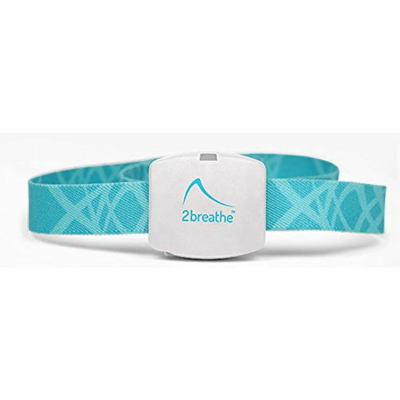
2breathe can test your respiratory rate
Or, at the very least, it spits out a bunch of data about your body. “You have 18% REM sleep and 24% light sleep—what exactly does that mean?” asks Breus, a sleep expert who frequently appears on The Dr. Oz Show.
Clinicians in sleep medicine are asking the same question. Dr. Gholam Motamedi, a neurologist at Georgetown University Hospital, stated, “Such devices may provide some insights into nighttime sleep, but I am uncertain whether the vendors of these devices can directly interpret the results.”
Limited evidence suggests that wearable trackers can encourage users to get more sleep each night.A recent study of 565 employees at a pharmaceutical company who used activity trackers for one year found that although users did not engage in more physical activity, surveys conducted before the end of the year showed that their average nightly sleep duration increased by 30 minutes.。
Laura Pugliese, Deputy Director of Research on Healthcare Innovation and Technological Innovation in New York and a co-author of the laboratory study, stated, “People do not realize how little they actually sleep until they are presented with data recording their sleep duration, at which point they recognize the severity of the problem.”
Even so, Pugliese agrees that most sleep technologies on the market are backed by scientific evidence, although there is little proof of how these products truly benefit users.
Beddit—a $149 sleep sensor that tracks heart rate, respiration, and snoring frequency—is designed to enhance the utility of this data by integrating it with electronic health records. The manufacturer’s goal is to enable physicians to stay informed about their patients’ sleep quality at all times.
Beddit’s app advises consumers to adjust their sleep habits for better nighttime rest. It also records whether users show signs of sleep apnea during the night and recommends that they schedule regular check-ups with a clinician.
If users prefer not to wear cumbersome bracelets or strap devices around their waists during exercise, they can opt for an alternative method to monitor whether they snore while sleeping: a smart mattress.
For example, the Sleep Number 360 Smart Bed is designed to sense physiological changes and continuously adjust mattress temperature as well as body positioning throughout the night. Like other mattresses from the company, it allows independent adjustment of each side to accommodate two sleepers. The company even claims that it can detect a partner’s snoring and gently elevate their side of the bed to help them breathe more quietly. As Sleep Number Corporation states, their goal is to help consumers obtain the much-needed “Vitamin Z.”
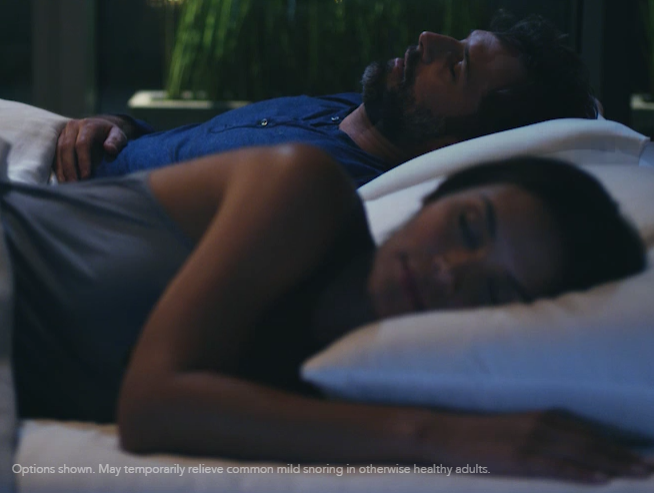
Smart beds can detect bodily changes and adjust sleeping positions.
“Dr. Oz Show” psychologist Bruce stated that products such as smart beds can directly interact with users to collect private data, including information on sleep cycles. These devices utilize the smartphone’s accelerometer to measure movements on the bed, thereby enhancing the accuracy of data capture by the application.
Mattress World is also encouraging its users to regulate their body temperature during sleep; for example, the Kryo Sleep Performance System is an app-controlled water-based cooling mattress.
Experts say that temperature plays a crucial role in sleep—it is a key factor in regulating our circadian rhythms, while the biological clock helps maintain our sleep-wake cycles. “Science shows a definite relationship between core body temperature and sleep,” says neurologist Motamedi.
There is also unpublished data supporting another claim by Kryo: this $299 cooling mattress can increase users’ deep sleep by 20%.
If you think smart mattresses aren’t enough, get ready for the arrival of smart pillows.
Sleepace is currently developing a product called Sleep Dot, a compact tracker that can be attached to the corner of a pillowcase. It is designed to monitor users’ body movements in order to track sleep cycles and the number of nighttime awakenings. Zeeq, an early competitor of Sleepace, previously launched a smart pillow capable of playing music, tracking movement and breathing, and even issuing alerts when snoring is detected.
Experts agree that to make sleep products more effective, these tech companies must give users the sense that their personal data plays a significant role.
Digital health researcher Stan Kachnowski said, “It is hoped that the growth trend in this field will see people striving to channel such biomedical data into platforms with lasting and sustained impact, such as medical innovation and technology laboratories, thereby enabling more effective utilization.。”
This may also mean that we need to provide personalized recommendations, and it could further imply enabling users of these products to automatically adjust their sleep habits to prevent potential safety risks to their partners.
Perhaps your data are similar to those of individuals of the same sex and age as you; personalized feedback is crucial. Such studies are precisely what we currently lack most, yet we still have a long way to go.