

Philips Developing Augmented Reality Navigation System to Enhance Minimally Invasive Spine and Trauma Surgeries
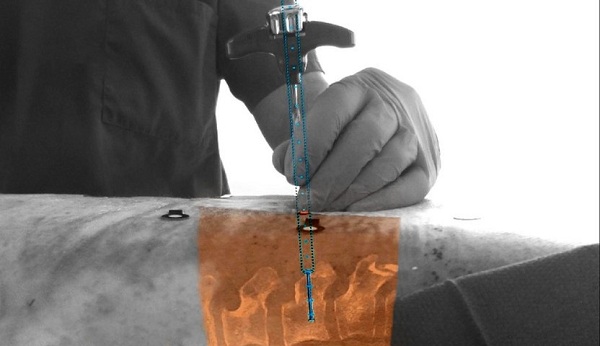
As a provider of integrated image-guided therapy solutions,Philips has publicly stated that it is developing a new surgical system that will use augmented reality technology to guide surgeons in performing open and minimally invasive spinal surgeries more effectively. The system will integrate external and internal images of the patient in real time to assist physicians during procedures.
Philips is committed to providing hospitals with hybrid operating room (hybrid OR) solutions, assisting physicians in performing surgical procedures and minimally invasive endovascular interventions.。Reportedly, the company has deployed more than 750 integrated operating rooms worldwide. According to Philips, the incorporation of this new augmented reality technology will further expand the scope of its integrated operating room solutions, extending their application to other rapidly growing areas of image-guided surgery, including spinal surgery, cranial surgery, and trauma surgery.
Open spinal surgery often requires large incisions, allowing surgeons to directly visualize and palpate the patient’s spine. In contrast, minimally invasive surgery performed through small skin incisions can better reduce blood loss, soft tissue injury, and postoperative pain, and has shown an increasing trend in recent years. However, minimally invasive surgery limits intraoperative visibility, soSurgeons require real-time imaging and navigation systems to guide them.
According to the statement, Philips’ platform will capture camera-acquired, low-dose X-ray data to generate 3D stereoscopic images of patients. This enables surgeons to obtain real-time views of the spine at the incision site.
This novel augmented reality surgical navigation technology is designed to add extra functionality to Philips’ low-dose X-ray systems. The technology utilizes high-resolution optical cameras mounted on flat-panel X-ray detectors to generate surface images of patients.
Subsequently, it integrates the external view captured by the camera with the 3D view generated by the X-ray system to construct a 3D augmented reality view of the patient’s internal and external anatomical structures.
This real-time 3D view reflects the position of the incision on the patient’s spinal skin, aiming toImprove surgical planning, navigation of surgical instruments, and implantation accuracy, while reducing the number of surgeries.
"This new technology allows us to obtain high-resolution 3D images of the patient's spine before surgery,"Preoperatively design the optimal surgical trajectory, and the system’s fully automated augmented reality navigation will assist in determining the placement of pedicle screws..” Dr. Skúlason from Landspitali, the University Hospital of Reykjavik, praised. “We can also directly perform 3D assessments of patients’ overall outcomes in the operating room without moving them near a CT scanner. This can all be done without any radiation exposure to surgeons, and it minimizes the radiation dose to patients as well.”
Philips stated that the augmented reality platform’s technology will be installed in the Philips hybrid operating rooms of 10 clinical partners as part of a joint clinical research program.
Original article link: "Philips developing augmented-reality navigation for minimally invasive surgeries"