

Childress Regional Medical Center: A One-Story Hospital Defying Rural Healthcare Collapse in Texas
In Texas, USAChildress Area: A Small-Town Hospital. To reach this hospital, you must endure a long drive. Located 220 miles northwest of Fort Worth, the route offers unobstructed views of the countryside, where you can see beautiful skies, numerous cattle, and abundant hay bales, all amidst a tranquil landscape.
However, Childress Regional Medical Center (hereinafter referred to as “Childress Regional Hospital”) is in fact merely a single-story facility, situated just a wall away from the adjacent primary care clinic, making it quite unassuming.
What we know about it is that Childress serves as the medical hub for this community of 7,000 residents. It is also the second-largest employer in the region, surpassed only by the state prison. The hospital has created numerous job opportunities, attracting teachers, business owners, and various retirees to settle in the community. Many babies are born here, people receive treatment for knee injuries, and those bitten by rattlesnakes are brought here for care.
“Hospitals, schools, and churches.” John Henderson, the hospital’s CEO, said, “They are like the three legs of a stool. If one collapses, the town is destroyed.”
Currently, rural hospitals across the United States are struggling to remain open. According to data from the North Carolina Rural Health Research Program, 13 of the closed rural hospitals are located in Texas, the largest state in the U.S.
Childress Regional Hospital, with only 39 beds, stands out as a rare success story among these failures. It functions like a solvent, capable of integrating diverse elements, while simultaneously expanding its services. In an era where healthcare appears increasingly fragmented and nearly every condition seems to require high-tech diagnostics and costly specialists, the existence of Childress Regional Hospital serves as a reminder that traditional approaches can still succeed.
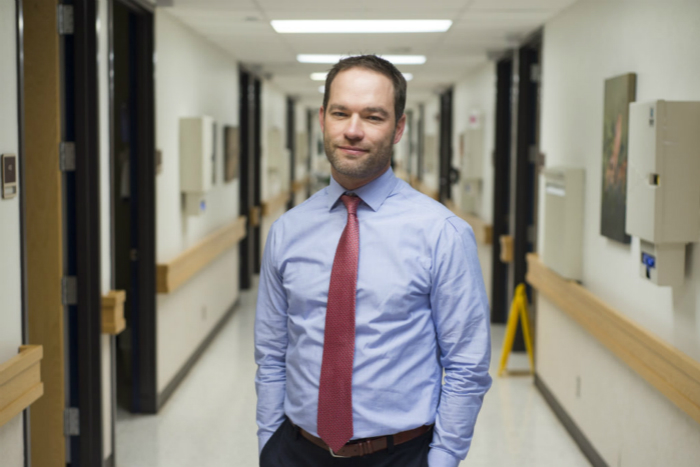
John Henderson is the CEO of Childress Regional Hospital, a success story amid the closure of rural hospitals across China.
“Strive, strive, and strive again!”
On the night of last Thursday, Dr. David Caldwell was working the night shift in Childress. This meant he had to shuttle continuously between patients. At that time, a patient with a shoulder injury was waiting for examination in the emergency department, and there was also a pregnant woman on the verge of going into labor.
“Push, push, push harder!” These shouts could be heard through the closed door by those standing outside the delivery room, as could the expectant mother’s screams.
Today, only 70 of the 162 rural hospitals in Texas still provide obstetric services. Childress, as a public nonprofit organization, is one of them.。
The nearest hospitals capable of delivering babies are at least 100 miles away from Childress, Texas—in Amarillo, Lubbock, or Wichita Falls. These cities surround Childress like spokes on a wheel, close yet out of reach.
“We are not in the middle of nowhere.” Henderson liked to say.
This quote comes from Henderson’s father. He trusts his dad—Dr. Mike Henderson, who at the age of 67 remains a practicing physician and delivered his 3,000th baby since beginning his career in late 2015. (These days, Mike Henderson is still busy answering emergency calls at the hospital; his response is that he is not yet ready for the retired life of “heading out to the ranch and watching the cows graze.”)
As Childress Regional Hospital does not have dedicated obstetricians, nearly all eight family physicians are responsible for delivering babies.。
Moreover, there was no neonatal intensive care unit (NICU) as a backup plan, nor any so-called team of specialists. John Henderson recalls that one physician, during the hospital’s early years, appeared at the CEO’s office door after completing a particularly challenging delivery and asked, “Do we really have to deliver babies here? Tell me why.”
“Because someone has to do it.” Henderson always answered this way.
Ideally, women with high-risk pregnancies would receive prenatal care in larger cities such as Lubbock. However, delays in transportation are not always predictable.。
Mike Henderson recalls that about a year ago, a woman was admitted in the late stages of her pregnancy with severe hemorrhaging and placental abruption, conditions that pose potentially life-threatening complications for both mother and infant. He therefore performed an emergency cesarean section.
“They performed very well,” he said. “They wouldn’t have performed any better in an ambulance or car being sent to a major city.”
Limited staffing sometimes leads to tense moments. For example,There is only one certified registered nurse anesthetist on duty at the hospital at any given time.. (The hospital hired two individuals who work on a biweekly rotation, residing in a duplex apartment owned by the hospital and exchanging keys and mobile phones every other weekend.)
If a woman requires an emergency resection while the surgeon and anesthesiologist are occupied with patients in the operating room, the situation becomes extremely dangerous.
Such incidents frequently occur in the workplace. John Henderson, recalling his professional experience, noted that a common scenario involved an emergency cesarean section commencing immediately after the completion of a delivery procedure.
Access Experts Through Telemedicine
To reduce costs,Childress Regional Hospital has been actively improving; every member of its administrative staff assumes multiple roles, bringing new services to patients.
“The arrival of an orthopedic surgeon in 2013 was a boon to both the hospital and its patients. ‘In the past, if a 90-year-old grandmother or grandfather fell and fractured their hip, we would stabilize them in the emergency room, place them in an ambulance, and transport them over a bumpy 120-mile journey to a more distant hospital for treatment,’ said John Henderson.”
Also in 2013, Childress began recruiting oncologists; previously, he had driven at least 150 miles from the Texas Tech University Health Sciences Center in Las Vegas each month to see patients. The oncologists were also responsible for supervising and training hospital nurses who administered chemotherapy.One morning recently, three patients were reading during their treatment sessions, while others sat together in comfortable chairs, chatting.
It is important to note that, prior to this, cancer patients had to drive up to two hours to Amarillo, Lubbock, or another city for chemotherapy.
“Then you need another two and a half hours to drive home,” said Keith McLean, who has worked in financial management at Childress Regional Medical Center for nearly 40 years. “After all that hassle, you’d be sicker than a dog.”
In 2015, the hospital also added telemedicine equipment, enabling physicians to consult with specialists at Children’s Medical Center Dallas regarding high-risk deliveries and complex emergencies., for example, 4-year-old Shane arrived here this July, screaming in agony. His mother, Amber Yoakum, said, “He was severely blistered all over his body; it looked as if he had been deep-fried.”
Yoakum estimated that she might have been driving at 95 miles per hour. During the nearly 60-mile journey from their home to the Childress area, she said she tried her best not to panic. However, although doctors and nurses administered painkillers and conducted a comprehensive examination of her son, the red blisters on his body continued to increase significantly, “almost spreading” across his entire skin surface. She noted that his back had also changed color from red to nearly purple.
At this point, the telemedicine vehicle was positioned beside Shane’s bed, establishing a video link with physicians in Dallas, while other equipment on the vehicle magnified the clusters of blisters that continued to spread.At this point, the physician’s primary concern was whether Shane, a preschool-aged child, had sustained burns—potentially chemical burns from swimming pool exposure—leading to the conclusion that he required transfer to a burn center for comprehensive evaluation.
The final diagnosis was an unusual complication of a staphylococcal infection known as Staphylococcal Scalded Skin Syndrome, which produces toxins that attack the skin surface. Five days later, after extensive antibiotic treatment and healing bandage dressings, Shane was discharged and returned home.

Childress Regional Hospital Leverages Telemedicine Equipment to Establish an Expert Guidance Mechanism
The hospital is a primary care clinic.Outpatient DepartmentPurchased a second telemedicine unit to facilitate communication with specialists in Lubbock, including cardiologists and psychiatrists.These visiting physician specialists are distributed across urology and cardiology, and they can attend to patients in the Childress area at least once a month.
These additional investments have increased the number of physicians and their working hours in primary care clinics, helping Childress Regional Medical Center maintain its bottom line with an annual operating budget of approximately $28 million.
A Hospital Deeply Rooted in Small-Town Life
It is hard to overstate the role this hospital and its 250 staff members play in the community.。
According to Mike Henderson, the hospital did encounter instability in the late 1970s, when there were three physicians, two of whom were retiring. (He is a local boy; he and his wife were high school sweethearts.)
At that time, Henderson had just completed his medical training elsewhere. A group of socially conscious citizens renovated a previously unused clinic building and then contacted Henderson.They were eager to retain young doctors in the city, so they provided Henderson with free accommodation during his first year.. Over the past few years, two more doctors have joined this hospital.
Currently, Childress Regional Hospital is overseen by a local board and partially subsidized by state tax revenues; for example, it raised nearly $600,000 in the previous fiscal year.

In 2016, Childress Regional Hospital delivered 211 babies.
In the most recent fiscal year, Childress Regional Hospital treated 939 patients and delivered 211 babies. Clinicians also managed nearly 5,600 emergency department visits and 40,000 appointments at primary care clinics.
John Henderson grew up here, and his three children were also born in Childress. He originally pursued a career as a doctor, following in his father’s footsteps, but abandoned this dream after observing a delivery procedure.
“I remember being in the delivery room, struggling to breathe,” he recalled. “Then I passed out.”
He therefore shifted his focus to the business side of healthcare, and after earning an MBA, he entered hospital management. He had previously worked for a period near Dallas before returning to Childress at the age of 30.
Now 42 years old, John Henderson learned last December that he might have the opportunity to work at a hospital closer to Fort Worth. This marked the first time in his 15-year tenure as CEO that he considered working outside of Childress. However, he ultimately stated, “I am very family-oriented. We value commitment, and I also want to continue working with my father.”
Even if Henderson decides to work elsewhere, he remains highly confident that the hospital will continue to maintain strong operational performance. The institution has effectively become a central hub, serving as a medical oasis in the flat expanse of the Texas Panhandle and providing shelter and care for its residents.
Article from STAT, by Charlotte Huff.