

Medgadget's Annual Roundup of Groundbreaking Medical Technologies That Could Redefine Human Health
Medgadget is a blog dedicated to reviewing global “medical gadgets,” serving as an authority on the latest technological advancements in the healthcare sector. It has highlighted some of the most significant, innovative, and astonishing developments in medical technology. VCBeat (WeChat ID: vcbeat) has curated these selections into this article to help you explore the newest and most noteworthy innovations emerging in today’s healthcare landscape.
Ultrasonic Equipment
Although ultrasound imaging is not a new technology and has been continuously evolving for many years, there are still constant new advancements endowing this technology with new “superpowers.”
Both Healcerion and Clarius have introduced wireless, screenless ultrasound probes that display images by connecting to smartphones or tablets. Due to their compact size and high portability, they can be used in virtually any setting. In the future, ultrasound devices will increasingly resemble physicians’ stethoscopes, enabling immediate, on-demand use.
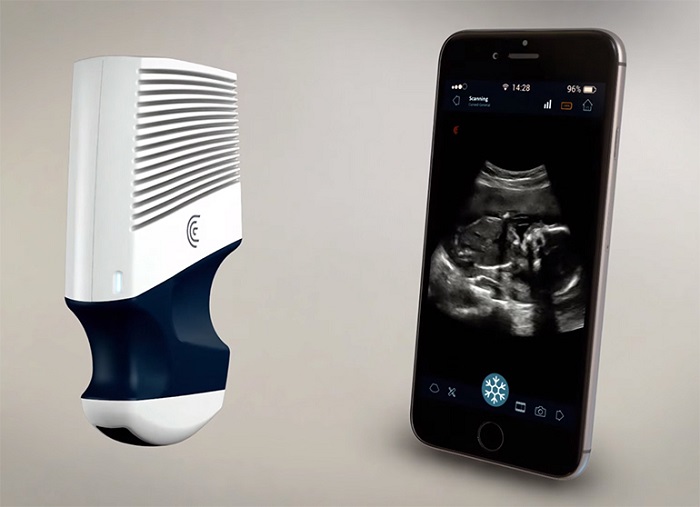
Clarius Ultrasound Sensors
Ultrasound devices have several other interesting applications. For instance, Bindex’s instruments can screen for osteoporosis, while Signostics’ Uscan devices are specialized for imaging and detecting bladder stones, among other uses. Both systems feature a high degree of automation during operation, eliminating the need for manual interpretation by physicians, as the machines can directly provide diagnostic results.
AR and VR
Augmented Reality (AR) and Virtual Reality (VR) have rapidly matured in recent years, reaching a level of sophistication that enables their application in clinical care and medical education, while also enhancing patient satisfaction. In April 2016, a cancer surgery was live-streamed via VR technology to a global audience for the first time, allowing all users of Google Cardboard VR headsets to view the procedure.
Microsoft’s sleek AR promotional video for HoloLens has likely given many people a vivid glimpse into a promising AR future. In fact, the HoloLens system is already being used by the Cleveland Clinic and Case Western Reserve University in the United States to develop an anatomical study and teaching app called HoloAnatomy.
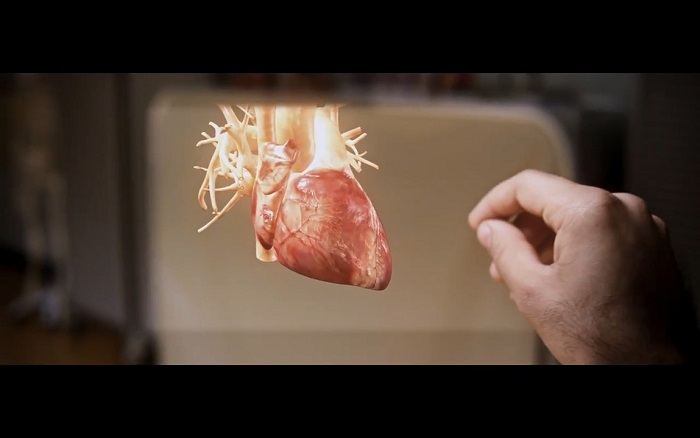
Microsoft HoloLens AR Medical Teaching System
Treating pediatric illnesses requires significant effort to calm children, a challenge that has long plagued pediatricians. VR technology has successfully helped distract children during injections and intravenous infusions. Clinics can effectively address this issue simply by introducing affordable VR equipment.
Most remarkably, patients with spinal cord injuries who underwent training combining virtual reality (VR) with electroencephalography (EEG) successfully regained leg mobility after several years. This approach essentially uses VR technology to compel the brain to believe that leg function is normal: an EEG headset reads the patient’s motor intentions, and corresponding leg movements are simulated within the VR headset, supplemented by other rehabilitation methods.
Prosthetics, Mind Control
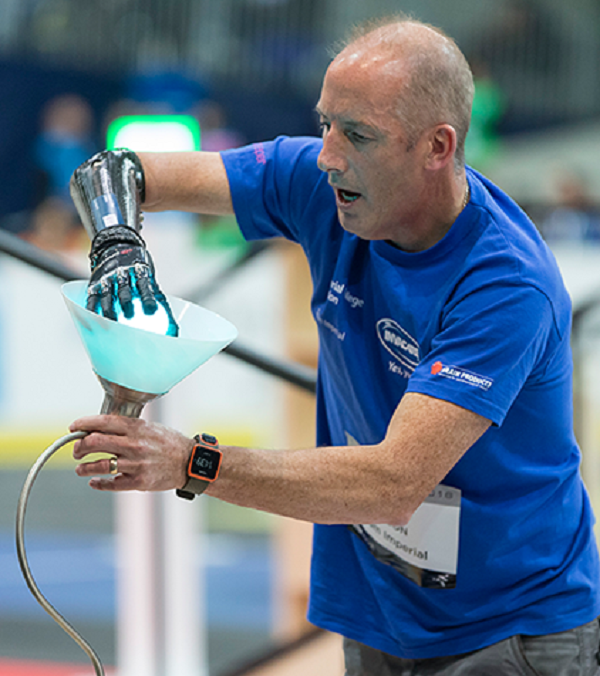
Last year, the inaugural Cybathlon—dubbed the “Cyborg Olympics”—held in Zurich, Switzerland, showcased numerous promising powered prostheses. Individuals with various physical disabilities, assisted by engineers and rehabilitation specialists, competed in events such as cycling and wheelchair racing using these powered prosthetic devices.
Numerous studies have emerged that directly leverage brain activity to control prosthetic limbs. Recently, Medgadget reported on a European-developed exoskeleton for the arm and hand that can be controlled by the brain, enabling patients with limb paralysis to regain precise hand manipulation. This technology does not require brain implants; instead, it uses a conventional EEG headset to decode the user’s intentions.
A patient with amyotrophic lateral sclerosis (ALS), also known as “Lou Gehrig’s disease,” can now communicate with others by typing after receiving an implantable wireless brain device at the University Medical Center Utrecht in the Netherlands. Although she can only type a few words per minute, this permanent implant technology for treating ALS represents a significant advancement over previous methods that relied on external devices.
Drone
Drones are playing an increasingly vital role in the transportation of emergency medical supplies, connecting remote areas with regional hospitals to facilitate the bidirectional transport of medications, patient samples, and other essentials. In early December, the William Carey University College of Osteopathic Medicine introduced a drone system capable of rapidly delivering emergency medical kits and Google Glass devices to individuals stranded in isolated locations. Uninjured persons can wear the Google Glass to enable remote medical professionals to visually assess the situation and provide guidance on administering emergency care to the injured before rescue personnel arrive.
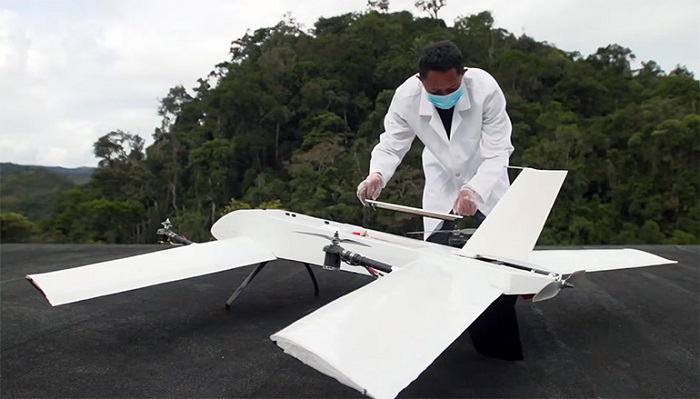
The practicality of this drone rescue system has yet to be proven, whereas Vayu, a drone company based in Michigan, has already begun transporting patients’ blood and stool samples from remote rural areas in Madagascar to a regional hospital. These drones are fully autonomous, capable of flying over 60 kilometers per trip and carrying payloads of up to 2 kg.
Brain Injury Assessment
BrainScope’s first commercialized product for assessing brain injury, the Ahead 300, recently received FDA clearance. It utilizes a disposable EEG electrode that connects to a smartphone to detect abnormalities in brain activity as reflected in electroencephalographic signals.
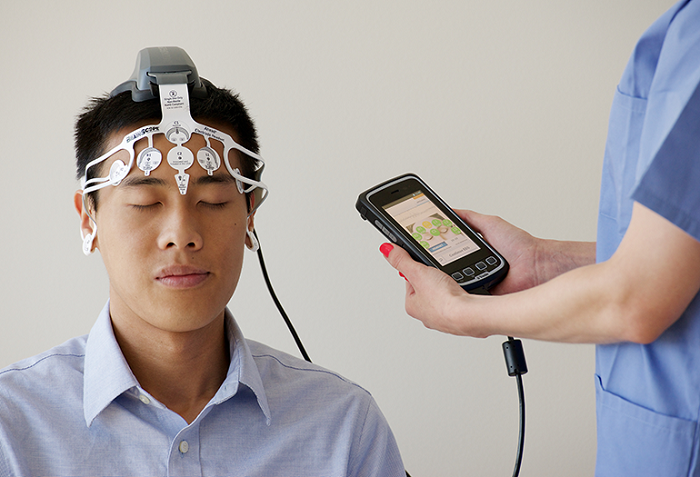
BrainScope’s Ahead 300
The Lucid M1 device from Neural Analytics is another newly FDA-approved device that uses Doppler ultrasound to penetrate the skull and assess blood flow, thereby aiding in injury evaluation. Similarly, another biodegradable brain implant can directly measure intracranial temperature and pressure.
SyncThink, a Boston-based company, has also received FDA clearance for its EYE-SYNC system, which utilizes VR headsets with embedded eye trackers to measure an individual’s ability to track objects on a screen, thereby assessing whether athletes have sustained a concussion.
Surgery
As next-generation devices more precisely translate hand movements into instrument actions within the body, surgical procedures are becoming increasingly less invasive. This year has also seen the emergence of numerous outstanding new surgical products.
For example, the FlexDex laparoscopic surgical system provides intuitive surgical control; devoid of traditional components such as dials and foot pedals found in conventional laparoscopic systems, it enables novices to achieve proficiency in a short period. The Levita Magnetic System eliminates the need for certain secondary invasive procedures by implanting a device at the incision site after the initial surgery to facilitate wound healing, which can then be retrieved magnetically during a subsequent procedure. Meanwhile, the Amend surgical system allows for mitral valve repair and replacement via a subxiphoid apical approach, thereby minimizing trauma.
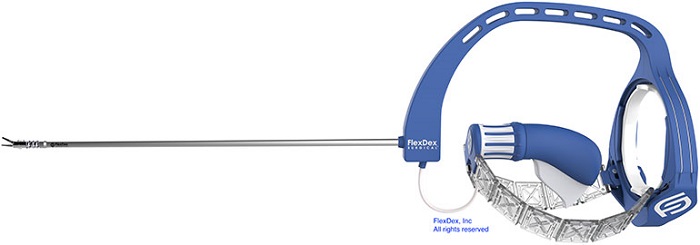
Convenient Surgical Tools for the FlexDex Laparoscopic Surgery System
Diabetes
Medtronic’s MiniMed 670G Receives FDA Approval, Becoming the World’s First “Hybrid Closed-Loop System Device.” This device utilizes Medtronic’s SmartGuard HCL algorithm. The system measures blood glucose levels in patients with diabetes every five minutes, and if abnormal glucose levels are detected, it administers a calculated dose of insulin via its algorithm.
Eversense Glucose Monitor Receives CE Mark Certification in Europe. The system includes a subcutaneously implanted sensor that is replaced every three months, connects to a smartphone via Bluetooth to display glucose readings, and provides timely alerts in case of abnormalities.
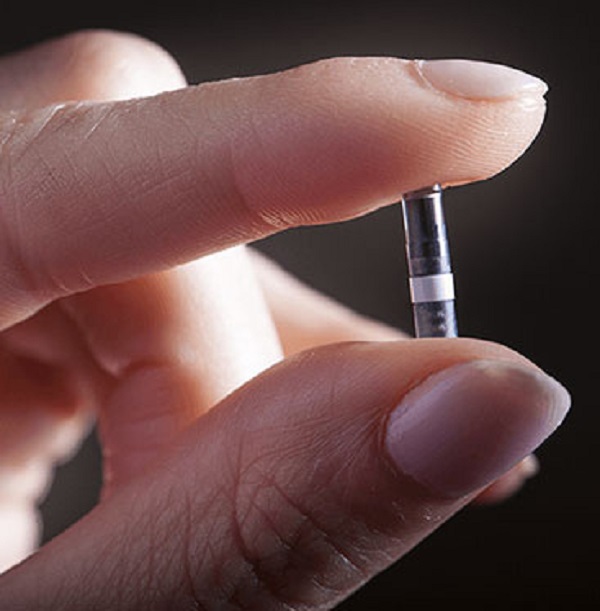
Eversense Subcutaneous Glucose Monitor
Researchers at Cardiff University in Wales have invented a non-invasive blood glucose meter that does not require blood sampling. The device operates by using low-power microwaves, which cause no tissue damage, to penetrate the skin and monitor feedback signals indicative of blood glucose concentration. However, the measurement accuracy of this device remains to be validated.
Other Categories
Researchers at Wake Forest Baptist Medical Center have invented a Taser with medical capabilities. Its primary application addresses scenarios in which law enforcement officers use Tasers to incapacitate suspects by disrupting their nervous systems; while this may induce cardiac arrhythmias, the device enables real-time monitoring of the subject’s electrocardiogram (ECG).
Capsocam’s “capsule endoscope” received FDA approval last November. This capsule-sized system is equipped with four cameras, enabling image capture as the capsule traverses the gastrointestinal tract. Although similar products have long been available on the market, they feature only a forward-viewing camera, yielding results far inferior to those of Capsocam, which incorporates four side-viewing cameras.
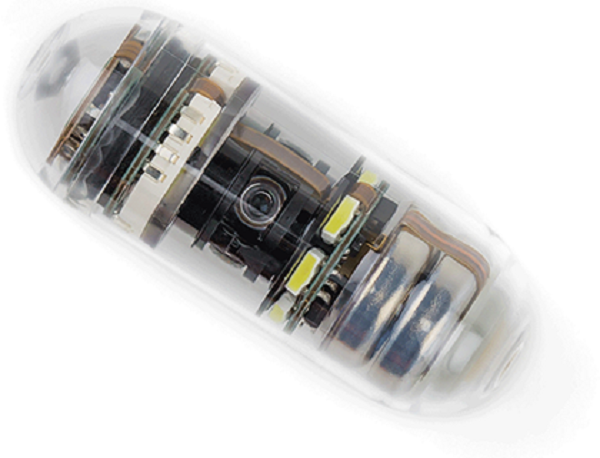
Capsocam “Capsule Endoscope”