

GE Healthcare Empowers Grassroots Medical Development Through Industry-Academia Collaboration: Training 10,000 Physicians in Six Years
FromSince 1979, GE Healthcare has continuously expanded its presence across various sectors of the healthcare industry. Currently, it has established multiple operating entities in China, including wholly-owned and joint ventures, and operates seven global production bases in the country.
To achieve the three major goals proposed by the state—“improving healthcare quality, reducing healthcare costs, and increasing healthcare access for more people”—and to align with national healthcare reforms and the overall health development objectives of the “12th Five-Year Plan,” GE Healthcare optimized channel resources in collaboration with primary care teams, rebuilt its service model, and advanced the localization of its supply chain.
"WeWe aim to support the development of primary healthcare by fostering talent cultivation, innovating products and services, advancing healthcare informatization, promoting the growth of medical consortia, and fulfilling corporate social responsibility, thereby honoring our commitment to China’s primary healthcare market.“Dai Ying, Chief Marketing Officer of GE Healthcare Greater China, said.
In fact, GE Healthcare has never ceased its efforts to focus on and serve primary care institutions. Currently, 70% of the new products developed in China are launched for the primary healthcare market.
Dai Ying told reporters that, fromSince 2010, GE Healthcare’s strategy in China has shifted from focusing solely on the high-end market to pursuing a dual focus on both the high-end and primary care markets, primarily by accelerating comprehensive localization across products, channels, services, and supply chains.
From a product perspective, throughContinuously Develop and Improve Cost-Effective SolutionsMRI, CT, patient monitors, and other products, while accelerating the time-to-market cycle for these products. CurrentlyThere are alreadyOver 30 products are specially customized for primary healthcare.
There are two main channels.Aspect, one is to deepen direct sales, and the other is distribution. CurrentlyExistingA 500-member team serves the private-sector and grassroots markets, continuously exploring new business development models to enhance market coverage and service delivery in these segments.
The demand in the primary healthcare market is highly diversified, with productsPrice is only“Admission ticket”; more importantly, it is essential to truly go deep into the grassroots level to understand the actual healthcare issues faced by the local population.
For remote areas, GEAchieve Remote Diagnosis Through Cloud Imaging Technology/Consultation connects large hospitals with primary care institutions to address the uneven distribution of medical talent. Meanwhile, Application 2.0 + Telemedicine provides real-time online clinical guidance and multi-channel learning opportunities to promote grassroots training.
In Dai Ying’s view, China’s primary healthcare sector continues to face numerous severe challenges due to imbalanced economic development across regions. On one hand, the uneven distribution of medical resources has led to insufficient healthcare resources and a shortage of talent at the primary level, making it difficult to meet the growing demand for healthcare services among the population. On the other hand, China has a limited number of licensed physicians, with a serious scarcity of healthcare professionals in rural and primary care settings.
Although the number of licensed (assistant) physicians per 1,000 population in China had risen to 1.94 by 2012, the overall competency of physicians still requires improvement. In particular, there is a severe shortage of healthcare personnel in rural and primary care settings, making it difficult to meet the growing demand for medical and health services among the public. Therefore, implementing standardized and systematic training is essential for enhancing the overall professional skills of primary care physicians.
Therefore, GE Healthcare and the Chinese Medical Doctor Association organized training programs for primary care, delivering over 10,000 primary care physicians to grassroots medical institutions.including the breast cancer screening training program in collaboration with the National Health and Family Planning Commission, and the grassroots sonographer training program in partnership with industry associations, having trained over5,000 primary care physicians and 300 presidents of county-level hospitals.
By establishing a base hospital (Peking University People's Hospital)Training core grassroots physicians and direct“Training at the Grassroots Level” and other models were adopted, with more than 60 multidisciplinary training sessions organized. The training programs spanned 42 cities, reaching over 10,000 primary care physicians, effectively enhancing the overall “soft power” of China’s grassroots healthcare system.
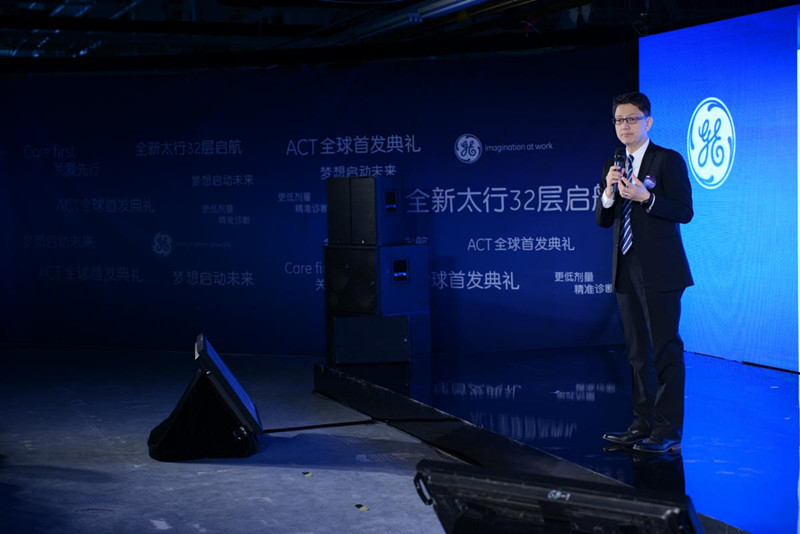
While the soft skills of primary care physicians have improved, portable medical devices can also enhance the service level of primary healthcare. Therefore, GE HealthcareAlso provided to grassroots levels100,000 ultrasound units, andPossessing32-Slice Precision CTTaihang32 CT,IntegrationGE integrates its experience and core technologies in the high-end CT field with innovative hardware design and manufacturing processes to ensure more accurate imaging and quantification.
This product breaks through the limitations of traditional 16-slice CT scanners by employing an innovative 32-layer high-definition acquisition chip. Each layer of the chip offers enhanced data acquisition capabilities, which, in conjunction with the Hummingbird precision-focus X-ray tube that delivers high-quality, zero-loss performance, enables the generation of double the image data. This results in superior spatial resolution, providing physicians with richer diagnostic information and facilitating precise diagnosis of early-stage lesions.
Dai Ying believes:“GE Healthcare continues to invest in the Chinese market, stepping up innovation across multiple dimensions—including product technology, remote support, training and education, and collaboration models—to help customers further control costs and deliver comprehensive solutions that meet their actual needs.”
In recent years, the healthcare industry has entered a new normal, with “ensuring basic coverage and strengthening primary care” becoming the focus of the new healthcare reform and guiding the development direction of this new normal.
GE Healthcare’s Vision: Caring for Individual Patients Through Technological Innovation, Collaborating with Partners to Address Industry Challenges, and Actively Promoting Public Health Awareness. We are committed to meeting patients’ health needs and enhancing patient satisfaction, while improving patient safety and comfort, and facilitating precision diagnosis.