

Professor Huang Shangzhi on the Imperative of Building a Genetic Counseling System in China
Source: GeneInsight PPT
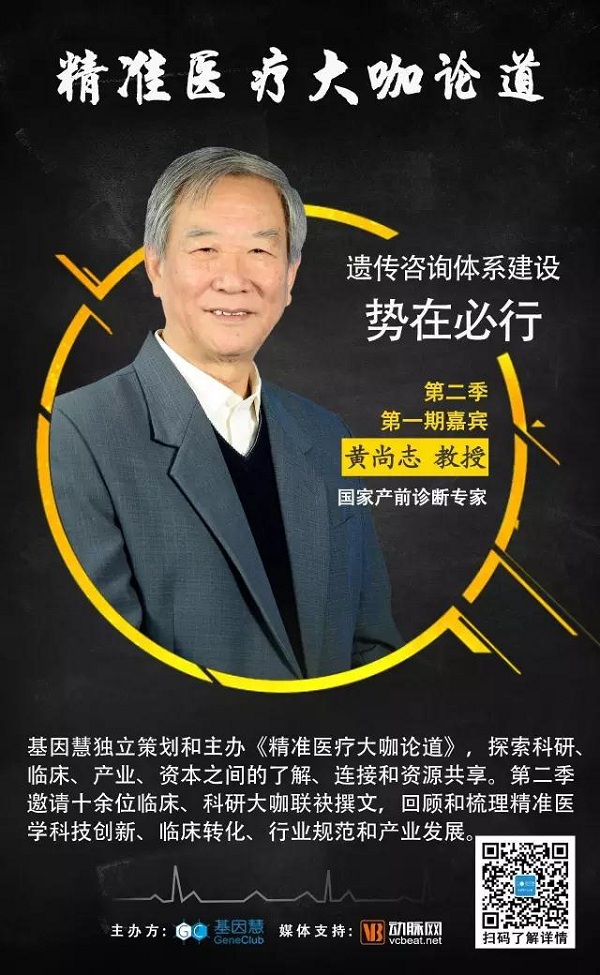
Guest of Season 2, Episode 1
[Editor's Note]At a time when precision medicine has become a national strategy, new genetic testing technologies have provided novel approaches for diagnosing many complex and rare diseases in clinical practice. Bioinformatics and cloud platforms have also made the analysis and management of genetic data exceptionally convenient. However, the interpretation step—bridging genetic analysis results to clinical diagnosis—remains immature in China. Taking the United States as an example, a comprehensive clinical genetic counseling system has been established, comprising clinical geneticists, molecular laboratory geneticists, and genetic counselors, all rigorously certified through qualification reviews and examinations by the American Board of Medical Genetics and Genomics (ABMGG) and the American Board of Genetic Counseling (ABGC). How can we accelerate understanding and establish a robust genetic counseling system to create a closed loop for clinical genetic diagnosis? Beyond technical aspects, what other dimensions does genetic counseling encompass, and what does its future development hold? In the premiere episode of Season 2 of “Expert Insights,” we invite Professor Huang Shangzhi to share his perspectives and reflections on genetic counseling.
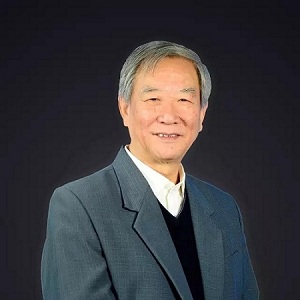
Huang Shangzhi
Director of the WHO Collaborating Centre for Community Control of Hereditary Diseases,
National Expert in Prenatal Diagnosis

Director of the WHO Collaborating Centre for Community Control of Hereditary Diseases, National Expert in Prenatal Diagnosis, Standing Director of the Cross-Strait Medical and Health Exchange Association, and Chairperson of the Professional Committee on Genetics and Reproduction. Formerly served asDirector of the Department of Medical Genetics, Institute of Basic Medical Sciences, Chinese Academy of Medical Sciences & Peking Union Medical College. Visiting Scholar at Johns Hopkins University School of Medicine, USA (1984–1986). Identified the seventh β-thalassemia gene in the Chinese population and characterized the mutational spectrum of β-thalassemia genes. Engaged in prenatal genetic diagnosis for monogenic diseases since 1990; pioneered positional cloning of disease-causing genes in China. Recipient of 11 national and provincial/ministerial-level awards for scientific achievements. In recent years, dedicated to training professionals in genetic counseling and promoting public welfare initiatives for rare diseases.

Author: Huang Shangzhi
(Director of the WHO Collaborating Centre for Community Control of Hereditary Diseases,
National Expert in Prenatal Diagnosis)
The Importance of Genetic Counseling
With advances in healthcare, the spectrum of human diseases has undergone significant changes, and genetic disorders have emerged as a new challenge in medicine. The issues and concerns that hereditary diseases bring to families are complex, such as: What is the specific diagnosis? Which hospitals have suitable specialists for treatment? What tests are required? How should the test results be interpreted? Is the condition treatable? What are the risks associated with having another child? Do relatives face any risk of developing the disease? How can it be prevented? And so on.
We do not lack patients with genetic disorders, but it is extremely difficult to find suitable physicians, and even more challenging to locate specialists capable of providing accurate diagnoses. The development of next-generation sequencing (NGS) technology has made genetic analysis remarkably rapid, and the development of new computer software has increasingly improved the efficiency of screening massive datasets. However, correlating test results with clinical significance and providing patients with accurate interpretations remains exceedingly difficult. It is also not easy to commission a high-quality institution to perform appropriate testing. Furthermore, many steps involving the prevention of recurrence risk require support for patients and their families. It is neither possible nor realistic to expect specialty physicians to undertake all these tasks. Our physicians are already overburdened and have no time to address non-clinical questions from patients. Who will fill this service gap? Who will help patients find appropriate physicians? Who will assist physicians in collecting and organizing patients’ fragmented medical records? Who will interpret the results of genetic testing? These responsibilities must be assumed by another group of non-clinical professionals: genetic counselors. Their mission is to connect patients and families with physicians and testing institutions, thereby translating scientific advancements into tangible benefits for the public. This is the mission of genetic counseling.
The History of Genetic Counseling
In the early stages of human genetics, the field was subject to misuse by eugenics. It was not until the 1940s that the first genetic counseling clinics emerged in the United Kingdom and the United States. These services were provided by non-medical professionals or junior clinicians, offering limited assistance to patients and their families, while societal ignorance and prejudice continued to plague those affected. By the 1960s, with the growing understanding of genetic disorders and the emergence of medical genetics as an independent discipline, genetic counseling gradually became medicalized. It evolved into a distinct specialty within clinical genetics, separate from clinical geneticists and genetic testing technologists.
In 2006, to clarify misconceptions, the National Society of Genetic Counselors defined genetic counseling as a process designed to help patients understand and adapt to the medical, psychological, and familial implications of genetic contributions to disease. The process generally includes: interpreting family and medical histories to assess the chance of disease occurrence or recurrence; educating about inheritance, testing, management, prevention, resources, and research; and counseling to promote informed choices and adaptation to the risk or condition.
Genetic counseling in China began in the 1960s. At that time, due to limited testing capabilities, genetic counseling was primarily conducted by physicians, who provided disease diagnoses and reproductive guidance to families. Cytogenetic testing was offered by teaching and research sections at universities and laboratories in scientific research institutions, while obstetricians provided only reproductive counseling to families. In 1980, Peking Union Medical College Hospital established a genetic counseling outpatient clinic within its Department of Pediatrics, where pediatricians provided diagnosis and counseling for patients with genetic disorders. By the late 1980s, prenatal diagnosis for thalassemia was first implemented in the Guangdong and Guangxi regions, and genetic counseling remained relatively rudimentary.
Current Status of Genetic Counseling
With the advancement of research on monogenic disorders, new conditions are continuously being added to prenatal diagnostic services, with genetic counseling still provided by obstetricians assisted by laboratory personnel. When the Administrative Measures for Prenatal Diagnostic Techniques were formulated in 2002, prenatal diagnosis for monogenic diseases was set aside and excluded from regulatory oversight. In 2004, when it was proposed to establish clinical genetics as a secondary discipline in hospitals, most medical experts deemed it unnecessary to create a professional series for genetic counselors. Although the administrative regulations require prenatal diagnosis centers to have positions for genetic counseling physicians, the lack of follow-up specialized training has resulted in most incumbent staff having limited professional knowledge, essentially remaining at the level of the previous century. To this day, despite the growing clinical demand for medical genetics, particularly with the widespread adoption of next-generation sequencing technologies, our professional workforce in genetic counseling remains unprepared, with uneven competency levels—either overly specialized or excessively informal.
Prospects for the Development of Genetic Counseling
It is an irresistible trend to gradually build a professional team for genetic counseling, which requires our unremitting efforts and serious implementation of professional training. Currently, many institutions are offering genetic counseling training courses, which is a positive development. Training should focus on both foundational knowledge and practical skills; concepts must be clear, knowledge comprehensive, practices standardized, and ethics given high priority. In addition to these continuing medical education programs designed to address immediate needs, clinical genetics should be established as a secondary discipline within medical school curricula to facilitate talent development across the three major series of clinical genetics. We hope that the disciplinary framework will be established as soon as possible, allowing current genetic counseling practitioners to take the national medical licensing examination after undergoing training through various channels, thereby obtaining their genetic counselor licensure at an early date.
[Postscript]
We thank Professor Huang Shangzhi for opening the second season of “Precision Medicine Experts’ Forum.”
Professor Huang often refers to himself as a “veteran” and “guardian” of genetic counseling. With nearly three decades of experience in genetic diagnostics, he is rigorous in his conduct and meticulous in his thinking. At the same time, he is full of passion, acting with swift decisiveness and speaking with resonant clarity. He enthusiastically answers questions from peers and younger professionals in social media groups. Despite his extensive experience, Professor Huang maintains a learning mindset toward emerging technologies such as next-generation sequencing (NGS) and bioinformatics, actively creating opportunities for young talents to shine.
Upon my first interaction with Professor Huang, he repeatedly emphasized the importance of genetic counseling reports, outlining key points in clinical genetic counseling and highlighting critical considerations for doctor-patient communication. I am deeply grateful and hold him in high esteem. Later, we invited Professor Huang to participate in GeneHui’s program “Three Perspectives on Genes.” Beyond professional discussions, his heartfelt words revealed his profound passion and expectations for the role of genetic counselors, which deeply moved me. Although new generations inevitably surpass their predecessors, many fields—particularly genetics within healthcare—must not forget their roots. The pioneers who laid the foundation have demonstrated remarkable dedication. It is incumbent upon successors to inherit, promote, and learn from this steadfast commitment, thereby honoring the trust placed in us by countless patients who entrust us with their lives and health.