

Wanda Announces Hospital Chain Plans and IBM Pushes for Global Healthcare Data at 2017 Winter Davos Forum
On January 17 this year, Davos, Switzerland, once again welcomed global leaders from the political and business sectors. Between the 17th and the 20th, more than 400 dialogue sessions will be held in Davos, where these most influential figures worldwide will discuss issues such as the global governance system and revitalizing the global economy. As the healthcare industry continues to gain momentum globally, it has naturally become a major topic at the forum. VCBeat (WeChat ID: vcbeat) has compiled some of the industry discussions and new developments from the Davos Forum to examine what was being said about healthcare at the 2017 Winter Davos Forum.
Biden Relaunches the “Cancer Moonshot”
(Image source: CBS News))
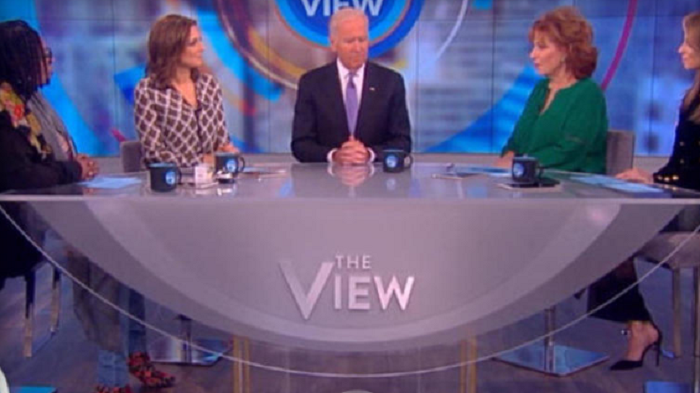
On Monday, ahead of the World Economic Forum in Davos, Vice President Biden began sparing no effort to promote the “Cancer Moonshot” initiative. The passage of the 21st Century Cures Act late last year added $1.8 billion in funding for cancer research at the National Institutes of Health. Biden stated that he had reached an agreement with the newly elected vice president to “help the Trump administration achieve its goal of eliminating cancer.”
He also called on other countries to join the fight against cancer, urging researchers, healthcare providers, and pharmaceutical companies worldwide to unite. Previously, at the J.P. Morgan Conference, Biden stated that he would establish an entity called the “Biden Cancer Initiative” to transform the way the nation conducts cancer research and delivers cancer care.
One point that Biden has strongly emphasized is enabling interoperability of healthcare industry data, allowing patients to access their own data.
Technology Transforms the "$3 Trillion" Healthcare Industry
From Apple to Google, major technology companies have begun to explore the potential of technology in healthcare, with a steady stream of products emerging for both consumers and enterprises.
This hot topic was also highlighted at the World Economic Forum in Davos on Tuesday. During the panel discussion on “The Future of Healthcare Development,” Bill McDermott, CEO of SAP, stated that the healthcare industry holds immense potential when empowered by technology. He also noted that the global foundation of medical information—specifically the adoption of electronic health records—remains poor, leaving significant room for improving the patient experience, which continues to evolve. “In this day and age, it is somewhat excessively backward that we are still repeatedly informing patients of their diagnoses verbally and issuing paper prescriptions. Patients urgently need more advanced approaches.”
McDermott’s view is that the practice with the greatest potential to transform the healthcare industry is identifying the most precise and personalized treatment and medication regimen for each patient. Although this has not been SAP’s revenue model in recent years, he believes that such medical technologies, which can fundamentally change people’s lives, offer “boundless opportunities.”
The first medical company to transform smartphones into clinical-grade scanners, Healthy.io, was also represented at the event by its CEO, Jonathan Adiri, who participated in the panel discussion. He stated that the U.S. healthcare market alone represents a $3 trillion opportunity. Even capturing a small fraction of this market holds astonishing growth potential. In fact, Google’s parent company, Alphabet, recently asserted that the next hundred-billion-dollar company is likely to emerge from the healthcare industry.
Philips: Turmoil in the Healthcare Industry Is Temporary
Royal Philips CEO Frans Van Houten stated that despite the current uncertainties, the turbulence in the healthcare industry will soon pass. He believes that the downturn in healthcare stocks will reverse in due course.

(Image source: CNBC))
“I believe the current panic is only temporary. Once the dust settles, all our efforts to promote healthy living for humanity and sustainable global development will pay off.” This was Houten’s response on Monday at the Davos Forum when asked about his views on Trump’s impact on the healthcare sector.
He also noted that while the entire industry is discussing the repeal and replacement of the Affordable Care Act, Philips remains confident in navigating this period of “uncertainty.” Last week, the U.S. Republican Party passed a budget resolution directing several key committees to draft legislation related to repealing “Obamacare” as soon as possible, marking the first step toward abolishing the Affordable Care Act.
IBM: Cognitive Healthcare Systems Require Global Data
IBM CEO Ginny Rometty explained the company’s ongoing research into “cognitive” computer-based medical expert and diagnostic systems during the “Artificial Intelligence” panel at the World Economic Forum in Davos. She noted that across various commercial operations in the healthcare industry, data is continuously accumulated and fed into artificial intelligence systems for analysis, thereby “deriving deep, personalized insights from your data.” To train the cognitive healthcare system to a state of mastery, the next step will inevitably involve collaboration with medical experts and physicians to acquire extensive datasets, with the ultimate medical database encompassing patients worldwide.
Pharmaceutical Manufacturers: Pivoting to Chronic Diseases in Underserved Regions
At the Davos meeting on Wednesday, global pharmaceutical manufacturers announced that they would initially invest $50 million over the next three years to help poor countries combat cancer and chronic non-communicable diseases. Supported by the World Bank, this project will see 22 pharmaceutical companies, including Pfizer, Merck, Novartis, Roche, Sanofi, and GlaxoSmithKline, contribute funds and professional services.
The “Accelerating Expansion of Drug Coverage” initiative aims to strengthen the treatment and prevention of diseases. In the past, global attention to healthcare in impoverished regions focused primarily on the prevention and control of infectious diseases, with corresponding measures including widespread vaccination and the distribution of insecticide-treated nets to combat malaria. Today, however, the burden of these diseases has been significantly reduced, while so-called “diseases of affluence,” such as cancer, diabetes, and heart disease, have become increasingly prevalent. According to the World Health Organization, 70% of deaths worldwide are attributable to chronic non-communicable diseases, one-third of which occur in less developed regions.
“To enable patients in many developing countries across Africa, Asia, and Latin America to benefit from the latest medical advances, their healthcare systems must be comprehensively strengthened. ‘To supply innovative drugs, hospital infrastructure must first be improved. Without sophisticated and comprehensive medical laboratories, drug quality cannot be assured. What we will do is help these regions establish institutionalized multi-stakeholder collaboration,’ Severin Schwan, CEO of Roche Pharmaceuticals, told Reuters.”
Sanofi’s CEO also stated that this $50 million initiative is more akin to a “seed-round project” for the pharmaceutical industry, which is characterized by massive sales volumes. The company will use the results from this pilot to launch larger-scale projects between 2020 and 2030.
China News: “Wanda” Brand Hospital Plan
On January 18, Wang Jianlin, Chairman of Wanda Group, discussed Wanda’s chain hospital initiative at the Davos Forum, marking the first time the country’s richest man has signaled a substantive entry into the healthcare and medical sector.
Wang Jianlin stated that China’s healthcare sector was previously a state monopoly. It was opened to private enterprises a year ago, permitting them to establish general hospitals and allowing foreign physicians to practice in China. A regulation issued just a few months ago now permits doctors, upon approval, to provide private outpatient services outside their hospitals to supplement their income. These developments have created favorable conditions for the growth of private hospitals. Wanda’s greatest advantage lies in its hundreds of large-scale commercial centers across China, which provide the capacity to implement its hospital development plans.
As early as the beginning of 2016, Wanda Group signed a cooperation agreement with International Healthcare Group (IHG) in Beijing to build three comprehensive international hospitals in Shanghai, Chengdu, and Qingdao, with a total investment of RMB 15 billion. Upon completion, the project will be operated and managed by IHG under its brand. Wang Jianlin stated that introducing international hospitals represents an innovation by Wanda in China, which not only meets the healthcare needs of high-end consumers but also elevates the local medical standards to world-class levels, thereby driving the advancement of premium healthcare services in China.