

Dr. Gu Weihong from China-Japan Friendship Hospital Discusses Clinical Implementation of Genetic Testing in Precision Medicine
Source: GeneInsight PPT
[Review]
Precision Medicine: "Expert Dialogues" Season 1 – Industry Edition
Season 2, Episode 1: Professor Huang Shangzhi
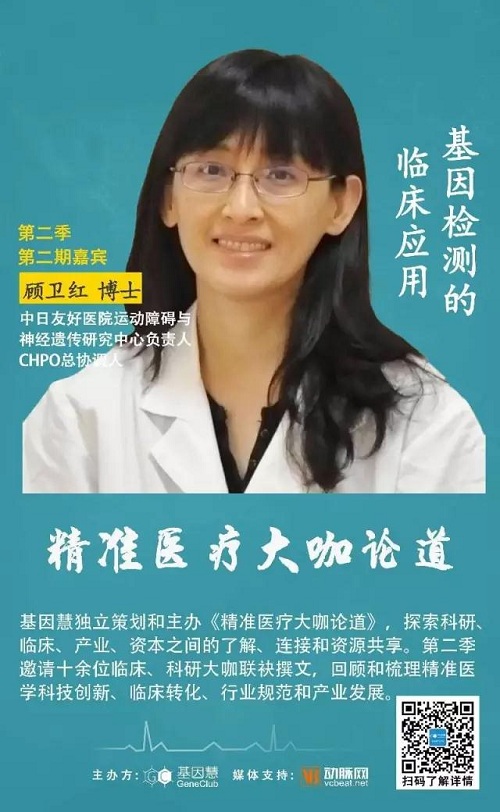
Guest of Season 2, Episode 2
[Editor's Note]Precision medicine primarily aims to address medical challenges, followed by precise diagnosis and treatment based on genetic biomarkers. Genetic big data cohorts, cloud platforms, and bioinformatics originate from clinical practice and must ultimately return to it. Genetic testing has enabled the diagnosis of certain diseases that traditional clinical methods could not identify, offering new avenues for research. However, the clinical application pathway for genetic testing has not yet formed a closed loop; aspects such as cost control, technical training, genetic counseling, informatization, and multi-party integration require gradual implementation. In this issue of "Precision Medicine: Insights from Leading Experts," we have invited Dr. Gu, a renowned expert with dual backgrounds in genetics and clinical medicine, to share her experiences from the practical application of genetic testing in clinical settings.
1. Current Issues in the Clinical Application of Genetic Testing
2. Bridging Genetic Testing and Clinical Practice
3. Genetic Counseling Training
4. The Role of Physicians in the Clinical Application of Genetic Testing
5. The Importance of Clinical Phenotypes and CHPO
6. Review of 2016 and Outlook for 2017

Dr. Weihong Gu
Head of the Center for Movement Disorders and Neurogenetic Diseases, China-Japan Friendship Hospital
Chief Coordinator, CHPO

Gu Weihong, Ph.D., Researcher, Clinical Geneticist. She serves as the Head of the Center for Movement Disorders and Neurogenetic Diseases at China-Japan Friendship Hospital and is the Chief Coordinator of the CHPO Project (Chinese Human Phenotype Ontology Consortium). Dr. Gu oversees specialized outpatient clinics for movement disorders and neurogenetic diseases (including joint clinics and precision medicine clinics) and manages the molecular genetics laboratory. She conducts clinical and genetic analyses of related disorders and has established a resource bank for hereditary movement disorders, comprising both a clinical database and a DNA biobank. She has led and participated in numerous national and ministerial-level research grants, with a long-term commitment to translating scientific achievements into clinical practice to improve disease diagnosis and treatment. Actively engaged in rare disease science popularization and public welfare initiatives, she has fostered extensive collaboration with sectors including genetic testing, internet healthcare, and medical data industries, striving to ensure that patients benefit promptly from the latest scientific advancements. Her current professional affiliations include Executive Director of the Rare Disease Branch of the Chinese Research Hospital Association; Vice Chairperson of the Neurogenetics Professional Committee under the Neurology Chapter of the Chinese Medical Doctor Association; Member of the Neurogenetics Group of the Neurology Branch of the Chinese Medical Association; Member of the Parkinson’s Disease and Movement Disorders Group of the Beijing Branch of the Chinese Medical Association; Executive Committee Member of the Medical Genetics Branch of the Beijing Medical Association; and Medical Advisor to the China Organization for Rare Disorders. In 2017, she was honored with the “Outstanding Contribution Award” by the OMAHA Open Medical and Health Alliance.

Author: Gu Weihong
Director, Center for Movement Disorders and Neurogenetic Diseases, China-Japan Friendship Hospital
CHPO Chief Coordinator
Driven by the rapid advancement of sequencing technologies and commercial forces, genetic testing has rapidly transitioned from scientific research to clinical application within a short timeframe. Technological progress is leading industry development, with current applications deeply embedded in the following areas: diagnosis of genetic disorders, intervention for birth defects, tumor subtyping and targeted therapy, as well as personalized trait analysis and health management. The clinical application of genetic testing is profoundly transforming models of healthcare and health management. From a scientific perspective, the diagnosis of monogenic disorders represents the most well-established application of genetic testing and serves as the foundation for birth defect intervention. Since many common multifactorial diseases may encompass numerous monogenic conditions or involve specific single-gene variants as major risk alleles, the diagnosis of monogenic disorders also constitutes the scientific basis for health management.
The rapid translation of genetic testing from research to clinical application has inevitably led to certain issues.
I. Issues of Philosophy and Model:In scientific research, clinical phenotypes serve as downstream outcomes; researchers employ various methods to trace upstream pathogenic mechanisms and identify etiologies. In contrast, in clinical applications, phenotypes are upstream inputs for testing. Diagnosticians must analyze sequencing results in conjunction with phenotypic information to diagnose diseases. Scientific research is characterized by openness and exploration, funded by researchers, with the authenticity and reliability of findings reflecting the researchers’ credibility. Clinical application represents practical implementation aimed at resolving real-world diagnostic and therapeutic challenges. It is paid for by patients, necessitating accountability to patients, careful consideration of social and ethical issues, and assumption of corresponding medical and even legal liabilities. Many testing institutions and practitioners originate from research backgrounds; they must fully account for this paradigm shift and determine how to better implement practical applications. This requires adjustments in roles and operational models.
II. Standardization Issues of Clinical Data:Due to the low level of standardization in medical data, lagging related technologies, and severe data fragmentation, coupled with the Chinese public’s lack of basic awareness regarding medical knowledge and their own health and medical information, the efficiency of clinical data collection, storage, and effective transmission remains very low, standing in stark contrast to genomic data.
III. Connection Issues:Genetic testing in the medical field requires collaboration across multiple sectors, including clinical practice, genetics, bioinformatics analysis, and medical informatics. However, the linkages between these sectors remain weak, particularly between clinical practice and other disciplines, where robust connections in both workflows and specialized technologies are lacking. The genetic testing sector is currently in a phase of unregulated growth, with its ecosystem and order yet to be established.
Connectivity encompasses two aspects: process connectivity and specialized technical connectivity.
I. Matching Suitable Patients with Appropriate Physicians: Areas for Improvement in the Healthcare SystemMany patients with genetic diseases face significant barriers to accessing medical care, lack reliable sources of information, and encounter convoluted healthcare pathways. Conducting genetic testing in the absence of comprehensive clinical data will inevitably compromise the accuracy of the results. To enable patients to find appropriate physicians more rapidly, it is essential to establish triage and referral systems, provide continuing medical education for physicians and patient education, and strengthen public science communication efforts.
II. From Clinical Practice to Genetic Testing: Physicians collect, analyze, and document patient phenotypes, a process that requires support in three areas: a standardized medical information system, an auxiliary diagnostic system (equipped with an existing knowledge base and interlinked annotations), and reference solutions for genetic testing; the latter two can be integrated into a single system.How can phenotypic information be reliably transmitted from physicians to testing laboratories? This area presents numerous challenges, necessitating the standardization of medical record documentation and the establishment of a standardized common language to minimize information loss and bias during intermediary processes. Currently, most specialist physicians practice in large public hospitals within the state-controlled healthcare system, whereas the majority of genetic testing is conducted by independent laboratories outside this system. Therefore, it is essential to establish more rational procedural linkages between these two sectors.
III. From Genetic Testing Back to Clinical Practice: This stands in stark contrast to scientific research; clinical application forms a closed loop aimed at resolving patients’ diagnostic and therapeutic issues. Since phenotypic data and genetic data are fundamentally different types of information, their integration requires collaborative efforts between clinicians and testing providers. On one hand, meticulous and reliable phenotypic data collection and analysis are essential; on the other, continuous development and optimization of genetic testing and analytical techniques are necessary. By leveraging robust phenotypic data to enhance the targeted analysis of genetic data, we can ultimately provide patients with the most scientifically grounded diagnostic results and medical recommendations. Multiple stakeholders are involved in this process, including physicians, clinical geneticists, genetic counselors, and bioinformatics specialists. While close coordination among these roles is crucial, they are not interchangeable.With the widespread clinical application of genetic testing, accumulated challenges are concentrated in the interpretation of test results. This area is becoming a bottleneck for industry development, necessitating the establishment of improved models.
In China, the genetic counseling system remains underdeveloped. Genetic counseling is not synonymous with genetic research; it also encompasses specialized fields such as medicine, ethics, and psychology. Serving as a bridge, the profession integrates relevant information from various domains, interprets genetic testing results in the context of each patient’s specific situation, and collaborates with physicians to provide medical recommendations. Currently, genetic counseling training in China is at the stage of science popularization. While it is essential to enhance practitioners’ understanding of related professional knowledge, it is unrealistic to expect individuals to achieve a certain level of competency or obtain genetic counselor certification through short-term training alone. The development of the genetic counseling industry requires a process of growth and maturation. Only when more people have a thorough understanding of this field and possess adequate knowledge can more standardized training be further implemented on this foundation. Meanwhile, genetic counseling training can draw lessons from clinical training models, such as conducting observerships and internships in real-world settings.
At the heart of healthcare lies the doctor-patient communication. Amidst the ongoing healthcare system reform, physicians bear substantial medical and social responsibilities. Meanwhile, driven by the rapid advancements in medicine and related life sciences, doctors are required to engage in continuous, lifelong learning. The medical profession is a form of self-cultivation, particularly so in contemporary China. Throughout the entire process of clinical application of genetic testing, physicians are responsible for collecting, analyzing, and reporting clinical phenotypes. Due to the shortage of professional genetic counselors in most domestic medical institutions, doctors must also interpret genetic test results directly for patients. Physicians face significant work and study pressures; they require support and understanding. Furthermore, it is essential to establish a more scientific system and approach for continuing medical education, enabling doctors to better understand and master genetics-related knowledge, thereby playing a more significant role in the clinical application of genetic testing.
Clinical phenotypes serve not only as the basis for selecting genetic testing methods but also as a critical foundation for the analysis and interpretation of genetic test results, with their importance being unquestionable. Genetic data must be fully integrated with phenotypic data to truly identify issues and address practical clinical problems. Currently, the lack of unified standards for clinical phenotype data limits the efficiency of genetic data analysis, creating an urgent need to promote the standardization of clinical terminology. The Human Phenotype Ontology (HPO) provides such a standardized framework, linking three key elements: the complex and diverse phenotypic information obtained by clinicians, the large volume of variants of uncertain significance (VUS) generated by genetic testing laboratories, and existing knowledge bases/databases.HPO differs from other medical standard terminologies in several ways: First, it is relatively simplified. Second, it is derived from existing medical literature and databases, covering relatively common and frequently used terms. Third, HPO was established primarily to support clinical and genetic analysis of genetic and rare diseases. These characteristics facilitate HPO’s role as a bridge in the clinical application of genetic testing.
CHPO, the Chinese Human Phenotype Ontology Consortium, was established in January 2016. Authorized by the HPO, it leverages an open platform in China to unite professionals from various relevant fields in developing standardized Chinese clinical phenotype terminology, thereby guiding and supporting clinical practice and research among Chinese-speaking users. The founders of CHPO include the BGI team, Professor Wang Kai, Professor Zhang Wei, Professor Huang Shangzhi, and myself. As the chief coordinator, I facilitate collaboration among all parties, jointly design initiatives, promote advocacy, and drive project implementation. CHPO is based on a wiki website.http://wiki.chinahpo.org/Display and optimize entry editing, provide free lexicon downloads; meanwhile, establish a search engine.http://www.chinahpo.org/, linking CHPO/HPO with the OMIM and Orphanet knowledge bases. CHPO and HPO communicate via email and conference calls, and will collaborate on areas such as cross-linking websites, research on matching patients with similar phenotypes, and terminology updates. Meanwhile, we have invited Dr. Mengchun Gong, Executive Director of the National Rare Disease Registry System, to join the CHPO core team, with the aim of supporting the establishment and development of China’s rare disease registry system.
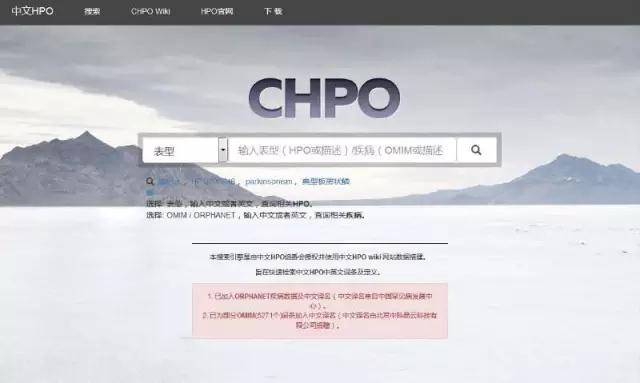
Figure: CHPO official website interface (provided with the author's authorization)
Both the healthcare and genetic testing industries have attracted a large pool of talent, which constitutes the most fundamental driving force for development. In 2017, we encourage all stakeholders to strengthen communication, foster mutual understanding, and build stronger connections, thereby translating ideas into tangible innovations. Through collaborative efforts, we aim to continuously enhance our capacity to address real-world challenges, ensuring that advances in genetic technology benefit a broader population and contribute to societal well-being.
[2016 Personal Milestones]
1. Coordinated with all parties to jointly establish the CHPO (Chinese Human Phenotype Ontology Consortium): http://wiki.chinahpo.org/, http://www.chinahpo.org/;
2. Participation in academic and public welfare activities related to rare diseases and genetic disorders, including the Rare Disease High-Level Forum, the establishment of the Rare Disease Branch of the Chinese Research Hospital Association and the launch meeting of the Chinese Rare Disease Registry Project, the annual meeting of the Genetics and Reproduction Professional Committee of the Chinese Medical Doctor Association, the committee meetings of the Rare Disease Branch of the Beijing Medical Association, and the committee meetings of the Genetics Branch of the Beijing Medical Association.
3. Explorations in Clinical Platforms, Medical Pathways, and Medical Informatics:
(1) Established a joint outpatient clinic and a precision medicine outpatient clinic for neurogenetic movement disorders http://blog.sina.com.cn/s/blog_504720710102x0m2.html;
(2) In collaboration with Yimai Gene, we established a clinical database for movement disorder neurogenetic diseases at http://dr.mygene.com/overview/index.html. We are currently working to integrate outpatient medical records with genetic data from testing laboratories to develop a more comprehensive interpretation workflow.
(3) Explore telemedicine modalities.
[Postscript]
Thank you, Dr. Gu, for participating in Season 2 of the Clinical Research Series of “Dialogues with Precision Medicine Leaders.”
Dr. Gu is a well-known figure in the medical community. With a clinical background, he furthered his expertise through genetics study and research before returning to clinical practice, effectively integrating theory with practice. He is also actively engaged in bridging various sectors within the industry, including patient advocacy initiatives, coordination with CHPO (Chinese Health Promotion Organization), and fostering connections among clinical practitioners, geneticists, and third-party testing laboratories. Beyond professional competence, such liaison work demands perseverance and a broad-minded perspective, which are truly admirable. Dr. Gu was subsequently invited to participate in GeneInsight’s program “Gene Triologue,” where his hosting skills clearly reflect years of accumulated practical experience. Tiered diagnosis and treatment, mobile health, and precision medicine have created more opportunities for enhancing physicians’ personal brands and expanding their professional reach, enabling doctors as individuals to directly engage in collaborations and contribute to the formulation of industry standards. This represents progress driven by the times and the benefits of information technology. We look forward to deepening our understanding of and connection with clinicians, bringing precision medicine technologies and data back into clinical practice, thereby empowering physicians to better serve patient health.