

IBM Watson Health and FDA Collaborate on Blockchain-Based Secure Healthcare Data Exchange
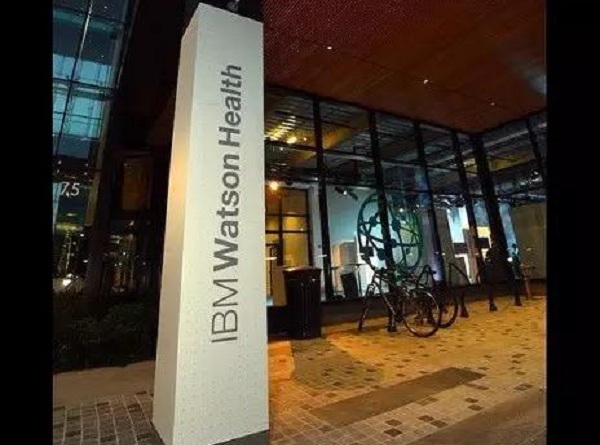
Recently, IBM Watson Health, the artificial intelligence healthcare solutions division of IBM Watson, has signed a research initiative with the U.S. Food and Drug Administration (FDA) to explore how blockchain technology can enable secure, efficient, and scalable healthcare data management.
IBM and the FDA will jointly explore how to exchange owner-intermediated data from multiple sources, such as electronic health records, clinical trials, genomic data, and healthcare data from mobile devices, wearables, and the Internet of Things (IoT).The initial focus of this project is on tumor-related data.
Blockchain is a novel application model of computer technologies, including distributed data storage, peer-to-peer transmission, consensus mechanisms, and cryptographic algorithms. It is also a key concept underlying Bitcoin. Blockchain originated with Satoshi Nakamoto’s Bitcoin, and since 2009, various Bitcoin-like digital currencies have emerged, all based on public blockchains.
Essentially a decentralized database, it also serves as the underlying technology for Bitcoin.. A blockchain is a series of data blocks linked using cryptographic methods, with each block containing information from a Bitcoin network transaction.Used to verify the validity of its information (anti-counterfeiting) and generate the next block。

Core Technological Innovations in BlockchainYes: distributed ledger, symmetric encryption, and authorization technologies. Transaction information stored on the blockchain is public, but account identity information is highly encrypted and can only be accessed with the data owner’s authorization, thereby ensuring data security and personal privacy. Consensus mechanisms and smart contracts are also integral components. The technology features decentralization, openness, autonomy, immutability of information, and anonymity.
Currently, blockchain has evolved to its third generation. Blockchain 2.0 was applied to digital assets and smart contracts, while Blockchain 3.0 has given rise to blockchain-based autonomous organizations and companies, with applications in science, healthcare, education, etc., as well as artificial intelligence.
IBM has been deeply engaged in the field of blockchain technology for a long time, and IBM is one of the founding members of the Linux Foundation's Hyperledger project.
Electronic Medical Records (EMR) contain vast amounts of data, such as demographic, medical, and genetic information, serving as a database for biomedical research. However, the highly sensitive nature of this data restricts data sharing for research purposes, including medical diagnosis.
IBM researchers record all audit trails on a distributed ledger to ensure the transparency and reliability of data exchange.IBM stated:“If researchers and healthcare providers can access comprehensive patient data, transformative healthcare solutions can be realized.”
IBM recently surveyed 200 healthcare industry executives, including insurers and service providers. The surveyshows that, for the healthcare industry, more than 70% of industry leaders expect,The greatest benefit of blockchain technology lies in its ability to help manage clinical trial records, regulatory compliance, and medical/health records.
IBM and the FDA will jointly explore how blockchain frameworks can advance public health by supporting clinical trial data and facilitating key use cases for information exchange across diverse data types, such as “real-world” evidence.
This collaboration also includes fully unlocking the value of the vast and diverse data in today’s biomedical and healthcare fields through new approaches. By leveraging a secure, owner-mediated data-sharing ecosystem, it will help drive new discoveries and improve public health.For example, patient data from wearable and connected devices can help physicians and caregivers better manage population health.
As the prospects of blockchain technology in the healthcare sector become increasingly clear,IBM will be dedicated to defining and building corresponding technical solutions, thereby creating a scalable, decentralized data-sharing ecosystem.
In medical applications, blockchain technology provides a secure decentralized framework that facilitates controlled sharing of patient information.Blockchain is a natural solution for electronic drug pedigrees and supply chain management, offering an excellent approach for pharmaceutical manufacturers, distributors, and pharmacies to address the product integrity challenges they face. With further development, blockchain can be transformed into an immutable, distributed patient record system that ensures security and facilitates seamless sharing, thereby accelerating the drug research and development process.
For all parties involved in clinical trialsBlockchain-based processes help improve integrity, security, and transparency, thereby enhancing the complex interactions among trial sponsors, investigators, CROs, and patients. It is anticipated that the collaborative initiatives between the FDA and IBM Watson Health will give rise to numerous high-value use cases for blockchain technology in the life sciences sector.
The application of EMR technology facilitates electronic data exchange between healthcare providers and insurers, while also enhancing the quality of services and processes. Furthermore, EMR data contributes to large-scale, cost-effective analyses of healthcare and pharmaceuticals.
Historically, large-scale health data sharing has been significantly constrained by concerns over data security and patient privacy breaches during the data exchange process.Secure Sharing of Medical DataIt facilitates the development of new drugs and is key to achieving personalized medicine.
To improve the domestic healthcare data sharing system, the U.S. governmentObama Administration Spends $50 Billion on EMR Implementation; however, despite the adoption of EMR, many institutions are unable to guarantee the security of data sharing, even between hospitals and clinics within the same organization. IBM Watson Health signed a two-year joint development agreement with the FDA, aiming to leverage blockchain technology to improve patient data sharing in medical research and other projects.
If healthcare researchers and providers could access patient data comprehensively, it would hold the promise of transforming healthcare solutions. Currently, patients have very limited access to their own health data and cannot easily share such information with researchers or providers.
If patients can securely share their health data, whether for research purposes or among various healthcare providers, it will help drive significant advancements in the healthcare industry. With blockchain technology, we have the opportunity to achieve this, as the core purpose of this technology is to enable organizations to collaborate in a more trust-based manner.
IBM Watson Health and the FDA plan to announce the results of this project early next year.
Disclaimer: The content and images in this article were compiled by the author based on IBM’s official WeChat account and online sources. If there are any copyright issues, please contact the author.