

U.S. Healthcare VC Rankings Unveiled: Where Is the Next Investment Hotspot?
This article is published with authorization from CTIC Capital.
Endpoints News has just released the latest 2017 rankings of top U.S. biomedical venture capital firms. Below are the highlights we have compiled.
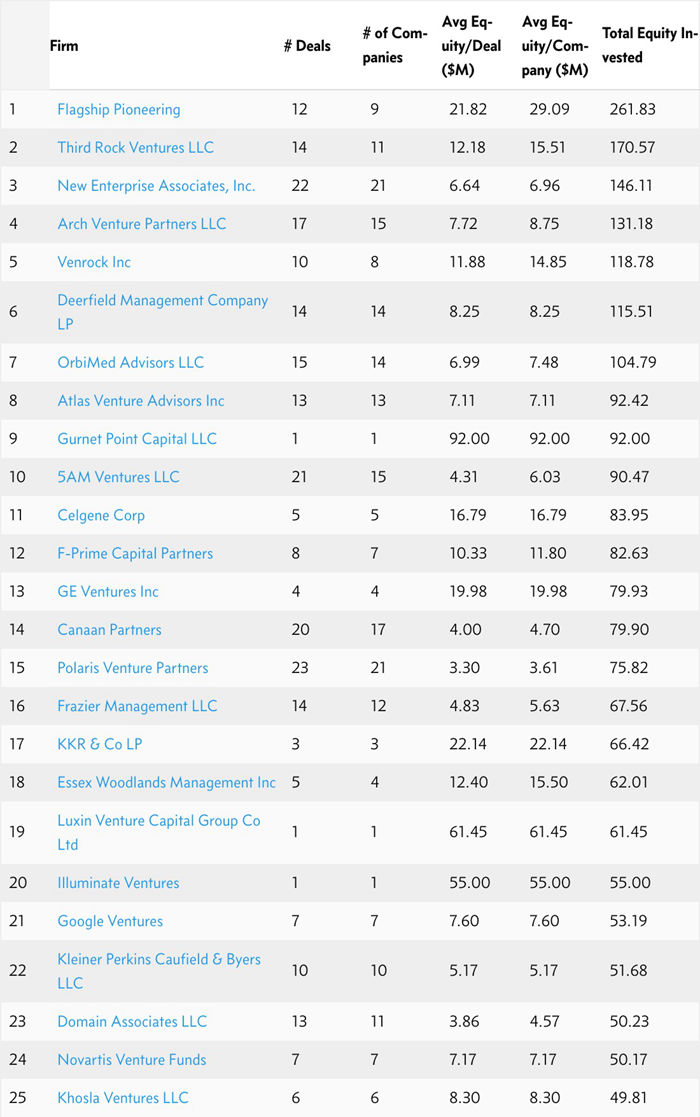
Ranked by Total Investment Amount
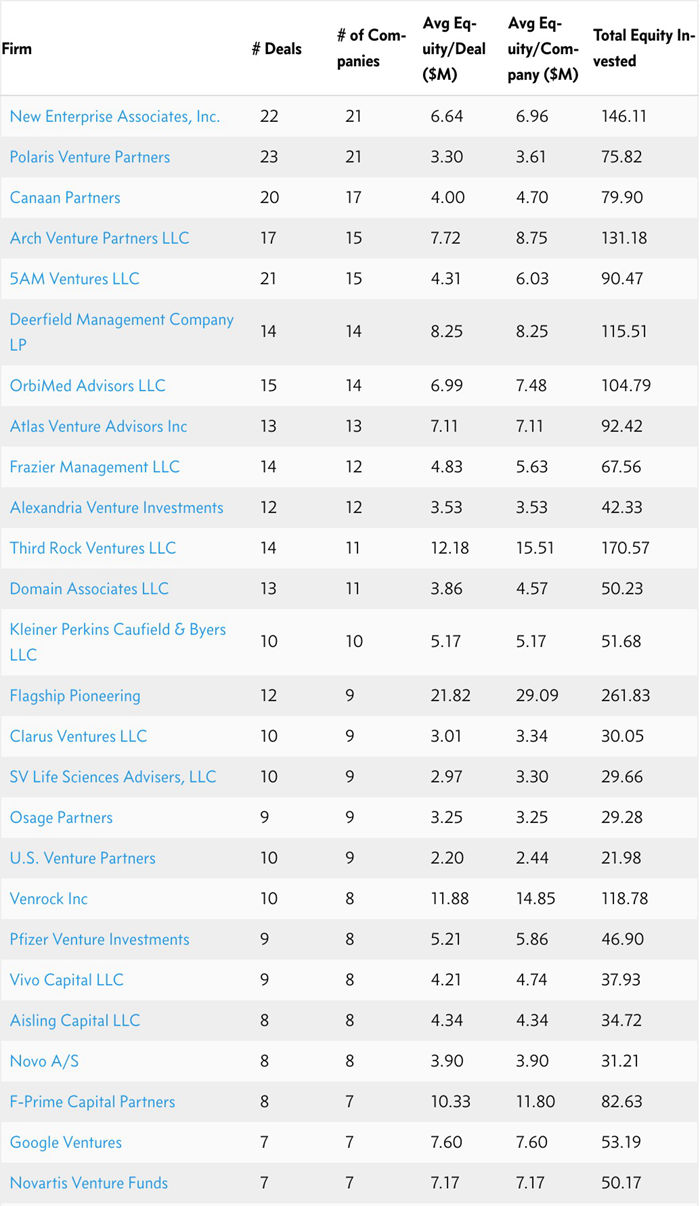
Ranked by Number of Projects
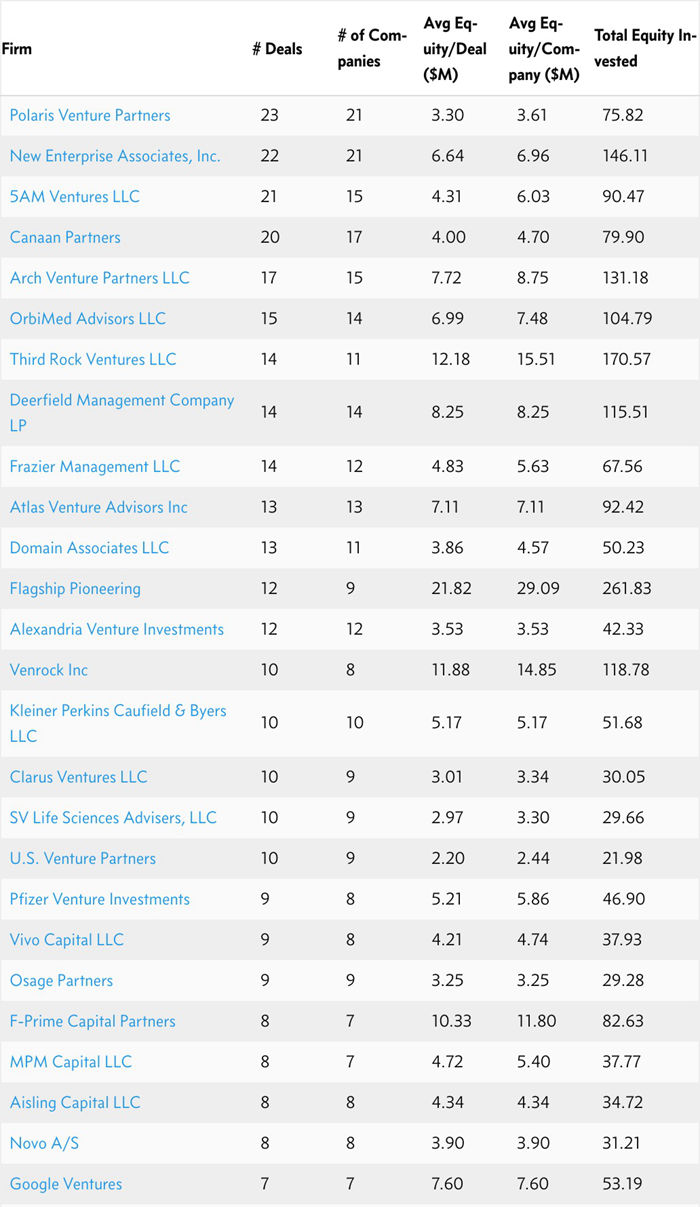
Ranked by Transaction Volume
Data Interpretation
Ranked by total investment amount, the top four are Flagship, Third Rock, NEA, and Arch Venture.Compared to last year, NEA’s ranking may have slipped slightly, but the life sciences team led by David Mott remains the most productive investment team and continues to serve as the lead investor in many major deals.
Ranked by total transaction volume, Polaris retains its top position for the second consecutive year, adhering to a strategy of pursuing multiple projects with smaller deal sizes.
Although all funds are highly interested in early-stage projects, the scale of assets under management is continuously expanding to increase investments in later-stage projects. For instance, Flagship recently launched a new $285 million fund dedicated to investing in mid- to late-stage companies.
Given that many portfolio companies encountered IPO difficulties in 2016, it is not surprising that the performance of multi-stage investors such as RA Capital slipped from fifth place in 2015 to 56th. However, funds like OrbiMed and Deerfield maintained relatively strong performance.
As expected, the total number of investment projects in 2016 declined slightly compared to 2015. The year 2015 was the most active year in the entire history of venture capital (VC) investment.Currently, influenced by the secondary market, investors are generally in a cautious and observational phase. The overall pool of capital available for investment in the market has not changed significantly compared to 2015, and the trend in the capital market is expected to remain clear and positive in the future.
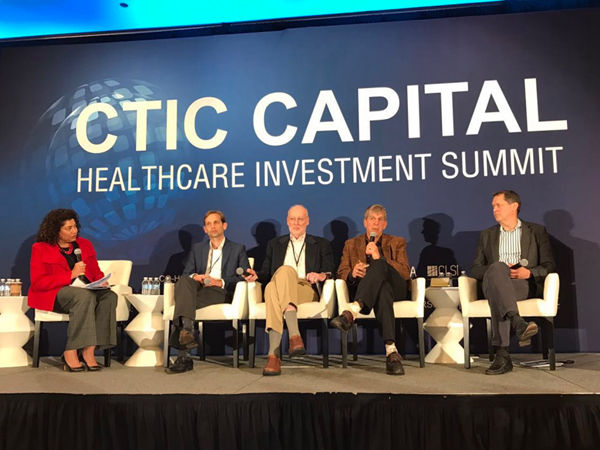
Moderator: Gini Deshpande (GD) - CEO of Numedii
Guest 1 (from left): David Berry (DB) – Partner, Flagship Pioneering
Guest 2: Ted Driscoll (TD) – Partner, Decheng Capital
Guest 3: Neil Exter (NE) – Managing Director, Third Rock Ventures
Guest 4: Skip Fleshman (SF) – Managing Partner, AMV
At the China-US Cross-Border Healthcare Investment Summit held on January 8, CTIC Capital was honored to invite partners from Flagship Pioneering (ranked first) and Third Rock Ventures (ranked second) on the aforementioned list to join the audience in discussing investment trends in the U.S. healthcare sector in 2017. Below is a summary of the highlights from the Q&A session:
Host GD: In 2016, U.S. healthcare investment was in full swing, with $7 billion in venture capital flowing into the healthcare startup ecosystem. Throughout the year, 500 new companies were established, 200 companies completed their IPOs, and 20 companies received FDA approval. As we enter the new year, how do investors view future trends?
NE: Although disappointed with the outcome of the presidential election, we remain broadly optimistic about the development of medical technology. Third Rock will continue to maintain its interest in making early-stage investments in startups possessing unique technologies. In 2017, more capital will flow into the United States, which will also help more companies go public.
TD: FDA management and policies are certain to change. We are still unclear about Trump’s intentions.
SF: There will be many changes in 2017, but the situation remains unclear at present.
DB: Although Trump’s return to power will bring significant impacts, there is no need for excessive anxiety. If the FDA relaxes its oversight of efficacy while maintaining safety standards for products, this could be beneficial for the development of new technologies.
Host GD: What is your view on the development of wearable devices?
SF: The beauty of wearable devices lies in their ability to digitize human health data. Although considerable technical accuracy remains to be validated, we are seeing steady improvements. The next major peak in development should be clinical-grade wearables. Despite the cumbersome regulatory requirements of the FDA, if personalized big data (such as blood pressure) can be leveraged by physicians or for clinical trials, the market potential is enormous. As the scale of data expands, there will also be a growing need for data scientists to enter this industry.
Host GD: Clinical trials are not easy; who will foot the bill?
SF: In the early stages, venture capital firms will certainly foot the bill. Nevertheless, this is undoubtedly beneficial to medical research as a whole. While the initial phase may be challenging, progress will become much smoother once specific hypotheses are validated and papers are published.
Moderator GD: When it comes to return on investment and insurance reimbursement, what are your views on the upcoming trends?
NE: Most companies invested in by Third Rock focus on therapeutic drugs or devices; however, we are also paying attention to companies in the diagnostics space (such as Foundation Medicine).
TD: I believe that medical products which are favored by physicians for their usability and stickiness, and possess strong potential for sustainable development, are more likely to gain the favor of insurance companies and deliver superior returns on investment.
DB: For a long time, we have focused more on pharmacological interventions than on medical devices. This is also the interest of our LPs.
Host GD: GRAIL is planning to raise $1 billion in its Series B financing round this January. What are your thoughts? (Note: GRAIL is a blood-based cancer liquid biopsy company founded by the DNA sequencing giant Illumina.)
NE: I am optimistic about this move. Grail has a strong track record in technology development. If successful, this financing round will soon yield an ROI of at least fivefold.
DB: Denali Therapeutics, Inc. raised $200 million in its Series A financing round in 2015, which also sparked significant controversy. Currently, Denali is thriving and has successfully secured Series B funding. Many predictions regarding these cutting-edge technologies have proven inaccurate. They require a tolerant capital environment to grow.
TD: I am skeptical about GRAIL's financing plan. After all, the industry is highly competitive.
Host GD: Do you have any advice for startups developing niche technologies?
DB: Startups of this type should place greater emphasis on selecting co-founders and investors, as well as defining their corporate development strategy. Rather than rushing to launch products, it is more advisable to establish a solid framework for both the company and its offerings at an early stage.
Host GD: How do you view the development of China's healthcare innovation market?
TD: Over the past fifteen years, with improving economic conditions and an aging population, many Chinese people have turned their attention to the healthcare sector. In fact, China’s modern healthcare market has grown two- to threefold compared to 1989. There has been extensive exchange and communication between China and the United States in terms of technology and capital.
Host GD: What is your perspective on China's digital healthcare sector?
SF: With the widespread adoption of precision medicine, digital health is poised for substantial growth. Many U.S. technologies and products will also enter the Chinese market for promotion. However, given the differences in national contexts, U.S. companies must not underestimate the importance of localization.
Host GD: When entrepreneurs present their products to you in search of financing, what do you most hope to hear? What content would be most appealing to you?
DB: Our primary areas of interest include immunology, the microbiome, and gene editing. We are open to understanding and supporting scientists’ novel ideas, even those that may not yet be fully feasible.
NE: Third Rock generally strives to understand and help the companies we invest in grow. For representatives of new companies seeking financing, I want to hear you tell me: Why are you different? I suggest you build good relationships with leading experts in the field. If you can get their recommendations, or even invite them to join your company's Scientific Advisory Board (SAB), it will definitely be a significant advantage for your fundraising.
TD: We are highly interested in the field of medical big data. In recent years, advancements in hardware have generated vast amounts of data. Leveraging deep learning to mine this data and assist physicians in making diagnoses will become a key focus. Data will not replace doctors, but it can serve as a valuable aid to them.
SF: We are highly interested in digital diagnostics, health metric monitoring, the application of deep learning in healthcare, telemedicine, and precision medicine.
Audience Question: With the repeated failures in the development of new drugs for Alzheimer’s disease, should we continue to strive?
NE: Will we continue to invest in R&D? The answer is yes. Should we continue to invest in R&D? The answer is also yes. This is a scientific challenge that we will ultimately overcome.
TD: Many hypotheses regarding Alzheimer’s disease remain to be validated. For instance, one study identified oral pathogens in the brains of patients with Alzheimer’s disease. We shall wait and see.
CTIC Capital is an investment advisory firm based in Silicon Valley, USA, specializing in financing and mergers and acquisitions (M&A) within the healthcare and TMT (Technology, Media, and Telecommunications) sectors. Leveraging its extensive cross-border network and a robust team of experts from China and the United States, CTIC Capital has successfully facilitated fundraising for numerous U.S. companies in the healthcare and TMT industries. With high-quality project resources and rich industry experience, CTIC Capital is the ideal partner for domestic investment funds and enterprises seeking overseas projects.