

The Opioid Divide: How America's Pain Medication Debate Is Leaving Patients in Agony

Dr. Sean Mackey oversees the “Pain Management” program at Stanford University.
For Thomas P. Yacoe, the word “pain” is “terrible”; Leah Hemberry describes it as “constant fear”; for Michael Tausig Jr., the horror has become indescribable.
The three individuals above are patients suffering from chronic pain. However, what they describe is not merely physical agony, but rather the “war” over analgesics within their respective medical communities—communities that threaten to restrict their continued access to pain medication. This distress has extended into their work lives, their interpersonal relationships, and, most importantly, their overall health.
The patient had to discontinue the medication.
Two years ago, 27,000 people in the United States died from prescription opioid-related causes, leading to severe restrictions on physicians’ and regulators’ access to certain medications, such as OxyContin and Vicodin. However, as the pendulum swung in the opposite direction, the adverse consequences emerged: many patients who genuinely required these medications for pain management reported feeling abandoned by society.
Doctors cannot agree on how to help them alleviate pain.
Dr. Daniel B. Carr, President of the American Academy of Pain Medicine, stated, “There is a civil war within the pain management community today. While some teams believe that the primary goal of pain treatment is to reduce opioid prescriptions, others argue that we should not stand by and ignore individuals suffering from disability, distress, and chronic pain.”
Pain management experts say that this war offers no benefit to patients.
“The debate in the field of pain management has become so intense that it has frightened many people,” said Dr. Sean Mackey, head of the Stanford Pain Management Program.
“But the problem is, although we all want things to be black and white, we don’t want to treat trivial matters equally. Pain management is just such an incredibly trivial issue.”
Such an incredibly trivial matter is of great importance to someone like Tausig. Now 43 years old, he has been unable to work normally or maintain social relationships since his fifth spinal reconstruction surgery in 2008 left him with chronic pain.
When the parent company of the pharmacy where he frequently purchased painkillers reset its opioid distribution limits, forcing him to seek out new suppliers, he chose to stop taking the medication. “Those three days were the worst of my life,” he said. “I wandered around the house every night, my legs trembling uncontrollably, and suffered from relentless insomnia that left me no respite from the agony.”
Regulators and healthcare industry leaders have stated that they will continue to strengthen oversight of opioid controls, and the incoming president has also indicated thatHe may further restrict the distribution of opioids, a move that has deepened Tausig’s concerns.。
“It’s as if God were punishing me, placing fear directly upon me.”
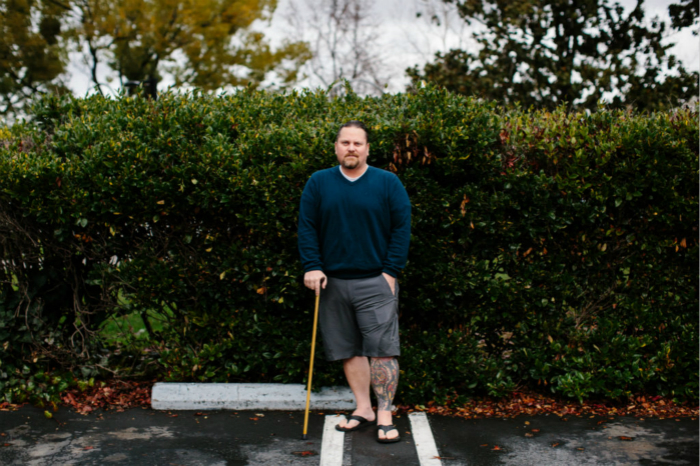
In 2008, five spinal reconstruction surgeries left Michael Taussig in constant pain, unable to work or socialize.
Both parties lack compelling evidence to persuade each other.
The medical community’s “war” on painkillers erupted in late 2015, when The New England Journal of Medicine published a commentary in which two physicians argued that patients with chronic pain should not focus on reducing the intensity of their pain, but rather on addressing the emotional underpinnings reflected by such pain.
Drs. Jane C. Ballantyne and Mark D. Sullivan, the authors of these commentaries, argue that patients should pursue “coping and acceptance strategies” for pain, primarily to reduce pain-related suffering, with only secondary emphasis on reducing pain intensity.
They believe that patients who focus primarily on reducing pain intensity tend to increase the dosage of their opioid medications, a practice that will subsequently worsen their quality of life.
On the NEJM website, the comment section is flooded with heated debates that would typically be found only on YouTube—what we might call “flame wars.” These comments no longer resemble what one would expect to see in the pages of the nation’s premier medical journal. Some commenters accuse the authors of lacking compassion, while others praise the authors’ perspective as a healthy approach to preventing addiction to painkillers.
However, these comments also reveal from another angle that a fundamental issue in the debate over opioid therapy is that neither side has sufficient evidence regarding the benefits or harms of long-term use, as few such studies exist.
Some studies have identified a range of adverse effects associated with the addictive use of analgesics. A study led by Mellar P. Davis and Zankhana Mehta, physicians specializing in respiratory disease management, indicated that the adverse effects of opioid addiction include high-risk symptoms such as depression, anxiety, cognitive impairment, and sleep apnea. Additionally, according to a survey of physicians working within the Geisinger Health System, patients with pulmonary diseases are at a higher risk of mortality when their treatment regimens include opioids.
Mike from Stanford University believes that these risks are worth our attention and are also crucial. However, he also points out that nearly 15,000 people die each year from anti-inflammatory drugs like ibuprofen, yet this issue seems to have gone unnoticed by the public.
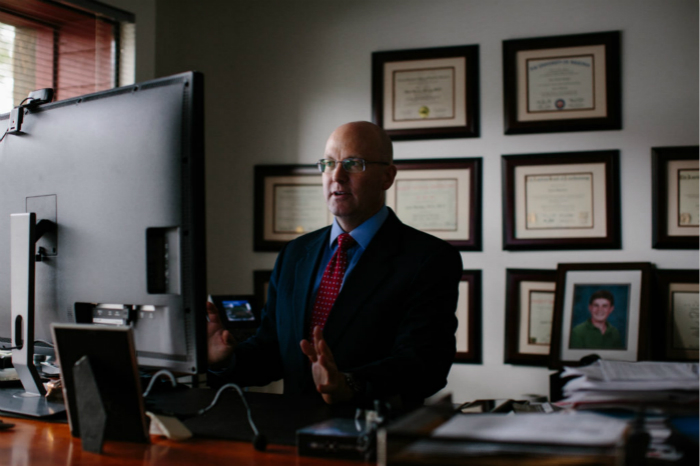
Mackey stated that physicians trained at the Stanford Pain Center are increasingly apprehensive about prescribing opioid medications.
The Impact of Opioid Addiction Remains Unknown
Mackey faces a major exam: he will be seeing an 81-year-old physician with a back injury who is using opioids.
The 81-year-old physician agreed to participate in the study under conditions of anonymity. He stated that he had regularly cycled to work until recently, when his degenerative spinal condition suddenly worsened. Meanwhile, the surgery he underwent in October provided him no relief. Now, he told Mackey, if he wishes to get out of bed and move around, he must take five opioid pills at dawn and then sleep for another hour and a half before rising.
The physician stated that he also wished to find alternative approaches to address his back problems, but without analgesics, he was unable to think clearly.
Mackey spent nearly 30 minutes chatting with him, discussing the scans, symptoms, and prior treatments. Following the consultation, the physician scheduled a follow-up appointment for January, by which time the results of another set of tests would also be available.
After lunch, Mackey carefully reviewed the case.
“Do you see any meaning in his behavior of seeking pain medication?” he asked. “Is he trying to sell it on the street, or attempting to obtain some synthetic fentanyl? Not at all. All he wants is to restore his body’s normal functioning so that he can continue working as a physician who heals and saves lives, while also having a life of his own.”
Mackey is also uncertain whether opioids caused the confusion. The patient’s cognitive issues may have resulted from non-opioid medications taken before bedtime; therefore, it would be incorrect to conclude that opioids might harm him without first exploring other possibilities. Without these analgesics, the 81-year-old physician’s pain would become more severe, potentially leaving him bedridden.
“If you stop getting out of bed and moving around at the age of 81, it represents a significant decline in vitality,” he said.
Mackey, the former president of the American Academy of Pain Medicine, helped build Stanford’s pain center into one of the most comprehensive and well-funded pain research institutions in the United States. However, he noted that physicians trained there are increasingly apprehensive about prescribing opioid medications.
“In many cases, these experiments are very encouraging, but I would like to see a more comprehensive and balanced approach,” he said. “Opioids are a tool—they are usually my fourth- or fifth-line option.”
Mackey recalls one of his patients whose foot was crushed in an accident. Despite undergoing ten surgeries, the patient’s “burning, terrifying, painful” memories of the incident were not alleviated. To this day, the patient remains dependent on opioids.
“People will say, ‘This guy is so deeply entrenched in opioid dependence that he can’t extricate himself; you have to pull him out of this vortex,’” Mackey said. “But you know what? He still gets up on time every morning to go to work and completes his tasks. He has lived this way for many years, so he wants to try everything possible first to maintain this lifestyle.”
Drug Dependence May Be a Last Resort
Some of Mike's colleagues share similar views.
Dr. Anna Lembke works with Mike at Stanford University’s Pain Clinic and serves as the Director of Stanford’s Dual Diagnosis Addiction Medicine Clinic. Last year, she published a book on the opioid crisis titled: “Dopamine Nation: Finding Balance in the Age of Indulgence.”
Lembke believes that even after the cause of pain has been eliminated, long-term use of opioids may still cause you to feel pain. She says that some patients, even though they no longer have physiological pain, often experience the same painful effects if they endure opioid withdrawal.
“This is a scenario we have observed time and again in numerous patients,” she said.
Lembke believes that chronic pain patients who take opioids long-term may never be able to break their dependence on the drugs and may require permanent medication doses, such as Suboxone, which is typically administered regularly to individuals with opioid use disorder.
However, for chronic pain patients who have not yet started using opioids, she said that these patients should only take painkillers intermittently, “about every three days,” to avoid addiction.
“American culture today seems to have become less tolerant of pain,” says Lembke.
“Whether patients undergoing surgery or women entering labor, they exhibit an exaggerated response to pain. Meanwhile, the contagious nature of pain heightens anxiety in others, making the experience worse than the pain itself,” she said. “We are more afraid of the process of enduring pain than of the pain itself.”
Mackey transformed Stanford’s Pain Center into one of the most comprehensive and well-funded pain research institutions in China.
"Those who experience chronic pain say that many of the viewpoints mentioned above further encourage some clinicians, pharmacists, and other healthcare institutions to treat them like addicts and criminals during their treatment."
Hemberry is a 36-year-old multimedia specialist based in Leavenworth, Washington. She has Ehlers-Danlos syndrome, a connective tissue disorder, and trigeminal neuralgia, a debilitating neurological condition for which she occasionally takes opioids to manage pain.
Upon learning about Lembke’s recent interview on NPR, she felt as though a part of her had been stripped away. “In fact, every patient enduring pain is, to some extent, an addict and a failure,” said Hemberry.
Last March, the Centers for Disease Control and Prevention (CDC) issued guidelines on opioid prescribing. These guidelines focus on preventing patients being treated for pain from developing drug dependence or even addiction. They include strict warnings regarding opioid diversion and drug transference, encompassing recommendations against the use of opioids for certain chronic pain conditions.
For Hemberry, these guidelines seem reasonable. “But many doctors and administrators have adopted an overly rigid ‘no opioids’ stance,” she said, “and these doctors and administrators have also implemented unusually harsh enforcement measures.”
“What people forget is that those who wish to try opioid medications for pain management are often left with no choice but to do so after all other possible avenues have been exhausted.”
This past winter, Hemberry recalled visiting the emergency room for a migraine, a type of pain she experiences frequently. She was seeking saline infusion therapy—one of the few treatments that can alleviate her suffering—rather than requesting opioid medications.
However, the nursing staff still criticized her medication regimen, stating that she was taking too many unnecessary medications, even though her daily medicines were not narcotics. She then turned her head and began to sob.
Many other patients have stated that numerous healthcare professionals similarly lack compassion.
“What people forget is that those who end opioid pain management are usually individuals who have tried every other viable option and failed,” said 61-year-old Yacoe, who suffers from chronic migraines. “For decades, I have struggled to stay away from opioids because they truly represent our last resort.”

The Ward of the Stanford University Center for Treatment of Back Pain
Causes of the Opioid Crisis
Some clinicians began to trace the early causes of the opioid crisis, which were not what we typically assume: the pharmaceutical industry’s marketing of controlled-release morphine tablets, but ratherA 1986 Study by Respiratory Therapists at Memorial Sloan Kettering Cancer Center on 38 Non-Cancer Patients。
Most patients were treated with low daily doses of oxycodone, methadone, or levofloxacin (less than half the starting dose generally recommended by surgeons). Of these, 24 patients reported acceptable pain relief, while two patients experienced so-called medication "management" issues (though both had a history of substance abuse).
According to Professor Carr of the American Academy of Pain Medicine, the conservative opioid therapy approach used in their studies, along with the modest benefits demonstrated in these reports, reflects the current goals and future expectations of many physicians.
But he said that more and more people are being forced to bear the so-called “zero-tolerance policy.”
“Because if a patient does not have adequate opioid antagonists, they will experience withdrawal symptoms,” said Carr, who is also the founding director of the Pain Research, Education and Policy Program at Tufts University.
Other experts pointed out,As opioid restrictions have tightened, healthcare systems and the insurance industry have made almost no effort to address opioid addiction., such as helping more doctors learn how to assist patients in managing pain, or how to enable patients to access alternative therapies。
In some cases, patients seeking treatment for their pain have turned to illicit street drugs, such as synthetic fentanyl; in more severe instances, some have chosen to end their own lives. (In a recent high-profile case, an individual who died by suicide left a notable message in his will, stating that he could find no relief for his chronic pain. Meanwhile, among the approximately 20 patients interviewed for this article, at least two indicated that they had considered suicide as an extreme measure due to their suffering.)
Everyone hopes for a reduction in opioid addiction, but patients like Tausig’s do not want to be forced to suffer as a result.
Tausig, a single father of two teenagers, says he must fill out a medication prescription form every month, and each time he worries that the prescription will be denied.
Whenever he needs to meet a new pharmacist or clinician, he dresses neatly and subtly conceals his tattoos. He believes that if doctors see his tattoos, it may lead to bias, or even cause them to view him directly as an addict.
“The war over painkillers in healthcare, despite the involvement of government regulation, has no clear end in sight,” said Tausig. “We only know that the alternatives to painkillers are worse.”
“Some places of comfort can overwhelm a single father struggling on the brink of despair; others in such pain are not at fault—they simply wish to get through the day with less suffering.”
Source: STAT; Author: Bob Tedeschi; Compiled by VCBeat.