

China's Health Food Market to Add RMB 100 Billion Amid Consumption Upgrade: Industry Reorganization and Transformation Underway
With the rapid rise in consumer income and health awareness, coupled with state support for the broader health industry, China’s health supplement market is poised for significant growth opportunities.It is estimated that China’s health supplement market will expand by RMB 100 billion over the next five years. On one hand, demand is growing rapidly; on the other, the industry is undergoing swift transformation: consumers are becoming more sophisticated and shifting their consumption habits, traditional distribution channels are being reshaped, and the internet and digitalization are altering how companies engage with consumers and create value. Meanwhile, new competitors continue to enter the market, driving innovation in business models. We anticipate further mergers and acquisitions, which will reshape the competitive landscape. To stand out in this increasingly fierce competitive environment, enterprises must grasp industry trends and embrace the opportunities and challenges of the new era with a proactive and open mindset.
China's Health Food Market Experiences Rapid Growth and Further Standardization
# The Chinese Health Food Market Sees Rapid Growth in Demand
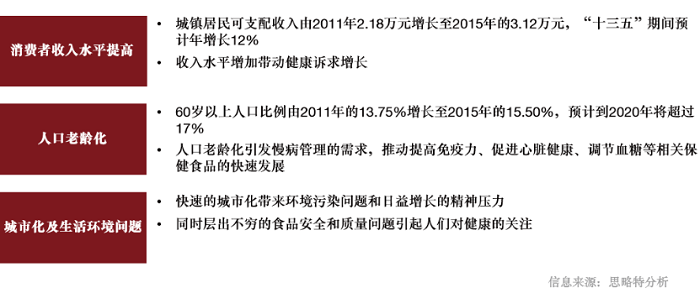
In recent years, the rise in national income levels, the increased demand for chronic disease management driven by population aging, and growing health concerns stemming from urbanization and environmental issues have become key drivers of the growth of China’s health food market (see Figure 1). Health and nutritional products can be categorized into health foods and functional foods based on their regulatory standards and intended uses. Health foods, identified by the “Blue Hat” symbol, are authorized to promote approved health benefits and are clearly recognized by consumers as having distinct health-promoting properties and evident functionality. Functional foods, such as Hericium erinaceus (lion’s mane mushroom) biscuits, are regulated under general food standards and may only promote the benefits of their ingredients, not specific health functions. Consequently, consumer perception of their health-promoting efficacy is less clear and less widely acknowledged compared to that of health foods.
Figure 1: Drivers of the Development of China's Health Food Market
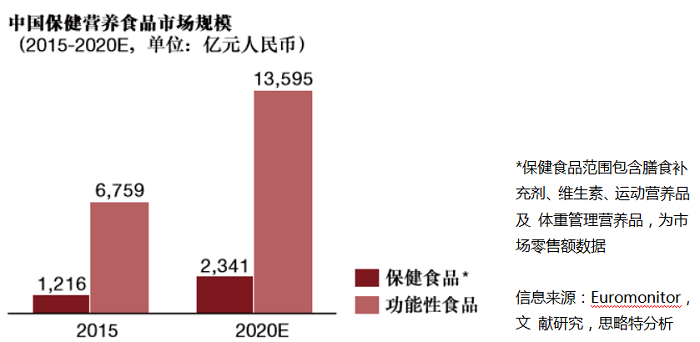
Strategy& projects that China’s health supplement market will expand by RMB 100 billion over the next five years, while the functional food sector will surpass the RMB 1 trillion mark (see Figure 2).
Figure 2: Market Size of Health Supplements and Functional Foods in China
Market Rapidly Standardizes, Promoting Healthy Industry Development
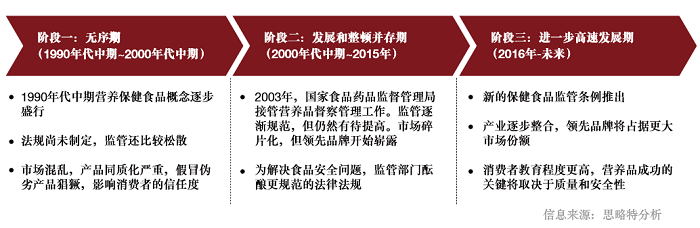
Since the mid-1990s, China’s health food market has undergone three stages of development (see Figure 3). With the successive introduction of a series of laws and regulations—including the Advertising Law of the People’s Republic of China (implemented in September 2015), the Food Safety Law of the People’s Republic of China (implemented in October 2015), and the Administrative Measures for the Registration and Filing of Health Foods (implemented in July 2016)—coupled with consumers’ rapid access to information via the internet, the health food industry will become further standardized, promoting its healthy and sustainable development.
Figure 3: Overview of the Phased Development of China’s Health Food Industry
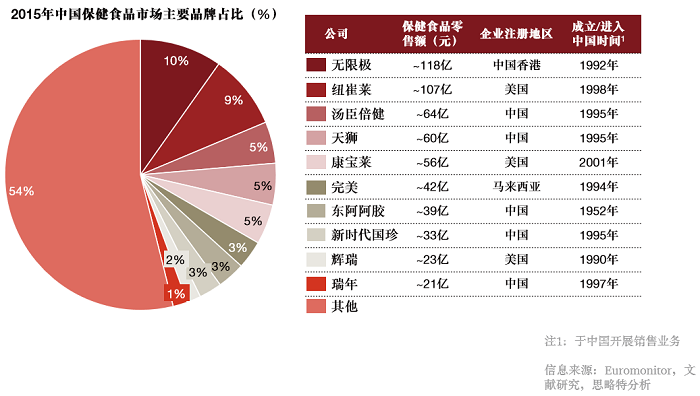
Leading brands are primarily direct-to-consumer, with no shortage of domestic brands.
Over the past two decades, numerous brands have emerged in China’s health supplement market, including a significant number of domestic Chinese brands. In 2015, amid a relatively fragmented health supplement market in China, well-known domestic brands accounted for approximately 25% of the market share, indicating substantial potential for future growth. Six of the top ten brands were direct-selling companies. Due to consumers’ currently limited awareness of health supplements, direct-selling firms leveraged their extensive and tightly knit sales networks to gain advantages in consumer education and product promotion, thereby capturing a larger market share. However, non-direct-selling enterprises, such as By-Health, have experienced rapid development in recent years by focusing on high-quality products, brand building, and channel expansion (see Figure 4).
Figure 4: Landscape of Leading Brands in China’s Health Supplement Market
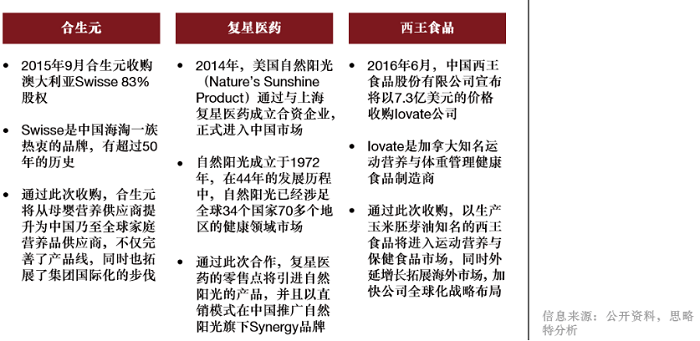
China’s rapidly growing health food market, characterized by the absence of a dominant monopolist, has attracted numerous new entrants, thereby intensifying industry competition. Chinese consumers lack confidence in domestically produced health foods and nutritional supplements; driven by concerns over food and drug safety, they prefer brands from Western countries. To align with consumer preferences, many new market entrants have adopted a “Chinese capital + foreign brand” model. Notable examples include Fosun Pharma’s joint venture with Nature’s Sunshine Products in 2014; Biostime’s acquisition of Australia’s Swisse in 2015; and Xiwang Foodstuff’s acquisition of Canada’s Iovate in 2016 (see Figure 5).
Figure 5: Acquisition Cases under the “Chinese Capital + Foreign Brand” Model
The Transformation of Chinese Consumers
In recent years, as China’s economy has slowed, its demographic structure has shifted, and technology has advanced, consumers have been undergoing a transformation, with their behavior exhibiting the following three major characteristics:
Consumption Upgrading: Gradually Rising Expectations for Quality of Life
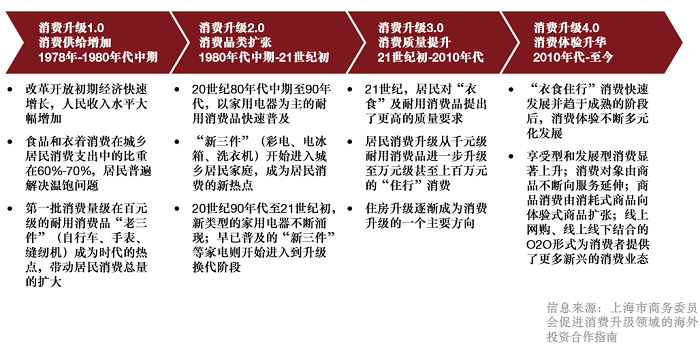
Based on differences in primary consumption characteristics, the process of consumer upgrading in China can be divided into four stages. During Stages 1.0–3.0 of consumer upgrading, consumers experienced rapid, multi-dimensional upgrades in spending on basic necessities—clothing, food, housing, and transportation—with significant increases in the supply volume, variety, and quality of consumer products. In recent years, fueled by the booming outbound tourism market and enhanced international information transparency brought about by the internet, Chinese consumers have continuously broadened their global perspectives and become increasingly influenced by foreign products and lifestyles. Under the dual influence of their rich consumption experiences and expansive global outlook, consumers’ expectations for product and service quality have risen steadily, marking the entry into Stage 4.0 of consumer upgrading: the sublimation of consumption experience. In this stage, the central theme of consumer upgrading within the health supplement industry is product quality.
and the enhancement of services (see Figure 6).
Figure 6: The Process of Consumption Upgrading in China
Advocating a Healthy Lifestyle
As China’s economy continues to grow at a high speed, the quality of life for its citizens has improved unprecedentedly, with ordinary people’s lifestyles transitioning from mere subsistence to a health-oriented model. In recent years, consumers’ awareness of health and wellness has deepened, leading to rapid growth in spending on healthy lifestyles. In terms of diet, consumers are increasingly seeking multifunctional foods that not only meet nutritional needs to the greatest extent but also enhance vitality, combat aging, and help maintain body shape. Low-calorie, low-fat, and low-sugar products have gradually become popular trends, while “green,” “natural,” and “healthy” have become the positioning strategies for many food brands. Beyond regular diets, consumers are also increasing their investment in personal health, including expenditures on health supplements, fitness activities, and healthy home products. These new trends in health consumption are bringing significant development opportunities to the health supplement market.
E-commerce and Social Media Deeply Integrated into Daily Life
China’s e-commerce market surpassed that of the United States in 2015, becoming the world’s largest online retail market. In 2014, China’s mobile phone usage rate also exceeded that of the U.S., driving a significant shift of online sales to mobile devices. During the 2015 “Double 11” shopping festival, Alibaba’s online sales reached $14.3 billion, a 60% increase from 2014. The most significant change was the substantial rise in transactions conducted via mobile devices, with 69% of all transactions completed on mobile platforms, representing a 42% increase compared to 2014. According to PwC’s 2015 Total Retail Survey, nearly one-fifth of Chinese consumers shopped online daily, whereas only 7% of respondents in the global sample reported daily online shopping. Meanwhile, driven by the widespread adoption of the internet and consumption upgrades, Chinese consumers have extended their shopping activities to overseas markets, making cross-border e-commerce, or “haitao” (overseas online shopping), an integral part of many consumers’ lives. Research by Big Data-Research estimates that the scale of China’s haitao market reached RMB 240 billion in 2015, a 60% year-on-year growth, with the number of haitao shoppers rising to 24 million. Social media is exerting an increasingly significant influence on Chinese consumers’ online shopping behavior. The Total Retail Survey indicates that 63% of Chinese respondents are influenced by “reading reviews, opinions, and feedback” when shopping online. E-commerce and social media have become deeply embedded in consumers’ daily lives, bringing about profound disruption to the strategies and operations of traditional offline health supplement companies.
Future Development Trends and Opportunities in China’s Health Food Industry
Consumer transformation continues to disrupt traditional industries and drive industry-wide change. Strategy& believes that the future of the health supplement industry will exhibit three major trends: channel models placing greater emphasis on experience and service, the rise of online shopping consumer groups, and diversification of marketing models.
Channel Models Increasingly Focus on Experience and Service
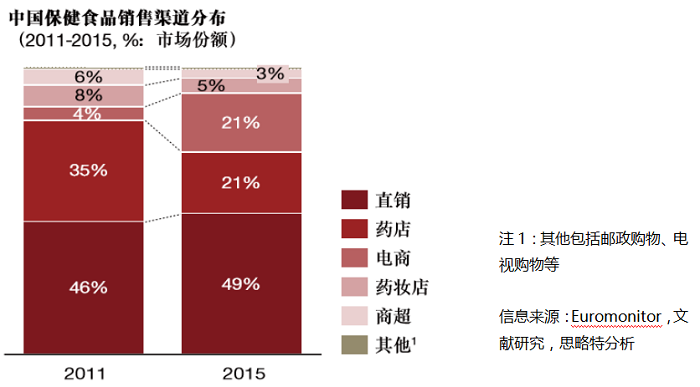
Currently, sales channels for health supplements are categorized into direct selling, pharmacies, e-commerce, and supermarkets/hypermarkets, among others. Direct selling remains the predominant model for health supplement sales. Meanwhile, the e-commerce channel has experienced the most rapid growth, expanding from RMB 3.4 billion in 2011 to RMB 25 billion in 2015, with a compound annual growth rate (CAGR) of 65%. In 2015, its market share was nearly equivalent to that of pharmacies, the second-largest sales channel (see Figure 7).
Figure 7: Distribution of Sales Channels for Health Foods in China
In the health supplement market, where product differentiation is increasingly marginal and competition is intensifying, companies must shift from merely providing products to offering comprehensive solutions. Both direct-selling and non-direct-selling health supplement enterprises need to capitalize on the rapidly growing e-commerce channels while enhancing consumer experience and delivering diversified services within these channels, thereby securing a more advantageous position for survival and development.
Offline sales.Products are primarily sold through non-digital channels, such as one-on-one sales by direct selling agents and offline distribution in pharmacies, supermarkets, and drugstores. Currently, offline sales remain the primary channel for health supplements. Leading health supplement companies have begun enhancing consumer experiences through experience stores in these offline channels. Amway, a leading direct selling company, has recently launched its “Experience Strategy,” aiming to create modernized experience stores. By 2015, Amway had established 28 offline experience facilities across China, including three large-scale experience centers in Shanghai, Shenzhen, and Chengdu. At Amway’s experience stores, customers can observe the growth process of green plants used to produce protein powder drinks, enjoy free physical constitution assessments, and participate in food preparation demonstrations. Tongrentang, a time-honored brand in China’s traditional Chinese medicine industry, has also opened various types of offline experience stores, including comprehensive flagship experience stores, community digital stores, and specialized stores, to enhance the consumer shopping experience. Offline experience stores not only improve customer service experiences but also provide integrated promotion of products, brands, and corporate culture, thereby achieving marketing and promotional objectives.
Online Sales.Products are primarily sold through digital channels. With the explosive growth of online shopping, numerous health supplement brands have launched e-commerce operations, regarding e-commerce as a key channel for future development. Amway, a direct-selling enterprise, leverages the internet to enhance efficiency, connect with customers, and improve the entrepreneurial experience for its members. Amway has established a digital matrix comprising 28 portals, Weibo accounts, WeChat official accounts, and mobile apps to build a comprehensive online service system. It has also invited more than 20,000 direct sales representatives to set up mobile studios, providing customers with efficient and convenient services. By-Health, a non-direct-selling enterprise, has made e-commerce a core strategic focus for future growth, establishing an online business division as one of its three major business segments. In terms of products, By-Health is actively developing internet-specific sub-brands and introducing overseas brands to mitigate and minimize conflicts of interest between online and offline sales. Regarding online channels, in addition to setting up flagship and authorized stores on major e-commerce platforms such as Taobao, Tmall, and JD.com, By-Health has invested in and taken equity stakes in the cross-border e-commerce platform Shenzhen Youkeshu, thereby strengthening its competitive advantage in e-commerce channels.
Diversified Services.Currently, leading brands are actively expanding their e-commerce operations while beginning to offer diversified services to consumers, including pre-sale, in-sale, and after-sales consultations, consumer education, and chronic disease management. Take By-Health, which has seen rapid growth in recent years, as an example. The company has not only integrated resources to build the O2O “Nutritionist” membership platform and provide online health manager services, but also enhanced customer experience by acquiring diversified service capabilities through investments and mergers and acquisitions. In 2015, By-Health invested in Beijing Taogu Company to expand its mobile healthcare-related business; invested in “Dayima,” an app focused on women’s health; and invested in Shanghai Fandi Biotechnology Co., Ltd. to develop gene sequencing services. These initiatives cover various niche segments of health management, thereby strengthening By-Health’s capacity for diversified services.
In fact, the boundary between online and offline sales has gradually blurred. In the future, these two sales channels will not be in a relationship of vicious competition; rather, they will complement and reinforce each other to better serve consumers. The development of mobile devices, such as the internet and smartphones, has built a bridge connecting online and offline channels. The O2O (Online-to-Offline) model, which has gained popularity in recent years, is an effective demonstration of the synergy between these two channels. Online channels meet customers' needs for accessing product information quickly and shopping efficiently anytime and anywhere, while offline channels allow customers to touch and try products. Moreover, the shopping environment and customer service provided by physical stores are irreplaceable by online channels.The richness of both online and offline channels has cultivated flexible shopping habits among customers: some prefer the one-stop convenience of online shopping; others like to experience products in physical stores before purchasing; some prefer to experience products in physical stores first and then buy online to take advantage of lower prices; while others prefer to quickly learn about product information online and then purchase in physical stores, valuing the quality assurance offered by offline channels. It is evident that offline and online channels complement each other. Ignoring either channel fails to meet customers' multidimensional shopping needs. Therefore, Strategy& recommends that health supplement companies seize the opportunities presented by online channels in the internet era, implement an omnichannel retail strategy, consolidate the existing advantages of offline sales models, actively expand into online channels, achieve synergy between online and offline operations, expand market share, and enhance corporate competitiveness.
The Rise of the Online Shopping Consumer Base
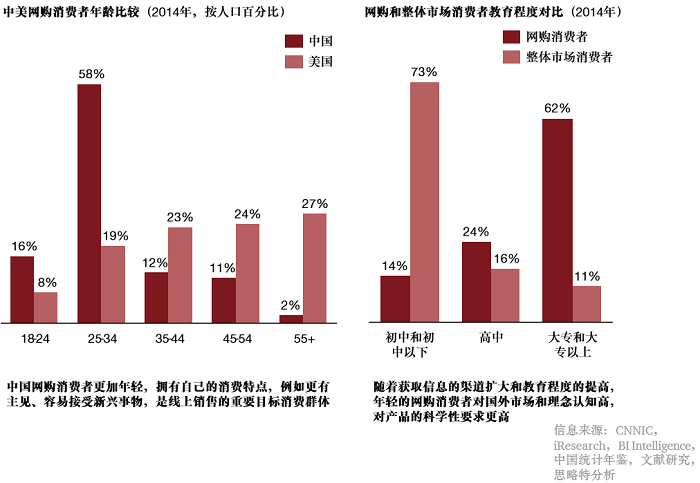
In recent years, with the booming development of e-commerce, online shopping has gradually become a preferred model for consumers. The newly emerged Chinese online shoppers have their unique characteristics: they are younger, better educated, and more rational in their consumption of health supplements (see Figure 8).
Figure 8: Age Comparison of Online Shoppers in China and the U.S., and Educational Attainment Comparison Between Online Shoppers and the Overall Consumer Market
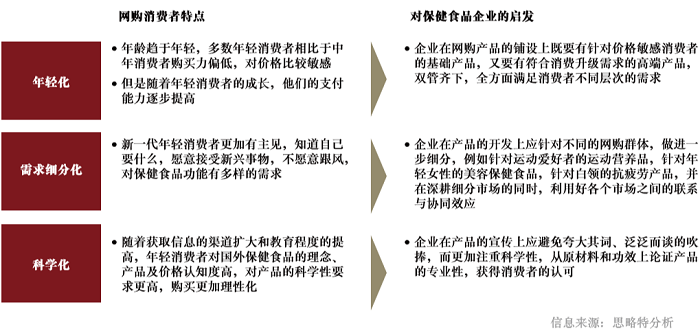
Faced with the emerging online shopping consumer demographic, health supplement companies must understand the factors influencing their purchasing decisions and meet their needs. Failure to promptly adjust products and services to align with consumer demands will result in a rapid loss of this customer segment. In contrast, enterprises with high market sensitivity and decisive execution capabilities will seize the opportunity to capture market share and consolidate their market position (see Figure 9).
Figure 9: Characteristics and Implications of the Online Shopping Consumer Demographic
Diversified Marketing Models
Consumers exhibit a higher acceptance of well-known brands when selecting health supplements, enabling prominent brand enterprises such as By-Health to achieve more rapid growth. In the future, consumer brand recognition and loyalty are expected to continue rising, while health supplement companies lacking strong brand support will be eliminated amid increasingly fierce competition. Therefore, enhancing brand awareness through marketing strategies is crucial for health supplement enterprises.
With the widespread adoption of the internet and digital technologies, traditional marketing methods can no longer meet corporate marketing needs in terms of efficiency and audience reach. The high-frequency use of social media and the proliferation of self-media have made digital marketing increasingly important. A key advantage of digital marketing is its ability to optimize campaigns through precise targeting based on the lifestyle and refined communication habits of specific target audiences. Leading health supplement companies have begun exploring innovative digital marketing strategies, including community-based marketing, micro-films, and WeChat marketing.
· Community Marketing
Since 2012, By-Health has established the “Nutritionist” platform, which was upgraded to the “By-Health Nutritionist Member Store” in 2014 to provide members with services such as health consultations and health assessments. By leveraging mobile internet resources through mergers and acquisitions, equity investments, and partnerships, the company has invested in Dayima (targeting women), Shanghai Zhending (targeting infants and young children), Taogu Technology (targeting patients), and Shenzhen Beitai (targeting the elderly and children). This has initially constructed a smart, closed-loop ecosystem for internet-based healthcare, forming an online health community centered around the “Nutritionist” platform.
·Microfilm
In 2012, Infinitus introduced the brand proposition “Believe in Your Limitless Potential” and produced three series of micro-films. These were distributed across major video platforms (such as Youku, Tudou, and iQiyi) and social media channels like Sina Weibo, supporting a three-month promotional campaign. Concurrently, a 60-second extended advertisement titled “Believe in Your Limitless Potential,” which distilled the essence of the three micro-film series, aired on China Central Television (CCTV) for one week, with approximately seven broadcasts per day.
· WeChat Marketing
Bycatching the wave of the debut of WeChat Moments ads, By-Health mobilized its employees and fans to change their profile pictures and nicknames to promote the brand, carrying out creative communication. This marketing approach was novel in creativity and very low in cost, achieving good marketing results. Well-known companies in various industries such as Boeing and Porsche also followed suit.
Meanwhile, big data on consumer attributes and purchasing behaviors collected through digital technologies enables enterprises to truly adopt a customer-centric approach and achieve more precise marketing. By analyzing big data, companies can continuously gain insights into customer needs and behaviors, facilitating personalized, real-time, one-on-one consumer interactions, and leveraging the precise targeting capabilities of big data across all stages of the marketing process:
· Develop personalized product portfolios. Design product and service offerings based on the characteristics and feedback of target customers to enhance appeal to specific segments.
· Support for Sales Representatives. Sales representatives leverage big data analytics to identify customer behavior patterns and provide targeted recommendations for products and services. Additionally, they can recommend products and services of potential interest to customers based on the product selection data of similar customers.
·Sales Representative and Customer Matching. Pairing is conducted based on the characteristics of different sales representatives and customer segmentation to enable targeted marketing and improve success rates.
U.S. health supplement giant GNC has adopted precision marketing strategies leveraging big data. GNC launched its Gold Card membership program to collect and analyze members’ purchasing habits, using insights from big data analytics to regularly send personalized letters and tailor product and service recommendations to members. In 2015, GNC had approximately 6.5 million active Gold Card members in the United States and Canada, accounting for 79% of sales at GNC’s company-operated stores. Meanwhile, data showed that sales generated by Gold Card members were three times those of other GNC customers. GNC’s sales figures demonstrate that targeted marketing driven by big data can effectively boost sales growth.
Strategy& believes that digital marketing is the trend of future development, as it not only reduces corporate marketing costs but also enhances marketing efficiency and success rates. Health supplement companies should promptly leverage innovative marketing methods brought by the internet era to build their brands and expand their market influence.
Conclusion
Amid the new macro-environmental shifts, China’s health supplement industry faces both opportunities and challenges in its future development. In this rapid and complex transformation, the still-maturing yet fast-growing Chinese health supplement sector will undergo a reshuffling of the competitive landscape, with accelerated industry consolidation and increasingly pronounced polarization among enterprises. Companies that seize the opportunities of the times, embrace industry changes with an open mindset, and promptly transform will stand out and emerge as industry leaders; whereas those that miss these opportunities will gradually lose market share and ultimately be eliminated by the tide of time.
Strategy& believes that both traditional enterprises and new entrants in the health supplement industry should transform their conventional development strategies and business models to align with evolving consumer preferences. Traditional companies in the sector should actively formulate internet-centric strategies, build core competencies around these strategies, and compete effectively against an increasing number of industry rivals. Meanwhile, new entrants should proactively challenge established business models, fully leveraging internet-driven innovation and disruption, strengthening brand building, and acquiring relevant capabilities through mergers and acquisitions.
Source: PwC Strategy&
Author: Sun Chao, Partner at PwC Strategy&