

Is the Innovative Medical Device Fast Track a Narrow Bridge? Insights from the Last 2016 Approved Device
By Huoshi Creation | Xing Xiao
In 2017, the “Priority Review Procedures for Medical Devices” officially came into effect. While it remains unclear whether this registration pathway will be smooth, examining the domestic approval landscape since the launch of the “Special Review Procedures for Innovative Medical Devices” in 2014 may provide valuable insights.
Recently, the China Food and Drug Administration (CFDA) announced the approval of the registration for valved pulmonary artery conduits, a cardiovascular implantable device. This may be the last innovative medical device to receive CFDA special review and market approval in 2016.
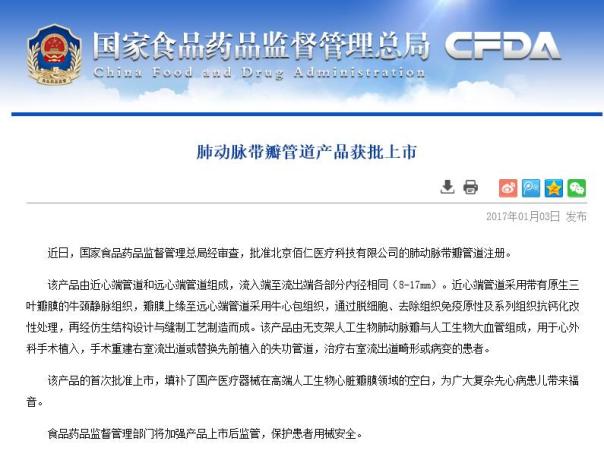
This product is another flagship offering from BaiRen Medical, in addition to its “tissue-engineered heart valves,” “valve annuloplasty rings,” and “surgical biological patches.” It not only represents a key project under the National 863 High-Tech Research and Development Program but also constitutes a major scientific and technological achievement of the National Science and Technology Support Program during the 12th Five-Year Plan period.
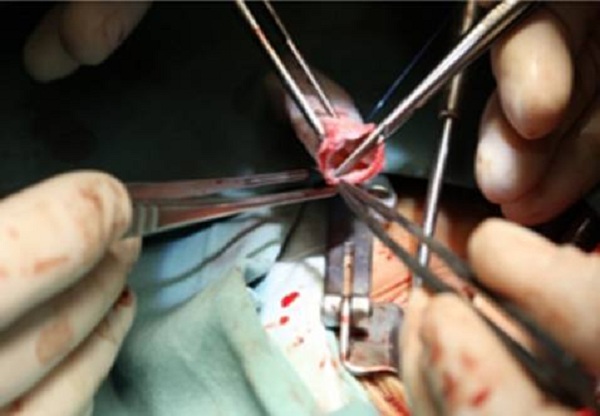
Valved pulmonary artery conduits are Class III implantable medical devices. Manufactured using healthy bovine jugular veins and bovine pericardium as raw materials, these products feature an internal structure resembling natural pulmonary valve leaflets. They are primarily used to reconstruct the connection from the right ventricular outflow tract to the distal main pulmonary artery and the left and right pulmonary arteries in pediatric patients with complex congenital heart disease (hereinafter referred to as "CHD").
Congenital heart disease (CHD) has remained the leading cause of death among children under five years of age in China for over a decade. Approximately one in every seven deaths in this age group is attributed to CHD. Complex CHD, in particular, with its low natural survival rate and significant therapeutic challenges, has long been a major concern for cardiac surgeons and pediatricians. Furthermore, valved conduits made from biomaterials represent a critical clinical necessity; patients require such products to survive. Historically, however, no comparable commercially available products existed, forcing reliance on grafts sourced from executed prisoners—a practice that was not only mismatched in terms of availability and specifications but also raised serious ethical concerns.
Therefore, the approval of this product not only fills a gap in the domestic and even global markets, but also provides a powerful tool for children with complex congenital heart disease to regain their lives. Its significance for the entire industry and all affected families is immeasurable.
Application Status Since the Launch of the Special Approval Channel
Since the release of the Special Approval Procedures for Innovative Medical Devices (Trial) on February 7, 2014, the special approval channel established by the China Food and Drug Administration (CFDA) for innovative medical devices has approved the market launch of numerous such products. This has played a positive role in promoting the adoption and application of new medical device technologies and fostering the development of the medical device industry.
In addition to the valved pulmonary artery conduit approved this time, other devices that received special review and approval from the China Food and Drug Administration (CFDA) in 2016 include innovative intraocular lenses and orthopedic surgical navigation and positioning systems. These devices were either the first of their kind among similar products or reached or even surpassed international standards for comparable devices, as detailed in the table below.
Innovative Medical Devices Approved through the CFDA Special Review in 2016
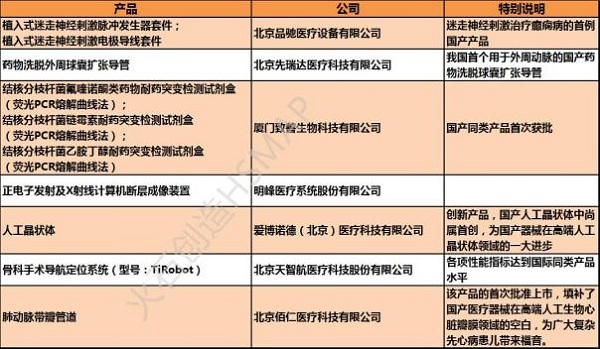
Data Source: HSMAP
Over the past two years, the number of products entering the special review procedure has increased year by year. With the implementation of the 13th Five-Year Plan and continuous innovation by Chinese enterprises in medical device research and development, this growth momentum is expected to continue.
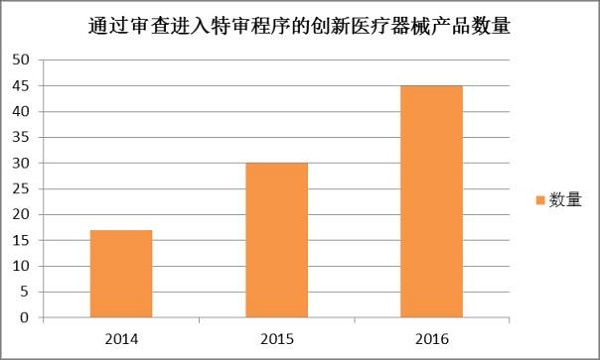
Data source: CFDA
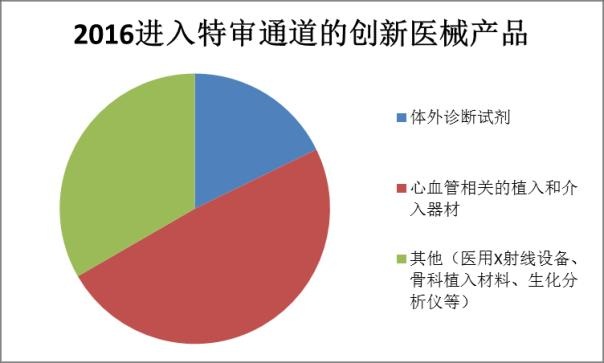
As of November 22, 2016, the China Food and Drug Administration (CFDA) had publicly announced 45 innovative medical device products that passed review in 2016. The total number of products entering the special review procedure throughout 2016 is expected to exceed 50.
Data Source: CFDA
Among these, cardiovascular-related products such as cardiovascular interventional devices and cardiovascular implants account for approximately half; in vitro diagnostic reagents also constitute about 17%, with the remainder including biochemical analyzers, patient monitoring systems, and other products.
Although the special review channel is tempting, it is not easy to navigate.
The special approval process for innovative medical devices has significantly shortened the time from application to registration completion compared with previous procedures. In the fastest cases, it takes just over two months from public notice to final registration. Such high approval efficiency has spurred unprecedented enthusiasm among enterprises to apply for innovative medical device approvals.
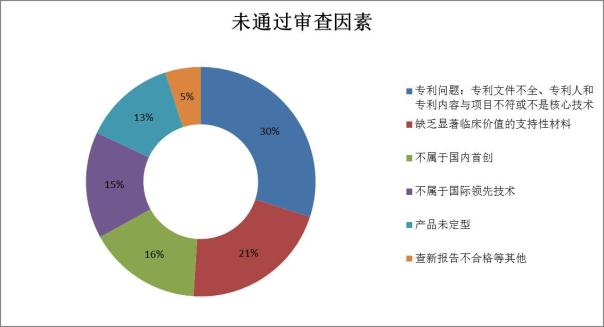
However, relatively speaking, the number of products that ultimately achieve successful registration remains few. According to official data released by the China Food and Drug Administration (CFDA) in 2016, as of the end of June 2016, the CFDA had received a total of 379 applications for special approval of innovative medical devices, completed reviews of 356 applications, and approved 68 products for entry into the special approval pathway for innovative medical devices, yielding an approval rate of 19.1%. Among these, only 16 products had ultimately received marketing authorization.
Source: Center for Medical Device Technical Review, National Medical Products Administration
In summary, the reasons primarily fall into two categories: 1. The product itself fails to meet the requirements stipulated by the special approval procedure; 2. The materials submitted by the enterprise are insufficient to demonstrate that its product complies with the requirements. Regardless of the specific cause, the low approval rate reflects underlying issues in China’s medical device sector and the broader healthcare industry, namely, insufficient innovation and a tendency toward short-termism.
Since special approval is being sought, the applicant must ensure its own qualifications are robust. Only by meeting the relevant provisions for innovative medical devices stipulated in the “Special Approval Procedures for Innovative Medical Devices (Trial)” can one successfully cross this rather narrow bridge.
So, what kind of medical devices can be considered “innovative”?
Reference to the "Special Approval Procedures for Innovative Medical Devices (Trial)" and the officially published reasons for failure to pass review, the definition requirements for innovative medical devices must comply with:
1. Legally hold invention patents for core technologies;
2. First of its kind in China;
3. Internationally Leading;
4. Significant clinical application value;
5. The product has reached its final design.
Once product compliance has been confirmed, comprehensive preparation of the submission dossier is essential, as all regulatory reviews are conducted solely on the basis of the materials submitted by the applicant, with no opportunity for supplemental submissions during the review process; therefore, it is imperative to ensure that the submission dossier is complete and thorough at the preparation stage.
Summary
With the implementation of the 2014 revised Regulations on the Supervision and Administration of Medical Devices and its subsequent supporting rules and regulations, the medical device industry has undergone significant transformation, imposing higher requirements on product registration filings by enterprises. Furthermore, the introduction of fee standards for medical device registration in 2015 further increased costs for these devices. Amidst this challenging situation, characterized by pressures from both regulatory tightening and rising costs, the Special Approval Procedure for Innovative Medical Devices offers an alternative solution. However, this does not constitute a shortcut. As the saying goes, “to forge iron, one must be strong oneself”; enterprises must strengthen their own capabilities to navigate this pathway successfully.