

New Horizon Health Partners with Zhejiang Society for Industrial and Applied Mathematics to Launch Community-Based Colorectal Cancer Screening Program

On February 4, initiated by Zhejiang Nuohui Health Technology Co., Ltd. and conducted by the Zhejiang Society of Mathematical MedicineThe “Community Colorectal Cancer Screening Program” was officially launched in Hangzhou. The program is led byLed by the Affiliated Hospital of Hangzhou Normal University and jointly implemented with eight hospitals in Hangzhou, Ningbo, Jiaxing, Huzhou, and other regions, this initiative aims to conduct large-scale screening for colorectal cancer and precancerous lesions among target populations. By integrating online and offline approaches and leveraging precise scientific methods based on molecular biomarkers, the program seeks to enhance the convenience and compliance of screening.
Colorectal cancer is the fastest-rising malignant tumor, now becomingOne of the Four Major Cancer Killers in China, posing a serious threat to human health. China accounts for 18.6% of the global incidence of colorectal cancer and 20.1% of global deaths from the disease,Both Rank First in the World, therefore, the prevention and treatment of colorectal cancer in China has global significance.
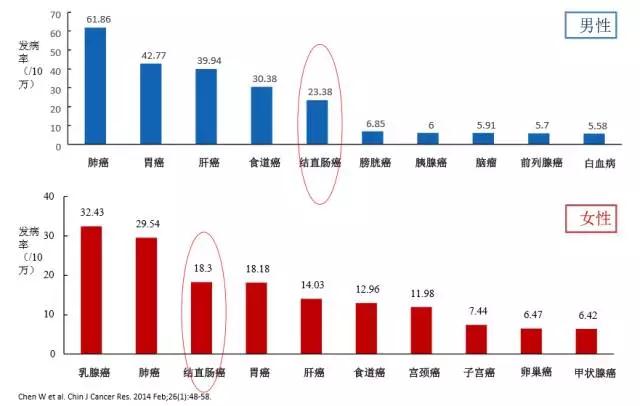
Beijing, Shanghai, Guangzhou, Hangzhou, and Shenzhen are major hotspots for colorectal cancer.
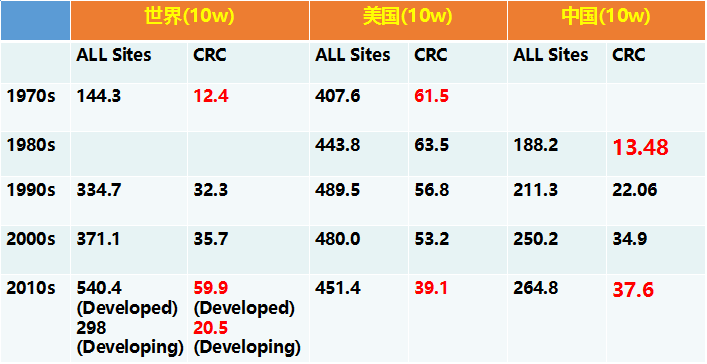
The incidence of colorectal cancer in China is rising rapidly at an annual rate of 4%, whereas in the United States and the United Kingdom, formerly hard-hit areas, rates are declining. The fundamental reason for this disparity lies in the insufficient emphasis placed on effective early screening for colorectal cancer.
“The Three-Year Action Plan for Cancer Prevention and Control in China” proposes to expand the coverage of cancer screening, early diagnosis, and early treatment.
Currently, across China, numerous renowned Grade 3A hospitals—including Peking Union Medical College Hospital, Peking University Cancer Hospital, the General Hospital of the Chinese People’s Liberation Army, the Second Affiliated Hospital of Zhejiang University School of Medicine, and the First Affiliated Hospital of Sun Yat-sen University—are either implementing or preparing to launch large-scale screening programs for early-stage gastrointestinal cancers in high-risk populations, generating significant social impact.
At the conference, numerous experts and scholars, including Professor Zheng Shu, Director of the Academic Committee at the Cancer Institute of Zhejiang University; Luo Hong, President of the Affiliated Hospital of Hangzhou Normal University; Dr. Ying Jie’er, Deputy Director of the Department of Medical Oncology at Zhejiang Cancer Hospital; Dr. Mao Jianshan, Deputy Director of the Department of Gastroenterology at the Second Affiliated Hospital of Zhejiang University School of Medicine; and Dr. Wang Kaifeng, Director of the Center for Tumor Diagnosis and Treatment at the Affiliated Hospital of Hangzhou Normal University, attended in person to comprehensively discuss the latest clinical research and academic advances in colorectal cancer screening from multiple perspectives.

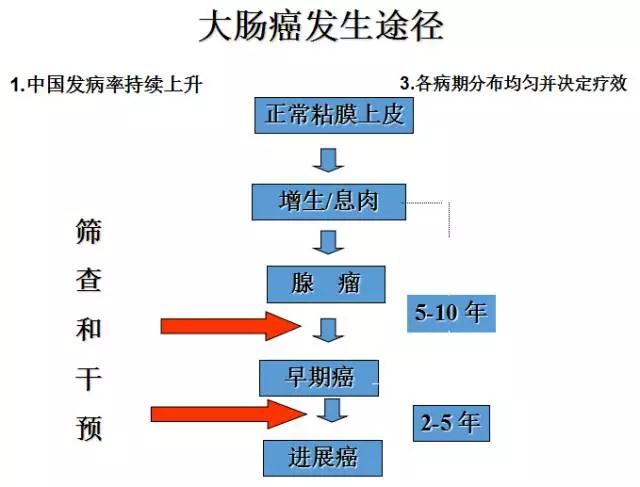
According to Professor Zheng Shu, Director of the Academic Committee at the Cancer Institute of Zhejiang University, the incidence of colorectal cancer in the United States decreased by 22% from 1975 to 2000.Of this, 50% is attributable to the implementation of colorectal cancer screening.; mortality rate decreased by 26%,53.2% benefited from colorectal cancer screening. It is estimated that the national colorectal cancer mortality rate in the United States in 2020 could be reduced by up to 50% compared with that in 1975.Survival rates in colorectal cancer patients are directly related to the timing of diagnosis.
But in terms ofIn the context of China's national conditions, it is required50It is unrealistic to perform colonoscopies on all individuals above a certain age; therefore, it is necessary to explore screening technologies and strategies suited to China’s national conditions, in order to improveCRCSpecificity in High-Risk Populations and Colonoscopy Detection Rate.
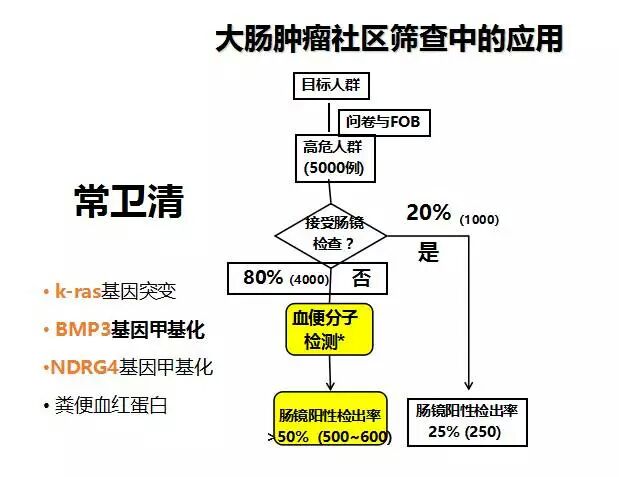
Professor Zheng Shu recommends improving colonoscopy compliance and tumor detection rates through molecular testing: In the target population, screening is conducted using questionnaires and fecal occult blood tests (FOBT). For high-risk individuals, molecular testing (fecal DNA testing) is recommended; those with positive results are classified as very high-risk, thereby enhancing colonoscopy compliance and tumor detection rates.
Meanwhile, based on the screening database of asymptomatic average-risk populations in China, a quantitative risk assessment mathematical model will be established to stratify the target population by risk level, thereby improving the quality of screening and colonoscopy and maximizing the cost-effectiveness ratio of colorectal cancer screening in China.
Green Channel for Colorectal Cancer Prevention and Treatment
CitationAccording to Wang Kaifeng, Director of the Center for Oncology Diagnosis and Treatment at the Affiliated Hospital of Hangzhou Normal University, the primary issue in current colorectal cancer diagnosis and treatment is the insufficient emphasis on effective early screening, with most patients presenting at moderate to advanced stages. This has directly resulted in substantial consumption of medical resources while yielding suboptimal therapeutic outcomes.
The “Community Colorectal Cancer Screening Program” is designed to address the current challenge of limited accessibility to early screening in China, aiming to provide tailored screening services for populations with varying risk levels through diverse, multi-dimensional screening approaches.
Community-based initial screening will adopt a combination of fecal occult blood testing (FOBT) and electronic questionnaires, fully considering comprehensive factors such as family history, dietary habits, smoking and alcohol consumption, emotional status, and body weight and waist circumference. Basic judgments will be made through risk analysis, followed by refined screening via colonoscopy or stool DNA testing (Changweiqing) based on the assessed risk level.
This community screening initiative aims to effectively increase the early diagnosis rate of colorectal cancer among participating residents and improve the survival rates of patients diagnosed through screening.
VCBeat Perspective
Our last contact with New Horizon Health was at the “West Lake Chess Match” forum, where the company launched its new products, “Changweiming” and “Pupu Tube.” What left a deep impression was a remark by Yan Dehua, Director of the Disease Control and Prevention Division of the Zhejiang Provincial Health and Family Planning Commission: “We were very interested in the products upon their release; their affordable pricing makes them easily acceptable to the public, which facilitates project promotion.”
Colorectal cancer is one of the four leading causes of cancer-related deaths in China. However, early screening for colorectal cancer has yet to achieve widespread adoption. This is partly due to the invasive nature of traditional colonoscopy and partly because the high cost of most early-screening products places them out of reach for the majority of the population. The “Community Colorectal Cancer Screening Program,” which progresses from initial screening via electronic questionnaires to refined screening following risk assessment, not only alleviates the financial burden on low-income individuals but also enables triage and stratification of users at pre-clinical or even pre-screening stages. This approach both improves access for low-income populations and effectively reduces pressure on hospitals and waste of medical resources.
Furthermore, the project will strengthen collaboration with public health institutions, general and specialized hospitals, and primary community healthcare facilities to establish a new-era cancer prevention and control system characterized by mass prevention and treatment, interconnectivity, and coordinated efforts across different levels of care. This initiative aims to promote the integrated development of cancer prevention and control efforts and advance the prevention and treatment of colorectal cancer in China.