

DNA Injection for Anti-Aging: The Maverick Gene Therapist’s DIY Experiment

Brian Hanley, who holds a Ph.D. in biology, had copies of genes injected into his thigh at his own request. This is the second case of unregulated gene therapy documented in MIT Technology Review—a procedure that carries risks but is embraced by a small number of daring individuals.They are attempting to leverage this approach to develop anti-aging therapies.。
This gene copy was designed and ordered through a company that researches and provides gene copies.Subsequently, the doctor inserted two pointed electrodes into his legs, and a strong electric current passed through his body, causing the muscle cells to open up and absorb new DNA.Genes injected into Hanley’s muscle cells will cause his body to produce more potent hormones, potentially enhancing his strength, endurance, and lifespan.
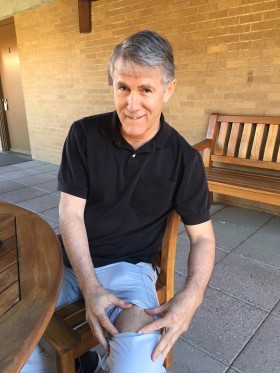
Brian Hanley displayed a tattoo on his thigh, marking the site of DIY gene therapy.
Hanley, 60, is the founder of Butterfly Sciences, a Davis-based company with Hanley as its sole employee.He had sought to enhance the physical condition of AIDS patients through DNA injections, but his proposal was met with indifference from investors.Afterward, he decided to be the first to try it. “I want to prove this therapy; I want to try it on myself first; I want to make progress,” said Hanley, who decided to conduct the experiment on himself.
Most gene therapies involve high-tech, costly trials conducted by large teams at top medical centers, aiming to cure rare diseases such as hemophilia.However, Hanley stated that gene therapy could also be applied to procedures such as liposuction or rhinoplasty, significantly reducing surgical costs, and may become easily accessible to everyone in the future.。
In a bid to extend their lifespans, some anti-aging enthusiasts are already injecting growth hormones, taking oral fullerenes or high doses of vitamins, sometimes even disregarding mainstream medical advice. Unregulated gene therapies may now be the next research frontier. “This is sheer madness,” said Bruce Smith, a professor at Auburn University who has conducted gene therapy research in dogs. “But it is human nature, and it conflicts with technology.”。”
Hanley leveraged his expertise and a portion of his savings to ensure the success of the trial. He engaged industry professionals to procure supplies, schedule blood tests, obtain approval letters from the local ethics committee, and hire a plastic surgeon to assist in testing two therapies. He administered low-dose injections in 2015 and high-dose injections in June of last year.
Driving a dilapidated sedan and listening to Indian rave music, Hanley fits the profile of an underappreciated genius seeking enhancements to his own biological mechanisms. He is an active online commentator, covering topics ranging from radiation and electric vehicles to the collection and bagging of leaves on city streets. Yet his scientific reasoning appears broadly sound. He states clearly that his dream is to become the monster created by Dr. Frankenstein. “My unconscious mind isn’t really that subtle,” Hanley said. “I’ve become something else, not entirely myself.”
Hanley’s actions have drawn the attention of mainstream scientists. His blood samples are being stored and analyzed at George Church’s laboratory at Harvard University. George Church, an expert in genomics, recommended Hanley to MIT Technology Review. He noted that he is aware of several other cases of individuals performing do-it-yourself gene therapy. “There may be many more such instances,” he stated, adding that no one knows the exact number because regulatory authorities have not approved such trials. “These trials are being conducted entirely without oversight.”
In 2015, we reported on the case of Liz Parrish. An entrepreneur without a background in biology, Parrish claimed to have undergone gene therapy in Latin America. Parrish primarily worked for Hanley; the two met at an anti-aging conference. Another individual who underwent self-administered gene therapy is an executive at a U.S. biotechnology company. Given that he is currently negotiating with the U.S. Food and Drug Administration (FDA) on other matters, he has chosen not to disclose his experience.
Hanley stated that he had not obtained FDA approval before conducting the trial. The FDA requires companies to secure an authorization known as an Investigational New Drug (IND) application before administering any new drug or gene therapy to humans. “They [the FDA] said, ‘You need an IND,’ and I said, ‘No, I don’t,’” Hanley recalled, describing his email exchanges with federal officials. He believed that self-experimentation should remain unregulated, as it poses no risk to the public.
This is not to say that gene therapy is without risks, such as immune responses.“I spent years meticulously refining the trial design and contemplating every possible point of failure.” When I met Hanley on the Stanford University campus to discuss his trial, he pulled down his trousers to show me. There were three black dots on his left thigh, marking the injection sites. He stated that his safety contingency plan in the event of an adverse reaction to the gene therapy would be to surgically excise the affected tissue.
I recall spending a day with Hanley in Menlo Park. He seemed full of energy, bumping into me several times as he entered and exited rooms. Was this due to gene therapy, an inherently excitable personality, or merely affected behavior? It remains unclear! When discussing gene therapy, he stated, “I believe there is potential for modifying humans in a manner similar to Spider-Man.”
Usually,This therapy relies on viruses to inject DNA into human cells. Hanley adopts a simpler method known as electroporation.During this process, circular DNA molecules known as plasmids are introduced into cells via an electric current. Once inside, they do not become permanent components of human chromosomes; instead, they remain free-floating within the nucleus. If genes are encoded into the plasmids, protein production will commence. The effect of the plasmids is transient, lasting from several weeks to months.
Owing to its relative simplicity, the same technology is now regarded as a rapid approach to vaccinating humans against emerging diseases. Last August, the U.S. National Institutes of Health began administering plasmids containing portions of the Zika virus to volunteers.
Hanley approaches this technology from a different angle. He has focused on more than a decade of research by VGX Animal Health, a company that attempted to implant plasmids into the muscles of cattle, dogs with kidney disease, and piglets.。
The company is exploring the addition of “growth hormone-releasing hormone” (GHRH) to additional gene copies. GHRH is typically produced by the brain, and one of its functions is to act via the pituitary gland, where it modulates growth hormone secretion, thereby stimulating the body to produce more growth hormone. It also appears to have a range of other effects, including enhancing immune system resilience. “Although we have never tested this in humans, the results from animal studies (in dogs, cats, cattle, pigs, and horses) suggest that this is a logical next step,” said Douglas Kern, a veterinarian at VGX. “It has had profound positive effects across most species.”
Hanley stated that he used computer-aided design to create a plasmid containing the human GHRH gene, with the intention of developing it as a therapeutic agent for patients with AIDS. However,No investors were willing to back the plan. He stated that he would next conduct experiments on himself, and soon found a scientific research and development company that produced DNA circles for him, for which he paid approximately $10,000.He showed me two small vials kept in a thermos, each containing a few drops of liquid that had been thickened by the addition of half a milligram of DNA.
In planning the trial, Hanley skipped several steps that most companies are required to follow when developing new drugs. To conduct the trial without FDA approval, he never tested his plasmids in animals. He did obtain permission from the Regenerative Cell Medicine Institute, a private Institutional Review Board (IRB) located in Santa Monica, California, which provides ethical oversight for human trials.
However, the company’s application only mentioned elevating “GHRH levels in a single subject to maintain a more youthful state,” and Hanley did not indicate that he planned to serve as the trial subject. He stated that this was not an issue because he had been working on the idea for so long that he had a comprehensive understanding of the risks. “I am providing informed consent,” he said. “No one in the world is more informed than I am.”
Ethicists have identified a significant oversight. Hank Greely, a professor of law at Stanford University, stated, “If I were to discover after the fact that the trial I had previously approved involved human subjects, I would be deeply disappointed.”
“This is absolutely something the IRB should have known in advance.” When the physician recommended that family members undergo the treatment, he noted that this could potentially compromise the objectivity of the trial, as Hanley was both the designer and the recipient of the therapy, and the outcomes might affect the company’s financial status.
“When you experiment on yourself, you face a very serious conflict of interest,” said Greely.
When the reporter asked Hanley for proof that the treatment had already been administered, he provided documentation and played a video from the trial, which was stored on his computer. In the footage, Hanley is seen sitting in the doctor’s office wearing only underwear. A scene filmed last June shows the surgeon dressed in shorts, running shoes, and white gloves. The two were exercising in a gym, and Hanley stated that, off-camera, a female friend was speaking with him while he had large ice packs applied to his thighs.
“How are you feeling?” the doctor asked.
“A bit nervous!” Hanley replied.
On that day, Bobby Dhadwar also observed the trial via Skype. As a postdoctoral fellow in Church’s Harvard laboratory, he was briefed on the latest progress of the Hanley trial. “When I first heard that someone intended to electrocute themselves, I thought they must be joking. That is typically something we do to animals,” said Dhadwar.
Administering electrical shocks to the body as part of treatment is a painful process. In the summer of 2015, Hanley underwent his first electroshock trial without anesthesia. He meticulously tracked his physiological responses in a journal, likening the sensation to torture. “A loud bang!” he wrote. “Nothing was unbearable. Sacrifices must be made for the sake of experimentation.” This time, Hanley took 6 milligrams of the sedative Xanax and received local anesthesia on his thigh. A Plexiglas clamp, fabricated by Hanley himself, was visibly attached to his thigh by the physician.
The physician injected a viscous solution of GHRH plasmid into the designated site using a hypodermic needle. He also used a clamp to guide the insertion of two electrodes, each about the size of a dining fork, into the tissue. The two electrodes, one positive and one negative, generated an electric current, somewhat akin to jump-starting a car.
In the video, when the electricity was connected, Hanley's thigh trembled, his cells were instantly opened, and DNA rings entered the cells.
“This is better than last time,” he said in the video.
Three weeks after his treatment ended in June, Hanley’s diary shows that he flew to Boston. He arrived at Church’s Harvard Laboratory on the morning of June 28 and worked there at his desk for two weeks.
Geneticists are elated over the multimillion-dollar grants from the National Institutes of Health, as they have launched a large-scale plan to test 45 different gene therapies in mice, aiming to identify which therapies maximize lifespan extension and which accelerate aging.
Church stated that he believes gene therapy is being “underestimated” as a treatment for combating aging, and he is confident that in the near future “everyone will undergo gene therapy,” not to treat hemophilia, sickle cell anemia, or other rare diseases, but to rejuvenate themselves.
This also made Hanley a person of great interest to the lab, somewhat like a visitor from the future. “We found it intriguing that someone would perform gene therapy on themselves,” said Dhadwar. “It’s easy to obtain these materials; it takes only one step to say, ‘I’m going to start treating myself.’”
Dhadwar informed me that the laboratory had received blood samples from Hanley and Parrish and was testing for the activity of the new genes in their bodies. He stated that Hanley’s elevated GHRH levels indicated that the treatment was effective, but he also cautioned that these results were inconclusive.
Given the constant flow of “independent” gene therapy experts in and out of his Harvard laboratory, I asked Church whether the lab would become a mecca for flouting medical conventions and violating laws. A real risk is that gene therapy could become a reckless and unproven treatment.
“We certainly do not encourage people to do this; in fact, we advise them against attempting it,” said Church. However, he saw no reason to forgo the opportunity to provide scientific feedback or assistance to the public: “I do not believe it would serve as a shield for people, akin to criticism.”
Through numerous conversations and emails with Hanley, reporters often wondered what his deepest motivation was, and whether he himself understood it. Was it to “develop products that people love,” as he told me? Did he see himself as the Steve Jobs of plasmid manufacturing? When I described Hanley’s trial to legal ethicist Greely, he said it reminded him of William Ernest Henley’s 19th-century sentimental poem “Invictus.” The poem ends with the lines: “I am the master of my fate, I am the captain of my soul.” Perhaps undergoing self-administered gene therapy was Hanley’s way of taking control of his business, health, and identity. Changing your DNA is merely a very literal expression; in essence, it means changing who you are as an individual.
This also allows Hanley to “play” within a large research community, surrounded by individuals engaged in “real scientific research,” much like those in the Church laboratory. “In this game, you need to secure funding from the NIH or Google,” Hanley stated. “If someone takes an interest in me, I look for approaches that are both validated and aligned with my beliefs, and then I consider how to implement them.” What might happen next? The U.S. FDA could intervene by issuing a warning letter, conducting an on-site inspection, or auditing its institutional review board (IRB). Meanwhile, the plastic surgeon involved may face inquiry from the Medical Board of California, although Hanley declined to disclose the physician’s name.
The company that supplied the plasmids to Hanley may begin to scrutinize who ordered the DNA and review their intended use. Alternatively, authorities may simply be viewing the matter from another perspective, given that Hanley experimented on himself.
Hanley hopes to attract the attention of investors. Perhaps someone will fund him to conduct larger-scale research, or perhaps there are wealthy individuals interested in paying for the treatment.
Hanley takes pride in what he has accomplished. He founded a company, secured patents, established new collaborative partnerships, identified a gene therapy beneficial to humans, conducted a comprehensive risk assessment, and served as his own test subject. Regarding his experience with gene therapy, Hanley stated, “Pay attention to your instincts; gene therapy truly works.”
This article was reported by Antonio Regalado, sourced from MIT Technology Review, and compiled by VCBeat.